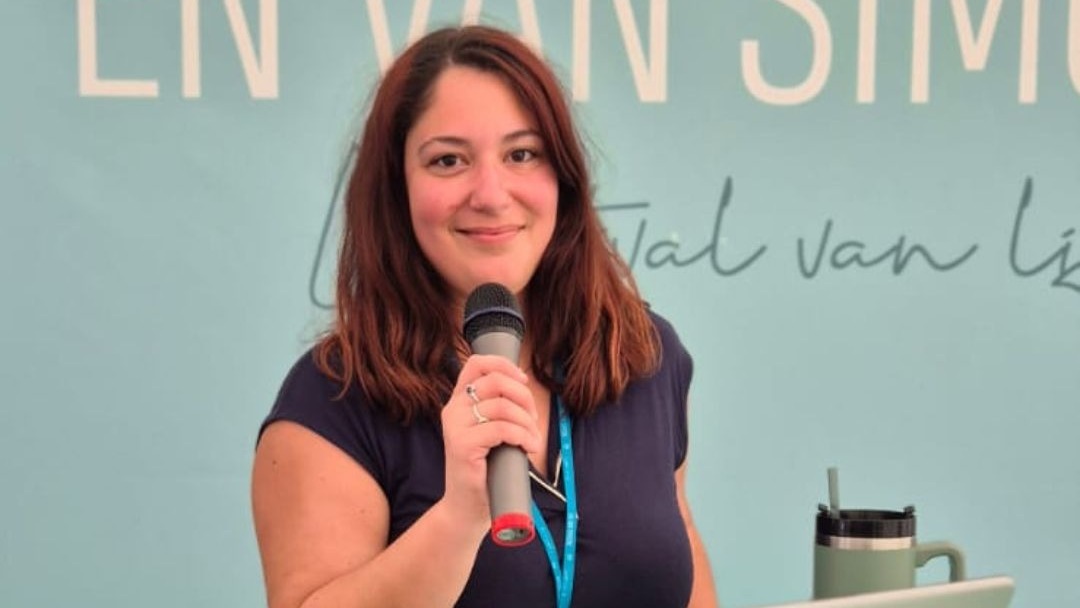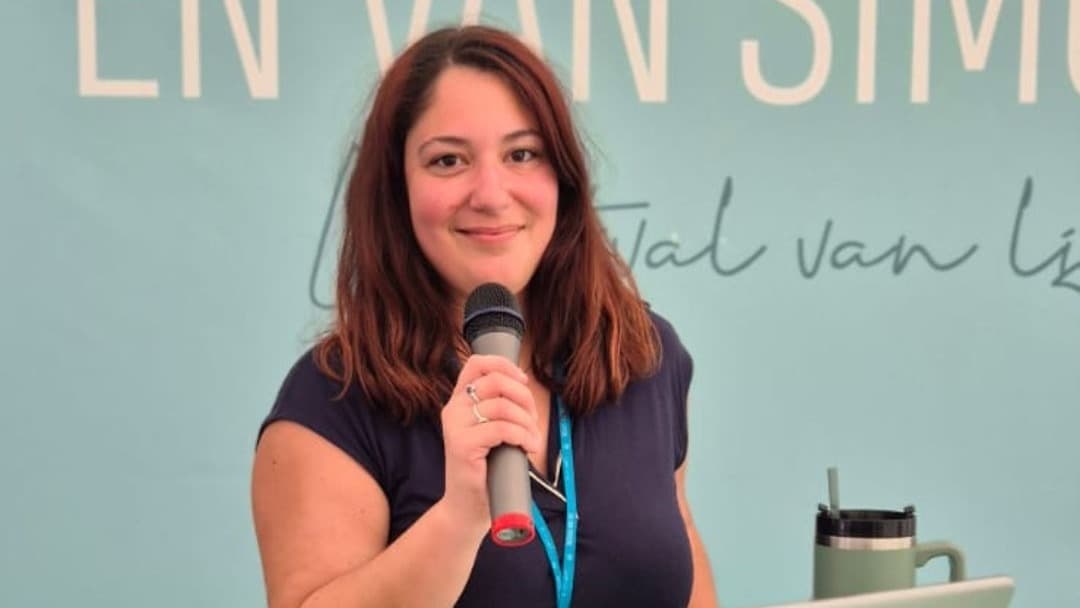
More than ten years after her first departure to New Zealand, Jennifer Therond lives and works on the roads in her van, Poseidon. An editorial consultant, entrepreneur and mentor, she debunks nomadism clichés with one conviction: freedom cannot exist without structure.
There are the dream images: the van facing the ocean, the computer open under the palm trees, the day organizing itself as you wish. And then there are the crêpes.
One day, while Jennifer Therond is traveling with a group of friends in a van, everyone settles down to make crêpes. Not her. She has to work. In that moment, the frustration is real: "I can't go make crêpes, I have to work."
Then she remembers what matters: it's precisely this work that allows her to live on the road.
Jennifer's entire philosophy fits into this scene. Nomadism is not a vacation break. And freedom is not the absence of structure. It is built, organized and financed. "The goal is to structure your business so it supports our lifestyle. We don't want to be enslaved by our own business. That's not why we decided to become nomadic."
A girl who says yes
"Hi, I'm Jen, I'm a nomadic van entrepreneur." To define herself, she first chooses the word adventurer. Always the first to leave on a whim, to try something new or to say yes to a "completely crazy" activity.
Her biggest flaw? "Impulsive." Her greatest quality? Being attentive and knowing how to "land on her feet, like a cat."
As a child, Jennifer already dreamed of exploring the world. She was naturally advised to pursue tourism. A two-month internship in Ireland gave her a first taste of life abroad. But the real turning point came in 2015, during a working holiday in New Zealand.
She discovered van life there, but especially a different relationship with time. "Honestly, New Zealand shaped my vision of travel. Kiwis have a really chill mentality: there are no problems, only solutions. They take time to live, to spend time with loved ones, to organize their day around waves and sunshine."
She takes away the importance of exchange, sharing, nature, and a very simple idea: taking time. This way of living will become her way of traveling, then something she will try to integrate into her daily life.
Upon her return, one certainty emerges: she now knows what she no longer wants. She returns to Japan, moves to Ireland for three years, works as an employee then launches her first business on the side. Five weeks of paid leave are no longer enough. Covid accelerates the movement: she converts a van, becomes a full-time freelancer and hits the road.
Poseidon, freedom with four wheels... and a few surprises!
Since 2022, her home is called Poseidon. The van gives her what she was looking for: "Total freedom. I don't have to plan ahead, I move when I want. I have my home with me all the time."
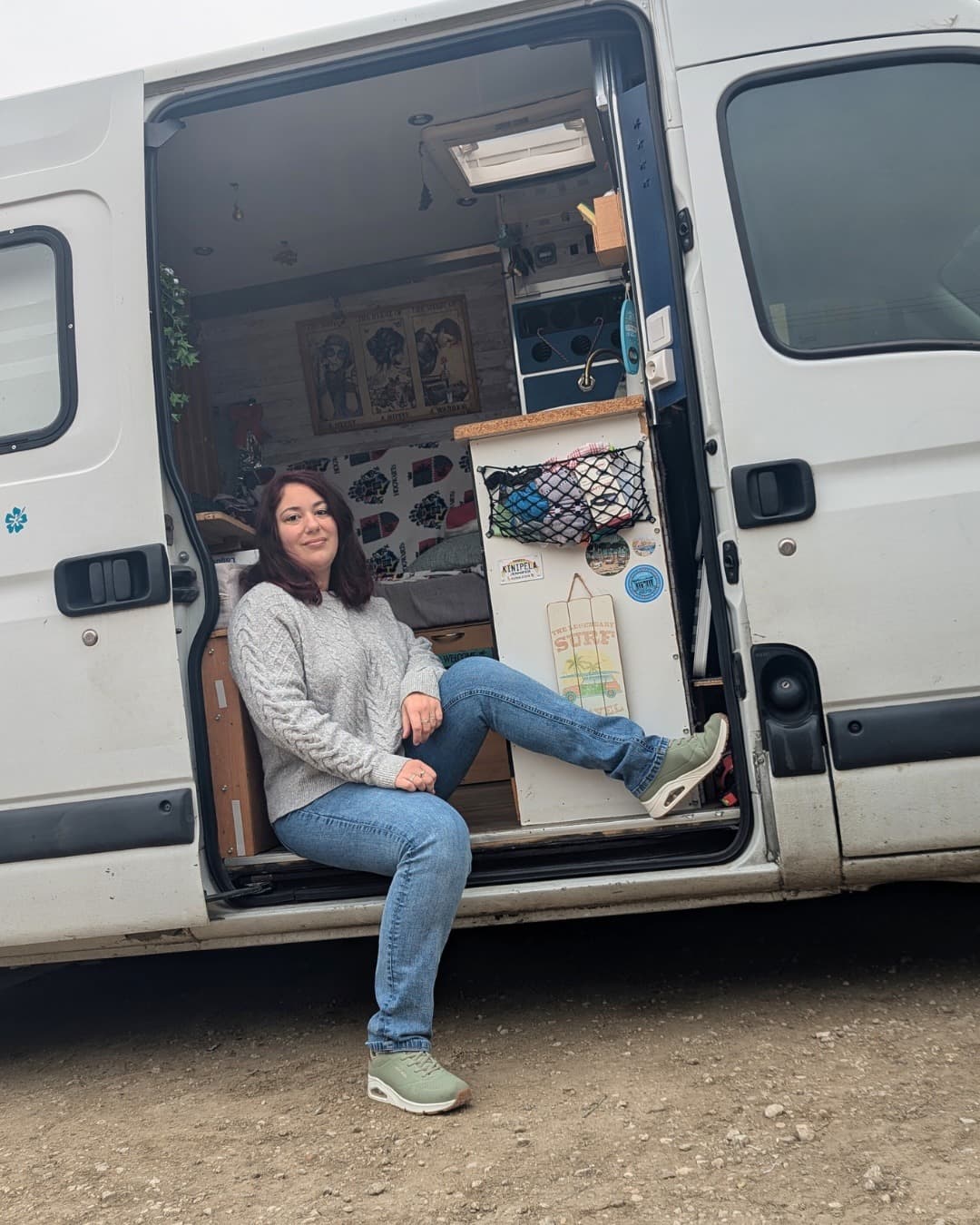
A mobile home doesn't prevent mishaps. In Germany, caught off guard by snow, Jennifer spends a night at 4°C after a battery failure, and therefore no heating. Another time, the automatic lock triggers while the keys are left inside. The window can be slightly open, but not enough for her to fit through. A family happens to arrive in the deserted village. Jennifer begs the parents to let their child squeeze through the window to open the van from inside. "It was very funny," she says today.
Travel also offers her gestures of hospitality that linger. In Japan, she looks for a museum with friends and asks a woman for directions. The place is too far to walk. The Japanese woman calls her son and asks him to drive them. He agrees, then calls his boss to let him know he'll be late because he has to drop off the travelers first. "We felt really bad, but he assured us it was normal."
He refuses any payment, as well as the restaurant invitation. They keep his contact and meet up with him later for karaoke. For Jennifer, this memory says what no guide or Instagram post can really tell: what travel becomes when you leave room for others.
The cliché hunter
If there's one image Jennifer can't stand, it's a woman sitting on a beach with a laptop on her lap. "Do you really think you have wifi on the beach? That it's great to work with sand on your laptop and the sun preventing you from seeing anything?" During her first meeting with Hello Mira, this image in a presentation actually bothered her.
She's also wary of the term "digital nomad," which has become so broad that it no longer says much. Some see it as a profession; others as permanent vacation. She prefers "nomadic entrepreneur": a person who runs a business and works on the road.
And when someone tells her they want to earn 10,000 euros a month from Bali? "I tell them I want to be in Marvel," she jokes. Then she clarifies: reaching that level of income isn't impossible, but it requires work, time and sacrifices, especially at first. "I might make some enemies, but I'm against all this Bali entrepreneur vibe. It's bullshit."
Instagram shows victories, revenue and beautiful landscapes. Much less the parking lots, noisy cafés, train stations, doubts, entrepreneurial loneliness and financial roller coasters. "Entrepreneurship isn't for everyone and we need to stop overselling it."
Another illusion she wants to dispel: leaving doesn't make difficulties disappear. "Your problems travel with you."
Two jobs, two failures and a few lessons
Jennifer works as an editorial consultant and writer specializing in tourism. She has notably collaborated with tourism offices, agencies and tour operators, and written content for Petit Futé, Simplissime, JNTO, Camino Ways, Reservit and Aéroports-Voyages. She advocates to her clients a vision of slower, off-season travel, in which nomads can also support territories differently.
In parallel, she has been supporting nomadic entrepreneurs since 2025. This second activity didn't develop in a straight line.
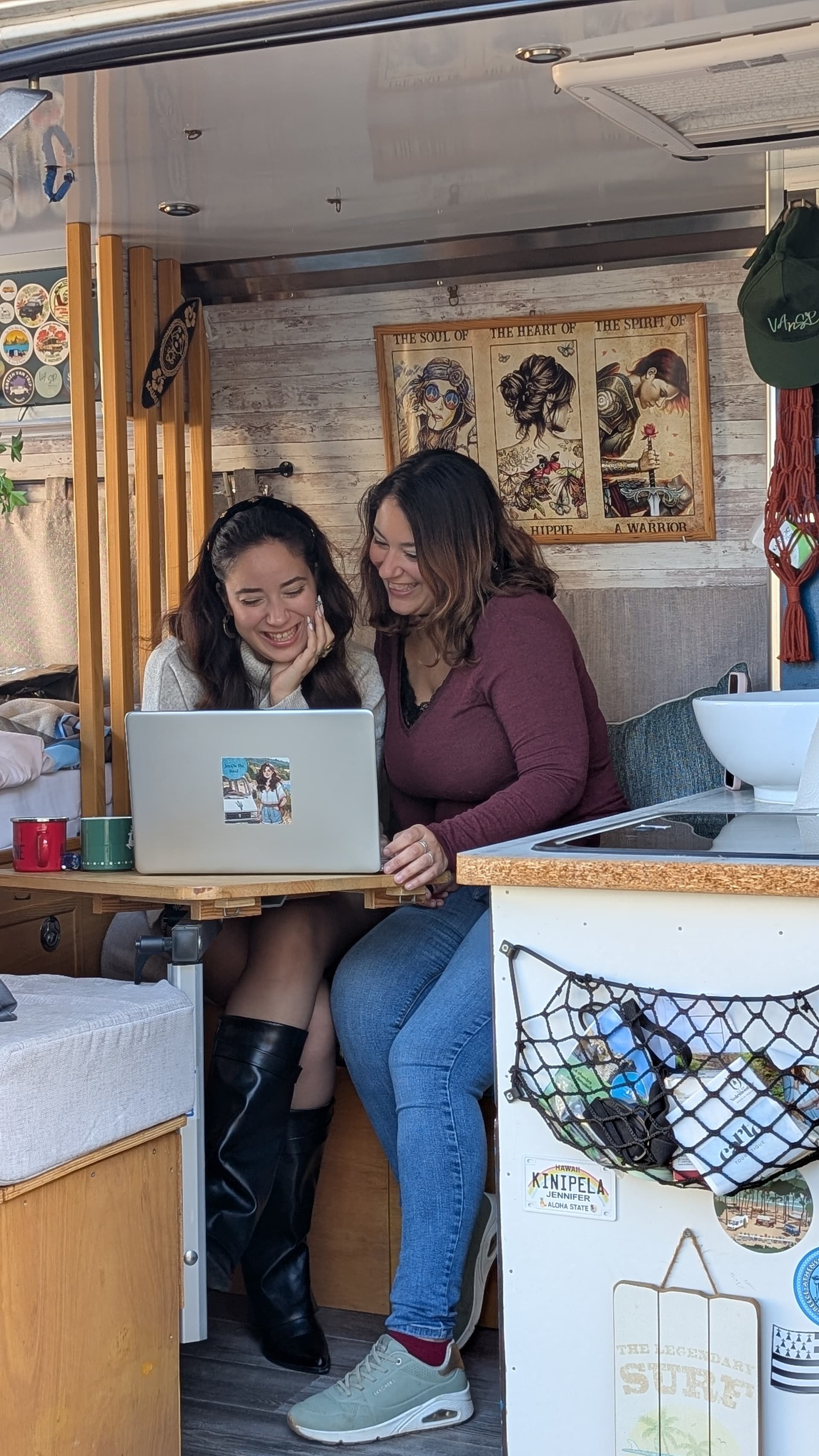
With two friends, she first launches the Nomad Camp, van seminars. They know each other well, but haven't sufficiently discussed their expectations, vision or way of working. The adventure ends after six months. Jennifer keeps one rule from it: "Just because you know someone well doesn't mean you can work together."
Launching the Nomad Business Club teaches her a second lesson. By following a trendy launch strategy that doesn't suit her, she exhausts herself, and the result is a flop. She then completely redesigns the format to create support in her image: six months to stop being a slave to your business, see things more clearly, find a rhythm suited to your lifestyle, organize better on the road and above all stop making decisions alone. She starts one-on-one to work on the basics, then each person can join a small group if needed. "A failure isn't a mistake, it's a lesson." For her, the formula is no slogan: it describes two very concrete experiences whose rules she changed.
Structure as a condition for freedom
The paradox is delicious: Jennifer says she's impulsive, but she teaches structure. Precisely because she loves being able to leave on a whim, she knows a nomadic business must hold up when the setting changes.
She identifies three obstacles that feed each other. Lack of structure leads to scattered efforts, procrastination and wrong priorities. Entrepreneurial loneliness deprives you of outside perspective capable of challenging a decision or avoiding wasted time. At the end of the chain, income becomes irregular and revenue fluctuates.
Her answer is concrete. No miracle routine or mandatory 5 a.m. wake-up. "Sorry, I don't work before 10 a.m.!" Jennifer knows her chronotype and energy. She uses three different routines depending on whether she's on a road trip, settled for several months or surrounded by other people.
She also times her tasks with Toggl. Not to turn every minute into a unit of productivity, but to know what really takes time, better price an offer, decide what to delegate and spot her zone of genius. To this she adds her "non-negotiables": not answering after 6 p.m., listening to herself rather than forcing it, and moving to another task when inspiration isn't there, refusing a project when the feeling isn't right or it contradicts her values, opening her inbox only twice a day. A list to return to when a decision becomes unclear.
Financially, she learns to understand the seasonality of her activities and follows three pillars: revenue, cash flow and investment. Fluctuations and risks don't disappear. They simply become more visible.
Structure is therefore not the enemy of spontaneity. It's what prevents her from running "straight into a wall or a burnout," and what sometimes allows her to decide that a castle open only on Tuesday morning deserves a place in her schedule.
Being surrounded without giving up the road
The loneliness Jennifer mentions isn't necessarily social. She meets people at vanlife festivals, in communities, cafés or coworking spaces. What's often missing are peers who understand a deadline, hesitation about pricing or an unstable month of revenue without first having to explain your entire lifestyle.
She now relies on several circles: a professional network, entrepreneur peers and a group of more advanced women with whom she shares immersions and regular meetings. She has however refused to join a business network that's too rigid, based on pitching and mandatory attendance. Her way of building connections lies in another rule: be curious, talk to people, without immediately trying to sell.
Even romantic life clashes with the moving geography of nomadism. Jennifer talks about it without romanticizing: meetings are easier when you stay somewhere long, in a community or during a vanlife festival. Finding someone truly aligned with this lifestyle is more complicated.
Again, she doesn't claim the road solves everything. She simply chooses places where meetings have time to exist.
Traveling slower to meet more
Jennifer sees herself in slowmadism. Outside of road trips, she stays at least three months in one place, and sometimes finds that's still not long enough. Visiting, asking for recommendations, frequenting producers and artisans, participating in local life: all of this takes time. To those who criticize the environmental impact of nomadism, she responds with her usual frankness that van life can also reduce water consumption and force you to watch your waste. Her point isn't that traveling doesn't pollute. It's that another way of traveling exists: slower, attentive to the local economy and present off-season.
This chosen slowness doesn't prevent movement. On her dream list are still the Harry Potter park in Orlando, crossing the Americas and, one day, opening a nomadic village.
Medellín, next stop
Starting October 24, 2026, Jennifer will be in Medellín to lead the Mira Class "Get Your Business Clear in Two Weeks." Six in-person modules, ten working days and a maximum of fifteen participants to work on real numbers, clarify an offer, set priorities and leave with a 90-day action plan.
She prepares a framework and exercises, but refuses a program applied the same way to everyone. She wants to adapt to participants' profiles and levels. Her mentoring approach follows the same logic: listen, don't immediately give the answer, make people think, ask the right questions and pass on the keys that allow for an informed decision. "But I'll also be direct and say things the person needs to hear."
Jennifer was among the first to push Hello Mira to put business at the heart of its travels. Today, she's already imagining themed stays, representatives in each destination, maybe even a nomadic hub. "And if I can play a more active role, why not!"
Ten years ago, she left for New Zealand and discovered there were other ways to organize a day, a trip and a life. In October, she will share in Medellín what the road, failures and experience have taught her: freedom doesn't mean having no structure. It means building the one that allows you to live the life you've chosen.
As her favorite quote says: "Make your life a dream and a dream a reality."
Jennifer's Mira Class in practice
- Program: "Get Your Business Clear in Two Weeks"
- Location: Medellín, Colombia
- Start: October 24, 2026
- Format: 6 in-person modules over 10 working days
- Group: 15 participants maximum
- Deliverable: a 90-day business plan
- Price: €810 for the masterclass; travel, accommodation and meals not included
- Language: French
Discover Jennifer's Mira Class
Structure your business in 10 days, in Medellín
Discover the Mira Class