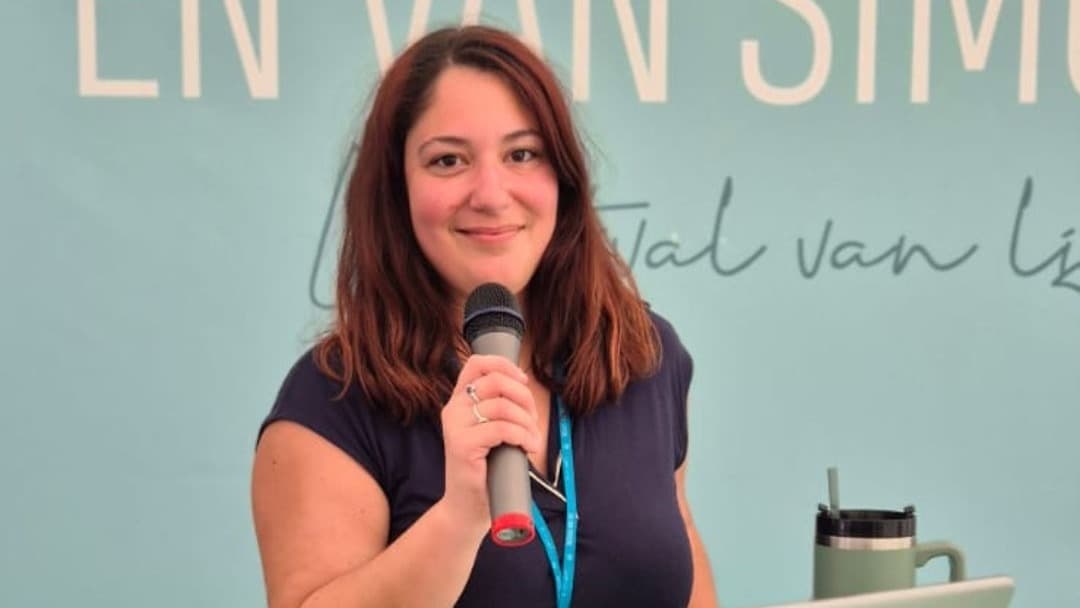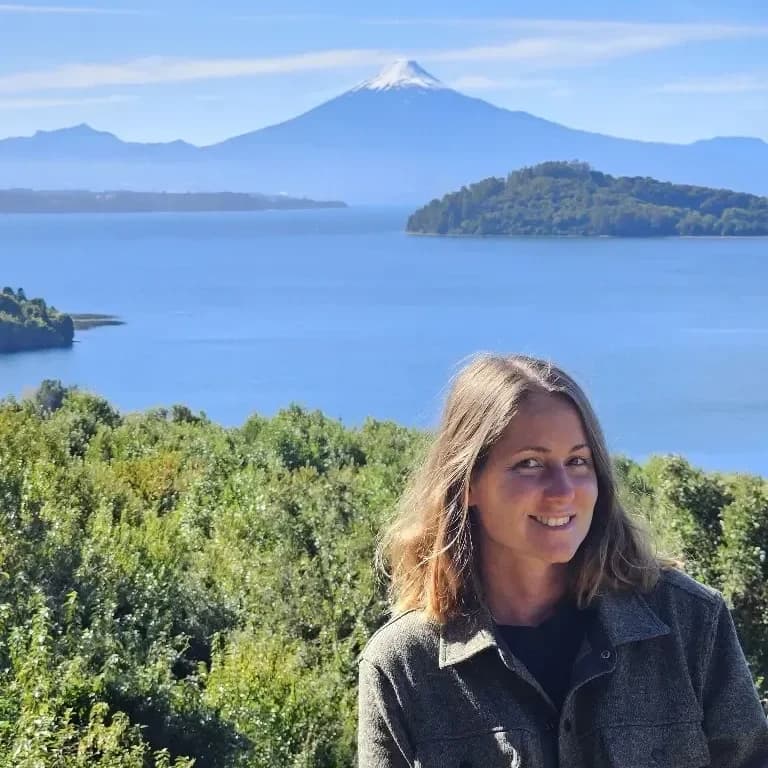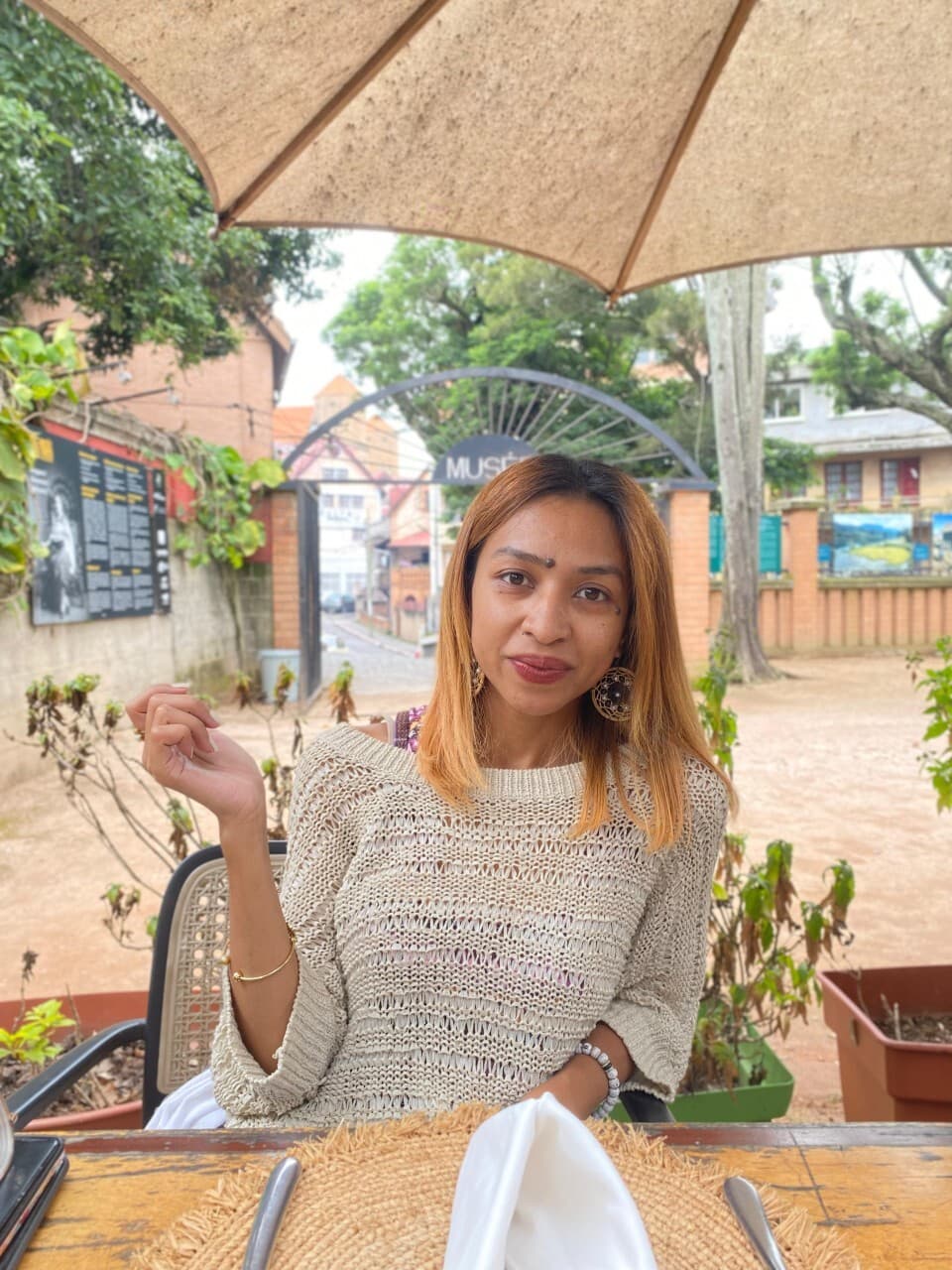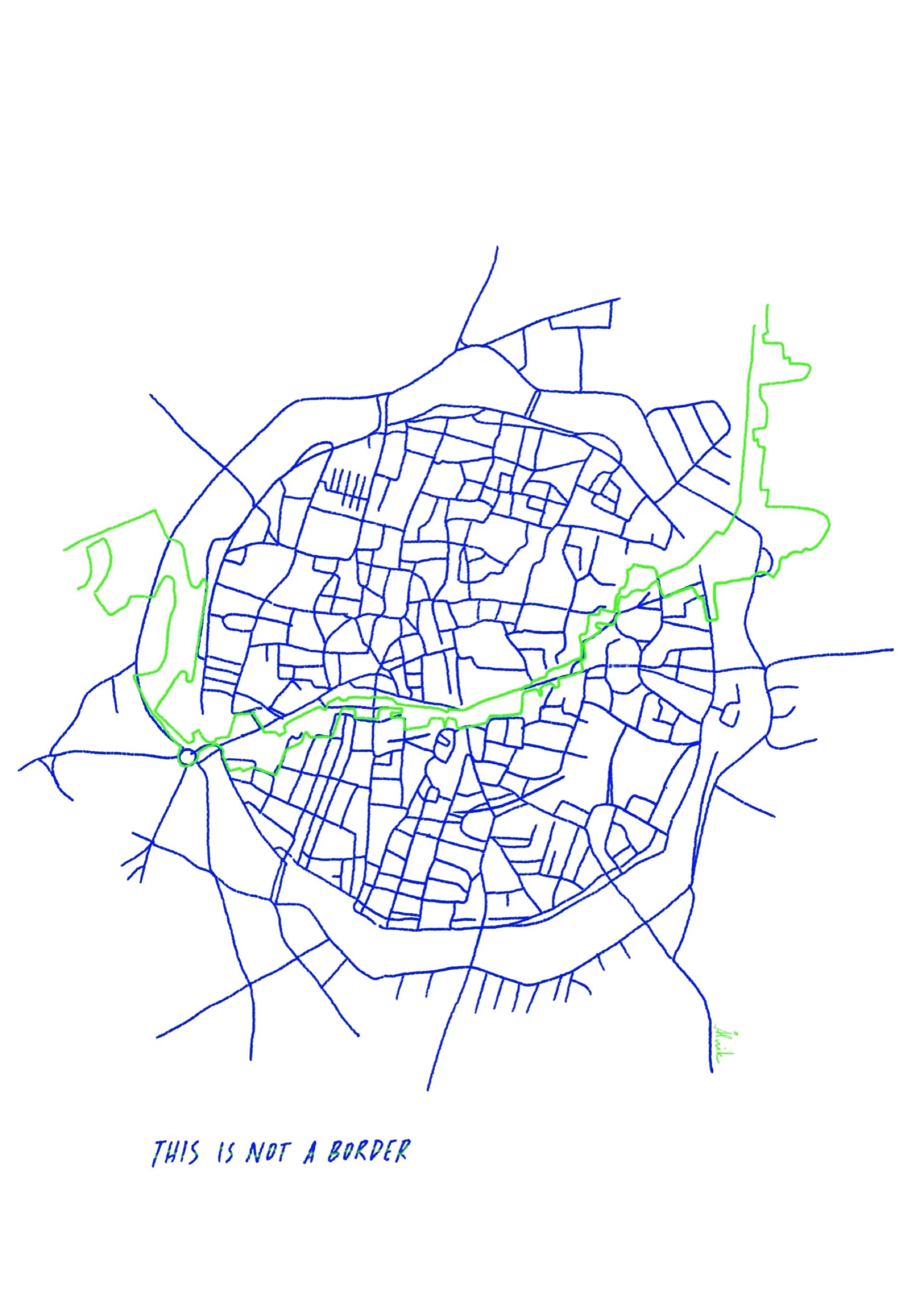
Alexandra Nikolova is 40, a Bulgarian illustrator, and has moved 21 times in her life. She lived in Lisbon in 2013, before what she calls, plainly, the invasion. She arrived in Brussels in February 2020, one month before the city emptied. She found her freest self on a bicycle in Rotterdam at 37, cycling home alone at night without fear, for the first time. Today she works with NGOs across Europe, draws mostly on an iPad because she can't carry a Riso printer across borders, and stopped using Airbnb years ago out of respect for local people.
She does not call herself a digital nomad. She's seen what that means from close up.
The map, before anything else
Every time Alexandra moves to a new country, the first thing she does is find a map. Not a rental listing or a Facebook group, but simply a map.
"I am really a map person. I have a very strong visual understanding and memory. So I always start with that, understanding the space, understanding the geography. And then I start reading about what's going on there, a little bit about the history, the politics, the economics, what kind of communities are there."
This is the visual mind of an illustrator applied to life itself: understanding the shape of a place before you step into it. In twenty-one moves, she has arrived in cities already knowing their outlines, their histories, the tensions running beneath them. Her current city, Nicosia, is one of the most complex maps she has ever had to read, a city physically divided by a wall, with a UN buffer zone running through the middle, Greek Cypriot south and Turkish Cypriot north, and a political division that has remained unresolved for decades.
"It's a very weird place. It has this very complicated political situation, and this problem with the division of the island is unresolved, and no one really sees how it will be resolved anytime soon." She says it without drama. Just the facts she gathered from the map.
The only place she was never afraid
Alexandra was 36 when she moved to Rotterdam for a master's program. It would become the one place she describes with something like nostalgia.
"In the Netherlands, I was never afraid to go alone after a party, late at night, with my bike. This was the first time in my life I was okay with that. As a woman, I would never go alone late at night, even in my hometown. That feeling of safety is very precious. And rare."
The city itself has a part in it. Her program was a cohort of eleven students from at least seven countries, with tutors from three nationalities. Rotterdam had built an international community that felt genuinely welcoming, curious about you, non-judgmental, without what she calls the "pretentious layer" she has encountered elsewhere.
But she's careful with this. "I have to say, I'm saying this because I was in an international community, not in a local community. It matters because I felt this way because of that context."
It's a distinction most people skip over and Alexandra doesn't. She knows the difference between being welcomed into an international bubble and actually integrating. Rotterdam was the bubble, a warm, extraordinary bubble, but still a bubble.
The city that disappeared
Some moves teach you something. The Brussels move taught her what it costs when a city disappears before you can find your place in it. She arrived in February 2020. Her husband was completing an internship at the European Parliament. They lived in the European Quarter, a neighbourhood that exists entirely because institutions exist.
One month later, the institutions closed.
"A lot of people moved back to their countries. They didn't want to stay. So it was completely empty, and we were locked down and couldn't really do anything. How do you meet people when you are in this really weird situation? You don't really."
"That experience was traumatic."
She made no lasting connections there. The isolation that followed had nothing romantic about it.
When the tools run out
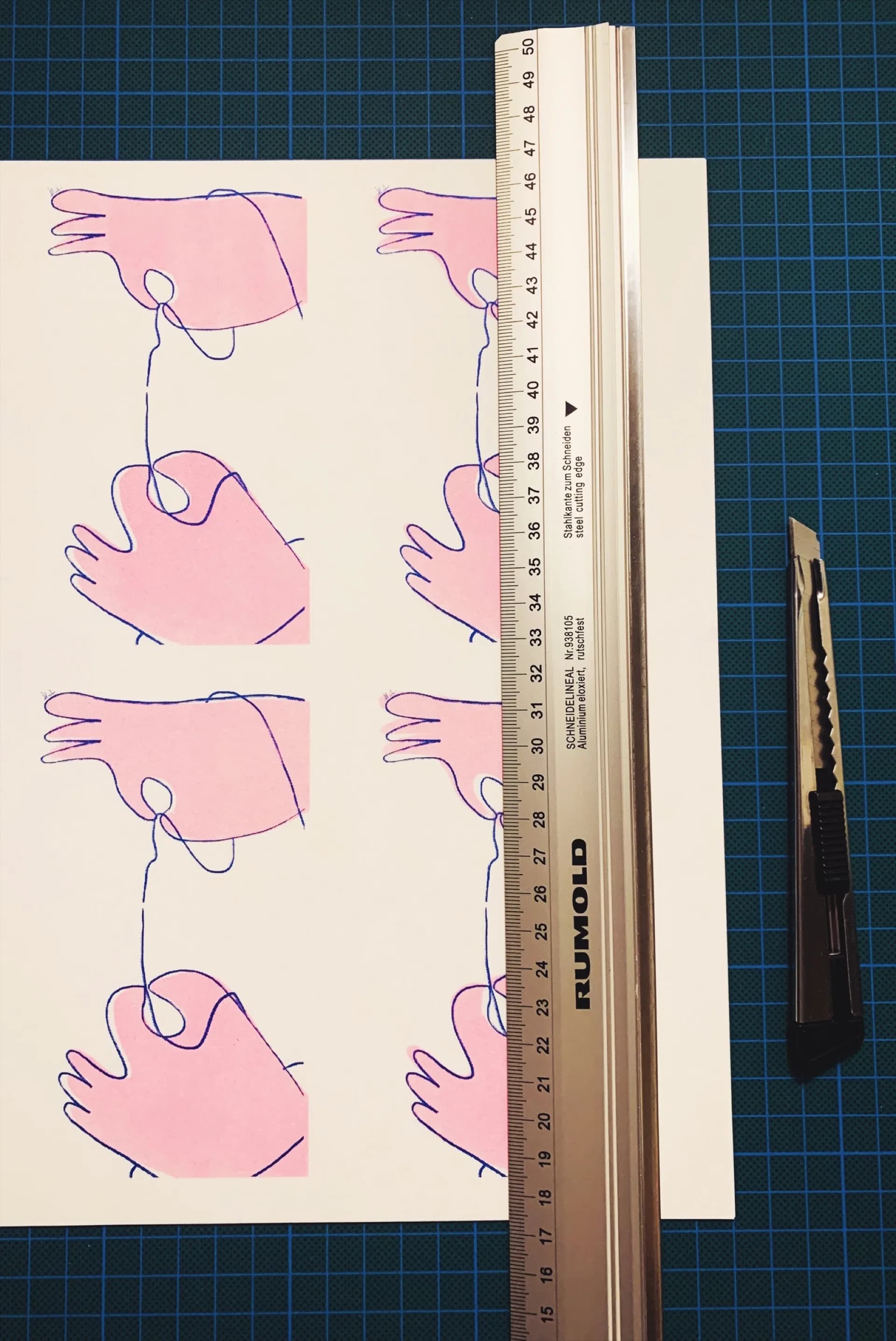
In Rotterdam, Alexandra had access to a full art academy, Riso printers, woodwork studios, and ceramics equipment. She printed vivid, layered work in saturated ink. She was at her most resourced. Then she moved to Cyprus.
"In Cyprus, there is not a single Riso printer in the whole country."
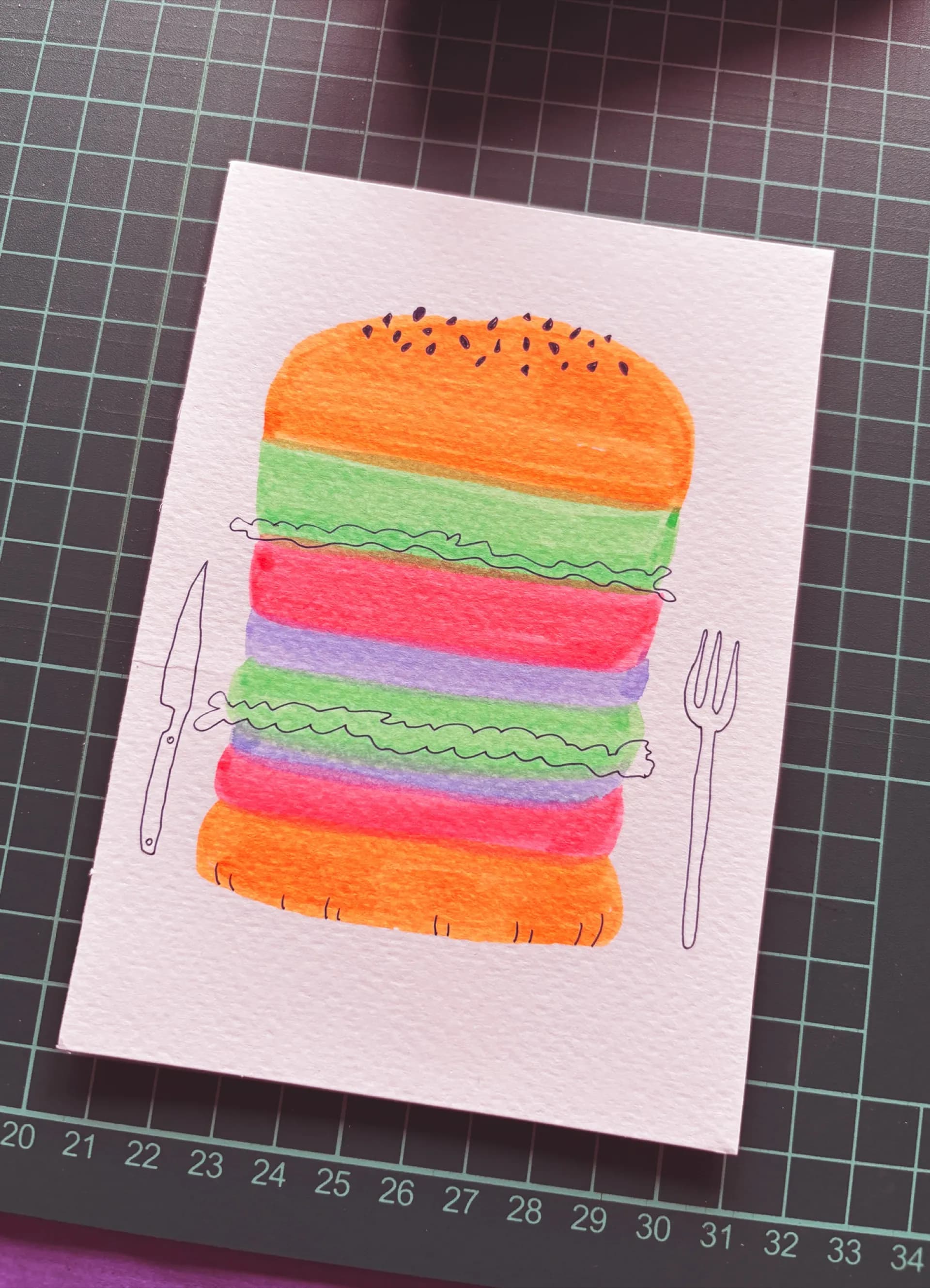
So she draws with a highlighter now. During our conversation, she held up a recent piece, a large burger, hand-drawn in marker, vivid and alive. It is not a lesser version of her practice, but an adaptation. Her art has always been shaped by wherever she moves next.
"I am like a sponge. I get a lot of impressions, and I need to put them in something."
She works mainly digitally now, on an iPad, because it travels with her everywhere. When she wants to make something physical, she finds what's available: canvas, acrylic, or a highlighter. The work changes and she adapts. This is also part of why she chose to build her career with NGOs rather than go back to the corporate and startup environments she left a decade ago. After years in marketing and then a startup world she describes as arrogant, she found in NGO teams something she values above almost everything: people working for a cause, without pretence, with genuine warmth.
"There is no fakeness. It's such an open and honest way to work with people, which I love the most."
Feeling isolated, saying it out loud
Two and a half years in Cyprus, and Alexandra says it plainly: she is not integrated.
"I wouldn't say I am integrated. I feel quite isolated. I have a few friends here, but I don't have a community. That's my biggest struggle."
She has tried by applying for an art residency, got accepted, and spent months working alongside other artists. One friend came from it, a Hungarian artist who lives on the other side of the island, far enough that they see each other occasionally. Another friend is a Cypriot woman, whom she met years earlier at an Erasmus project; they meet for coffee or dinner sometimes. One here, one there, but not a community.
Part of it, she acknowledges, is exhaustion. Rotterdam asked so much of her socially; she was proactive, she pushed herself, she made real friends, and she built. "I'm an introvert, so I got tired. When I moved to Cyprus, I was exhausted and just couldn't do that here."
Part of it is the place itself: "The Netherlands is such a hyperproductive place, and in comparison, Cyprus is so slow." The creative infrastructure isn't there. The density of people doing the same kind of work isn't the same. And a city divided by a wall is, in its own way, a city that keeps its distances.
The conscious mover
Alexandra stopped using Airbnb years ago. She books hotels now, she says, "out of respect for local people." She watched what happened to Lisbon, a city she loved before what she calls the invasion. Property bought by investors, sublisted to nomads and tourists, locals priced out of neighborhoods they had lived in for generations. She watched a city she recognized become a city that no longer recognized itself.
"I go to hotels or sleep in friends' places now. That's my rule."
She refuses the word digital nomad for herself. She moves, 21 times, with all her things, each time making a new place her base. But the word carries something she doesn't want to claim: a carelessness about what movement does to the places you pass through. She has seen that carelessness up close and decided not to be part of it.
What 21 moves teach you
Alexandra doesn't frame her life as a template and doesn't sell it as a solution. But across the course of this conversation, a few things emerge that are hard to ignore once you've heard them.
The first: integration takes longer than you think, and demanding it from yourself too soon is how you burn out. Rotterdam was extraordinary, but it was also a built-in cohort, a city wired for openness, years of proximity. "It takes a few years," she says. "You need time." Arriving somewhere new and feeling disconnected after three months isn't failure; it's part of the process.
The second: there's a difference between an international bubble and a local community. Most people who move land in the international layer first, the co-working crowd, the expat groups, or the hostel social scene. It's warm and it's easy, but it's not integrated. Alexandra has been in both, and she names the distinction clearly, without judgment. Both are valid, but knowing which one you're in changes what you look for next.
The third is the question she has been asking of every country she has ever moved to, and the one worth borrowing: Can I be free here? Not whether the city is beautiful or the cost of living is manageable. Whether you can move through it, work in it, be yourself in it, without shrinking. It's a harder question than it sounds. For her, only one city has fully answered yes.
And the last: you optimize. Move by move, the logistics get more practiced, the loneliness more manageable, the art of arriving and starting over more familiar. It doesn't become easy. It becomes more yours.
"You constantly improve the way you move to any place, every time you do it. It's not an intentional reflection. It's more like the way you optimize how you prepare yourself."
After twenty-one moves, Alexandra is still learning and every time asking the same question.
And now?
Alexandra has roughly one year left in Nicosia. After that, she and her husband return to Sofia for a period, a required step before a new posting is determined. Then another city, another map to study, another community to try.
But before that, she is preparing for an upcoming art book fair. She has the highlighter piece ready. She'll carry her publications, the ones that, over years of fairs and markets, find their way out of the box and into people's hands. She is dreaming of new Riso pieces, waiting for access to a printer she hasn't found yet on this island.
If she could move anywhere next by choice, not assignment, she says Rotterdam. Not somewhere new. Back.
"It takes a few years. You need time."
Twenty-one moves later, she still believes the best place she found is one she already knows. And she's still looking for it everywhere else, every time.
Find Alexandra
At Hello Mira, we collect the stories that don't make it into the highlight reel. The isolation. The adaptation. The slow, uneven search for a place where you can finally be free. Alexandra's is one of them, and if hers sounds a little like yours, you're not alone in it. Discover our full investigation: Female nomadism decoded and 7 inspiring women digital nomads.
Discover how to travel better, longer, with a positive impact on local communities.