In the Basque Country, two cities complement each other: Bilbao, which reinvented itself around its museum and its old town, and San Sebastián, oriented toward its bay and its table. You'll learn what to see and taste in each, which excursions to take around Bilbao, and how to get around. A few points to watch, at the end of this article, will help you avoid unpleasant surprises.
Bilbao, the City That Reinvented Itself
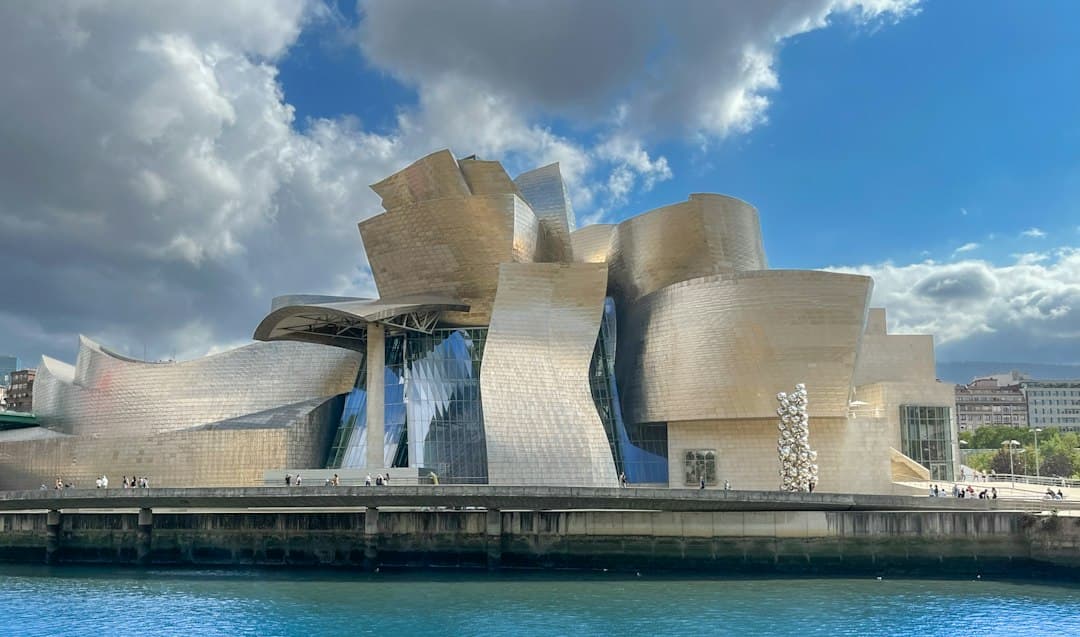
You could call it "the Guggenheim city": since the museum was built in 1997, Bilbao has been transformed for good[1]. Yet what gives it its unique character is the blend of avant-garde and the traditional flavor of its old town, full of charming streets and pintxo bars[1].
If you imagined it gray and industrial, it will surprise you: this is a city that reinvented itself within a single generation, without losing its character[2].
What to See in Bilbao: the Guggenheim, the Estuary, and Contemporary Architecture
Start with the Guggenheim Museum, one of the most striking examples of twentieth-century architecture: Frank Gehry used 33,000 very thin titanium sheets to create its curved forms[1]. Bilbao also has one of the finest art galleries in Spain, the Fine Arts Museum[1].
The city shows its taste for the new: the Euskalduna Palace, Norman Foster's metro stations, Calatrava's Zubizuri footbridge, or Philippe Starck's Alhóndiga, built from a former wine warehouse[1]. To reach the Guggenheim from the Casco Viejo, follow the quays: it's the best way to understand the city's transformation[2].
Near the museum, the Abandoibarra promenade is a charming spot where tourists and locals, joggers and families cross paths every day[3]. The ría, the estuary, remains a key part of city life[3]: you'll see stand-up paddle and rowing enthusiasts, and you can take a boat trip to the Vizcaya Bridge[1].
The Casco Viejo and the Pintxos
Old Bilbao has more than 700 years of history[1]. Stroll along the "Siete Calles" (Seven Streets), where you'll find the cathedral and the Arriaga Theatre, inspired by the Paris Opera, with shops and cafés ranging from the most traditional to the trendiest[1].
Plaza Nueva and its surroundings are full of lively bars serving their pintxos: small culinary creations to enjoy in a single bite[1]. The simplest approach is to wander these streets: you'll soon find yourself tasting pintxos and wine, what locals call "txikiteando"[3].
La Ribera Market lets you have the groceries you buy prepared for you, or lets you taste a selection of pintxos and Txakoli wines to the rhythm of live music[1]. In Bilbao, gastronomy is an art: it's one of the places in the world with the most Michelin stars per person[1].
Around Bilbao: Vizcaya Bridge, Getxo, Artxanda, Gaztelugatxe
To see Bilbao from above, take the Artxanda funicular, a classic way to discover the city from the heights[1]. Go in the morning: the light over the city is beautiful[2].
The Vizcaya Bridge, a UNESCO World Heritage Site, is a jewel of industrial architecture[3]. The beaches and spectacular cliffs of Getxo are just over half an hour away by metro[1].
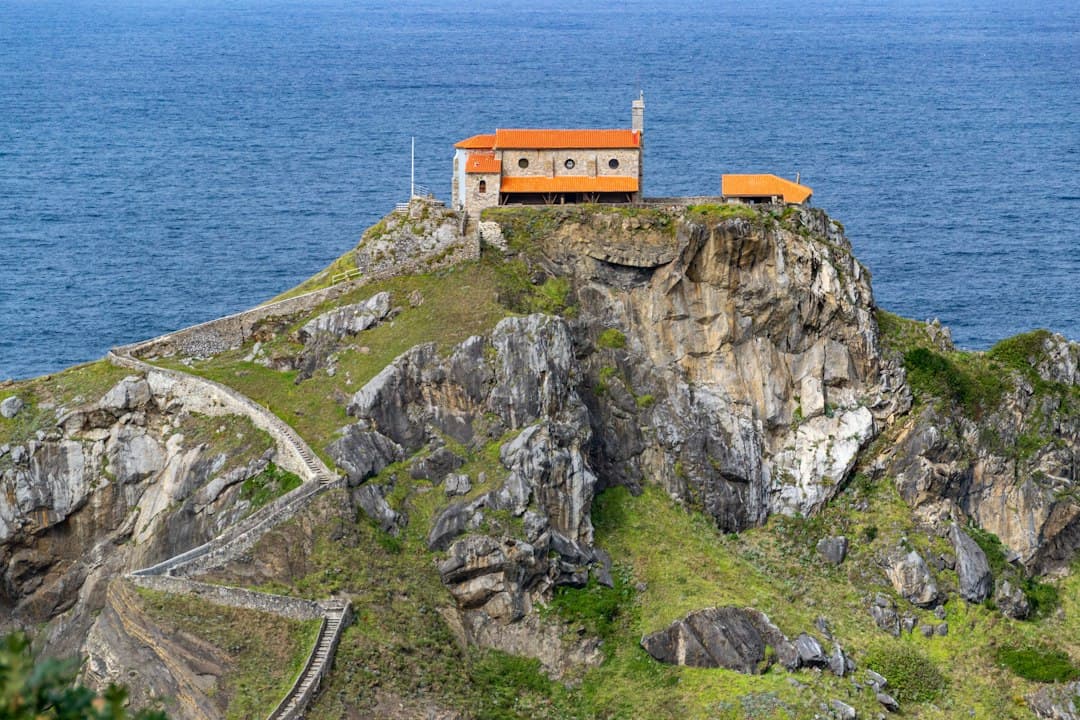
Another famous outing, San Juan de Gaztelugatxe: you must climb 241 steps to reach the hermitage at the top, and access is free[2]. On days of heavy crowds, especially in summer, you will however need to book a time slot online through the Biscay province website[2]. Gernika, Mundaka, and Bermeo can also be visited on a day trip from Bilbao[4].
San Sebastián: the Bay, the Beaches, and the Old Town
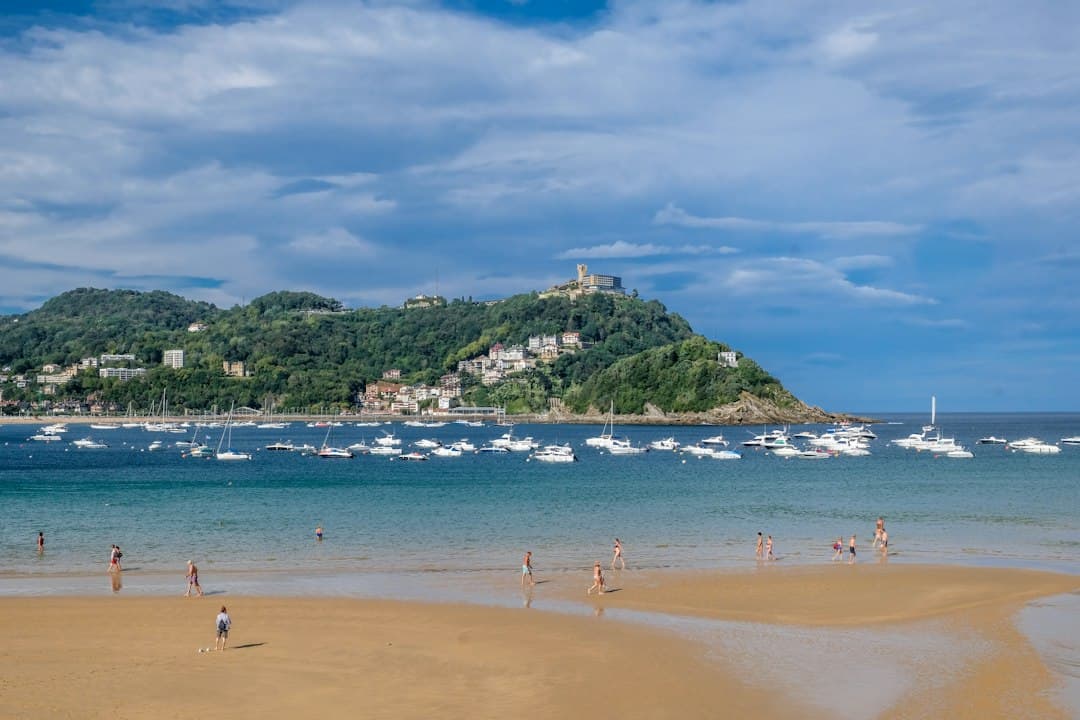
The city stretches along a bay of white sand between Mount Urgull and Mount Igeldo[5]. Ondarreta Beach begins between a garden and the Pico del Loro, a tiny headland that separates it from the next beach, La Concha[5]. The summit of Urgull is dominated by the Castillo de la Mota[5].
In the old town, a former Dominican convent houses the San Telmo Museum, whose archaeology, ethnography and painting collections deserve a careful visit[5]. The San Telmo Museum, the Comb of the Wind and the Kursaal show how the city brings together tradition and modernity[5]. On Gros beach, the Kursaal is the work of architect Rafael Moneo[5]. The Alameda del Boulevard leads to the romantic city, which grew up after the old city walls were demolished, along the banks of the Urumea[5].
Food, Culture and Festivals in San Sebastián
Basque cuisine enjoys an international reputation, and some of Spain's most celebrated restaurants are in San Sebastián[5]. Recipes built on vegetables, fish and seafood are paired with Getaria chacolí, which has its own designation of origin[5].
The Tamborrada and the Semana Grande, with its « traineras » rowing regattas, speak to the city's traditions, while its film and jazz festivals reflect its international outlook[5]. For these events, you need to book your accommodation well in advance[5].
The province of Gipuzkoa offers a long coastline of beaches and fishing villages: Hondarribia, Zarautz, Getaria, Deba or Mutriku[5].
Practical Info: Duration, Season and Getting Around
Bilbao works very well as a two-day visit: the first day for the Casco Viejo, the Ribera market and the Guggenheim, the second for Mount Artxanda, the Fine Arts Museum and the Vizcaya Bridge[2]. Spring and early autumn offer the best balance between weather and crowds[2].
Spanish is spoken everywhere, although Basque is also an official language[2]. The metro, designed by Norman Foster, makes it easy to get around the city and reach nearby towns such as Portugalete or the beaches of Sopela and Plentzia[3]. The tram serves several architectural landmarks, including the Arriaga Theatre and the Guggenheim[3].
- The Barik card, a contactless smart card, gives discounts on public transport[1].
- The Bilbao Bizkaia Card also gives access to many discounts; both can be bought at tourist offices or booked online[3].
- In San Sebastián, the tourist office sells the San Sebastian Card and the Basque Card, which offer discounts on public transport, museums, restaurants and shops[6].
Traps and Things to Watch Out For
In the most touristy areas, such as the Casco Viejo around the Plaza Nueva, some establishments focus on passing trade rather than local customers. The trap isn't always an obvious scam: it can be bread you were charged for without ordering it, a hidden terrace surcharge, vague drink prices or a plate of pintxos that is surprisingly expensive[7].
- Avoid places where someone insists you come in, promises an « authentic Basque menu » with no visible prices, or only reveals the price once you're seated[7].
- For major attractions such as the Guggenheim, buy your tickets through official channels: third-party sites may add high service fees or sell a standard ticket as an « exclusive fast-track »[7].
- For Gaztelugatxe, check before you go whether your visit day requires a free time slot to be booked online[2].
Going Further
- Spain: The Essentials, Region by Region
- Málaga and the Costa del Sol: What to See and Do, from the Alcazaba to the White Villages
- Santiago de Compostela: What to See and Do in a Few Days
- Granada and the Alhambra: What to See, What to Experience and How to Plan
Sources
- 1.^ abcdefghijklmnspain.info — Tourism in Bilbao. What to see | spain.info: “The city of the Guggenheim, that is how this Basque Country destination could be called, because since the construction of this original museum in 1997, Bilbao has been transformed forever.”; “But, curiously, what gives it its unique character is the combination of avant-garde and the traditional flavor of its old town, full of charming streets and pintxos bars (portions of food served on a slice of bread) that show that gastronomy is lived with passion there.”; “This is one of the most striking examples of 20th-century architecture, as Frank Gehry used 33,000 very thin sheets of titanium to create its unusual curved forms.” https://www.spain.info/fr/destination/bilbao/ (accessed November 17, 2026)
- 2.^ abcdefghiespagnol-pas-a-pas.fr — Visiting Bilbao: Must-sees, Itinerary and Tips: “Visiting Bilbao means discovering a city that reinvented itself in a single generation, without losing any of its character.”; “To reach the Guggenheim from the Casco Viejo, follow the quays. It's the best way to understand the city's transformation.”; “Climb Mount Artxanda in the morning, when the light is beautiful over the city.” https://espagnol-pas-a-pas.fr/visiter-bilbao/ (accessed November 17, 2026)
- 3.^ abcdefgtourism.euskadi.eus — What to do and what to see in Bilbao | Tourism in the Basque Country | Turismo Euskadi - Essentials on your trip to the Basque Country - Tourism Euskadi: “You have to see for yourself how design and architecture permeate the entire city, starting with the Paseo de Abandoibarra, right near the museum, an undeniably charming neighborhood where tourists and locals, joggers and families mix and gather every day.”; “During your visit to Bilbao, you can use the ría, the estuary, as a landmark, a waterway through which ships once arrived and which remains a key element of city life today.”; “Wander through its seven lively streets and, before you know it, you'll be tasting pintxos and wine, what is called txikiteando.” https://tourism.euskadi.eus/webtur00-recursostop/en/contenidos/d_destinos_turisticos/0000004981_d2_rec_turismo/en_4981/4981-ficha2.html (accessed November 17, 2026)
Show 4 more sourcesShow less
- 4.^basquecountry-unpacked.com — Travel guides to Bilbao and Bizkaia: “Five day trips from Bilbao by train, metro and bus: the E4 Euskotren timetables to Gernika, Mundaka and Bermeo, the booking days for Gaztelugatxe, the Bizkaia Bridge and the A3714 bus to Vitoria-Gasteiz.” https://www.basquecountry-unpacked.com/es/bilbao-y-bizkaia/ (accessed November 17, 2026)
- 5.^ abcdefghijklspain.info — Tourism in Donostia-San Sebastián. What to see. Tourist information | spain.info: “The Basque city stretches along a bay of white sand between Urgull and Igeldo mountains.”; “Here begins Ondarreta beach, between a garden and Pico del Loro, a tiny headland that separates this stretch of sand from the next one, La Concha.”; “The summit of Urgull is crowned by the Castillo de la Mota and a representation of the Sacred Heart.” https://www.spain.info/fr/destination/san-sebastian/ (accessed November 17, 2026)
- 6.^tourisme.euskadi.eus — San Sebastián Tourist Office | Tourist offices | Tourism Euskadi: “You can also buy the San Sebastian Card and the Basque Card, tourist cards offering discounts on public transport, museums, restaurants and local shops.” https://tourisme.euskadi.eus/fr/offices-de-tourisme/san-sebastian-turismo/webtur00-content/fr/ (accessed November 17, 2026)
- 7.^ abcbilbao.ue.is — Avoiding Common Scams in Bilbao: Travel Smart: “The trap is not always an obvious scam: it can be bread charged without having been ordered, a hidden terrace surcharge, drinks with unclear prices, or a plate of pintxos at a surprisingly high price.”; “In tourist areas, especially the Casco Viejo around the Plaza Nueva and the Calle del Perro, some establishments prioritize turnover over local customers.”; “Avoid places where someone insists you come in, promises an authentic Basque menu without visible prices, or only tells you the price once you're seated.” https://bilbao.ue.is/en/how-to-spot-common-scams-in-bilbao-avoid-tourist-traps/ (accessed November 17, 2026)