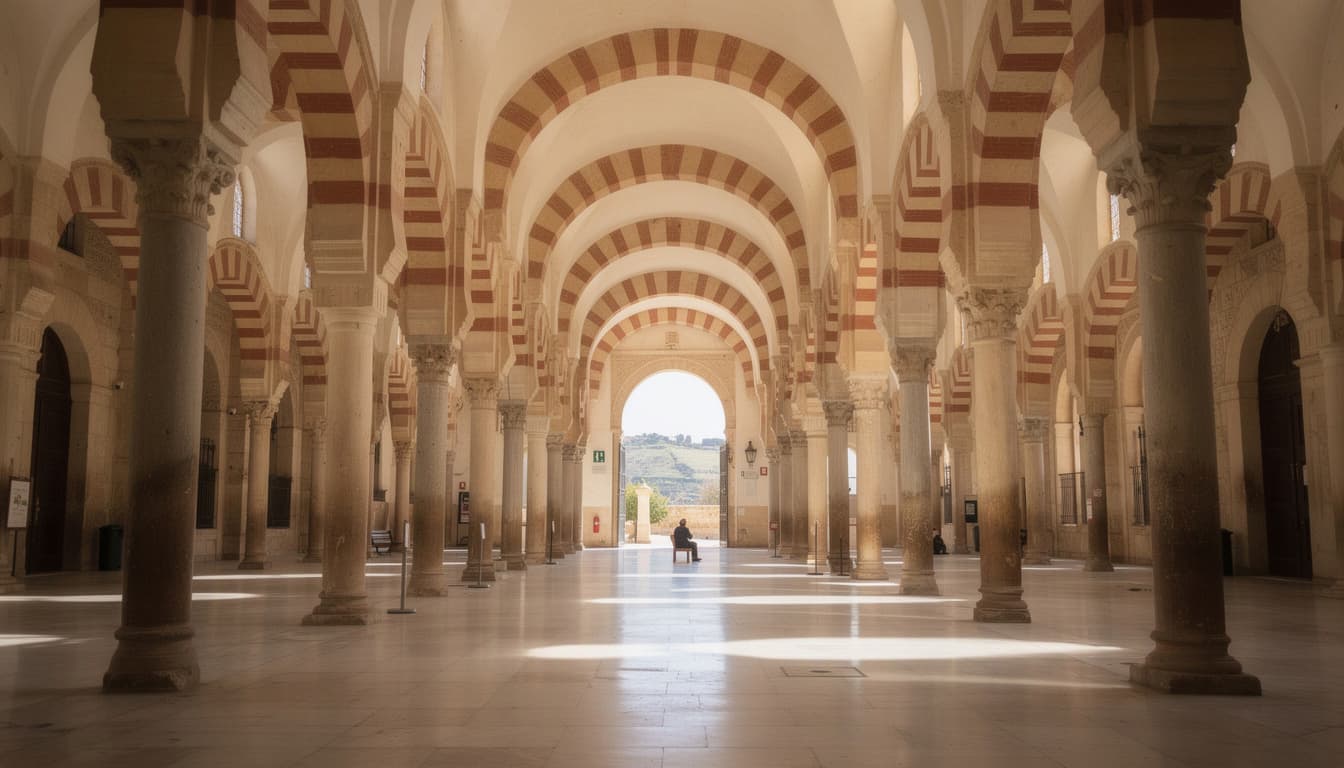
Córdoba fits into a two- to three-day getaway: a forest of columns, a Jewish quarter with whitewashed alleys, flowering patios, a Roman bridge, and food worth savoring slowly. This article helps you choose what to see, when to visit, how to get there, and how much time to plan.
Why Córdoba: Four Cultures, One City
Córdoba has a monumental historic center listed as a UNESCO World Heritage Site, made of small streets where you'll want to linger, flower-filled inner courtyards, pleasant squares, and lively taverns[1]. The city reflects its Roman past and the coexistence of Christian, Islamic, and Jewish cultures throughout its history[1].
That history is still visible in the streets. In the 10th century, Córdoba, with a population of one million according to Routard, had become the largest city in Europe[2]. Great minds of the Middle Ages flocked there, drawn by the brilliance of its arts and sciences, and some were born there, such as Averroes and Maimonides[2].
The Mosque-Cathedral, the Essential Stop
It is the city's most iconic monument[3]. According to Renfe, you can admire 1,300 columns and 360 arches of white and red stone, the light filtering through the stained glass, and the layering of styles[3]. The two-tone arches and the forest of columns are its signature[4]. Don't skip the Patio de los Naranjos (Courtyard of the Orange Trees)[3].
The site went through several building phases: Caliphal, Renaissance, and Baroque[5]. The current Baroque bell tower conceals and preserves the first minaret in the West, built by Abd al-Rahman III[5]. A detail to share with your travel companions: the mihrab, the niche that indicates the direction of Mecca, is not oriented southeast as it should be, but south[5].
The Judería and the Historic Center
Surrounding the Mezquita is the Judería, the former Jewish quarter and Córdoba's oldest neighborhood[2]. Get lost in its alleys: you'll feel the East in the air[2]. The synagogue, the Casa de Sefarad, and the Casa Andalusí are the only sites open to the public that recall the history of the quarter[2].
The maze of narrow streets includes Calle de la Luna and Calle de las Flores, not to be missed, along with squares, fountains, and patios decorated with flowers[1]. Other recommended visits include the Roman theater, the Royal Stables, and the Plaza de la Corredera[1].
The Alcázar de los Reyes Cristianos is a fortress where the Catholic Monarchs spent several years, and it preserves remains from the Visigothic, Roman, and Arab periods[3]. It offers beautiful gardens and, from its towers, a panoramic view of the city[4].
The Roman Bridge, the River, and Medina Azahara
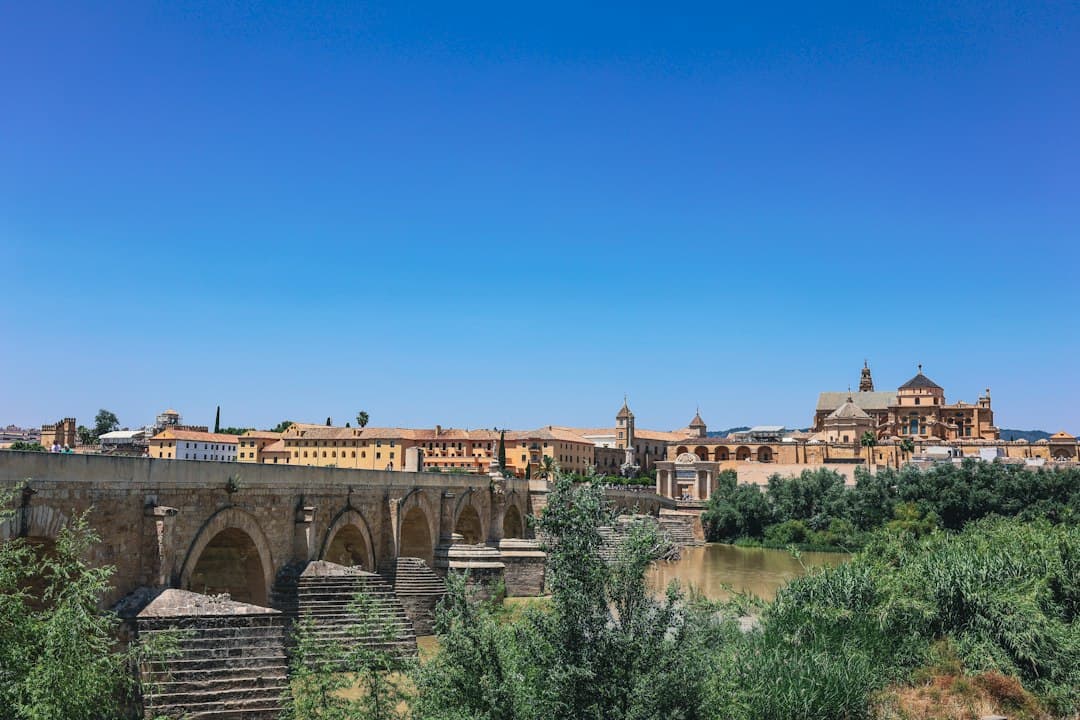
The Calahorra Tower, of Arab origin, had a defensive function and stands at one end of the Roman bridge[3]. Cross the bridge at sunset: the view of the Guadalquivir with the mosque in the background is dazzling, according to Renfe[3].
About ten kilometers from the city lies Medina Azahara, the former capital of the Caliphate, the largest archaeological site in Spain and a UNESCO World Heritage Site since 2018[1]. A bus line connects Córdoba to Medina Azahara, with daily departures from Tuesday to Sunday at 10:00 am and 10:45 am[1].
Patios, May Festivals, and Atmosphere
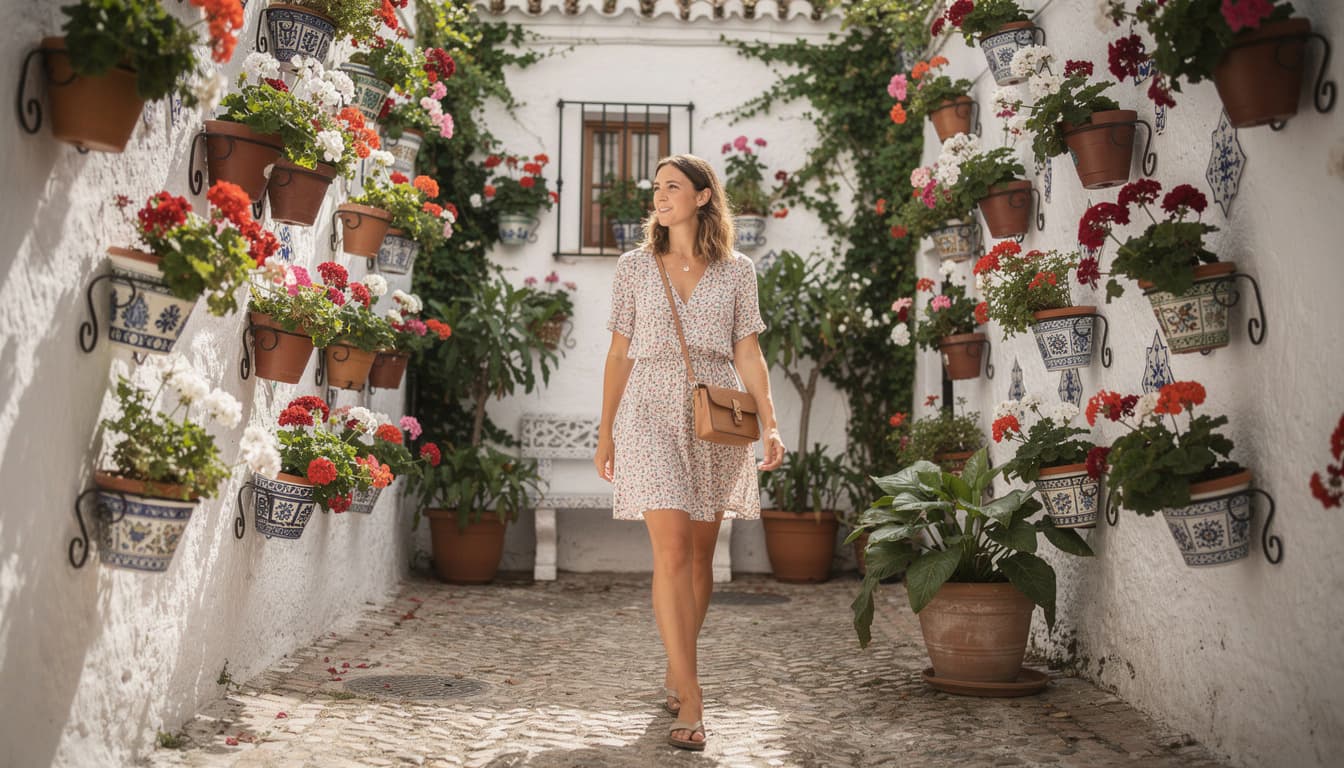
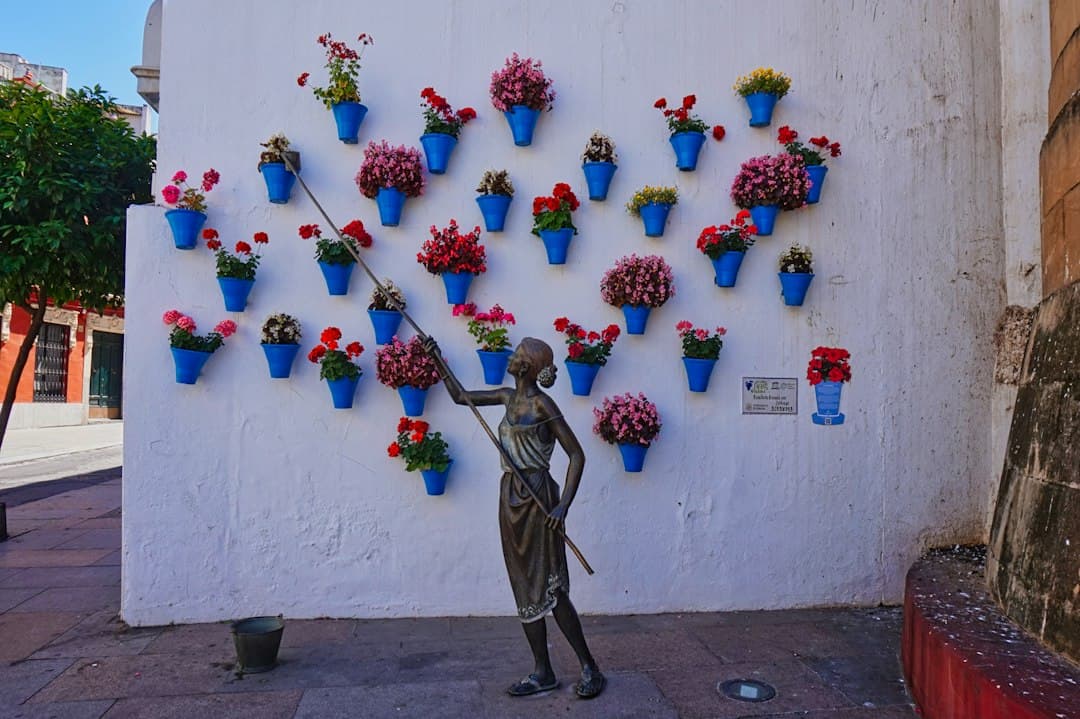
Spring is Córdoba's season par excellence: the scent of orange blossom and jasmine accompanies the city constantly, especially in May, rich in traditional festivals[1]. The Festival of the Patios, listed as World Heritage, is its heart; in May there are also the Crosses of May, the Battle of Flowers, and the competition for Grilles and Balconies[1]. During the Festival of the Patios, residents decorate their private courtyards with flowers to compete for the prize for the most beautiful patio[6].
At this time of year, the city is decked out in flowers, open-air flamenco shows are staged, and a festive atmosphere fills the streets; the month ends with the Córdoba fair[1]. The neighborhoods of San Basilio, Alcázar Viejo and Santa Marina are home to the most beautiful patios, and entry is generally free there during the festival[4].
At the Table, at the Tablao, at the Arab Bath
For tapas, the best-known neighborhoods are the old town, San Lorenzo, San Andrés and Santa Marina[1]. Here are the specialties to try:
- salmorejo, a cold soup made mainly from tomatoes[1];
- flamenquín, a rolled breaded pork loin[1];
- eggplant with honey[1];
- mazamorra, a cold soup made with almonds[1];
- Iberian ham from Los Pedroches, Zuheros cheese and Montilla-Moriles wine[1].

You can catch a flamenco show at a tablao, discover equestrian art at the Royal Stables, and unwind after a walk in an Arab bath[1]. To have a drink or eat with locals, the Plaza de la Corredera is a good meeting spot[3].
When to Go and How Long to Plan For
Spring (March to May) is the best season, but Holy Week and May inevitably draw crowds[7]. September and October are a second spring, the best months according to Lonely Planet[7]. In summer, temperatures exceed 30 °C and reach 40 °C in July[7].
To see the highlights, plan at least two full days[4]. One day covers the essentials of the historic center, including the Mosque-Cathedral and the Jewish Quarter; two days give you time to explore the patios and the Alcázar at a more relaxed pace and stroll along the Guadalquivir[4].
A third day opens up the less touristy neighborhoods and the museums[4]. Add another day if you also want to explore the surroundings, such as Medina Azahara[4].
Getting There and Getting Around
Córdoba's train station is less than two kilometers from the Mosque-Cathedral, a little over 20 minutes on foot, and several bus lines run to the city center[1]. As the historic center is largely pedestrian, leave your car on the outskirts[4].
Getaway Checklist
- Book at least two full days, or three if you want the less touristy neighborhoods and the museums[4].
- Aim for spring or September-October; avoid the July heat peaks[7].
- If you visit in May, expect crowds and enjoy the patios, often free to enter during the festival[7][4].
- Save sunset for the Roman Bridge[3].
- Set aside a half-day or full day for Medina Azahara, by bus from Tuesday to Sunday[1].
- To place Córdoba within a longer trip, read "Spain: The Essentials, Region by Region."
This article covers the essentials to help you prepare your getaway. To plan the visit in detail, check opening hours, ticket prices and monument reservations with the city's tourist office.
Going Further
- Spain: The Essentials, Region by Region
- Seville: What to See, What to Eat and How to Plan Your Stay
- Granada and the Alhambra: What to See, What to Do and How to Plan
- Valencia: What to See and Do Between the Old Town, Beaches and the Albufera
Sources
- 1.^ abcdefghijklmnopqrspain.info — Tourism in Córdoba. What to see | spain.info: “It has a monumental historic centre, a UNESCO World Heritage Site, dotted with small alleyways where you’ll want to linger, flower-filled inner courtyards, pleasant squares and lively taverns where you can catch a beautiful flamenco show or taste the local cuisine.” ; “A city that reflects its Roman past and the coexistence of Christian, Islamic and Jewish cultures throughout its history.” ; “A walk will take you through a maze of narrow streets (don’t miss Calle de la Luna and Calle de las Flores), squares, fountains and patios decorated with flowers.” https://www.spain.info/fr/destination/cordoue/ (accessed November 17, 2026)
- 2.^ abcderoutard.com — Visit Córdoba: plan your stay and trip | Routard.com: “This tolerance led to such growth that Córdoba, with 1 million inhabitants, became the largest city in Europe in the 10th century!” ; “The great minds of the Middle Ages flocked there, drawn by the radiance of the arts and sciences. Some were even born there, such as Averroes and Maimonides…” ; “The Judería surrounds the Mezquita: it is the former Jewish quarter, and also the oldest quarter in Córdoba.” https://www.routard.com/fr/guide/europe/espagne/andalousie/region-de-cordoue/cordoba-cordoue (accessed November 17, 2026)
- 3.^ abcdefghrenfe.com — Discover Córdoba: what to see and do in the city | Renfe: “The Mosque-Cathedral of Córdoba is the city’s most iconic monument and one of its most magical places.” ; “You won’t know what to admire first: its 1,300 columns, its 360 arches of white and red stone, the light streaming in through its stained glass, or the layering of artistic styles.” ; “And of course, don’t forget the Patio de los Naranjos!” https://www.renfe.com/es/fr/inspirate/destinos/cordoba (accessed November 17, 2026)
Show 4 more sourcesShow less
- 4.^ abcdefghijryo.co — Visit Córdoba: 17 must-see spots with audio guide: “The Mosque-Cathedral remains the undisputed jewel, with its forest of columns and iconic two-tone arches.” ; “The Alcázar of the Christian Kings offers magnificent gardens and panoramic views from its towers.” ; “The San Basilio, Alcázar Viejo and Santa Marina neighborhoods are home to the most beautiful patios, and entry is generally free during the festival.” https://ryo.co/en/destinations/espagne/ryocity/cordoue/ (accessed November 17, 2026)
- 5.^ abcouigo.com — Córdoba train Station | Ouigo low-cost train: “Built in three stages, Caliphal, Renaissance and Baroque, the current Baroque bell tower hides and preserves the first minaret ever built in the West, erected by Abd al-Rahman III.” ; “One of the mosque’s curiosities is that its mihrab, the niche that indicates the qibla, the direction of the Kaaba in Mecca, is not oriented southeast as it should be, but south.” https://www.ouigo.com/es/en/cordoba-station (accessed November 17, 2026)
- 6.^lonelyplanet.com — The best time to visit Andalusia - Lonely Planet: “In May, you can experience the Festival of the Patios in Córdoba, when the city’s residents decorate their private courtyards with flowers to compete for the prize for the most beautiful patio.” https://www.lonelyplanet.com/articles/best-time-to-visit-andalucia (accessed November 17, 2026)
- 7.^ abcdelonelyplanet.es — When to go to Córdoba - Lonely Planet: “Spring (March–May): the best time to visit the city, although crowds are guaranteed during Holy Week and in May.” ; “Autumn (September–November): September and October are a second spring, the best months.” ; “Summer (June–August): temperatures exceed 30 °C and, in July, 40 °C.” https://www.lonelyplanet.es/europa/espana/andalucia/cordoba/clima (accessed November 17, 2026)