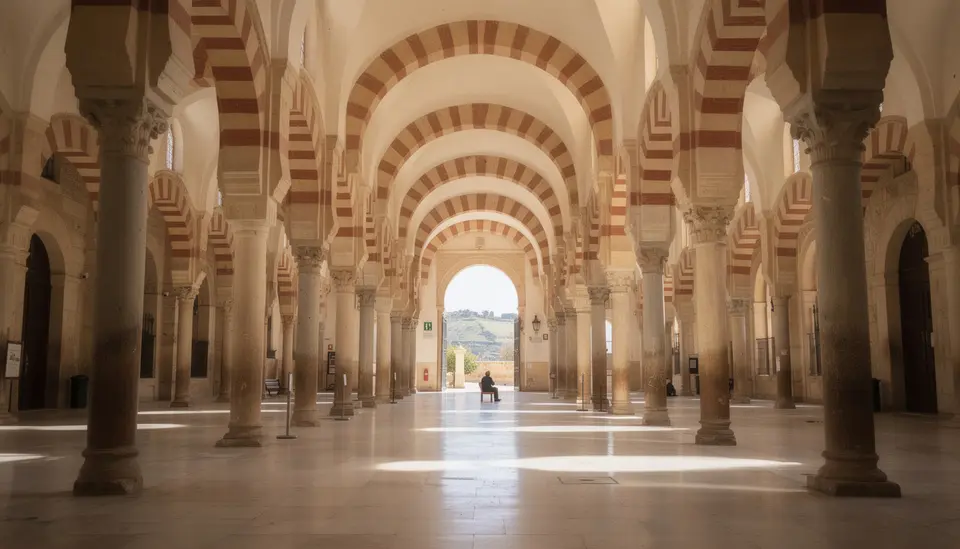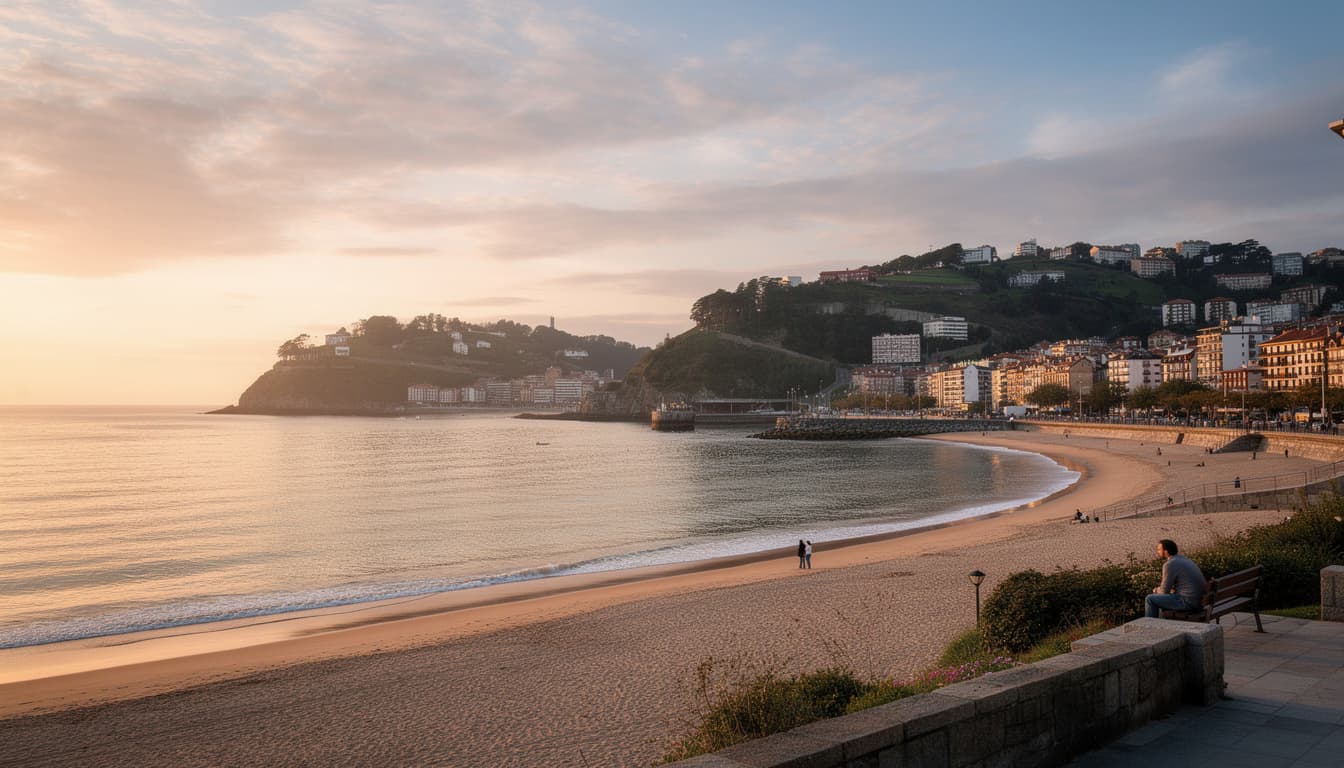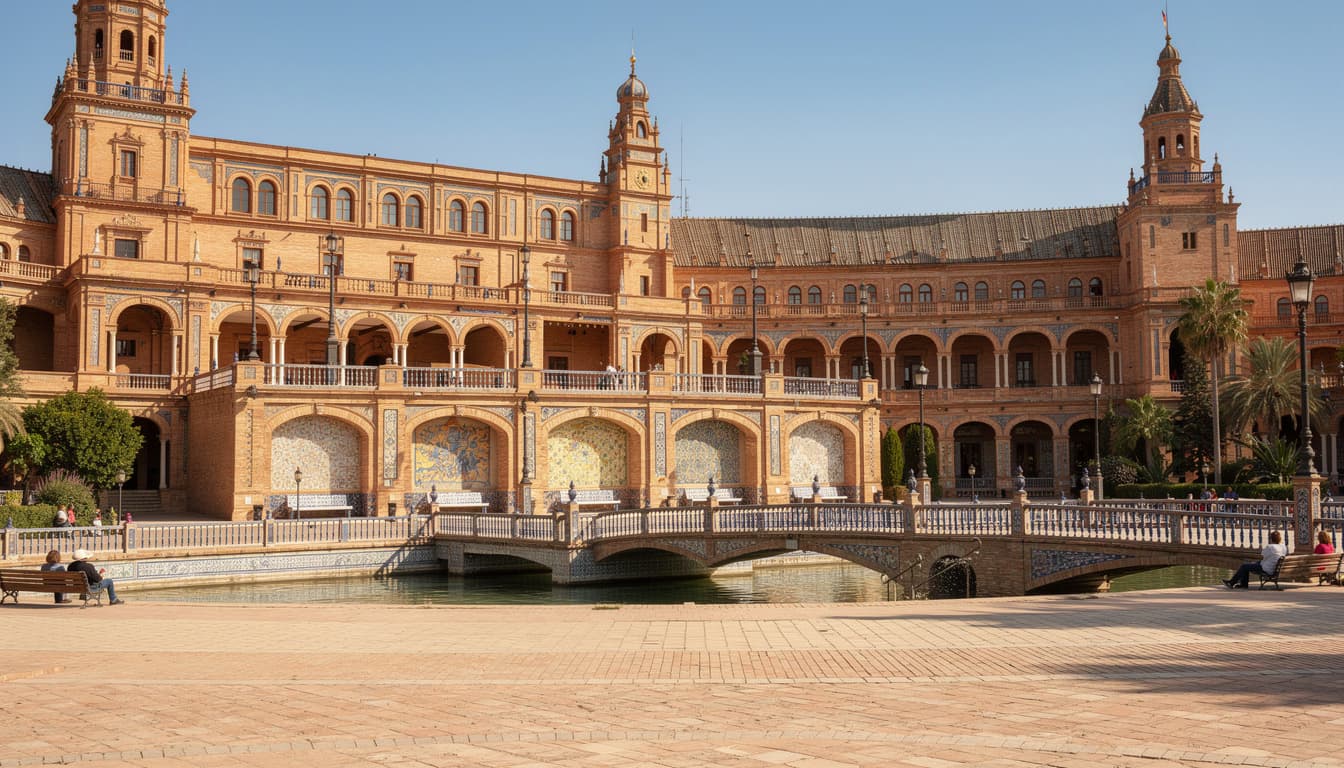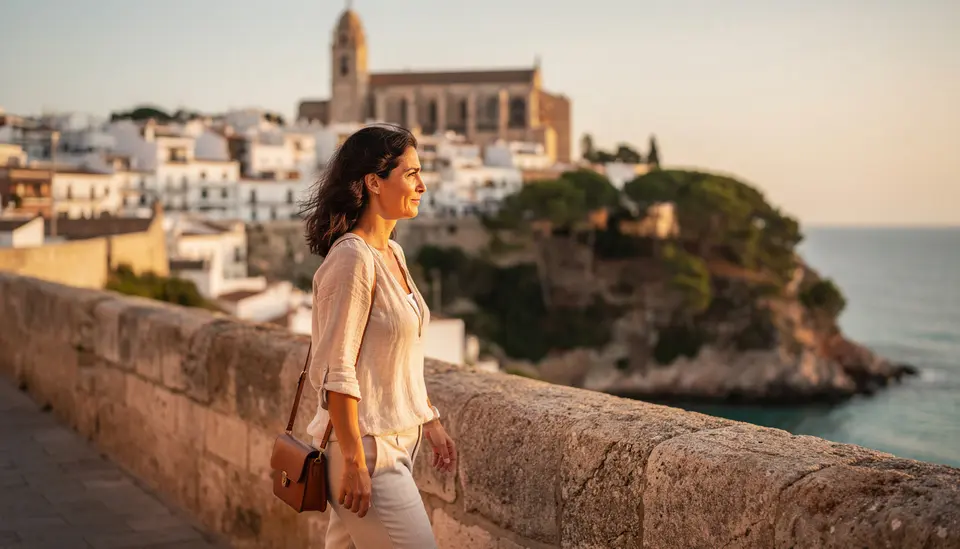
Valencia combines a historic center, futuristic architecture, long beaches and a lake for sunsets. This article helps you plan your days: the monuments to see first, what to taste, where to get some fresh air, and how the city lives during the Fallas. You'll also learn how to get there and get around, and which traffic restriction applies to the center.
Valencia at a glance: why go
Valencia is known as a city of contrasts, blending the charm of its historic center with futuristic buildings[1]. You'll find long beaches, monuments ranging from Gothic to Baroque, and heritage protected by UNESCO[2].
It's a perfect destination for a short getaway[1], and you can easily stretch it out at your own pace. As for the weather, the city enjoys more than 300 sunny days a year[1].
The historic center: cathedral, towers and Lonja de la Seda
Valencia is easy to explore on foot[1]. The natural starting point is Plaza de la Reina, with the cathedral and its Miguelete tower, which offers a superb view after 207 steps[1]. The cathedral keeps Baroque, Romanesque and Gothic portals that you really shouldn't miss[2].
On Thursday at noon, don't miss the Water Tribunal: every Thursday at noon, on the cathedral's square, this institution meets, a traditional ritual protected by UNESCO[2]. For centuries it has settled irrigation disputes among farmers[3].
Just around the corner, the Lonja de la Seda, a former silk exchange listed as a UNESCO World Heritage Site, is a gem of secular Gothic architecture and houses a hall with columns of exceptional beauty[2]. Its 15th-century building reflects the commercial splendor of medieval Valencia[3]. Its "patio de los Naranjos" (courtyard of the orange trees) is part of the visit[1]. This 15th-century prosperity, built on silk, is also visible in the Velluters neighborhood[3].
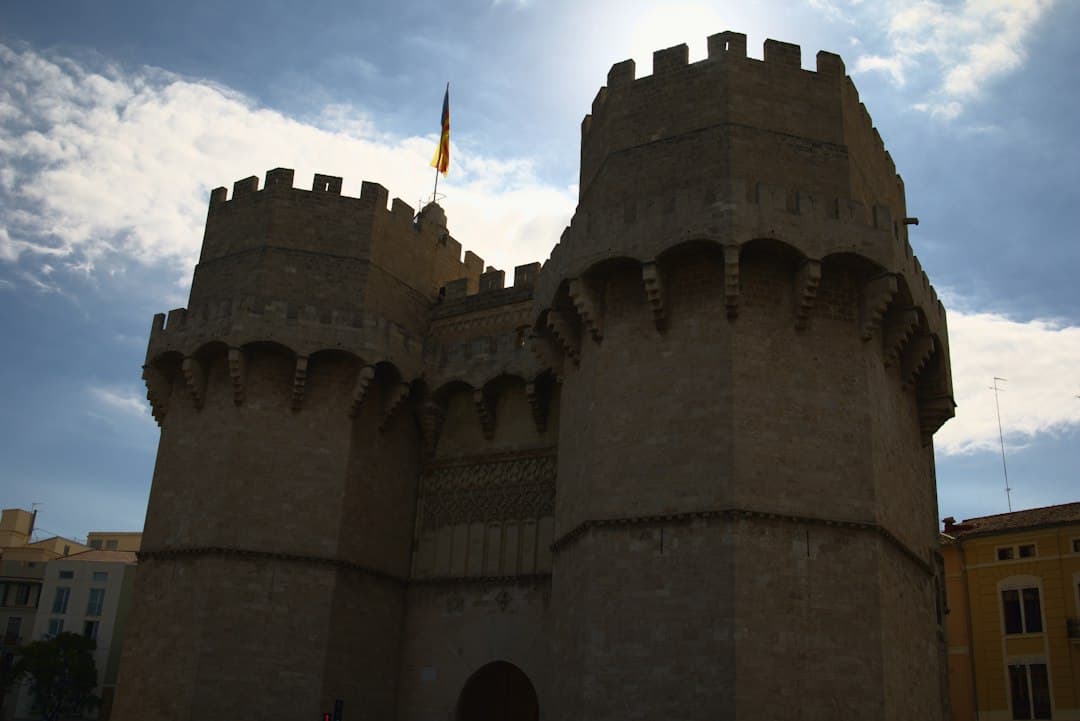
The old city walls, with their Roman, Arab and medieval layout, have preserved two majestic medieval gates: the Serranos and Quart towers[4].
Central Market, paella and Valencian flavors
The modernist Central Market is one of the largest fresh produce markets in Europe[1]. It's a great place to understand what the region puts on the plate.
When it comes to food, paella is the signature dish, and you really must try the authentic version[1]. Since paella was invented here, the authentic version is the one cooked with chicken, rabbit and vegetables[5]. For a restaurant, tradition points to El Palmar, in the heart of the Albufera natural park, to taste the true Valencian paella[4]. Also try the clóchinas and horchata, a drink made from tiger nuts[1].
In the early evening, sit down at a café terrace or choose an innovative restaurant, even one with a Michelin star[1]. The nightlife in the Carmen neighborhood is worth experiencing, and so is the scene in trendy newer areas, a "paradise for foodies," like Ruzafa[1].
City of Arts and Sciences and museums
A little removed from the center, the City of Arts and Sciences showcases Valencia's most modern side. Designed by Santiago Calatrava and Félix Candela, the complex houses Oceanogràfic, the largest aquarium in Europe[1].
For art, several options depending on your tastes:
- The Museum of Fine Arts, the second-largest art gallery in Spain, with works by Sorolla, Goya and Velázquez; admission is free[3].
- The National Museum of Ceramics, housed in the Palace of the Marquis of Dos Aguas, with its spectacular alabaster-carved facade[3].
- The Hortensia Herrero Art Center, set in a 17th-century former palace, which exhibits works by Joan Miró, David Hockney and Anselm Kiefer, among others[5].
- The IVAM, among other museums, and many surprising corners with street art[1].
Turia Gardens, beaches and Albufera: outdoor life
The Turia Gardens, the city's most famous park, stretch 9 km to explore on foot or by bike[2], along the former riverbed, past museums, bridges and monuments[5].
Valencia has immense urban beaches full of life, such as La Malvarrosa and El Cabañal, as well as more natural stretches of coast, next to a spectacular wetland, such as El Saler or La Devesa[2]. La Malvarrosa, with its fine golden sand, recalls the famous paintings of Sorolla[1]. Eating a paella facing the sea is one of the city's pleasures[1].
To end the day, Albufera is a navigable lake close to the sea, known as the “mirror of the sun,” where the sunset is simply incredible[1]. You can sail on it at dusk and watch the sky melt into the water[5]. If you're traveling with family, Bioparc is another outdoor option[1].

Festivals and Culture: The Fallas and Traditions
The Fallas are celebrated from March 15 to 19 and are inscribed by UNESCO on the Representative List of the Intangible Cultural Heritage of Humanity[3]. They completely transform the city, to the rhythm of music, light, and tradition[4]. On the program: mascletàs, ingeniously crafted monuments, the Offering of Flowers, street parties, and chocolate buñuelos at dawn[5]. The Cremà ritual, in which the monuments are burned, closes the festivities[4]. If you're staying in Valencia during this period, expect the city to live entirely to the rhythm of the festival.
Another tradition recognized by UNESCO: manual bell ringing, still practiced today, notably at the Miguelete tower or the Church of the Santos Juanes[3]. To understand the Fallas from the inside, a museum displays ninots, the figures saved from the fire[3].
When to Go and How to Plan
Valencia is easy to visit: the center is best explored on foot[1], and the Turia Gardens are best covered by bike[2]. If you're aiming for the Fallas, they take place from March 15 to 19[3].
If you plan to see several sights, the Valencia Tourist Card is available. It comes in a package including the City of Arts and Sciences, Bioparc, and the tourist bus[5].
Good to Know Before You Go
Much of the city center is designated a low-emission zone, where traffic and parking are restricted. These restrictions also apply to vehicles registered abroad[1]. If you're coming by car or motorcycle, check the Valencia city council website before you leave. If your vehicle carries an environmental label from another country, the website of the DGT, Spain's traffic authority, publishes an equivalence table for the classifications of European Union countries[1].
The city also invites visitors to become part of local life and to enjoy the destination with respect for people, public spaces, and the natural environment[6]. Among the recommendations in its Responsible Tourist Decalogue: avoid noise and disruptive behavior, support local shops and craftsmanship, protect heritage, and favor sustainable transport[6].
Key Takeaways for Planning Your Days
- Cathedral, Miguelete, and Lonja de la Seda in the morning, linked together on foot.
- Mercado Central, then a paella or clóchinas for lunch.
- City of Arts and Sciences or a museum, depending on your interests, in the afternoon.
- Turia Gardens by bike, or the Malvarrosa beach.
- Sunset over Albufera, by boat if possible.
- For the Fallas, March 15 to 19: a city in festival mode, so plan ahead.
- Traveling by car: check the low-emission zone before entering the center.
To Explore Further
- Spain: The Essential Sights, Region by Region
- Barcelona: What to See and Do, from Gaudí to the Beaches
- Seville: What to See, What to Eat, and How to Plan Your Stay
- Salamanca: What to See and Do in the City of Gold and Knowledge
Sources
- 1.^ abcdefghijklmnopqrstspain.info — Tourism in Valencia. What to See | spain.info: “A city of contrasts that blends the charm of its historic center with futuristic architecture.”; “Valencia, one of the most welcoming cities in Spain, is perfect for a few-day getaway.”; “Don't forget that Valencia enjoys more than 300 days of sunshine a year!” https://www.spain.info/fr/destination/valence/ (accessed November 17, 2026)
- 2.^ abcdefgcomunitatvalenciana.com — Discover València - Comunitat Valenciana: “València is a city with huge beaches where you can also admire monuments ranging from Gothic to Baroque. You will discover a heritage protected by UNESCO.” ; “The cathedral houses Baroque, Romanesque and Gothic doors that you absolutely must see!” ; “On the cathedral square, every Thursday at noon, you can watch the celebration of the Water Tribunal of the Valencian plain, an institution and a traditional ritual protected by UNESCO.” https://www.comunitatvalenciana.com/fr/valencia/valencia (accessed November 17, 2026)
- 3.^ abcdefghivisitvalencia.com — Historical Places in Valencia Spain | Historical Sites: “For centuries, this tribunal has settled irrigation disputes between farmers.” ; “This impressive 15th-century building reflects the commercial splendor of medieval Valencia; UNESCO declared it a World Heritage Site in 1996.” ; “Monuments such as the Lonja de la Seda, the cathedral or the Velluters quarter reflect an era of prosperity tied to trade and silk.” https://www.visitvalencia.com/en/what-to-do-valencia/valencian-culture (accessed November 17, 2026)
Show 3 more sourcesShow less
- 4.^ abcdcomunitatvalenciana.com — València: Discover What to See - Comunitat Valenciana: “The old city walls of València, with their Roman, Arab and medieval layout, still preserve parts of their stretches in various places, along with two majestic medieval gates: the Serranos and Quart towers.” ; “Tradition calls for a visit to El Palmar, in the heart of the Albufera natural park, to taste the authentic Valencian paella.” ; “The Fallas of València, declared Intangible Cultural Heritage of Humanity by UNESCO, completely transform the city to the rhythm of music, light and tradition.” https://www.comunitatvalenciana.com/es/valencia/valencia (accessed November 17, 2026)
- 5.^ abcdefvisitvalencia.com — Tourism in Valencia | Visit Valencia: “Because paella was invented here, you can’t pass through Valencia without tasting the authentic version: the one cooked with chicken, rabbit and vegetables.” ; “Housed in a 17th-century former palace, the Hortensia Herrero Art Centre is a feast for the eyes of any art lover. The building is a jewel in itself, but the works by Joan Miró, David Hockney and Anselm Kiefer make it truly unique.” ; “9 km of gardens along the former riverbed, with museums, bridges and monuments.” https://www.visitvalencia.com/fr (accessed November 17, 2026)
- 6.^ abvalencia.es — Featured News | Valencia City Council: “That is why we invite tourists to embrace our local way of life and enjoy the destination, always with full respect for people, public spaces and our natural environment, the councilor stated.” ; “Respect for neighbors and rest: keep living together harmoniously by avoiding noise and uncivil behavior. Support for the local economy: directly support neighborhood shops, local crafts and local restaurants. Care for the environment and heritage: protect historic heritage, use water and energy responsibly and favor sustainable transport.” https://www.valencia.es/cas/actualidad/-/content/dec%C3%A1logo-turista-responsable-val%C3%A8ncia (accessed November 17, 2026)