Ibiza is about more than its clubs. The island has four UNESCO-listed sites, salt flats, coves and whitewashed villages. This article helps you plan a stay built around heritage, nature and local traditions. You'll also learn when to go, how many days to plan for and how to get around once you're there.
Why Ibiza is worth a visit beyond the party
Ibiza is often associated with endless nights and world-famous DJs, but the island is far more than that[1]. The official Spanish tourism website sums up the contrast well: Ibiza can offer “the most exciting nightlife in the world” alongside a town listed as a UNESCO World Heritage Site, with biodiversity reserves[2].
The island is inscribed on the World Heritage List under the name “Ibiza, Biodiversity and Culture.” It brings together four sites: Dalt Vila, the Punic necropolis of Puig des Molins, the Phoenician settlement of Sa Caleta and the posidonia seagrass meadows[3]. Add villages, coves, markets and historic sites within short distances of each other, and you have plenty to fill a stay without spending a single night in a club.
History and culture: more than two thousand years of layers
In the 7th century BCE, the Phoenicians founded Ibosim, the future Ibiza[4]. Since then, the island has remained a strategic point in the Mediterranean. Its heritage is Phoenician, Roman, Islamic and Christian, the legacy of a crossroads that has known how to preserve its essence[5].
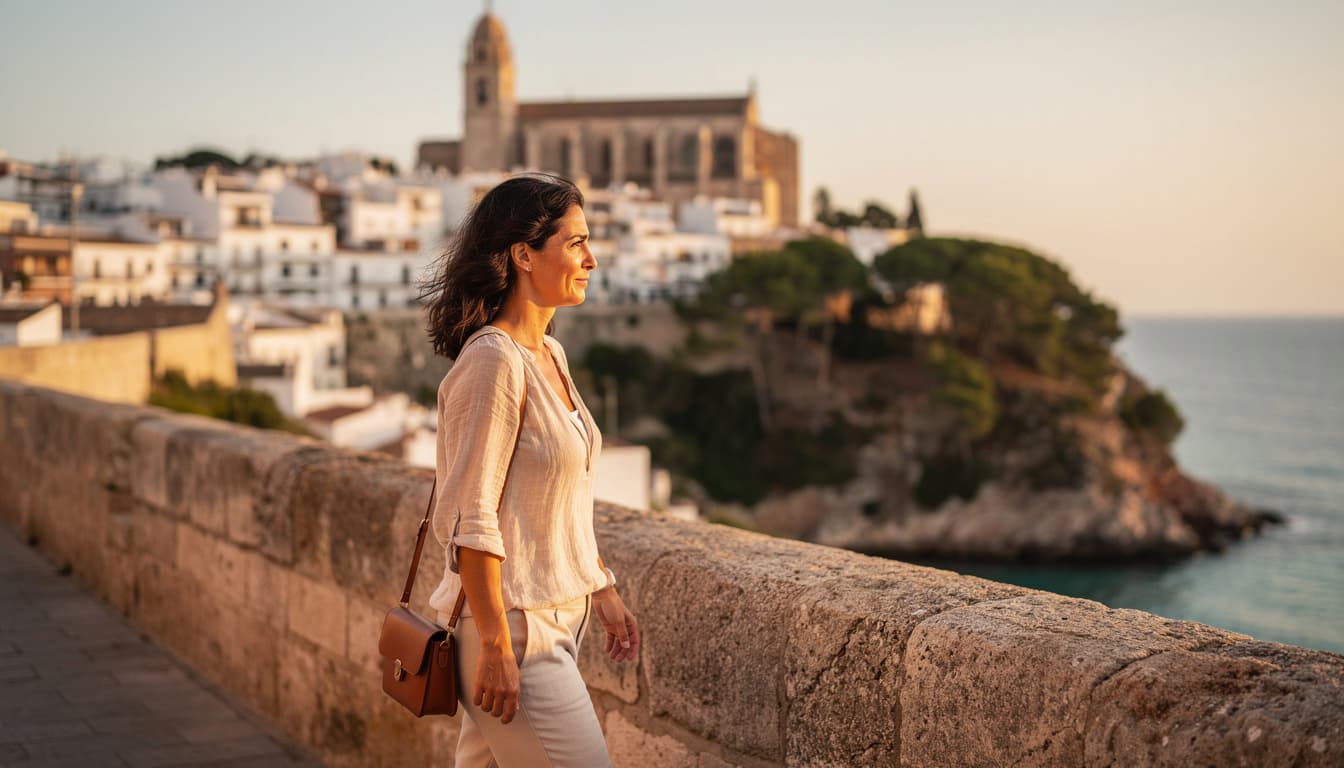
This history is visible in the landscape. Archaeological sites, the defensive towers that watch over the coast, rural churches, traditional villages and farmhouse architecture help you understand how the island has evolved and how closely it is tied to its environment[6]. The churches, built on high points, were also meeting places and refuges for scattered communities; their lime-washed facades and sturdy forms make them recognizable from afar. Sant Miquel, Sant Joan, Santa Agnès, Sant Josep and Puig de Missa are among the most iconic[6].
To go deeper, several places help you understand Ibiza's role in the Mediterranean: the Archaeological Museum of Ibiza and Formentera, the Puig des Molins monographic museum, the Can Ros ethnographic museum, the Sa Caleta interpretation center and the Madina Yabisa center[3].
To see and experience: Dalt Vila and the UNESCO sites
Dalt Vila, the old town of Eivissa
Dalt Vila was the first cultural property in Ibiza to receive UNESCO status, in 1999[7]. Its fortifications are a remarkable example of Renaissance military architecture. Designed by the Italian engineer Giovanni Battista Calvi, they form seven arrow-shaped bastions around a perimeter of nearly two kilometers[7]. Inside, a network of winding streets and alleys, squares and historic buildings can be discovered on your own or on a guided tour[7].
This fortified quarter, with its stone pedestrian streets and its 16th-century ramparts, was originally founded by the Phoenicians[8]. To see it at its liveliest, visit in the evening[9].
Puig des Molins and Sa Caleta
The Punic necropolis of Puig des Molins is the largest and best-preserved in the entire Mediterranean. An estimated 3,000 tombs are counted there, of which some 340 are visible from the outside[7].
On the southwest coast, about 10 km from Eivissa, the promontory of Sa Caleta hosts a settlement founded around 650 BCE[7]. The colonists worked the natural salt pans; excavations have also revealed fishing, baking, weaving and metalworking[7]. The remains are fenced off and closed to the public, but the site is worth the trip for its views[7].
The posidonia seagrass meadows
The fourth listed site, the posidonia seagrass meadows, plays a vital role in the ecosystem: they oxygenate and filter the water, reduce the erosive force of waves and thereby protect the archipelago's beaches[7].
To see and experience: nature, beaches and coves
The southeast of the island is organized around the Ses Salines natural park, a protected area of pine-covered hills, pale beaches and Posidonia meadows that stretch out to Formentera[8]. There you'll find vast salt pans said to be 2,000 years old, where pink flamingos can be seen wading around from roughly August to October[8]. The beaches of Ses Salines and Es Cavallet lie within the reserve: a few beach bars, pines along the edge and a long strip of golden sand[8].
Along the coast, the official Spanish tourism website highlights Cala d'Hort, facing the Es Vedrà natural reserve, and Es Caló d'es Moro, which offers one of the most admired sunsets on the island[2]. For sunset, the most popular spots are Punta Galera, Cap Negret, the Savinar lookout and the area around Cala Comte[10].
When it comes to activities, the island is well suited to hiking, cycling, kayaking, paddleboarding and scenic routes[10]. Marked trails cross preserved valleys and rural villages, all the way to Sa Talaia, the island's highest peak at 475 m[8].
If you have time, a boat trip to Formentera is often presented as a must-do during a stay in Ibiza[11].
To see and experience: villages, markets and traditions
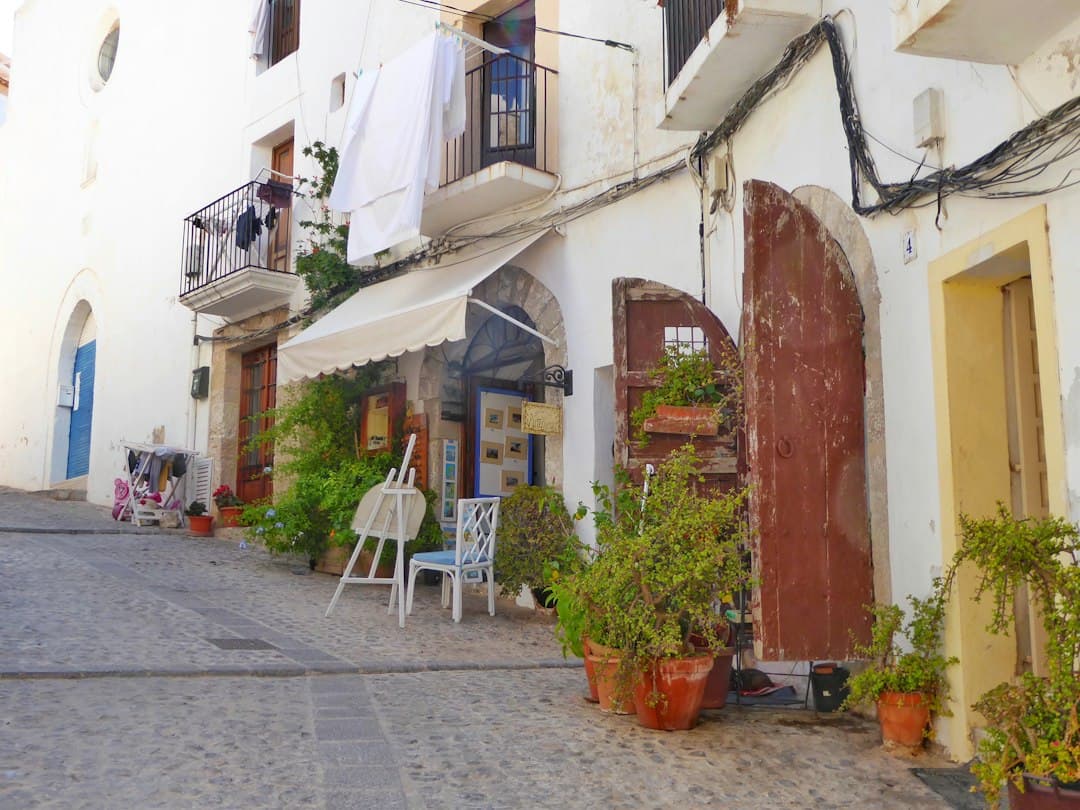
To the east, Santa Eulària des Riu is the island's third-largest town and is said to have Roman roots. Above it, Puig de Missa is a small old white village crowned by a 16th-century fortified church, where residents once took refuge during pirate raids[8]. The ethnographic museum occupies a 300-year-old casa payesa[8]. Other villages often feel similar: artisans, a typical square, a fortified church and small traditional or trendy cafés[12].
Markets are open for much of the year. The best known include Las Dalias, the hippie market at Punta Arabí, and the craft markets of Sant Joan and Sant Miquel[10]. Las Dalias is one of the few that stays open all year round[13].
On the traditions side, the Ball Pagès is one of the island's oldest and most emblematic, declared an Asset of Cultural Interest[14]. At the table, traditional dishes include bullit de peix (boiled fish with potatoes), sofrit pagès, amanida pagesa and flaó, an Ibizan cheesecake, along with the Herbes Eivissenques liqueur and local wines[10]. In town, Mediterranean seafood restaurants are worth trying[15].
When to go and how long to plan for
May, June and September are considered the ideal months for most travelers: it's warm, the sea is pleasant and the island is lively without being overwhelming[16]. July and August are peak season, with the biggest parties, the highest temperatures and the highest prices[16].
Outside summer, the tourist office describes spring and autumn as ideal for nature, hiking, cycling and local cuisine, and winter as authentic, peaceful and cultural[10]. The climate is Mediterranean with strong sunshine year-round; summers are hot and dry, often above 30 °C, and rain is fairly frequent in October and November[4].
For length of stay, the tourist office recommends 4 to 7 days to explore several areas by combining beaches, villages, heritage, nature and gastronomy, while also considering the island suitable for short weekend trips[10]. Its general Spanish portal instead suggests 7 to 10 days to enjoy the different areas at a relaxed pace[14]. If you're aiming for a digital nomad rhythm, the second range leaves more room.
Getting there and getting around the island
From the airport, bus line L10 serves Eivissa every 15 to 20 minutes between 6:20 am and 11:50 pm[4]. Ibiza has no train line, and some areas remain hard to reach without a private vehicle[4].
The island has a modern public bus network, taxis, private transport services, and car and scooter rental companies[10]. Eivissa is the best-served town for public transport, and an intercity network connects the main villages, such as Santa Eulària, Sant Antoni or Sant Josep[4]. Beach and nightlife lines run seasonally[17]. Taxis are easy to find in town and in tourist areas; a car is very convenient, since distances are short and roads well maintained, and cycling suits short trips around Eivissa[4].
Key takeaways and things to watch out for before you go
- Before bringing a vehicle, check the island's vehicle entry rules, published on ibizacircular.es[10].
- If you book private transport, make sure it displays the “Verified Transport” seal from the Island Council of Eivissa[10].
- For heritage sites, plan Dalt Vila and Puig des Molins, then Sa Caleta for the view: the remains there are fenced off[7].
- Time your visit for sunset at Es Caló d'es Moro, Punta Galera, or Cap Negret[2][10].
- Plan Ses Salines between August and October if you want to see the flamingos[8].
This article covers the essentials for choosing what to see. To plan a longer stay, you'll need to go further, especially on choosing the neighborhood where you stay and on budgeting item by item.
Go Further
- Spain: The Essentials, Region by Region
- Tenerife and the Canary Islands: What to See and Do, from Teide to Anaga
- Santiago de Compostela: What to See and Do in a Few Days
- Malaga and the Costa del Sol: What to See and Do, from the Alcazaba to the White Villages
Sources
- 1.^loudavymkrokem.cz — Ibiza, Spain: 25 Tips on What to See and Do: “Ibiza is not just an island of endless parties and world-famous DJs, as many people think.” https://loudavymkrokem.cz/fr/ibiza-espagne (accessed November 9, 2026)
- 2.^ abcspain.info — Ibiza (Island). Discover the best travel plans and what to visit | spain.info: “Ibiza is so authentic that it can combine the most exciting nightlife in the world with a UNESCO World Heritage city and biodiversity reserves.”; “There are many ways to experience Ibiza's coast: the beaches of Cala d'Hort, facing the beautiful Es Vedrà natural reserve, and Es Caló d'es Moro, with one of the island's most admired sunsets.” https://www.spain.info/en/region/ibiza-island/ (accessed November 9, 2026)
- 3.^ aben.ibiza.travel — Historical walks - Ibiza: “Under the World Heritage designation Ibiza, Biodiversity and Culture, the island brings together four emblematic sites: Dalt Vila, the Punic necropolis of Puig des Molins, the Phoenician settlement of Sa Caleta, and the Posidonia oceanica seagrass meadows, considered essential to the Mediterranean ecosystem.”; “Among the most notable sites are the Archaeological Museum of Ibiza and Formentera, the Puig des Molins monographic museum, the Can Ros ethnographic museum, the Sa Caleta interpretation centre, and the Madina Yabisa interpretation centre, which help explain Ibiza's importance as a strategic enclave in the Mediterranean.” https://en.ibiza.travel/to-do/culture-and-heritage/ (accessed November 9, 2026)
Show 14 more sourcesShow less
- 4.^ abcdefguide.en-vols.com — Visiting Ibiza - Guide, practical info, useful addresses: “The island has always attracted visitors: in the 7th century BCE, the Phoenicians founded Ibosim there, the future Ibiza; later, hippies turned it into a paradise refuge.”; “Ibiza has a southern Mediterranean climate and enjoys strong sunshine all year round. Summers are hot and dry, with temperatures often above 30 °C.”; “In October and November, rain is quite frequent.” https://guide.en-vols.com/destination/ibiza/ (accessed November 9, 2026)
- 5.^en.ibiza.travel — Our history - Ibiza: “From its first Phoenician settlements to its Roman, Islamic, and Christian heritage, the island has been a strategic enclave in the Mediterranean, a place of passage and coexistence that has preserved its essence over time.” https://en.ibiza.travel/discover/history/ (accessed November 9, 2026)
- 6.^ abfr.ibiza.travel — Itineraries through history - Ibiza Travel: “Archaeological sites, the defensive towers watching over the coast, the rural churches that shape the landscape, traditional villages, and vernacular architecture help us understand the island's historical evolution and its close link with the environment.”; “Churches such as Sant Miquel, Sant Joan, Santa Agnès, Sant Josep, and Puig de Missa remain among the most recognizable symbols of traditional Ibiza today.” https://fr.ibiza.travel/que-faire/culture-et-patrimoine (accessed November 9, 2026)
- 7.^ abcdefghiibiza-spotlight.com — Ibiza's four UNESCO world heritage sites | Ibiza Spotlight: “Ibiza's first cultural property to receive this status was the old quarter of Ibiza Town, Dalt Vila, in 1999.”; “Designed by the Italian military engineer Giovanni Battista Calvi, the whole structure consists of seven arrowhead-shaped bastions covering a perimeter of nearly two kilometers.”; “Inside lies the Dalt Vila quarter, whose network of winding streets and alleys, squares, and old buildings is full of atmosphere and beauty.” https://www.ibiza-spotlight.com/magazine/2023/09/ibizas-four-unesco-world-heritage-sites (accessed November 9, 2026)
- 8.^ abcdefghlonelyplanet.com — 15 Best Things to Do in Ibiza - Lonely Planet : “With its laundry-draped balconies, pedestrian stone streets and 16th-century ramparts, Dalt Vila, the walled historic quarter of Ibiza Town, was originally founded by the Phoenicians.” ; “It also includes vast salt flats believed to be 2,000 years old, where flocks of flamingos wade through the water roughly from August to October.” ; “Ses Salines beach and its neighbor Es Cavallet sit within the nature reserve; each pairs a few beach bars with pine trees lining a long strip of blond-white sand and crystal-clear turquoise water.” https://www.lonelyplanet.com/articles/top-things-to-do-in-ibiza (accessed November 9, 2026)
- 9.^cntraveler.com — 15 Best Things to Do in Ibiza | Condé Nast Traveler : “Visit in the evening to see this old part of the city at its liveliest.” https://www.cntraveler.com/story/best-things-to-do-ibiza (accessed November 9, 2026)
- 10.^ abcdefghijen.ibiza.travel — Faqs : “Among the most popular sunset spots: Punta Galera, Cap Negret, the des Savinar viewpoint and the area around Cala Comte.” ; “Ibiza is ideal for hiking, cycling, kayaking, paddleboarding and scenic routes.” ; “Among the best known: the Las Dalias market, the Punta Arabí hippie market and the craft markets of Sant Joan and Sant Miquel.” https://en.ibiza.travel/faqs-english/ (accessed November 9, 2026)
- 11.^visitonsibiza.com — Ibiza - Guide de voyage et de tourisme - Visitons Ibiza : “A visit to Formentera is a must on any stay in Ibiza.” https://www.visitonsibiza.com/ (accessed November 9, 2026)
- 12.^routard.com — Ibiza : les incontournables | Que faire, que voir, que visiter ? : “A small town without much mystery but not without charm, with its artisans and its typical village square, the usual fortified church and small traditional or trendy cafés” https://www.routard.com/fr/guide/top/europe/espagne/baleares/ibiza (accessed November 9, 2026)
- 13.^nationalgeographic.fr — Ibiza en famille : guide de la ville | National Geographic | National Geographic : “At Las Dalias, one of the only markets open all year round, there is a space for children with activities and face-painting sessions, as well as a wide choice of food.” https://www.nationalgeographic.fr/voyage/europe-espagne-comment-profiter-un-sejour-en-famille-paisible-a-ibiza-guide (accessed November 9, 2026)
- 14.^ abibiza.travel — Inicio : “The Ball Pagès is one of Ibiza's oldest and most emblematic traditions, declared an Asset of Cultural Interest…” ; “It is recommended to spend between 7 and 10 days to comfortably enjoy the island's different areas and combine beach, villages, heritage, nature and gastronomy.” https://ibiza.travel// (accessed November 9, 2026)
- 15.^vacancesespagne.fr — Vidéo sur Ibiza ville et informations pour des vacances à Ibiza ville : “There is a cuisine for every taste and every budget; but we recommend trying the wonderful Mediterranean seafood restaurants in the town.” https://www.vacancesespagne.fr/Ibiza-ville (accessed November 9, 2026)
- 16.^ abibizaonestop.com — All Things Ibiza – Ibiza One Stop : “May, June and September are considered the ideal months for most travelers, as it is warm, the sea is pleasant and the island is lively without being overwhelming.” ; “July and August are peak season, with the biggest parties, the highest temperatures and the most expensive prices.” https://ibizaonestop.com/fr/collections/all-things-ibiza (accessed November 9, 2026)
- 17.^periodicodeibiza.es — ¿Cómo funciona el autobús en Ibiza: líneas, horarios y precios? : “Beach lines and nightlife lines are seasonal.” https://www.periodicodeibiza.es/pitiusas/que-hacer-en-ibiza/2026/11/05/2743983/como-funciona-autobus-ibiza-lineas-horarios-precios.html (accessed November 9, 2026)