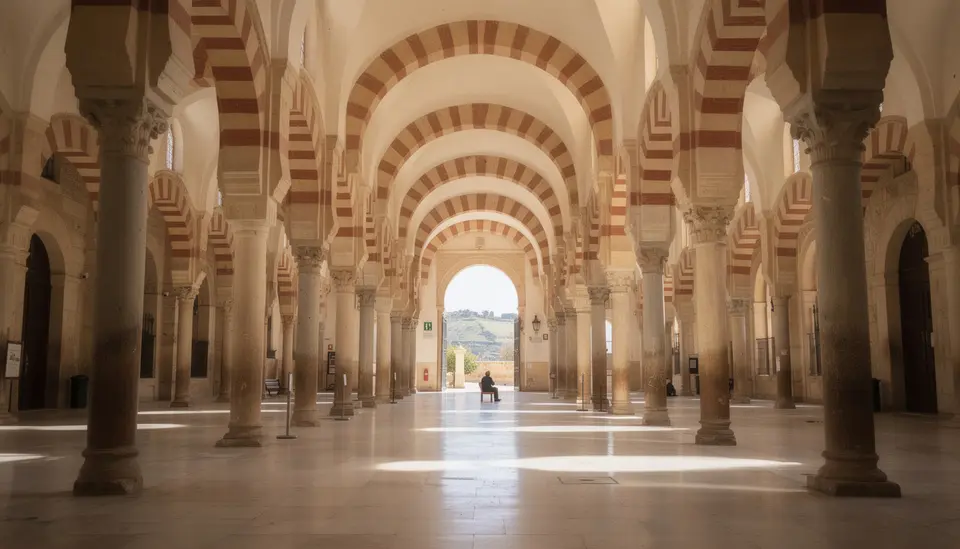
You can get around Seville almost entirely on foot, and its major sites are close to one another. This article helps you choose what to visit, plan two days in an order that makes sense, find flamenco and tapas, and avoid the pitfalls around the main monuments.
Why Seville Leaves a Mark
Many people describe Seville as exceptional, between the grandeur of its monuments, the charm of working-class neighborhoods like Triana, the scent of jasmine in its squares, Spanish guitar, festivals and tapas[1]. You experience it in the streets and in its wide open spaces: the vast Plaza de España, María Luisa Park, or the Setas de Sevilla (Metropol Parasol)[1].
Its big advantage for travelers: the sites are all near one another, and the neighborhoods are easy to reach on foot, so you can wander and soak up their atmosphere[2]. In the old town, most sites are less than 20 minutes' walk from the cathedral[3].
The Landmarks: Alcázar, Cathedral and Giralda
Just a few meters separate the Giralda, the cathedral and the Alcázar[1]. This trio is not to be missed.
The Real Alcázar
Visiting the Alcázar reveals an extraordinary palace complex full of detail[1]. Its vast gardens are dotted with fountains, and the buildings blend Mudéjar, Gothic, Renaissance and Baroque styles, a sign of the palace's long history[2]. It is still a royal residence: the Spanish royal family stays here during official visits to Seville[2]. Together with the cathedral and the Archivo de Indias, it has been a UNESCO World Heritage Site since 1987[3]. If you travel in summer, evening tours and a festival take place in its gardens[1].
The Cathedral and the Giralda
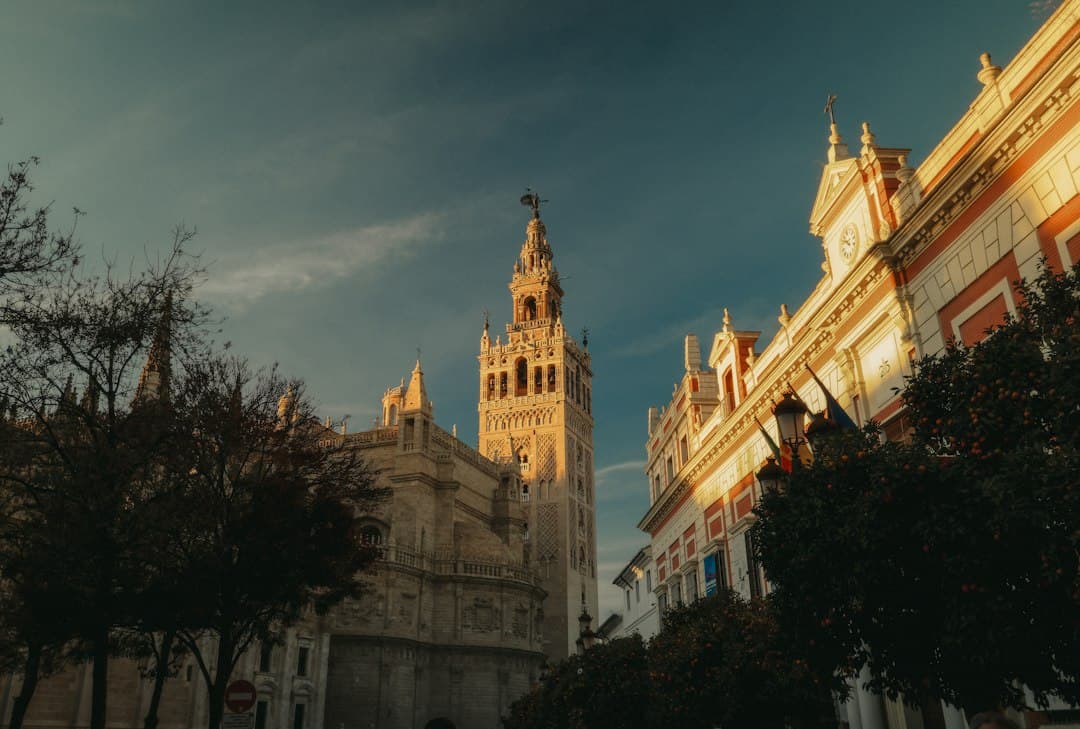
The cathedral is the largest Gothic building in Europe[1]. It houses a vast gilded altarpiece and the tomb of Christopher Columbus[3]. Next to it, the 104-meter-tall Giralda was once the minaret of the Moorish mosque that stood on the same site[2]. It has become a symbol of the city, and its belvedere is one of its main attractions: from the top you get an unbroken view over Seville, with an orange-tree courtyard in the foreground, very typical of Andalusia[1].
Squares, Parks and Architecture
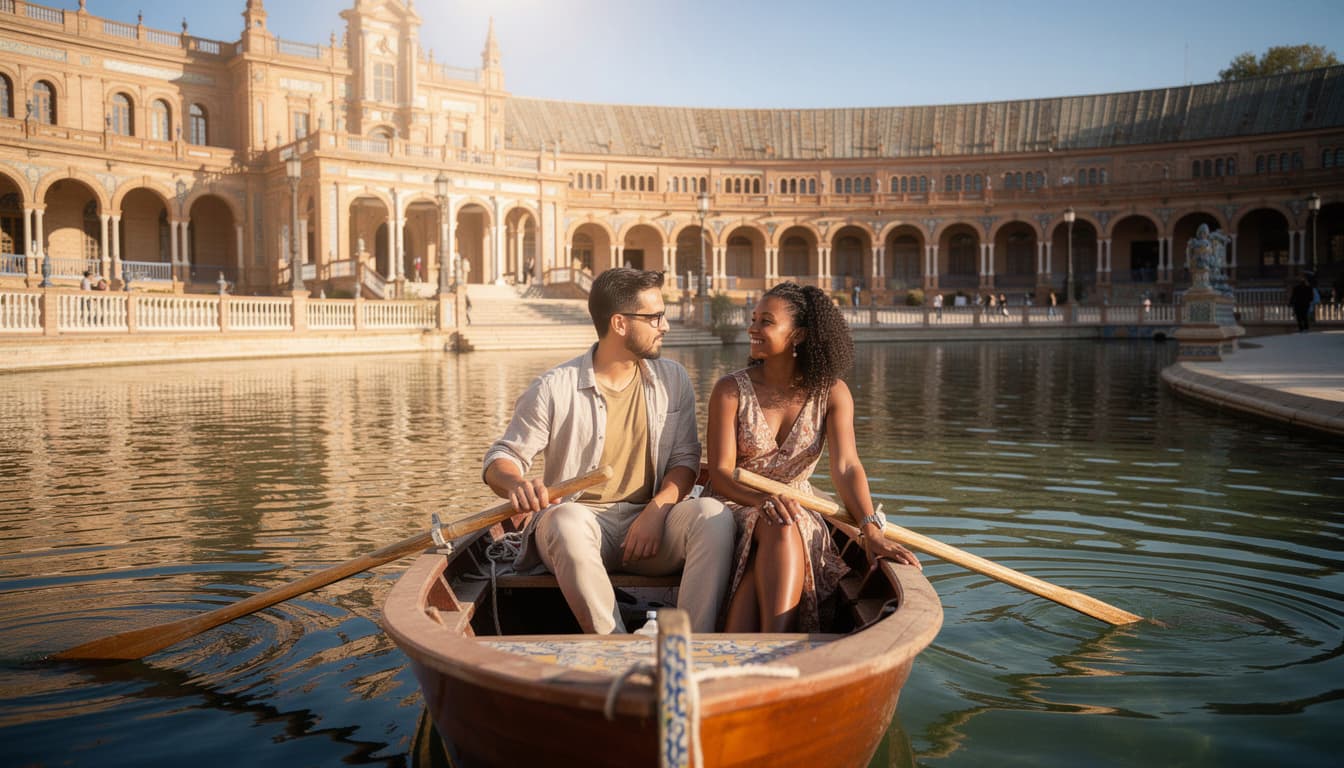
Built for the 1929 Ibero-American Exposition, the Plaza de España forms a vast half-circle of brick and tile arcades around a canal crossed by small bridges, with a tiled alcove for each Spanish province[3]. Entry to the plaza is free[3]. Right next door, María Luisa Park is the city's great green space, with shaded paths, fountains and tiled benches[3]. Go early in the morning or at sunset: in summer, at midday, the square is an oven[3].
For contemporary architecture, the Setas de Sevilla offer a 360° panoramic view from their upper level[2]. On the banks of the Guadalquivir, the Torre del Oro and the Arenal district complete the picture[3].
Neighborhoods to Explore: Santa Cruz, Triana and Beyond
Triana, on the bank of the Guadalquivir, is one of Seville's emblematic places. Of modest origins, the neighborhood is the birthplace of many flamenco singers and dancers, artists, bullfighters and fashion designers[2]. The riverbank is lined with tapas bars, restaurants and tablaos, the venues where flamenco is performed; you reach it via the Triana Bridge[2]. Ceramics shops and craft workshops are plentiful in the neighborhood[1].
For the most authentic Sevillian atmosphere, also explore tapas in the historic center and in sought-after neighborhoods like the Alameda, La Macarena, Nervión, Los Remedios or Triana[1].
Flamenco, Tapas and Traditions
Flamenco is easy to discover in the many tablaos or in the neighborhood peñas[1]. Seville also hosts what may be the most important international gathering of this art, the Biennale[1].
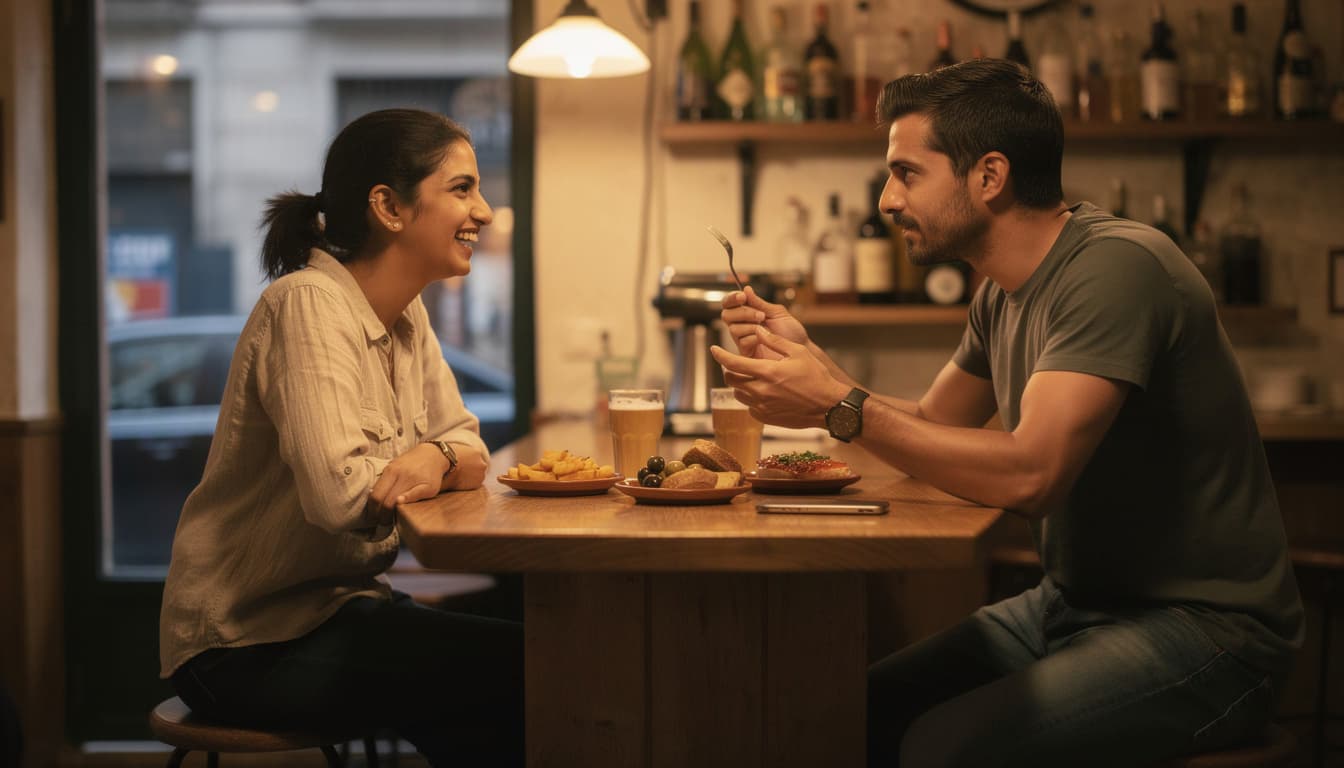
At the table, marinated pescaíto (fried fish), montaditos, the typical snails, a fino (a white wine), a manzanilla (a dry white wine from Andalusia), or a cold beer are must-haves on a day of tapas[1]. Bar-hopping to sample different tapas is a popular custom in the city. To live Seville like a Sevillian, space out your visits, breaking them up with stops at traditional bars and restaurants[2].
Festivals and Calendar
Seville's tradition is reflected in its most internationally known celebrations, the April Fair and Holy Week[1]. The April Fair is all about joy and passion for Andalusian popular art: Spanish guitar, flamenco fashion, and the most festive side of the city[1].
Holy Week is a passionate celebration, rich in moving moments: the processions draw huge crowds, and you can hear a live saeta, a flamenco song dedicated to religious images[1].
Planning Your Stay: Visiting Order and Hours
A two-day itinerary works well[3]:
- Day 1: The Alcázar right at opening, then Santa Cruz and the cathedral with the Giralda; tapas in the Arenal and sunset along the river near the Torre del Oro[3].
- Day 2: Plaza de España and María Luisa Park in the morning, Casa de Pilatos or the Setas in the afternoon, then dinner and a flamenco show in Triana[3].
The Alcázar is open daily from 9:30 am to 7 pm from April 1 to September 30, and from 9:30 am to 5 pm from October 1 to March 31[3]. A general ticket costs €15.50; the reduced rate is €8 for visitors over 65 and students aged 14 to 30, and children up to 13 accompanied by an adult enter free[3]. The Cuarto Real Alto, the royal apartments upstairs, costs €5.50 more and is visited at fixed times[3]. The Alcázar is closed on January 1 and 6, Good Friday, and December 25[3]. Buy online through the official website (alcazarsevilla.org) or at the Patio de Banderas ticket office, which accepts cards only[3].
At the cathedral, the visit begins with the Giralda, which has its own access control; capacity is limited, and the time printed on your ticket is your entry time[4]. The reduced rate is €7 online and €8 at the ticket office (over 65, students up to age 25, among others)[4]. Free admission applies to people from or residing in the Archdiocese of Seville, and to minors up to 13 accompanied by an adult[4]. A free public visit is possible on Sundays, depending on the liturgical calendar, with a ticket to be collected in person at the Puerta del Príncipe window from 5 pm[4]. Hours may change due to worship services and cultural events: check the day's schedule for your visit date[4].
Getting There and Getting Around
By plane, you will land at San Pablo Airport[5]. By train, Santa Justa station is served by high-speed trains from Córdoba, Madrid, Zaragoza, and Barcelona, and from Málaga by AVANT trains[5]. From Madrid, allow about 2 hours 30 to 2 hours 45[3]. The station is about 2 km from the cathedral, roughly a 25-minute walk; bus 32 connects the station to the old town in under 15 minutes[1]. The airport EA bus also stops there[3].
Once there, the historic center is flat and best explored on foot[3]. Tussam buses and the small Metrocentro tram (between Plaza Nueva and San Bernardo) cost €1.40 per ride (as of October 2026)[3]. Seville is one of Spain's best cities for cycling, with long flat bike lanes and the Sevici bike-sharing service; in summer, ride early or late in the day[3]. It is better not to drive in the historic center: narrow streets, many restrictions, and scarce parking[3].
You can also arrive by river: the Guadalquivir is Spain's only navigable river, which allows cruise ships to dock very close to the center, a short walk from María Luisa Park[5].
Traps, Scams, and Things to Watch For
Seville is not a particularly dangerous or exploitative city[6]. Its tourist traps are almost exclusively about value for money, not safety, and each has a simple countermeasure: step away a few streets from the monuments, book tickets through official channels, and politely but firmly decline unsolicited offers[7].
- Fake "skip-the-line" tickets: near the Alcázar and the cathedral, people with no link to the monuments sometimes approach visitors to sell skip-the-line tickets, or claim that the official ticket office is closed or sold out[7]. Official tickets are only sold on the monuments' own websites or through authorized resellers; never buy from someone who approaches you on the street[7]. If you're told that the official booking isn't available, check directly on the monument's website[7].
- Discounted ticket for cash: walk away. Legitimate discounted tickets are not sold this way, and there is no reliable recourse if the ticket turns out to be invalid at the entrance gate[6].
- Restaurants hugging the monuments: on Avenida de la Constitución, in the most photographed alleys of Santa Cruz and near the Alcázar gates, photo menus in five languages and touts at the door go hand in hand with prices 40 to 60% above the local average for food that is usually mediocre[7]. Walk a few streets away.
- Horse-drawn carriages: rides around the cathedral and Plaza de España are a licensed activity, not a scam, but their high price for a short ride often makes for poor value[7]. If you take one, agree on the route and price before setting off[3].
- Taxis: official taxis are white, with a green light and official markings, and use a meter or a fixed fare to the airport[7]. Unlicensed drivers sometimes approach visitors at the airport or at Santa Justa station with a vague or negotiated price: use the official taxi ranks, a licensed taxi app, or a transfer booked in advance, and confirm the fixed fare before getting in[7].
Key takeaways
- Start with the Alcázar when it opens, before the crowds and the heat.
- Book your tickets online, on the monuments' own websites.
- Save Plaza de España and Maria Luisa Park for the start or end of the day.
- Cross the Triana Bridge late in the afternoon for tapas and flamenco.
- Eat a few streets away from the monuments rather than at their doors.
- To go further into Andalusia and the rest of the country, see the article "Spain: The Essential Highlights, Region by Region."
Sources
- 1.^ abcdefghijklmnopspain.info — Visiting Seville. What to see | spain.info: "Seville is a city that leaves a lasting impression, and many agree it is exceptional. Perhaps that is due to the magnificence of its monuments. Or perhaps it is the charm of its working-class neighborhoods like Triana." ; "It is a city lived in its streets and its large open spaces, such as the immense Plaza de España, Maria Luisa Park, or the avant-garde Setas de Sevilla (also known as Metropol Parasol)." ; "You can see this for yourself in the few meters that separate the Giralda, the cathedral and the Alcázar of Seville." https://www.spain.info/fr/destination/seville/ (accessed November 17, 2026)
- 2.^ abcdefghbarcelo.com — What to see in Seville, The 17 places you must visit: "The great advantage of Seville is that the sites are all within easy reach, and it is simple to reach neighborhoods like these to wander and soak up their unique atmosphere." ; "The enormous gardens feature fountains, and the buildings themselves showcase Mudéjar, Gothic, Renaissance and Baroque art, a testament to the palace's long history." ; "This is where the Spanish royal family stays during their official visits to Seville." https://www.barcelo.com/guia-turismo/en/spain/seville/things-to-do/what-to-visit-in-seville/ (accessed November 17, 2026)
- 3.^ abcdefghijklmnopqrstuvwtravelercenter.com — Things to Do in Seville: Where to Stay & Travel Guide - TravelerCenter: "The old town is flat, and most sights are within 20 minutes' walk of the cathedral." ; "Together with the cathedral and the Archivo de Indias, it has been a UNESCO World Heritage Site since 1987." ; "It houses a vast gilded altarpiece and the tomb of Christopher Columbus." https://travelercenter.com/spain/seville/ (accessed November 17, 2026)
Show 4 more sourcesShow less
- 4.^ abcdecatedraldesevilla.es — Opening hours and prices | Official website of the Cathedral of Seville: "The visit begins at the Giralda tower, which has its own access control. Capacity is limited both for access to the cathedral and to the Giralda tower. The time shown on your ticket or voucher is your entry time." ; "Reduced-rate admission: €7.00 online / €8.00 at the ticket office (over 65s, students up to age 25, people with a disability of 33% to 65%, adult members of large families)." ; "Free admission: people born in or residing in the Archdiocese of Seville, children under 13 accompanied by an adult, people with a disability of 65% or more, unemployed Spanish nationals." https://www.catedraldesevilla.es/fr/visite-culturelle/horaires-et-tarifs/ (accessed November 17, 2026)
- 5.^ abcvisitasevilla.es — Prepare your trip - Visita Sevilla - EN : “If you decide to come by plane, you will land at Seville Airport, also called San Pablo Airport.” ; “Today, you can reach Santa Justa station by high-speed lines from Córdoba, Madrid, Zaragoza and Barcelona on the southwest–northeast AVE line, and from Málaga by AVANT trains.” ; “Seville has access to the sea thanks to the Guadalquivir, the only navigable river in Spain. That is why cruise ships full of travelers arrive in Seville every year. They dock right at the edge of the city center, a literal stone's throw from María Luisa Park.” https://visitasevilla.es/en/prepare-your-trip/ (accessed November 17, 2026)
- 6.^ abseville-trip.com — Tourist traps in Seville to avoid in 2026 : “Seville is not a particularly dangerous or exploitative city.” ; “If a discounted ticket is offered for cash, walk away — legitimate discounted tickets are not sold this way, and there is no reliable recourse if the ticket turns out to be invalid at the gate.” https://www.seville-trip.com/fr/blog/la-verite-sur-les-pieges-touristes-seville/ (accessed November 17, 2026)
- 7.^ abcdefghseville-trip.com — Tourist traps in Seville — honest guide 2026 : “Seville's tourist traps are almost exclusively about value for money, not safety, and each one has a simple, low-cost remedy: step a few streets away from the monument, book tickets only through official channels, and politely but firmly decline unsolicited offers.” ; “Near the Alcázar and the cathedral, people not affiliated with the monuments sometimes approach visitors offering to sell skip-the-line tickets or claiming that the official ticket office is closed or sold out.” ; “Official tickets are sold only on the monuments' own websites or through authorized resellers — never buy from someone who approaches you on the street.” https://www.seville-trip.com/fr/guides/pieges-touristes-seville-a-eviter/ (accessed November 17, 2026)