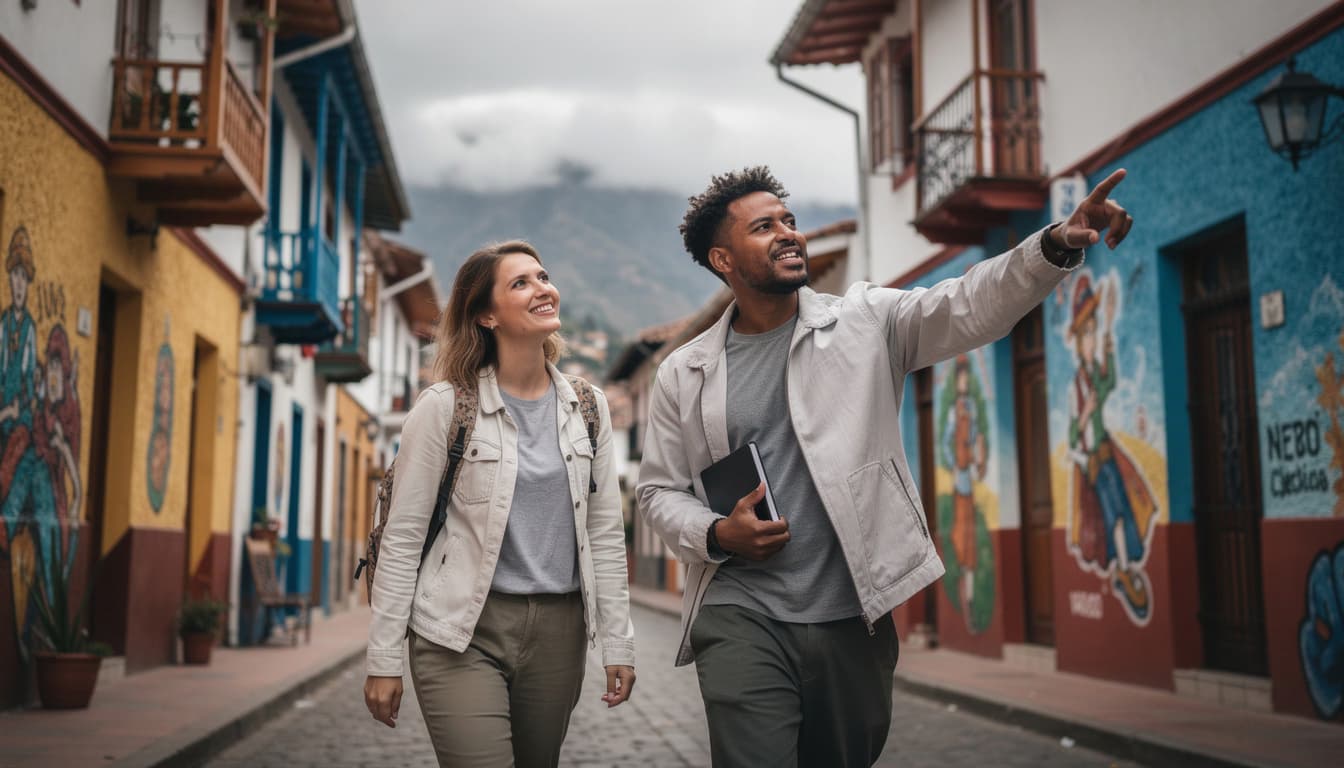
Bogotá is nothing like a beach city. It's a capital perched in the Andes, best discovered on foot, by bike and through its museums. This guide helps you spot what's worth your time: the historic center, the major museums, the heights of Monserrate, the parks and the city's cultural life. You'll also find practical tips on the climate and TransMilenio, along with the precautions to keep in mind.
Why Bogotá: a high-altitude capital worth experiencing
Colombia has beaches on the Caribbean coast, but none is close to Bogotá[1]. The city sits at 2,600 meters above sea level[1]. People come here for something else: the capital brings together the country's cultures and many cultures from elsewhere, with voices to listen to and flavors to taste[1].
The city also presents itself as the world capital of cycling[1]. It has 550 kilometers of ciclorrutas, dedicated bike lanes, and a Ciclovía of more than 120 kilometers, a network that authorities describe as the largest in Latin America[1]. A good starting point for a first visit: a stay that alternates walking, cycling and museums.
La Candelaria and Plaza de Bolívar
Bogotá's historic heart is best explored around Plaza de Bolívar. This former main square likely dates from 1539, the year of the first layout of Santafé[2]. On its eastern side, the cathedral complex brings together the Catedral Primada, the Casa Capitular and the Sagrario chapel[2]. The site holds great heritage value in the city's history and urban fabric[2].
Another building not to miss: the Capitolio Nacional, whose construction began in 1847 to plans by architect Thomas Reed and lasted nearly eighty years[2]. Austere in its neoclassical style, it is one of the city's most architecturally significant buildings[2].
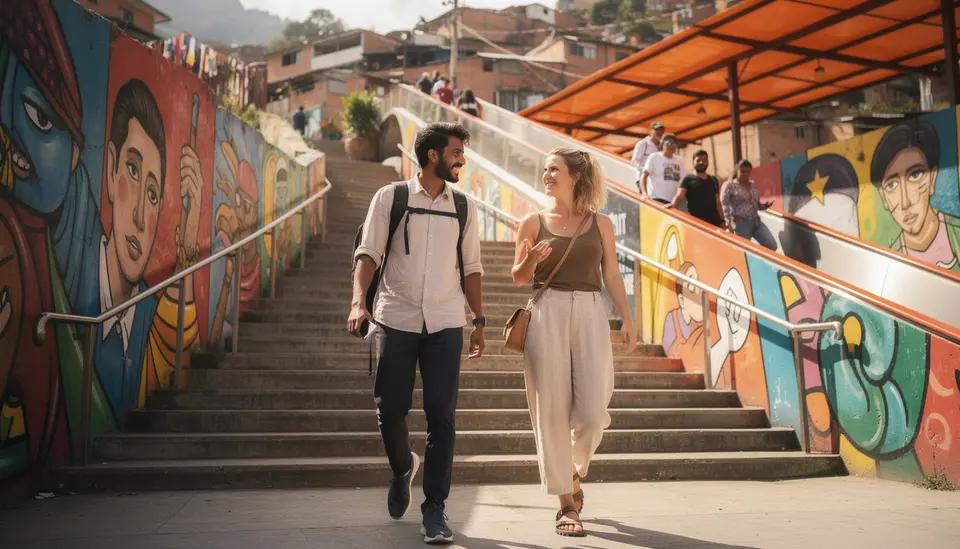
The La Candelaria neighborhood extends this visit: it is presented as an ideal area for those who prefer simple hotels right in the center, a district popular with backpackers[1]. Plan to wander around, but keep in mind the precautions detailed at the end of this article.
The major museums: Gold Museum, Botero Museum and beyond
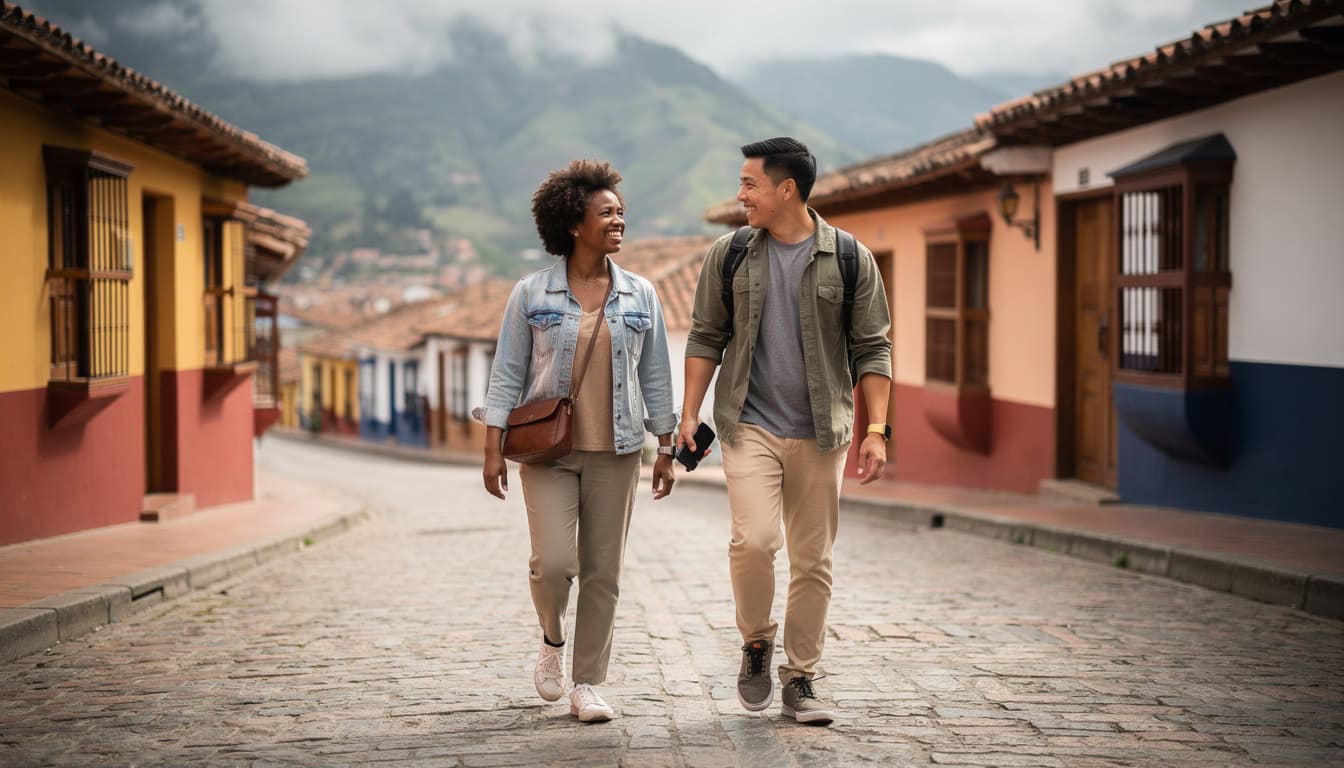
Three of the city's museums are especially renowned: the Museo del Oro, the Museo Botero and the Museo Banco de la República. According to travelers' reviews on TripAdvisor, they rank among the best tourist attractions in the world and have received the Travellers' Choice “Lo Mejor de lo Mejor” award[1]. This award recognizes attractions that receive excellent reviews and rank in the top 1% of the most popular establishments worldwide[1].
The city offers a “top 10” list of museums not to miss, to enjoy with friends or family[1]. Among the sights on your route, the Museo Nacional also appears on the list of places to discover[2]. Before you go, check each museum's website for opening hours and admission fees.
Monserrate and the eastern hills
Bogotá is bordered to the east by the cerros orientales, hills that are part of the mountain system surrounding the Sabana de Bogotá[2]. They hold an almost guardian-like presence for the city, given their imposing profile and their role in the first Spanish settlement of the territory in 1538[2].
Each hill has its own profile. On Monserrate, the tower stands out; on the neighboring hill of Guadalupe, the statue of the Virgin with open arms, installed in 1946[2]. Farther south rises the Cruz Verde, considered the highest peak of the range bordering Bogotá to the east[2]. Monserrate is one of the city's leading sights[2]. It is also a popular tourist spot where muggings are frequent: see the safety box further down.
Parks, gardens and cycling: the green city
Simón Bolívar Park, built on the grounds of the former El Salitre hacienda, covers nearly 400 hectares[2]. Its leisure and green areas are organized around a large lake[2]. You'll find a large oval-shaped events plaza and paths for walking, running or cycling[2].
On one side of the park stands the Biblioteca Virgilio Barco, a work by Rogelio Salmona and María Elvira Madriñán[2]. Ramps lead to rooftops you can reach on foot, where you can see the silhouette of the eastern hills (cerros orientales), the city, and the vegetation of the neighboring park[2].
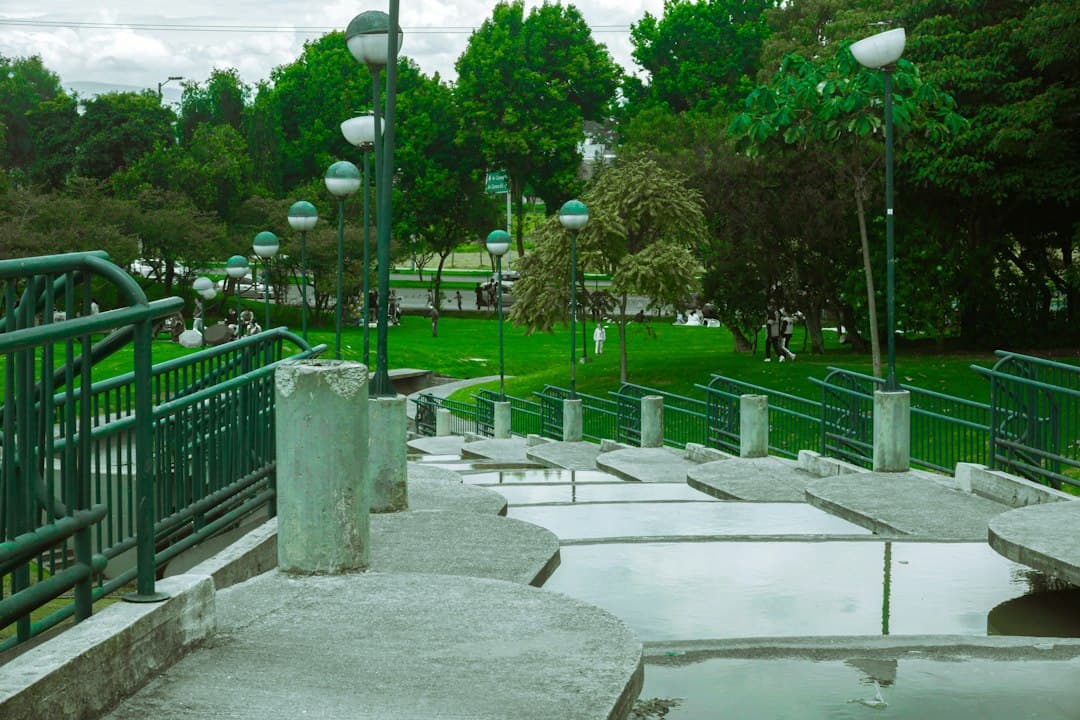
The Jardín Botánico, covering about 20 hectares, is part of the green spaces of Simón Bolívar Park and the adjoining lands[2]. It recreates the country's Andean and tropical ecosystems, with a wide variety of species, some of them endangered[2].
Biking is a great way to discover the city, including routes through the historic center[1]. If you have time to explore a green, clean city without adding to traffic, city authorities believe you will love Bogotá by bike[1].
Culture and Food Scene
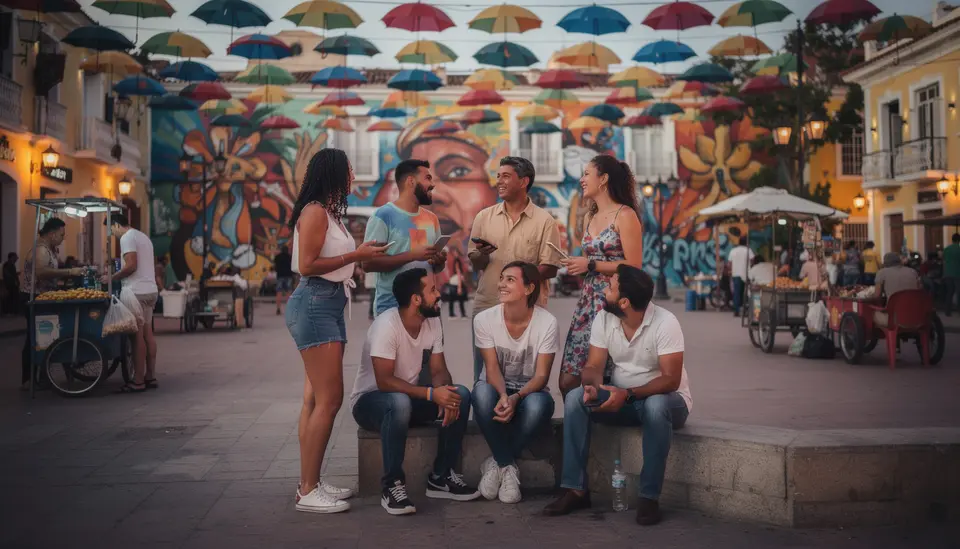
The capital has a rich cultural offering, from its music scene to its food[1]. In recent years, it has hosted major festivals: Salsa al Parque, Jazz al Parque, Rap al Parque, Joropo al Parque, Vallenato al Parque, Colombia al Parque Estéreo Picnic, Festival Cordillera, and Rock al Parque[1]. The latter is presented as the most important rock festival in Latin America[1].
When it comes to food, the city's tourism website highlights events such as the Carnival del Asado in Puente Aranda, three days of flavors and tradition, as well as its Christmas calendar[3]. The same site lists concerts, fairs, and outing ideas for the days ahead, depending on how much time you have and how you like to travel[3].
Practical Info: Climate and Getting Around
Close to the equator, Bogotá has no seasons as such, but it does have rainy and dry periods[1]. Rain falls from March to May and from October to November[1]. The official average temperature is 14 °C[1].
At 2,600 meters, expect strong winds, rain, and cold nights, though the sun can be surprisingly strong[1]. During holidays, especially between December and January, the city can reach nearly 25 °C[1]. Pack layers you can add and remove throughout the day.
To get around, the single fare for TransMilenio, TransMiZonal, and TransMiCable costs 3,550 COP in 2026[4]. It applies starting January 14, 2026[5], representing an increase of 10.9%[5]. With a personalized TuLlave Plus card, transfers are free for 125 minutes between buses in the integrated system, namely TransMiZonal buses (blue), main-line buses (red), and TransMiCable[5]. To get this card, you must go to a personalization point with an ID and fill out a form[5].
Scams, Pitfalls, and Things to Watch Out For
The French diplomatic service advises extra caution in tourist areas, especially in the city center (La Candelaria, Monserrate), where thefts are common[6].
- Avoid hailing a taxi on the street: opt for app-booked taxis, which are "trackable" (Uber, Cabify, Taxis Libres, etc.)[6].
- Don't flaunt signs of wealth, and keep valuables in a secure place[6].
- In the affluent northern neighborhoods (Chapinero, Chicó, Parque de la 93, Zona T, Usaquén), snatch-and-grab thefts have been reported[6].
- Scopolamine attacks have been reported particularly in the Zona T[6].
Keep exploring
- Colombia: The Essentials, from the Caribbean to the Amazon
- Zipaquirá Salt Cathedral: A Day Trip from Bogotá
- Villa de Leyva: The Colonial Village Bogotanos Escape To on Weekends
- Barichara, “the most beautiful village in Colombia”: Stone, the Royal Road, and Santander Cuisine
- The Colombian Llanos: Plains, Wildlife and Llanera Culture
Sources
- 1.^ abcdefghijklmnopqrsbogota.gov.co — Visita a Bogotá por primera vez: lo que todo turista debe saber | Bogota.gov.co: "If you're visiting the city for the first time, know that Colombia has beaches on the Caribbean coast, but none are close to Bogotá." ; "The city sits at 2,600 meters above sea level: you may face strong winds, rain, and low temperatures at night." ; "Before setting off to explore the Colombian capital, know that you'll visit a city where all of the country's cultures converge, along with many foreign cultures: get ready to see and hear every voice and taste every flavor in the city known as the heart of the Andes, the South American Athens, and the world capital of cycling." https://bogota.gov.co/internacional/visita-bogota-por-primera-vez-lo-que-todo-turista-debe-saber (accessed November 9, 2026)
- 2.^ abcdefghijklmnopqrbogota.gov.co — Top of the seven must-see sights to visit in Bogotá in its 486 years | Bogota.gov.co: “Plaza de Bolívar, the former main square, likely dates from 1539, when the first layout of Santafé was made.”; “The whole cathedral complex, on the eastern side of the square, includes the Catedral Primada, the Casa Capitular and the Sagrario chapel.”; “This complex holds very significant heritage value in Bogotá's history and urban space.” https://bogota.gov.co/en/node/211064 (accessed November 9, 2026)
- 3.^ abvisitbogota.co — Visit Bogotá | What to do, events and tourism in Bogotá: “Bogotá fires up the grills! The Carnival del Asado in Puente Aranda promises three days of flavor and tradition.”; “Bogotá at Christmas: a city that lights up to make you fall in love.”; “Concerts, fairs and outing ideas in Bogotá for the coming days.” https://visitbogota.co/en (accessed November 9, 2026)
Show 3 more sourcesShow less
- 4.^transmilenio.gov.co — TransMilenio - Abecé 2026 Fare Adjustment: “For 2026, the ticket price for TransMilenio, TransMiCable and TransMiZonal will be COP 3,550 (Colombian peso).” https://www.transmilenio.gov.co/comunicaciones/noticias-de-transmilenio/comunicados-oficiales/abece-ajuste-tarifario-2026 (accessed November 9, 2026)
- 5.^ abcdbogota.gov.co — TransMilenio, TransMiCable and TransMiZonal Fares 2026 Bogotá | Bogota.gov.co: “Starting January 14, 2026, the new fare of Bogotá's Integrated Public Transport System (SITP) will take effect.”; “For 2026, the unified fare for the TransMilenio, TransMiZonal and TransMiCable main line services will be COP 3,550 in Bogotá, an adjustment of 10.9%, below the change in the minimum wage and the system's main cost indicators.”; “No, the 125-minute window (two hours and five minutes) for zero-peso transfers continues in the fully integrated system, which includes the TransMiZonal buses (blue), the main line buses (red) and the TransMiCable.” https://bogota.gov.co/mi-ciudad/movilidad/tarifa-transmilenio-transmicable-y-transmizonal-2026-bogota (accessed November 9, 2026)
- 6.^ abcdediplomatie.gouv.fr — Colombia - Safety | France Diplomatie: “In general, great caution should be exercised in tourist areas, particularly in the city center (Candelaria, Monserrate), where thefts are frequent.”; “Prefer, therefore, taxis ordered through apps and thus traceable (Uber, Cabify, Taxis Libres, etc.).”; “It is also recommended not to hail taxis on the street due to the risk of assault, theft or kidnapping, in particular express kidnapping, in which attackers (including a fake taxi driver) force passengers to withdraw money from several ATMs.” https://www.diplomatie.gouv.fr/fr/information-par-pays/colombie/conseils-aux-voyageurs-securite (accessed November 9, 2026)