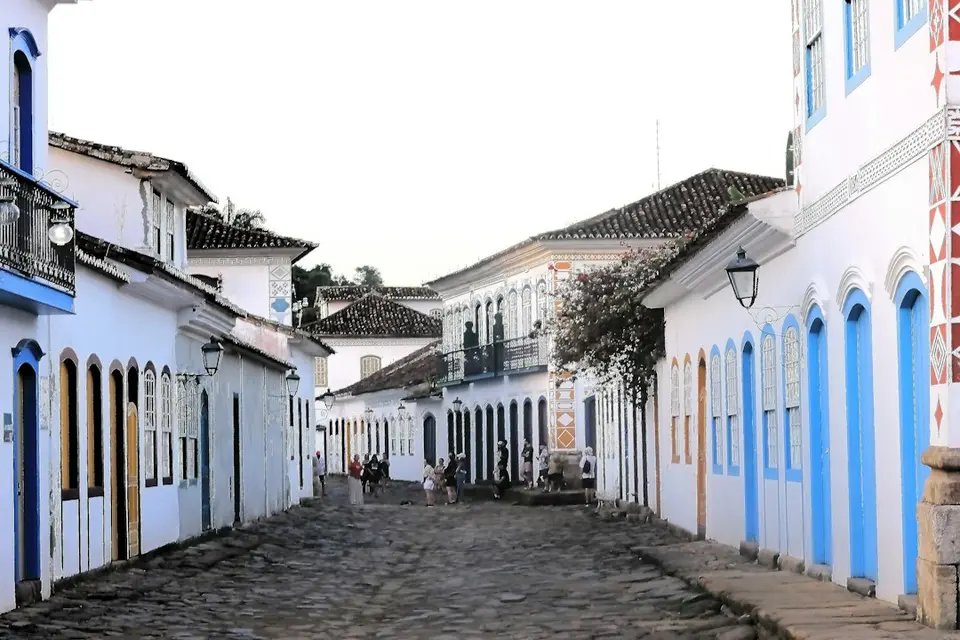
About three hours by bus from Bogotá, Villa de Leyva is a colonial village in Boyacá where you wander between whitewashed houses and cobblestone streets. You'll discover what makes it unique, what there is to see in two or three days, when to go, and how to get there. You'll also learn how to prepare for the high-altitude climate and which pitfalls to avoid, especially on weekends.
A village that has barely changed in 400 years
Villa de Leyva was founded in 1572 as a retreat for clergy and Spanish officials[1]. The village sits away from the main trade routes, in a high-altitude valley with semi-desert terrain and no nearby resources to exploit, which is why it has changed very little in four centuries[2].
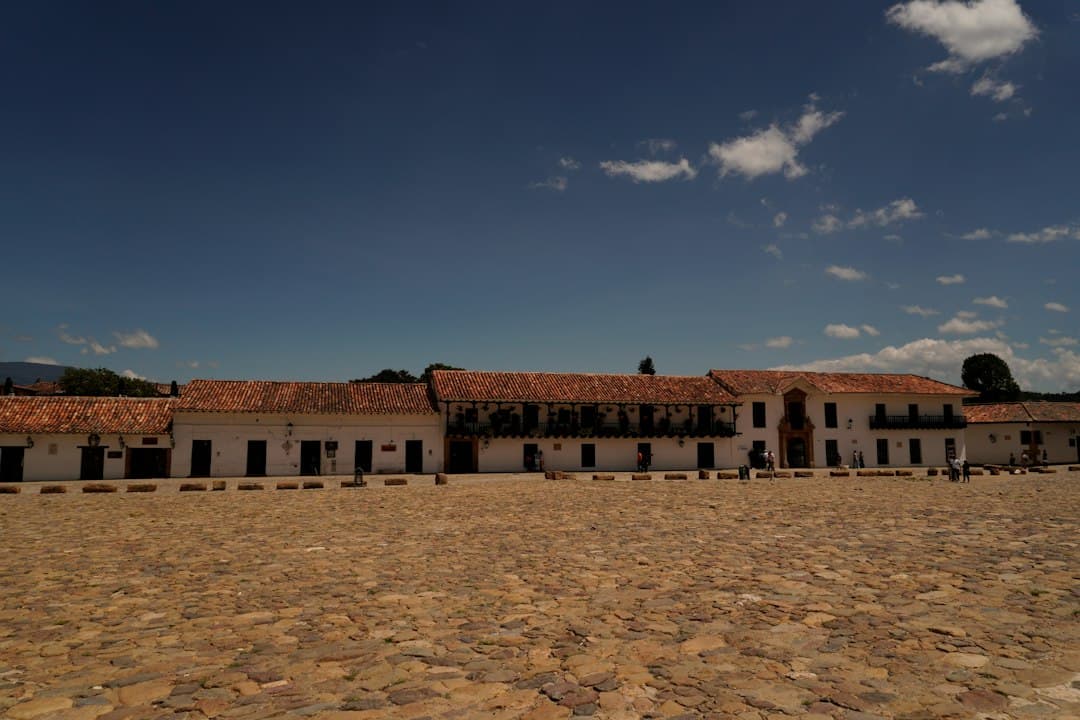
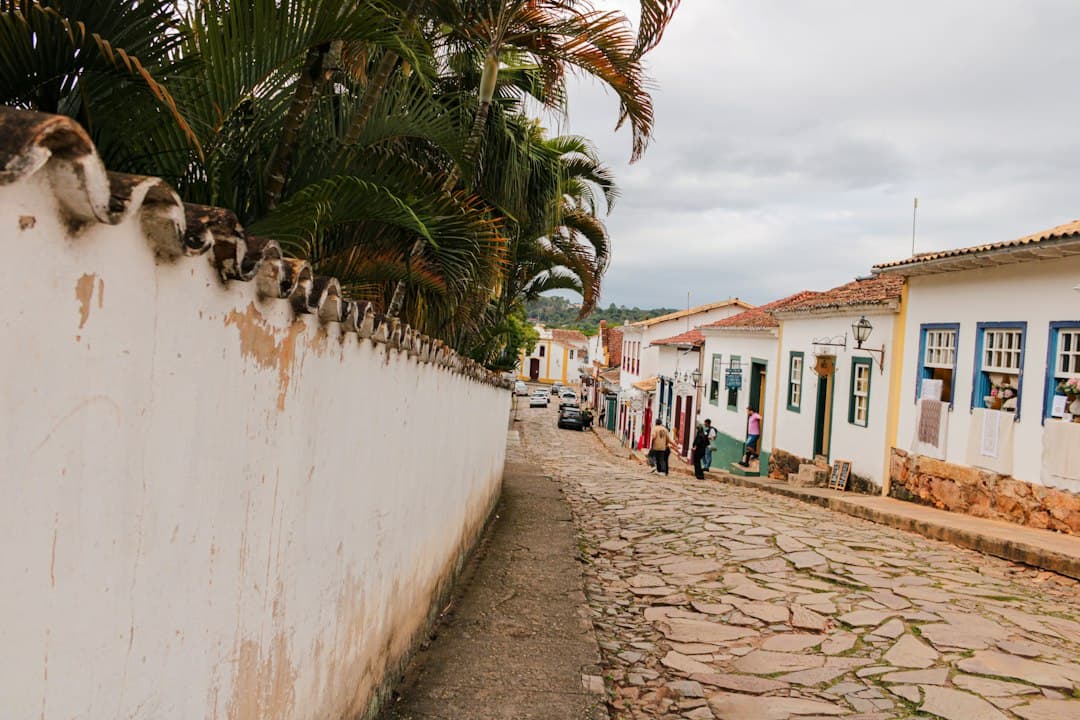
It is one of the few towns in Colombia to have kept its original colonial style and architecture intact: the streets and the large central square are still cobbled, and many buildings date back to the 16th century[2]. It was declared a national monument on December 17, 1954, in order to preserve this architecture[2].
The village has been part of Colombia's network of heritage villages since 2010 and appears on UNESCO's tentative list for World Heritage status[3]. It is therefore not yet inscribed: it is a potential candidate. Bogotá residents have made it a highly popular weekend destination, and it attracts a growing number of foreign travelers[2]. Yet it remains, about three hours by road from the capital, a world apart from the bustle of the big city[1].
The Plaza Mayor and the whitewashed lanes
Everything is organized around the Plaza Mayor: 14,000 m² of cobblestone, with a fountain at its center[4]. It is the largest square in Colombia and one of the most impressive in South America[4]. The buildings surrounding it retain their original architecture and house the town hall, museums, hotels, and shops[4].
Next to it stands the parish church of Nuestra Señora del Rosario, built in 1604: a colonial baroque building with carved wooden altarpieces covered in gold[4]. Among the other sites to see is the house where Antonio Nariño, a hero of independence, died[5]. Nariño and the artist Luis Alberto Acuña both ended their days in the village; their houses have become museums, and Acuña's house displays a selection of his works, including two murals in the inner courtyard[2].
Beyond the monuments, you can stroll through the village, linger in its streets, and enjoy the shops and local cuisine; renting bicycles for historic tours of the village and its surroundings is common[4][2]. On market days, Saturdays, producers from Boyacá come down to sell cheese, fruit, corn breads, and woven goods[6].
Fossils, desert, and nearby sites
Millions of years ago, the region was covered by the sea: fossils turn up everywhere[7]. According to the Colombian tourism office, the El Fósil museum was founded in 1977 by local farmers after they discovered a pliosaur during farm work; this specimen, named Kronosaurus boyacensis, is displayed there as the most complete pliosaur fossil ever found in the world[4]. El Fósil can be reached by car from the village in under twenty minutes, but you should plan for a morning to visit[1].
A few kilometers away, the Pozos Azules offer a landscape whose green-blue water changes with the weather, in striking contrast to the desert[4].
- El Infiernito, the Monquirá archaeological park, preserves stone columns erected by the Muisca[7]; it is a Muisca astronomical site[1].
- The Dominican convent of Santo Ecce Homo, dating from the 17th century, is located in the surroundings[7].
- Ráquira, the village of potters, is known for its colorful houses and clay workshops[7]; it is 40 minutes away by car[3].
To the northeast, the terrain rises toward the cloud forest and Iguaque National Park, which is also home to La Periquera, a group of seven waterfalls 15 kilometers from the center[2]. The hike to the sacred Iguaque Lake can take up to six hours, and it is recommended to go with a guide; check the current rule with the park[1].

Festivals: Lights, Kites, and Jazz
The village hosts several festivals throughout the year[2]:
- the jazz festival, in July[2];
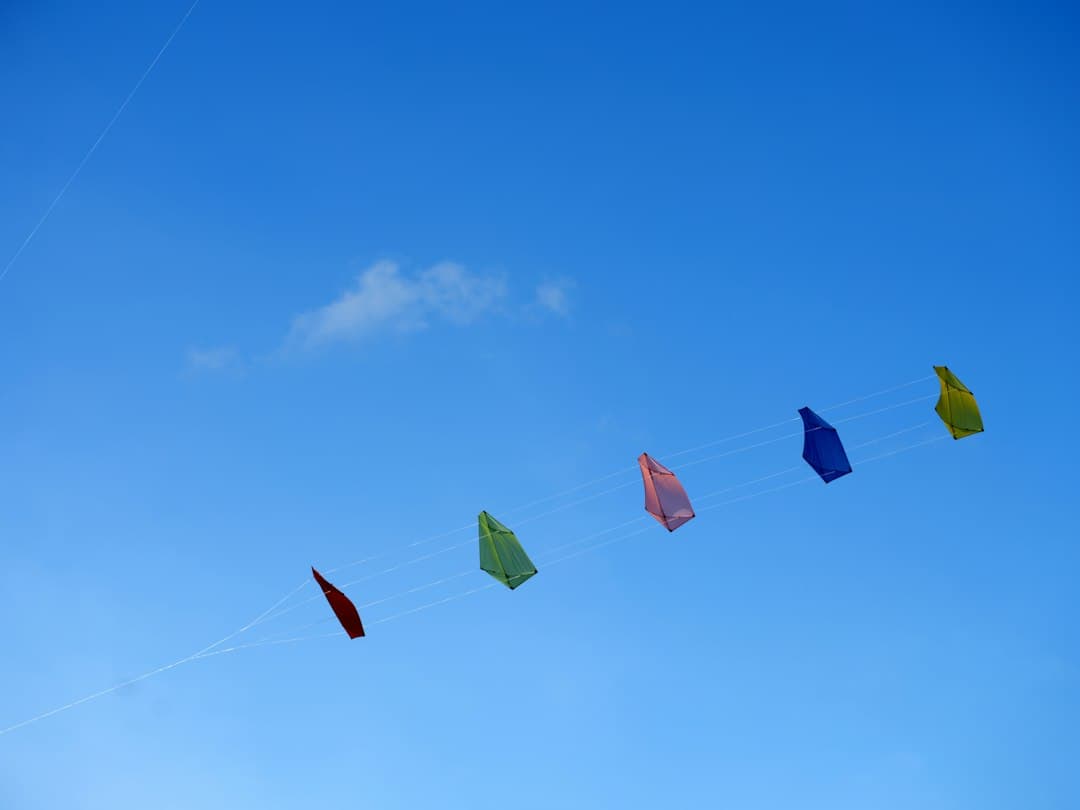
- the International Kite Festival, in August[2];
- the onion beauty contest, in October[2];
- the food festival, in November[2];
- the Festival of Lights, on December 7[2].
In August, the National Wind and Kite Festival takes advantage of the region's strong winds for colorful displays[4]. At Christmas, the village puts on its light installations, along with an alternative program of art exhibitions, choirs, and other activities[4]. The astronomy festival offers telescope viewing sessions set up on the Plaza Mayor, thanks to clear skies[4]. There is also a tree festival and a water festival[2]. Music, painting, and theater events take place all year round[2].
When to Go and How Many Days to Plan
The village is quieter on weekdays; weekends, Colombian public holidays, and Holy Week are the busiest periods[7]. During the week, Villa de Leyva is still spared from mass tourism: it comes alive on Friday evening and Saturday, market day[6]. For weekends, public holidays, high season, and festivals, book ahead. The period from December to February and from June to August is generally less rainy; pack a jacket for nights in every season[7].
Two nights are enough for the village and two or three sites nearby; allow three nights to add Iguaque Park, Ráquira, or the Candelaria Desert[6]. If you use Villa de Leyva as a base to explore Boyacá, plan for 4 to 5 days[3]. A two-day itinerary: the village, the Plaza Mayor, and the museums on the first day, then El Fósil, El Infiernito, the Pozos Azules, and the Ecce Homo convent on the second[7]. With a third day, add Ráquira and a hike in the surrounding area[7]. Combine two sites per day rather than trying to fit everything in[6].
Getting There from Bogotá and Getting Around
There is no airport in the village itself: you arrive by road[4]. The village is about 40 kilometers west of Tunja, the capital of Boyacá, and easily reached by road from Tunja or from Bogotá[4].
From Bogotá, several buses leave every day from the North Terminal, with the Flota Valle de Tenza company (3.5 to 4 hours of travel); you can also depart from the Salitre Terminal[3]. Travel times and prices vary depending on the source: 3 hours 30 minutes to 4 hours for roughly 25,000 to 35,000 pesos from Portal del Norte, with a connection in Tunja[6]; 3.5 to 4.5 hours, between 30,000 and 42,000 pesos[8]; one timetable also lists a 3-hour 6-minute trip from the village to the Salitre Terminal for about 15 dollars[9]. Treat these figures as rough estimates and check schedules and fares with the companies directly. From Tunja, frequent local buses reach the village for about 8,000 pesos in 45 minutes[8]. Expreso Los Muiscas is the other main operator[8].
By car, allow three to four hours from Bogotá depending on traffic leaving the city[7]. A rental car or private transfer lets you stop at Zipaquirá and Ráquira along the way[3]. The Villa de Leyva bus terminal is a 5- to 10-minute walk from the Plaza Mayor[3], and many small buses leave from there for neighboring villages[3]. In the center, vehicle traffic is banned on the Plaza Mayor; for sites nearby, rely on local taxis, rental bikes, or a horseback excursion[6].
Altitude, Cold, and Cobblestones: How to Prepare
The village sits at about 2,100 meters (6,900 feet) above sea level[7]. Nights are cool: pack a jacket no matter the season[7]. Villa de Leyva is a year-round destination, so pack accordingly[1]. To walk the páramos and reach the sacred Iguaque lake, you'll need warm clothing[1]. The Iguaque hike can take up to six hours, and a guide is recommended[1].
The center is entirely paved with cobblestones, from the square to the streets[2]: bring sturdy shoes.
And for Working Remotely for a Few Days?
Some owners have turned their grand houses into guesthouses, art galleries and restaurants[1]. For remote work, the Selina hotel in Villa de Leyva offers a coworking space[4], but the village is not a coworking hub: don't count on the kind of setup you'd find in larger cities. For the rest, the cafés and restaurants in the center can do the job. The village suits a few relaxed days better than an intensive daily digital nomad routine.

Pitfalls, Scams and Things to Watch Out For
Villa de Leyva is calm and pleasant, but it is a tourist town, and its prices follow the calendar: hotels double their rates on Saturdays, restaurants facing the main square charge 30 to 40% more for the same meal, and the square is really crowded in December and during Holy Week[8]. Visiting on a weekday or off-season makes your stay much cheaper[8].
- Before booking accommodation, find out whether you are booking directly with the hotel or through an intermediary[10].
- Check the price list before consuming or accessing a property or service[10].
- During holiday periods, beware of fake tour operators: the Colombian National Police warns about these scams, especially free or deeply discounted vacation offers that ask for money or personal information[10].
- If you are robbed or defrauded in Colombia, report it to the police by calling 123, or #767 in rural areas[10].
Checklist Before You Leave
- Check whether your stay falls on a weekend, a public holiday or a festival, and book accordingly.
- Choose your bus (Salitre or the North terminal, direct or via Tunja) and check schedules and fares with the company.
- Pack a warm jacket and sturdy shoes for the cobblestones and outings.
- If possible, time your stay around a festival: jazz, kites or lights.
- Arrange a guide for Iguaque and look into day trips.
This article gives you the essentials to make your decision. Choosing accommodation, a line-by-line budget and the practical details of each site require going further to plan a longer stay.
Keep Reading
- Colombia: The Highlights, from the Caribbean to the Amazon
- Bogotá: What to See and Do in Colombia's High-Altitude Capital
- Zipaquirá Salt Cathedral: The Day Trip from Bogotá
- Barichara, “the Most Beautiful Village in Colombia”: Stone, the Royal Road and Santander Cuisine
Sources
- 1.^ abcdefghithecitypaperbogota.com — Insider's guide to Villa de Leyva | The City Paper Bogotá: “Founded in 1572 as a retreat for Spanish clerics and viceroys, Villa de Leyva has been preserved by time and, although it is only three hours from Bogotá by road, it is a world apart from the bustle of the big city.”; “You can drive there from the village in under twenty minutes, but El Fósil is a place where time stopped 100 million years ago: there is no need to hurry. Plan a morning to visit the remains of the 7-meter-long marine Kronosaurus, unearthed from this dried-up lake bed by paleontologists in 1977.”; “Another interesting option for visiting Villa de Leyva is to go with Zebra Trips, a local tourism company with several off-road vehicles to take you off the beaten track, for example to the former Muisca astronomical site of El Infiernito.” https://thecitypaperbogota.com/travel/andes-travel-guide/insiders-guide-to-la-leyva/ (accessed November 9, 2026)
- 2.^ abcdefghijklmnopen.wikipedia.org — Villa de Leyva - Wikipedia: “Located away from the major trade routes, in a high-altitude valley with semi-desert terrain, and with no nearby mineral deposits to exploit, the town has changed very little over the past 400 years.”; “It is thus one of the few towns in Colombia to have fully preserved its original colonial style and architecture: the streets and the large central square are still cobbled, and many buildings date from the 16th century.”; “Villa de Leyva has since become one of Colombia's main tourist attractions, and it was declared a national monument on December 17, 1954, to preserve its architecture.” https://en.wikipedia.org/wiki/Villa_de_Leyva (accessed November 9, 2026)
- 3.^ abcdefgtomplanmytrip.com — Visit Villa de Leyva, Colombia: Expert Travel Guide | TPMT: “It has been part of Colombia’s Network of Heritage Villages since 2010 and is on UNESCO’s tentative list for World Heritage status.” ; “Ráquira, 40 minutes by car from Villa de Leyva, is another village renowned as Colombia’s pottery capital.” ; “If you plan to use Villa de Leyva as a base to explore Boyacá, consider staying 4 to 5 days.” https://www.tomplanmytrip.com/travel-to-colombia/destinations-in-colombia/boyaca-santander/villa-de-leyva/ (accessed November 9, 2026)
Show 8 more sourcesShow less
- 4.^ abcdefghijklmcolombia.travel — Villa de Leyva: History, prehistory and landscape | Colombia Travel: “The Plaza Mayor of Villa de Leyva is in fact the largest in Colombia and one of the most impressive in South America, covering 14,000 square meters.” ; “In Villa de Leyva, you’ll find the incredible Plaza Mayor, known for its colonial look, its stone-paved ground, a fountain at the center, and buildings that keep their original architecture. They house the town hall, museums, hotels, and shopping galleries.” ; “Next to the Plaza Mayor stands the imposing parish church of Our Lady of the Rosary, built in 1604. The building features colonial Baroque architecture and holds altarpieces carved in wood and covered in gold.” https://colombia.travel/en/villa-de-leyva (accessed November 9, 2026)
- 5.^colombia.travel — Appreciate historic architecture | Colombia Travel: “Among its architectural highlights are the main square, which covers 14,000 square meters and is home to the Church of Our Lady of the Rosary of Villa de Leyva, as well as the house where Antonio Nariño, a hero of independence, died.” https://colombia.travel/en/villa-de-leyva/appreciate-historic-architecture (accessed November 9, 2026)
- 6.^ abcdefvoyagecolombie.com — Villa de Leyva (Colombia): complete village guide: “Still largely spared from mass tourism on weekdays, Villa de Leyva comes alive on Friday evening and Saturday, market day, when producers from Boyacá come down to sell cheeses, fruit, corn breads, and woven goods.” ; “Two nights are enough for the village and two or three sites nearby.” ; “Plan three nights if you want to include Iguaque Park or head on to Ráquira and the Candelaria Desert.” https://www.voyagecolombie.com/guide-colombie/destination/villa-de-leyva (accessed November 9, 2026)
- 7.^ abcdefghijkcidadeturismo.com — Villa de Leyva, Colombia: things to do, when to go and how to get there: “The surrounding region is dry, with reddish soil, and was covered by the sea millions of years ago. That is why fossils appear everywhere.” ; “Nearby, the Monquirá archaeological park, known as El Infiernito, preserves stone columns erected by the Muisca.” ; “Nearby you will also find the Pozos Azules, blue-green lagoons, the 17th-century Dominican convent of Santo Ecce Homo, and Ráquira, the potters’ village, with its colorful houses and clay workshops.” https://cidadeturismo.com/en/colombia/destination/villa-de-leyva (accessed November 9, 2026)
- 8.^ abcdecolombiamove.com — Villa de Leyva, Colombia: the complete guide: “The trip takes 3.5 to 4.5 hours depending on traffic (leaving Bogotá on Friday evening is brutal). Budget 30,000 to 42,000 COP per person one way.” ; “From Tunja, the department capital 40 km away, frequent local buses reach Villa de Leyva for about 8,000 COP in roughly 45 minutes.” ; “Flota Valle de Tenza and Expreso Los Muiscas are the main operators.” https://colombiamove.com/blog/villa-de-leyva-colombia-guide/ (accessed November 9, 2026)
- 9.^checkmybus.com — Villa de Leyva to Bogotá | Compare Carpool and Bus: “A Valle de Tenza bus leaves Villa de Leyva’s bus terminal on November 10, 2026 at 4:30 am and arrives at Bogotá’s Salitre bus terminal at 7:36 am. Budget tickets at $15 per person are available. The trip lasts 3 hours and 6 minutes.” https://www.checkmybus.com/travel/villa-de-leyva-cl/bogota-dc (accessed November 9, 2026)
- 10.^ abcdpolicia.gov.co — Safety recommendations for the mid-year vacation season | National Police of Colombia: “When you book accommodation, you should know whether you are booking directly with the hotel or through an intermediary or third party.” ; “At your tourist destination, always check the price list before consuming or accessing a good or service.” ; “The National Police works to promote tourism and make your destination a safe place; if you travel during the mid-year holiday season, follow these recommendations to avoid falling victim to a fake tour operator scam.” https://www.policia.gov.co/noticia/recomendaciones-seguridad-para-temporada-vacacional-mitad-ano (accessed November 9, 2026)
- 11.bookaway.com — Travel from or to Villa de Leyva, Colombia | Bookaway: “Hotel Selina Villa de Leyva, Cra. 11 No. 8-43, Villa de Leyva, Boyacá, Colombia.” https://www.bookaway.com/fr/routes/colombia/villa-de-leyva (accessed November 9, 2026)