Are you living in Colombia or staying there for a long time? This article helps you prepare your arrivals and departures by air, understand the tourist stay length and how to extend it, know who to contact if you have a problem with an airline, and get around Bogotá using SITP and TransMilenio. It also covers the capital's metro and the precautions to take with taxis and on the road.
Entering and Leaving Colombia: The Formalities That Shape Your Travel
To enter the country, you present your travel document to immigration authorities, along with a visa if your nationality or planned activity requires one, a return or onward ticket and, depending on the case, proof of sufficient funds[1]. Also keep in mind that any paid activity requires a visa, regardless of your nationality[1].
On arrival, the immigration officer must tell you that you will need to present, when leaving the country, the same document you used to enter[1]. So keep that document with you for the entire length of your stay.
Before a flight, online pre-registration called Check-Mig can speed up immigration control. It can be completed from 72 hours up to 1 hour before your trip[2]. It is not required if you pass through a land border immigration checkpoint, on entry as well as on exit[2].
Length of Tourist Stay and Extension
If you are visiting as a tourist and your country of origin does not require a visa, you can stay up to 90 days from your date of entry[3]. If your trip is for work or study, you must apply for a visa at a Colombian consulate abroad[3].
This period can be extended. The request is filed with Migración Colombia, in Bogotá or in any departmental capital, for a maximum of 180 days per year with multiple entries, after paying the applicable fees[4]. It is therefore wise to count this annual ceiling into your back-and-forth trips.
As an example of an exempt nationality: Spanish citizens do not need a visa for a tourist stay of under 90 days, but they do need one, even for less than 90 days, for a study or business trip[5]. Check the rule that applies to your own nationality.
Airports and Arrival in Bogotá
In Bogotá, entry and exit by air take place through El Dorado airport[3].
To reach the city center, Taxi Imperial is the airport's official taxi company: 700 vehicles are available 24 hours a day, and the trip costs roughly 35,000 COP[6].
If you are coming from Europe, note that Air Europa, Iberia and Avianca operate direct flights between Spain and Colombia[4].
A departure airport tax may apply. Its amount is adjusted periodically, so check the exact sum with your travel agency or your hotel[3].
Domestic Flights and Passenger Rights
In Colombia, the Superintendencia de Transporte protects the rights of air transport users, from the moment the service is quoted until it is delivered[7]. These rights and obligations are set out in the aeronautical regulation RAC 3 and in the Consumer Statute (Law 1480 of 2011)[7].
You can file a complaint with the Superintendencia over delays, cancellations, overbooking, lost or damaged baggage, misleading advertising, or a breach of your right to information[7]. It oversees not only airlines but also charter flight services, air taxis, travel agencies and any other intermediary[7].
One useful clarification: its investigations aim to protect all users as a whole and do not result in compensation for your individual loss, which must be claimed through the ordinary civil courts[7].
If you need to change your booking, contact your airline or travel agency first[4].
Planning for Disruptions: Airport Closures and Schedule Surprises
A suspension of operations at an airport, for whatever reason, can throw off an entire day of travel. Avoid combining a flight and an important appointment on the same day, and leave yourself a comfortable buffer between connections.
If your bookings change, follow the instructions from Aeronáutica Civil, your airline and your travel agency[4].
On the road, heavy rains can occur at different times of the year: they cause flooding, landslides and road damage, and disrupt traffic in many places[4]. Before any road trip, check the website of the Traffic and Transport Directorate of the Colombian National Police, which publishes road conditions[4].
Getting Around Bogotá: SITP, TransMilenio, Taxis
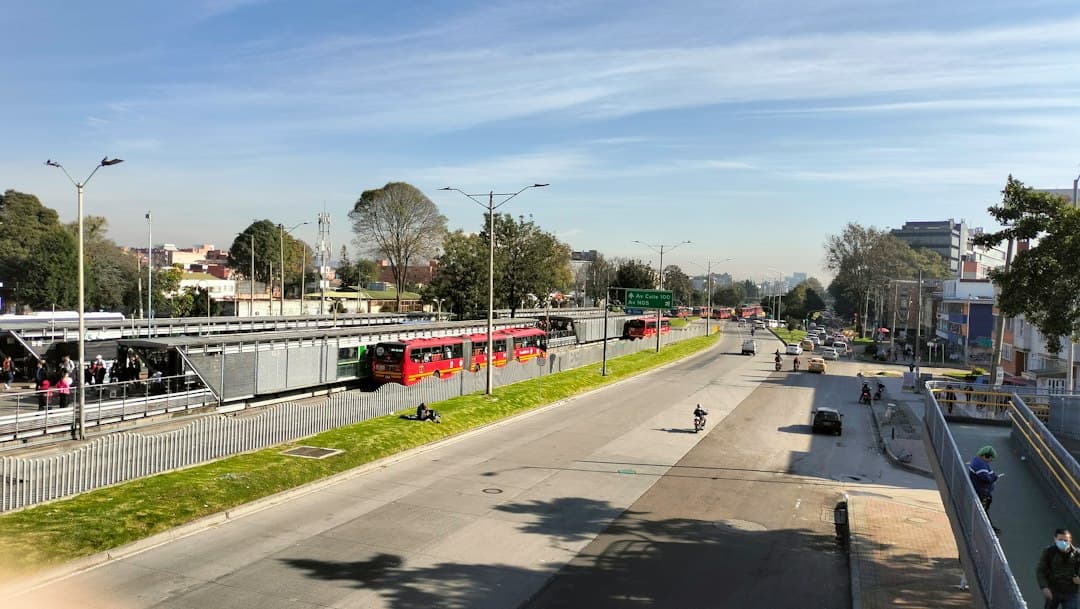
Bogotá's public transport system is paid for with the rechargeable TuLlave card, which is already used on TransMilenio and across the entire SITP network[8]. You can buy and top up the card at stations and at some newsstands[6].
The SITP/TransMilenio fare has been COP 3,550 since January 14, 2026, with free transfers for 125 minutes between TransMilenio, TransMiCable and zonal buses[8].
Taxis have the advantage of being widely available, very numerous and inexpensive[6]. For safety reasons, do not hail them on the street: order or book them instead[6].
Bogotá's Metro: Where Things Stand
The metro will not have its own fare: it will be integrated into the SITP fare system via the interoperable fare collection system[8]. You will therefore pay with the same TuLlave card as on TransMilenio[8].
The COP 3,550 fare is that of the system the metro will join, not a fare set for Line 1, which does not yet have a fare decree[8]. Don't build your daily plans around an opening date: in the meantime, TransMilenio and the SITP remain your reference.
Pitfalls, Scams and Points of Caution
Taxis
It is recommended not to flag down a taxi in the street, due to the risk of assault, robbery or kidnapping, including express kidnapping: attackers, sometimes posing as taxi drivers, force passengers to withdraw money from several ATMs[9]. If you are attacked, do not offer any resistance whatsoever[9].
Prefer taxis ordered through an app, which are therefore traceable (Uber, Cabify, Taxis Libres, etc.)[9].
Fake Police Officers and Fake Couriers
Fake police officers carry out scams under the pretext of checking identity documents and foreign currency[9]. If you are stopped on the street, particularly in Bogotá, ask to be escorted to the nearest police station or to a public place, such as your hotel[9]. Fake couriers may also enter restaurants to rob customers[9].
Roads
Colombia's road network is in poor condition and road signs are scarce[9]. Mountain roads can be blocked for several days following an accident or bad weather (rockfalls, landslides); it is strongly recommended to travel only during daylight and on main roads[9]. Pedestrians do not have right of way, including at pedestrian crossings[9].
In the La Guajira region, particularly near Cabo de la Vela and Punta Gallinas, the poor state of the tracks has sometimes led to fatal accidents: use reputable agencies[9].
Stay and Visa
Colombian authorities are very strict about visa regulations: they impose substantial fines on those who are in violation of their status, including for income-generating activity, even very occasional, carried out after entering as a tourist[4]. Overstaying the permitted length of stay can also result in a financial penalty, or even a ban on re-entering Colombia[5].
Checklist Before You Go
- A valid passport, a visa if your nationality or activity requires one, an exit ticket and, depending on the case, proof of sufficient funds.
- Check-Mig completed between 72 hours and 1 hour before a flight.
- Keep your entry document for departure.
- Request a stay extension from Migración Colombia before the end of the 90 days, up to a limit of 180 days per year.
- Exit tax amount verified with your agency or hotel.
- TuLlave card loaded for TransMilenio and the SITP.
- Taxis ordered through an app or booked in advance, never hailed on the street.
- Road conditions checked before any overland trip, with daytime travel on the main routes.
Sources
- 1.^ abcmigracioncolombia.gov.co — Requisitos de entrada y salida del país - Migración Colombia: “The documents above must be accompanied by a visa if the nationality or the activity to be carried out requires it, by an onward travel ticket and by proof of economic solvency, as applicable.”; “Any paid activity requires a visa, regardless of nationality; the exceptions are crew members and holders of a diplomatic passport who perform representation of the State that accredits them in international relations.”; “It is the responsibility of the immigration officer conducting entry control to inform the foreign national entering Colombian territory that, upon leaving the country, they must present the same document used at entry immigration control.” https://www.migracioncolombia.gov.co/tramites-y-servicios/instructivos/requisitos-de-entrada-y-salida-del-pais (accessed October 24, 2026)
- 2.^ abmigracioncolombia.gov.co — Inicio - Migración Colombia: “This process can be completed from 72 hours up to 1 hour before travel.”; “NOTE: they do not need to present the Check-Mig upon entering or leaving Colombia if they travel through a land immigration checkpoint.” https://www.migracioncolombia.gov.co/index.php (accessed October 24, 2026)
- 3.^ abcdbogota.gov.co — Información General de Bogotá | Bogota.gov.co: “If the purpose of your visit is tourism and your country of origin is among those that do not require a visa, you may stay in the country for up to 90 days from the date of entry.”; “If your trip to the country is for work or study purposes, you must apply for a visa at Colombian consulates accredited abroad.”; “Entry and exit take place through El Dorado Airport.” https://bogota.gov.co/informacion-general-de-bogota (accessed October 24, 2026)
Show 6 more sourcesShow less
- 4.^ abcdefgexteriores.gob.es — Recomendaciones de viaje: “This period may be extended upon request submitted to Migración Colombia authorities in Bogotá, or in any departmental capital of the country, up to a maximum of 180 days per year with multiple entries, after payment of the corresponding fees.”; “Passengers may purchase their tickets directly from Air Europa, Iberia, and Avianca, which currently operate direct flights between Spain and Colombia.”; “as well as your airline or travel agency, in case of any changes to your reservations.” https://www.exteriores.gob.es/Consulados/bogota/es/ViajarA/Paginas/Recomendaciones-de-viaje.aspx (accessed October 24, 2026)
- 5.^ abexteriores.gob.es — Documentación y trámites: “Spaniards visiting Colombia for tourism purposes, for fewer than 90 days, do not need an entry visa.”; “They will need one, even for stays of fewer than 90 days, for study or business trips.”; “if you exceed the set period, a financial penalty may be imposed, and you may even be prevented from re-entering Colombian territory.” https://www.exteriores.gob.es/Consulados/bogota/es/ViajarA/Paginas/Documentaci%C3%B3n-y-tr%C3%A1mites.aspx (accessed October 24, 2026)
- 6.^ abcdguide.en-vols.com — Visiter Bogota - Guide, infos pratiques, adresses utiles: “Taxi Imperial is the airport's official taxi company. 700 vehicles are available 24 hours a day. Expect to pay around 35,000 COP for the trip to downtown.”; “Payment is made using a pass called the Tarjeta TuLlave, which can be purchased and topped up (from 5,000 to 150,000 COP) at stations and at some newsstands.”; “Taxis, for their part, have the advantage of being available, very numerous, and inexpensive.” https://guide.en-vols.com/destination/bogota/ (accessed October 24, 2026)
- 7.^ abcdesupertransporte.gov.co — Preguntas Frecuentes Sector Aéreo - Superintendencia de Transporte: “The Superintendencia de Transporte is responsible for protecting passenger rights, from the quotation of the service through to its effective completion.”; “Passenger rights and obligations are established by Colombia's aeronautical regulations (RAC 3) and by the Consumer Statute (Law 1480 of 2011).”; “You can already file complaints to bring to the attention of the Superintendencia de Transporte any possible violations of your passenger rights during the provision of air transport services, such as those related to flight delays, cancellations, and overbooking, loss or damage to baggage, misleading advertising, promotions and offers, violation of the right to information, e-commerce, among others.” https://www.supertransporte.gov.co/index.php/faq-sector_aereo/ (accessed October 24, 2026)
- 8.^ abcdemetrodebogota.com.co — Bogotá Metro Fares: What Will a Ticket Cost?: “With a TuLlave card (personalized or Plus): the same rechargeable smart card already used on TransMilenio and across the entire SITP network.”; “Currently, the SITP/TransMilenio fare is 3,550 COP, in effect since January 14, 2026, with a 125-minute free transfer window between TransMilenio, TransMiCable, and TransMiZonal buses, according to the Alcaldía de Bogotá / TransMilenio S.A.”; “Will the Bogotá Metro have its own fare? No. According to the EMB, it will be integrated into the SITP public transport fare system via the interoperable fare collection system, rather than having a separate fare.” https://metrodebogota.com.co/en/guides/fares (accessed October 24, 2026)
- 9.^ abcdefghijdiplomatie.gouv.fr — Colombia - Security | France Diplomatie: “It is also recommended not to flag down taxis in the street due to the risk of assault, theft, or kidnapping, including express kidnapping, in which attackers (including a fake taxi driver) force passengers to withdraw money from several ATMs.”; “In the event of an attack, do not offer any resistance whatsoever. Instead, prefer taxis booked through apps, which are therefore traceable (Uber, Cabify, Taxis Libres, etc.).”; “Fake police officers have reportedly carried out scams under the pretext of checking identity documents and currency.” https://www.diplomatie.gouv.fr/fr/information-par-pays/colombie/conseils-aux-voyageurs-securite (accessed October 24, 2026)