Santa Marta is a base for anyone who wants to see an old city, the Sierra Nevada mountains, and the beaches of Tayrona National Park all in one trip. This article gives you a sequence of practical days: what to see in town, how to make Minca a second base, and which park entrance to choose. You'll also learn when to go, how many days to plan, and what to watch out for.
Santa Marta, the oldest surviving Spanish city in Colombia
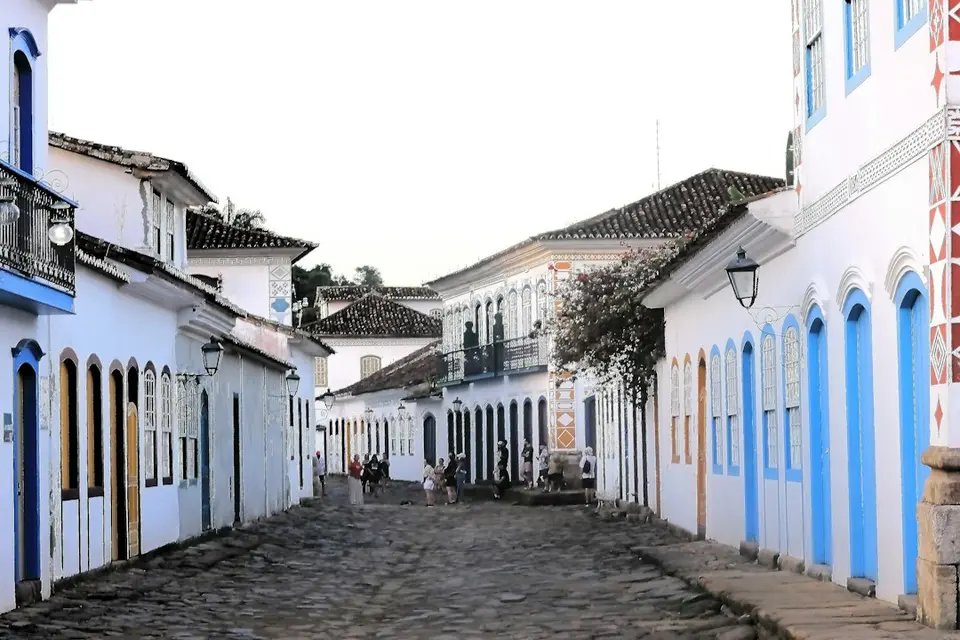
Santa Marta is the oldest surviving Spanish city in Colombia, founded in 1525[1]. At first glance, it doesn't look like a historic city. The center is a compact grid around the cathedral, Plaza Bolívar, and Parque de los Novios, surrounded by a working port, heavy traffic, and daytime temperatures that never drop below 32 °C[1].
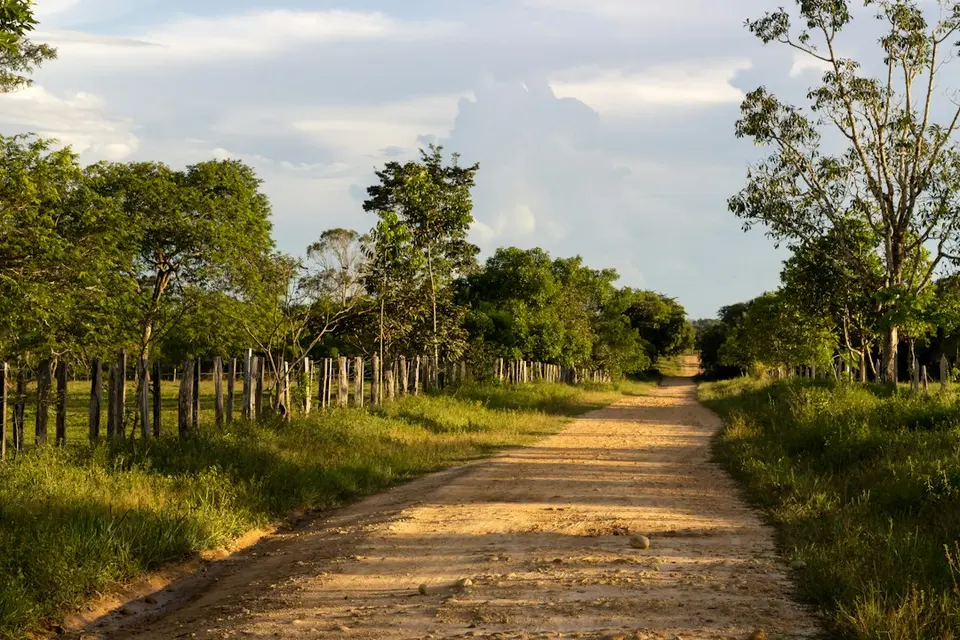
Almost nobody comes for the city itself. People come because the Sierra Nevada de Santa Marta rises right behind it, the coffee farms of Minca are an hour's drive away, and Tayrona National Park begins a bit farther along the coast[1].
What to see in town: the historic center, the Gold Museum, and Quinta de San Pedro Alejandrino
The Museo del Oro Tairona is housed in the Casa de la Aduana in the historic center. This colonial building holds the cultural heritage of the Sierra Nevada de Santa Marta and its surroundings[2]. Entry is free, and you can see Tairona gold and pottery, plus a model of Ciudad Perdida, which makes it a good first stop before a trek[1].
The Quinta de San Pedro Alejandrino, a national historic monument, is the last home of Simón Bolívar[2]. A good route fits into one day: the Quinta in the morning, then the Gold Museum and the cathedral in the center, and sunset along the Malecón de Bastidas[3].
The bay, the beaches, and Taganga
Around the bay, Taganga is presented as ideal for recreational diving, sun, beach time, and rest[2]. You can also explore marine life at the Acuario and the Museo del Mar[2].
For a beach day, Bahía Concha is the park's bay closest to Santa Marta. You reach it through the city's northern neighborhoods, with a 20-minute walk to the beach[4]. It has a wide beach, a restaurant, and snorkeling[4].
Minca and the Sierra Nevada coffee farms
Santa Marta's great advantage is that you can go from sea level to the cool coffee lands in under an hour, by shared van[1]. Minca is often treated as a day trip; the better idea is to make it a second base. Sleep up there, where it's cooler and bird watchers spot species around the coffee farms, and only come back down to the coast for Tayrona and for the jeep to the start of the Lost City trek[1].
A typical day in Minca can be arranged around Pozo Azul, the Marinka waterfalls, and a coffee plantation[3].
Ciudad Perdida is a trip of its own: four to six days of guided hiking[3]. Hikes to the Lost City are possible in the dry season, but they must be done with a guide[5].
Tayrona National Park, the gateway to the coast
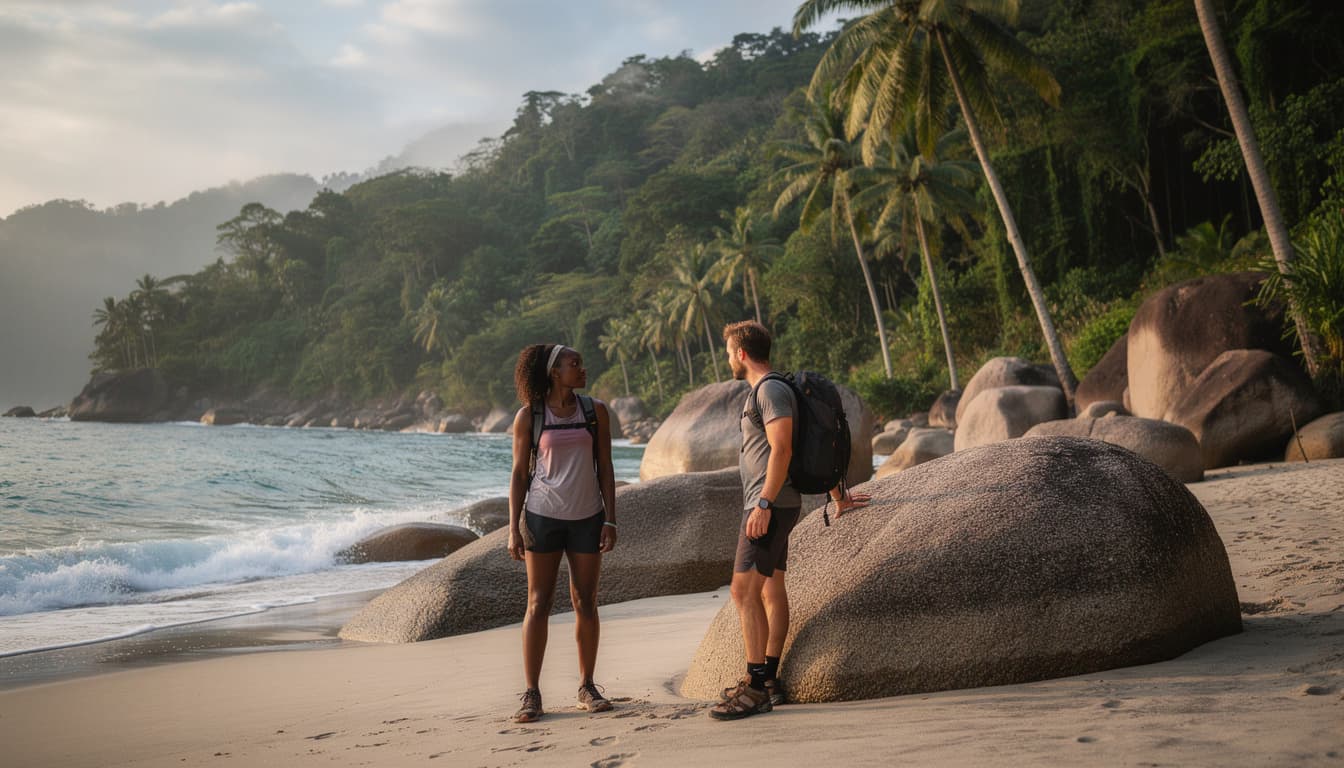
Established in 1964, Tayrona National Park protects 19,309 hectares of coastline, forest, sandy coves, and large granite boulders between the Sierra Nevada and the sea[3]. It is part of the ancestral territories of the Kankuamo, Kogui, Wiwa, and Arhuaco peoples of the Sierra Nevada[6].
It has four land entrances, each serving different beaches[7]:
- El Zaino, the main entrance, about 32 km from the center, where the trail goes through Cañaveral, Arrecifes, and La Piscina to Cabo San Juan del Guía[3].
- Calabazo, at km 20 of the Troncal del Caribe, leads by a longer trail to Playa Brava and the Cape[3].
- Palangana, at km 5, gives access to Neguanje and, by boat, to Playa Cristal[3].
- Bahía Concha, in the northwest sector, is reached through the city itself[3].
Many visitors take the bus to El Zaino and walk toward Arrecifes and Cabo San Juan.
The other entrances are an alternative: for foreigners, Bahía Concha costs COP 43,500, compared with COP 81,000 or more for the main entrance[1].
There are no reservations: tickets are sold at the entrance on the same day, up to the daily capacity, and every visitor must have accident insurance, attend the orientation talk and register[3]. Single-use plastic, bottles of alcoholic drinks, speakers, drones without authorization and pets are prohibited[3].
The main beaches are Playa Cristal, Cañaveral, Arenilla, Arrecifes and Cabo San Juan[6]. For snorkeling, head to Neguanje, where guides teach you to discover the corals and fish[6]. Pueblito Tayrona is reached on foot, along trails of large sculpted stones, with old stone stairs and bridges[6].
When to go, how to get there, how much time to plan
The most recommended period to travel runs from December to April[2]. The Fiestas del Mar in mid-year are another good time, as is the Caribbean International Theater Festival in late August and early September[2].
The park closes every year from February 1 to 15, from June 1 to 15, and from October 19 to November 2, according to the schedule published by the parks agency[3]. These closures correspond to a rest period for the territory agreed with the peoples of the Sierra Nevada[7]. Check these dates before planning your trip: the closure only applies to the park, not to the historic center, Taganga or El Rodadero[7].
To reach the park, allow about 40 minutes by bus from Santa Marta to the main entrance[6], not including waiting and walking time. Another guide gives closer to one hour by local bus from the market area; taxis and tours are faster[4]. Boats also leave from Taganga and El Rodadero to several points in the park[4].
For duration, three days is enough for the essentials: one day in the city, one full day at Tayrona, one day in Minca[3]. With a fourth day, you can return to the park via the Neguanje sector to spend the day at Playa Cristal, and finish in Taganga[3].
Pitfalls, scams and things to watch out for
- Swimming: the park's beaches have dangerous currents that require particular caution[8]. Only swim at authorized beaches and follow the instructions of the authorities[5]. Swimming is not allowed at Arrecifes, and the current is strong at the mouth of the Palomino River[9].
- Boat: entry and insurance must be paid before boarding[4], and those arriving by sea must also pay the entrance fee and have accident insurance[7]. The sea can be rough, especially from December to April, and a life vest must be worn at all times[4].
- Theft: keep electronic devices out of sight, especially on buses, and do not walk the coastal trail between Ziruma and El Rodadero, where armed assaults have taken place in broad daylight; take a bus or taxi for this stretch[9].
- Taxis: do not hail a taxi on the street, due to the risk of assault, theft or express kidnapping, in which attackers force passengers to withdraw money from several ATMs[5]. Prefer taxis booked through an app[5].
- Scopolamine: never leave your drink unattended in bars and party venues; the French embassy advises against using dating apps in Colombia[10].
- Taganga and Palomino: armed attacks, assaults and violent robberies are regularly reported there; avoid isolated places[5].
- Yellow fever: there have been periods when vaccination was required to enter Tayrona. Get vaccinated at least ten days before arriving in risk areas, carry your certificate, and confirm the rule in force with the park before traveling[9].
Key points for planning your stay
- Ideally travel between December and April, and check the park's closure dates before booking.
- Plan three days: the city, the park, Minca; add a fourth day for Neguanje, Playa Cristal and Taganga.
- Start with the Gold Museum before setting off on a trek to Ciudad Perdida.
- Choose your park entrance based on the beaches you want to visit; entry and insurance must be paid in every case.
- For the night, return by booked taxi rather than walking.
This article covers the essentials for planning a trip to Santa Marta. To really settle in, you'll need more detail on transport to reach the city, choosing a neighborhood, a line-by-line budget, and organizing a trek to Ciudad Perdida.
To go further
- Colombia: The Highlights, from the Caribbean Coast to the Amazon
- Tayrona National Park: A Guide to Planning Your Visit
- Ciudad Perdida: The Trek to the Lost City in the Sierra Nevada
- La Guajira: Cabo de la Vela and Punta Gallinas, the Edge of the Continent
Sources
- 1.^ abcdefgbootsnall.com — Santa Marta Travel Guide | BootsnAll: “Santa Marta is the oldest surviving Spanish city in Colombia, founded in 1525, and at first glance it doesn't look like it.”; “The historic center is a compact grid around the cathedral, Plaza Bolívar and Parque de los Novios, wrapped in a working port, traffic, and daytime temperatures that never drop below 32 °C.”; “People come here because the Sierra Nevada de Santa Marta rises right behind it, the coffee farms of Minca are an hour's climb away, and Tayrona National Park begins a little further along the coast.” https://www.bootsnall.com/colombia/santa-marta (accessed November 9, 2026)
- 2.^ abcdefcolombia.travel — Santa Marta: Caribbean City | Colombia Travel: “It is also worth visiting the Tairona Gold Museum, in the Casa de la Aduana in the historic center; this imposing colonial house holds the cultural heritage of the Sierra Nevada de Santa Marta and its surroundings.”; “One of the tourist sites in Santa Marta to include in your visit is the Quinta de San Pedro Alejandrino, a national historic monument and the final resting place of Simón Bolívar.”; “You can also enjoy the biodiversity at the Aquarium and the Museo del Mar, and in Taganga, ideal for recreational diving, sun, beach and deep relaxation.” https://colombia.travel/es/santa-marta (accessed November 9, 2026)
- 3.^ abcdefghijklmnilopelomundo.com — Santa Marta: map, what to do and when to go: “The first: the Quinta de San Pedro Alejandrino in the morning, the Tairona Gold Museum and the cathedral in the center, and sunset on the Malecón de Bastidas.”; “The third, I would spend in Minca, between the Pozo Azul, the Cascadas de Marinka and a coffee farm.”; “Ciudad Perdida is another journey, four to six days of guided trekking, and Palomino and Aracataca are worth the detour for those with even more time.” https://nilopelomundo.com/en/place/santa-marta/ (accessed November 9, 2026)
Show 7 more sourcesShow less
- 4.^ abcdeftravelercenter.com — Tayrona National Natural Park Travel Guide - TravelerCenter: “Bahía Concha, the closest bay to Santa Marta, has a wide beach, a restaurant and snorkeling, according to the park agency.”; “Bahía Concha is reached through the city's northern neighborhoods, with a 20-minute walk to the beach.”; “The main entrance, El Zaino, is 32 km from Santa Marta on the Troncal del Caribe heading toward Riohacha, according to the park agency; local buses from the market area take about an hour, and taxis and tours are faster.” https://travelercenter.com/colombia/tayrona-national-natural-park/ (accessed November 9, 2026)
- 5.^ abcdediplomatie.gouv.fr — Colombia - Security | France Diplomatie: “Excursions into the foothills and the Sierra Nevada are possible, as are, during the dry season, hikes to Ciudad Perdida, but they must necessarily be accompanied by a guide.”; “Only visit authorized beaches and scrupulously follow the instructions of the authorities.”; “It is also recommended not to hail taxis on the street because of the risk of assault, theft or kidnapping, notably express kidnapping in which the attackers (including a fake taxi driver) force passengers to withdraw money from several ATMs.” https://www.diplomatie.gouv.fr/fr/information-par-pays/colombie/conseils-aux-voyageurs-securite (accessed November 9, 2026)
- 6.^ abcdecolombia.travel — Tayrona National Park in Santa Marta | Colombia Travel: “One of the first things to know about Tayrona Park is that it is part of the ancestral territories of the Kankuamo, Kogui, Wiwa and Arhuaco indigenous communities, who inhabit the Sierra Nevada de Santa Marta where the park is located.”; “From there, you can take the 40-minute bus to the main gates of Tayrona Park, where you will access the park's main beaches: Playa Cristal, Playa Cañaveral, Playa Arenilla, Playa Arrecifes and Playa Cabo de San Juan.”; “At Bahía Neguanje, you will also find expert guides who will teach you snorkeling and show you the great variety of corals and fish species in the area.” https://colombia.travel/en/santa-marta/visit-tayrona-park (accessed November 9, 2026)
- 7.^ abcddeeparrival.com — Tayrona National Park Access Stops Oct. 19 | Deep Arrival: “Four land entrances serve different beaches.”; “The pause is the last of three annual closures agreed with the Arhuaco, Kogui, Wiwa and Kankuamo peoples of the Sierra Nevada de Santa Marta.”; “The closure only affects the park. The historic center of Santa Marta, Taganga and El Rodadero do not close because Tayrona is resting.” https://deeparrival.com/news/tayrona-national-park-closure-october-19-2026/ (accessed November 9, 2026)
- 8.^Mira Knowledge — The park's beaches have dangerous currents that call for particular vigilance when swimming. Verified on 06/10/2026: official source diplomatie.gouv.fr. https://www.diplomatie.gouv.fr/fr/information-par-pays/colombie/conseils-aux-voyageurs-securite (accessed June 10, 2026)
- 9.^ abcnilopelomundo.com — Santa Marta: Map, What to Do, and When to Go: “At sea, respect the red flag, which prohibits swimming; swimming is not allowed at Arrecifes, and at the mouth of the río Palomino the current is strong.” ; “Keep electronic devices out of sight, especially on buses, and do not walk the coastal trail between Ziruma and El Rodadero, where there have been armed robberies in broad daylight; take a bus or taxi for this trip.” ; “There have been periods when vaccination was required to enter Tayrona and the Sierra Nevada national park.” https://nilopelomundo.com/fr/lieu/santa-marta/ (accessed November 9, 2026)
- 10.^diplomatie.gouv.fr — Colombia - Travel Advice - Latest Updates and Alerts - Page 1 of 1 - France Diplomatie | France Diplomatie: “Given the risk of being unknowingly given drugs or psychotropic substances (scopolamine), it is advised not to use dating apps in Colombia.” ; “Likewise, do not leave your drink unattended in bars, nightclubs, or other social venues, especially when meeting strangers through these apps.” https://www.diplomatie.gouv.fr/fr/information-par-pays/colombie/dernieres-minutes-et-alertes (accessed November 9, 2026)