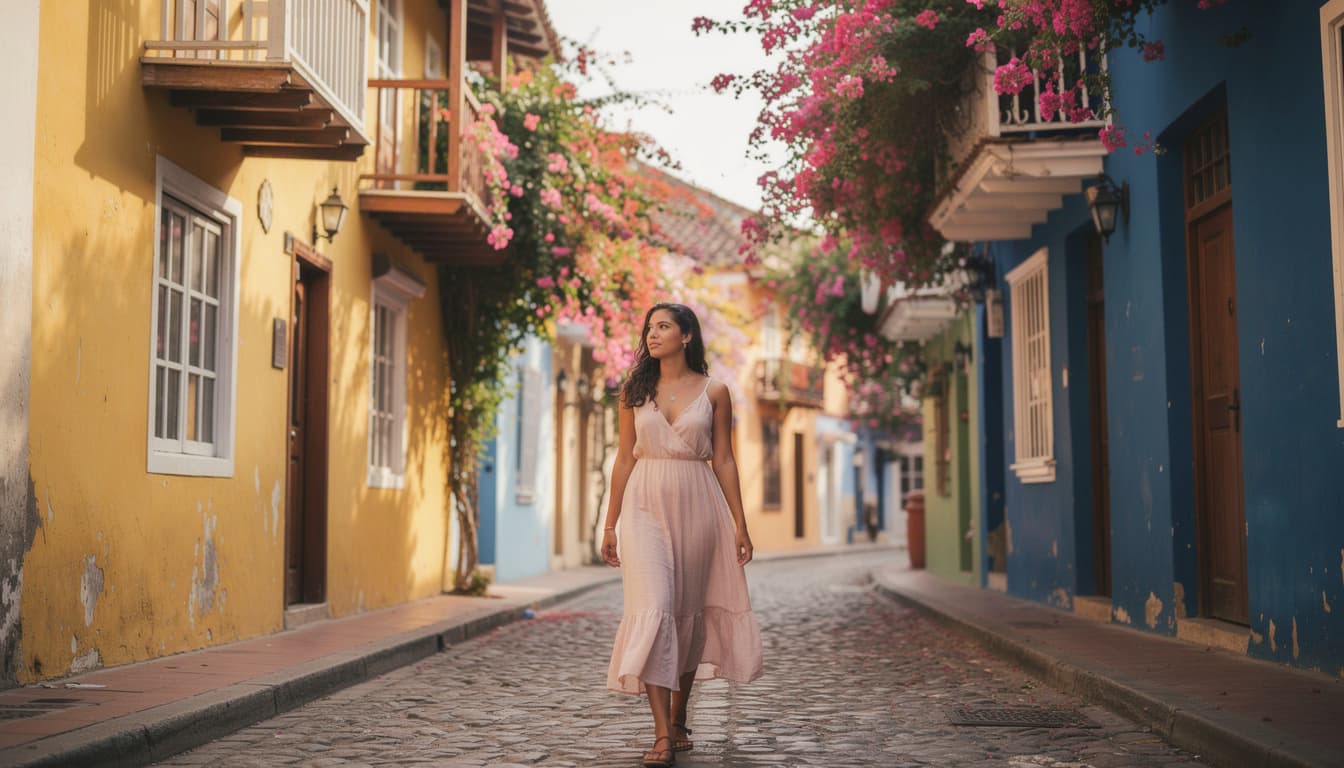
Colombia draws travelers with its Caribbean coast, mountain villages, and nature. It also takes some preparation: areas to avoid, neighborhoods where you can stay, and street-smart habits in the city. This article helps you choose your first stop, get around safely, and spot the common pitfalls before you set off alone.
Solo in Colombia: What to Expect
Yes, Colombia is worth visiting, but it can't be compared to a very safe destination. A traveler who has lived in the country puts it this way: even though Colombia is safe enough, “it really isn't like what you're used to at home”[1]. She notices the difference as soon as she travels to a safer country: there, she can walk down the street and use her phone anywhere without worry[1]. For a first solo trip, staying alert is part of the plan.
The security situation is mixed and changes quickly. Even in areas rated orange, some destinations remain safe, while elsewhere conditions can shift within a month[1]. Risks vary by location: outside the big cities and the red and orange zones, the country is described as much safer, with few problems in the villages[1]. Some remote rural areas, however, carry a different kind of risk tied to guerrilla groups such as the ELN, which differs from ordinary urban crime[1].
One point to keep in mind: ahead of the presidential elections in May 2026, the same traveler noted that they always bring unrest, which often begins a year in advance[1]. The southwest, around Cali, Popayán, and Pasto, was more volatile at the time[1].
Where to Go, Where to Avoid: Areas to Know
Official advisories place several departments of the country in orange zones, meaning heightened caution (details below). Some countries, such as Belgium, also advise against all travel to certain regions[2]. For its part, the French foreign ministry rates the eastern departments (Vichada, Guainía, Guaviare, Vaupés) and the southern departments (Amazonas, Caquetá, Putumayo) as orange zones due to armed groups and trafficking[3]. Nariño, eastern Valle del Cauca, northern Antioquia and Santander, and southern Sucre, Córdoba, and Bolívar are also classified as orange[4].
Belgian diplomacy goes further for certain regions: according to its advice updated on September 18, 2026, all travel is discouraged to the border areas with Venezuela, Ecuador (except Ipiales), and Panama[2]. It also advises against all travel to Chocó (except Bahía Solano and Nuquí), Cauca (except Popayán), and Valle del Cauca (except Cali)[2].
These lists change, so check your country's travel advice right before you book, for example France Diplomatie's if you are French[2].
Choosing Your Starting City
Each major city has neighborhoods to favor and habits to adopt.
Bogotá
The south of the capital (Kennedy, Ciudad Bolívar, Altos, Cazuca, Soacha) is rated orange. The north (Chapinero, Chico, Zona T, Usaquén) is affected by frequent snatch-and-grab thefts, and it is recommended to avoid walking after 7 pm. The downtown area (La Candelaria, Monserrate) is exposed to frequent theft[5].
Cali
The situation is acceptable there, except in the east of the city, and the Cali-Popayán-Pasto-Ipiales road corridor should be avoided[6]. A travel guide advises staying in neighborhoods such as Granada, San Fernando, San Antonio, or El Peñón, and getting around by official taxi or Uber[7].
Cartagena
The situation is satisfactory in the walled old town, in Bocagrande, Castillogrande, and Getsemaní. Extra vigilance is recommended in the alleys at night[8].
Comparing Cities
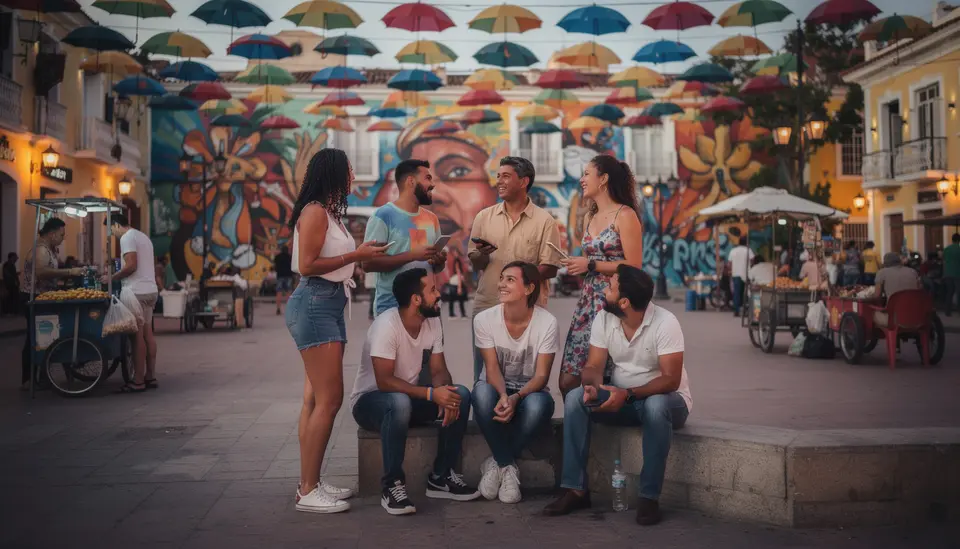
The Hello Mira guide for digital nomads compares Bogotá, Medellín, Cali, and Cartagena on the same criteria: climate, air access, and neighborhood-by-neighborhood safety guidelines[9]. It's the right starting point for deciding based on your budget and pace.
Things to See and Do
On the Caribbean coast, Cartagena combines historic ramparts and beaches, and remains a must-see on the tourist circuit[7]. Near Santa Marta, Tayrona National Park is a safe tourist destination[10]. Hello Mira also features Santa Marta and the Eje Cafetero in its guide for digital nomads[9].
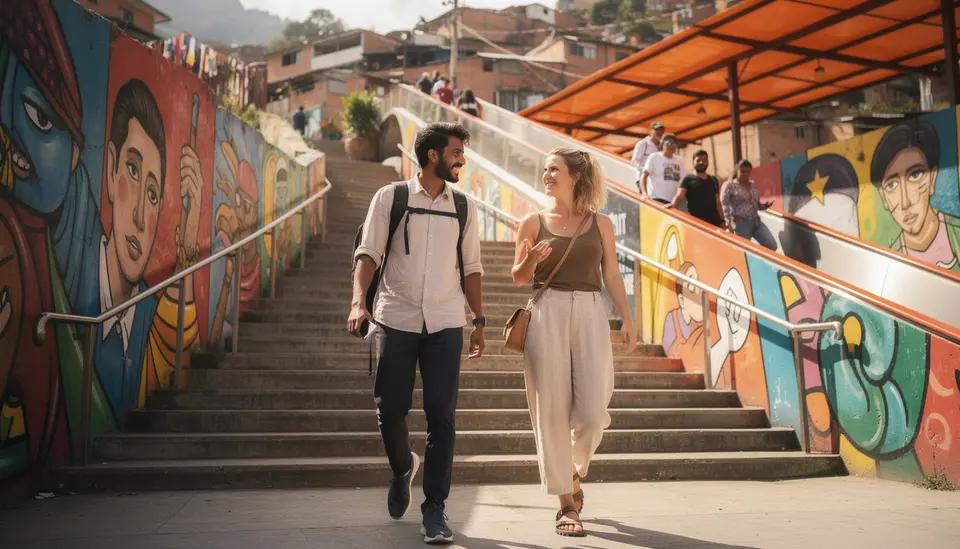
In the interior, several villages are generally safe for travelers: Salento, Palomino, Barichara, Villa de Leyva, Jardín, and Guatapé[7]. Villages often offer more freedom than a large city: the traveler quoted above was able to use her phone on the street in Sopó, which she does not do in Bogotá[1].
Budget and length of stay
According to the Hello Mira guide editorial team's estimate, a single adult can expect to spend about €1,270 to €2,010 per month depending on the city and accommodation, before coworking and leisure[9]. The budget therefore varies greatly from one city to another. This guide is for those who want to live in Colombia for one to six months while working remotely, with a French passport[9].
Staying connected
If you have a postpaid plan with a carrier in Bolivia, Ecuador, or Peru, you have not paid any roaming surcharge in Colombia since January 1, 2022: voice, SMS, and data are billed under the terms of your home plan[11]. This comes from Decision 854 of the Andean Community[11].
Scams, pitfalls, and points of caution
- Taxis: hailing a taxi on the street in large cities, especially if you speak little Spanish, can go very wrong[1]. Prefer a location-based ride service such as Uber[7].
- Walking: avoid walking alone at night in quiet neighborhoods[7]. In Bogotá, it is recommended to avoid walking after 7 pm[5].
- Valuables: in the Colombian capital, a travel guide recommends avoiding walking around at night and displaying valuables[7]; in Cali, do not show ostentatious signs of wealth[7].
- Phone: the traveler quoted uses hers in the villages but not in Bogotá[1].
- Bogotá bridges: many bridges that cross the highway or lead to a Transmilenio station are not safe at certain times; check locally before using them[1].
- Swimming: the beaches of Tayrona Park have dangerous currents[10].
- Road route: avoid the Cali–Popayán–Pasto–Ipiales road[6].
- Calendar: disturbances are possible around the May 2026 elections, especially in the southwest[1].
Checklist before you leave
- Re-read the travel advice for your country just before booking[2].
- Choose a first base among the neighborhoods considered satisfactory: the old city and Getsemaní in Cartagena, outside the eastern part of the city in Cali[8][6].
- Set up an app-based transport account rather than relying on hailed taxis[7].
- If you have a postpaid plan in Bolivia, Ecuador, or Peru, check your plan before leaving[11].
- Budget roughly €1,270 to €2,010 per month for a single adult, excluding coworking and leisure[9].
- For more (step-by-step procedures, line-by-line budget, choosing a neighborhood), see the Hello Mira guide for digital nomads[9].
Sources
- 1.^ abcdefghijklbesabine.com — Colombia travel advice for your trip: honest and up to date (2026). : “Although Colombia is safe enough, it really is not like what you’re used to back home.” ; “Suddenly, I can walk down the street safely, use my phone anywhere, and do what I want without worry.” ; “Even in orange zones, there are destinations that are safe. Or the security situation keeps changing: one moment you can go safely, and a month later it’s better to avoid that place.” https://www.besabine.com/fr/securite-en-colombie/ (accessed November 4, 2026)
- 2.^ abcdehorizoncolombie.com — Safety in Colombia 2026: real risks for an expat: “According to the Belgian diplomacy travel advice updated September 18, 2026, all travel is advised against to: ” ; “the border areas with Venezuela, Ecuador (except Ipiales), and Panama; ” ; “Chocó (except Bahía Solano and Nuquí), Cauca (except Popayán), and Valle del Cauca (except Cali);” https://horizoncolombie.com/les-risques-reels-en-matiere-de-securite-pour-un-expatrie-en-colombie/ (accessed November 4, 2026)
- 3.^Mira Knowledge — The eastern departments (Vichada, Guainía, Guaviare, Vaupés) and southern departments (Amazonas, Caquetá, Putumayo) are classified as orange zones (heightened vigilance) due to the presence of armed groups and trafficking. Verified 06/10/2026: official source diplomatie.gouv.fr. https://www.diplomatie.gouv.fr/fr/information-par-pays/colombie/conseils-aux-voyageurs-securite (accessed June 10, 2026)
Show 8 more sourcesShow less
- 4.^Mira Knowledge — Also classified as orange zones: the department of Nariño, eastern Valle del Cauca, northern Antioquia and Santander, and southern Sucre, Córdoba, and Bolívar. Verified 06/10/2026: official source diplomatie.gouv.fr. https://www.diplomatie.gouv.fr/fr/information-par-pays/colombie/conseils-aux-voyageurs-securite (accessed June 10, 2026)
- 5.^ abMira Knowledge — In Bogotá, the south of the capital (Kennedy, Ciudad Bolívar, Altos, Cazuca, Soacha) is classified as an orange zone. The north (Chapinero, Chico, Zona T, Usaquén) is affected by frequent snatch-and-grab thefts. It is recommended to avoid walking after 7 pm. The city center (Candelaria, Monserrate) is exposed to frequent theft. Verified on June 10, 2026: official source diplomatie.gouv.fr. https://www.diplomatie.gouv.fr/fr/information-par-pays/colombie/conseils-aux-voyageurs-securite (accessed June 10, 2026)
- 6.^ abcMira Knowledge — The security situation in Cali is acceptable, except for the east of the city. It is recommended to avoid the Cali–Popayán–Pasto–Ipiales road corridor due to security risks. Verified on June 10, 2026: official source diplomatie.gouv.fr. https://www.diplomatie.gouv.fr/fr/information-par-pays/colombie/conseils-aux-voyageurs-securite (accessed June 10, 2026)
- 7.^ abcdefghlesjoyauxdameriquelatine.fr — Safety in Colombia: A Complete Guide for Travelers: "To enjoy Cali safely, avoid the east side and choose neighborhoods such as Granada, San Fernando, San Antonio, or El Peñón for your accommodation. Get around by official taxi or Uber, and do not display ostentatious signs of wealth." ; "With its historic ramparts and paradise-like beaches, this city is a must-see." ; "Villages such as Salento, Palomino, Barichara, Villa de Leyva, Jardín, and Guatapé are generally safe for travelers." https://www.lesjoyauxdameriquelatine.fr/securite-en-colombie-guide-voyage/ (accessed November 4, 2026)
- 8.^ abMira Knowledge — The security situation in Cartagena de Indias is satisfactory in the intramuros (walled old town), Bocagrande, Castillogrande, and Getsemaní neighborhoods. Increased vigilance is recommended in the alleyways at night. Verified on June 10, 2026: official source diplomatie.gouv.fr. https://www.diplomatie.gouv.fr/fr/information-par-pays/colombie/conseils-aux-voyageurs-securite (accessed June 10, 2026)
- 9.^ abcdefhello-mira.com — Digital nomad in Colombia: the guide for French travelers | Hello Mira: "It compares Bogotá, Medellín, Cali, and Cartagena on the same criteria, covers Santa Marta and the Eje Cafetero, and ends with a glossary, frequently asked questions, and printable practical sheets." ; "Climate, air access, and neighborhood-by-neighborhood safety guidelines vary greatly from one city to another. The guide compares them on the same criteria to help you choose your base according to your budget and work rhythm." ; "According to the editorial team's estimate, a single adult can expect to spend roughly €1,270 to €2,010 per month depending on the city and accommodation, before coworking and leisure." (accessed November 4, 2026)
- 10.^ abMira Knowledge — Tayrona National Park, near Santa Marta, is a safe tourist destination. The park's beaches have dangerous currents that require particular caution when swimming. Verified on June 10, 2026: official source diplomatie.gouv.fr. https://www.diplomatie.gouv.fr/fr/information-par-pays/colombie/conseils-aux-voyageurs-securite (accessed June 10, 2026)
- 11.^ abcMira Knowledge — Since January 1, 2022, postpaid subscribers of a mobile operator in Bolivia, Colombia, Ecuador, or Peru pay no international roaming surcharge in the other Andean Community countries: voice, SMS, and data are billed under the terms of their national plan, pursuant to Andean Community Decision 854. Verified on September 28, 2026: official source comunidadandina.org. https://www.comunidadandina.org/notas-de-prensa/desde-el-1-de-enero-de-2022-se-eliminaran-cargos-de-roaming-internacional-en-paises-de-la-comunidad-andina/ (accessed September 28, 2026)