Sukhothai, the first capital of the Kingdom of Siam, is a journey back to the origins of Thai culture: lotus-bud chedis, monumental Buddhas, and ruins you can explore by bike. This article helps you choose the temples worth the detour, understand how the park and nearby towns are laid out, time your visit for the cool season or Loy Krathong, and plan your trip from Bangkok.
Sukhothai, the dawn of happiness: a capital at the roots of Thai culture
The name Sukhothai means "the dawn of happiness." The city was the first capital of the Kingdom of Siam in the 13th and 14th centuries[1]. This period is often regarded as a golden age of Thai culture, when the first Thai alphabet was created[1]. UNESCO notes that the Thai alphabet invented in Sukhothai is still in use today[2].
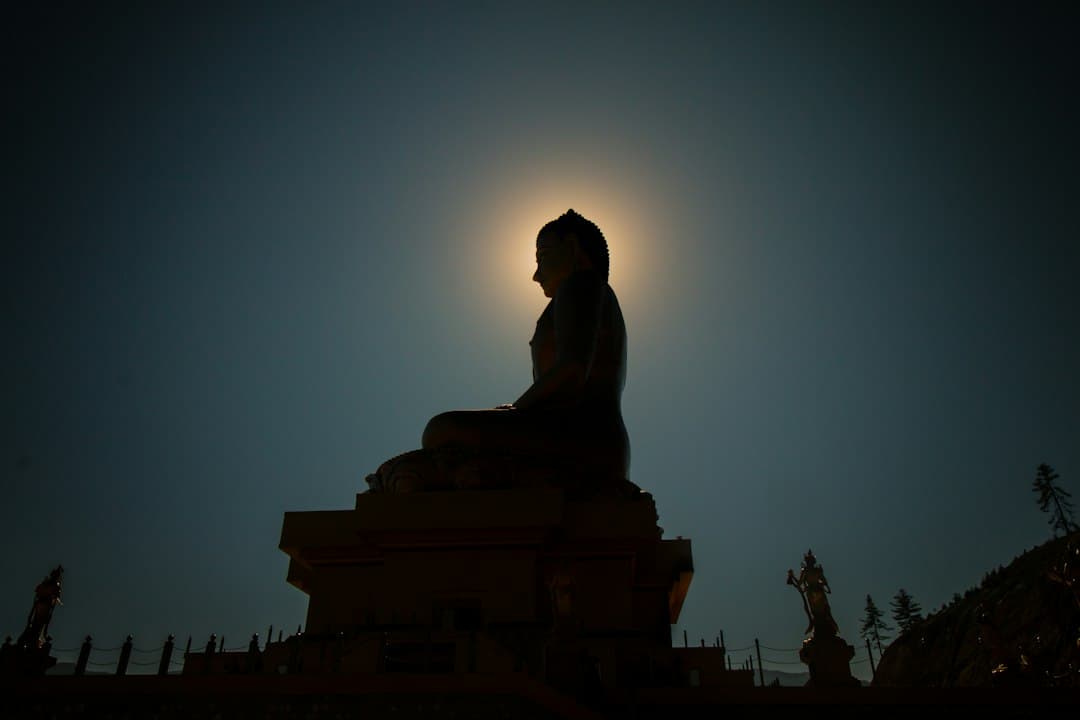
King Ramkhamhaeng the Great also encouraged religion and culture, and Buddhism flourished under his reign[3]. This faith gave rise to the classic forms of Thai religious art: Buddha images sculpted in the Sukhothai era are cultural treasures that convey a sense of peace and serenity[3]. UNESCO speaks of a "Sukhothai style," forged by the rapid assimilation of many influences and older local traditions[2].
The first Thai kingdom came to an end in 1365, when it became a vassal state of Ayutthaya, the new southern kingdom that then served as capital for four centuries, before Bangkok[3]. The historical park has been a UNESCO World Heritage Site since 1991[1]. The Tourism Authority of Thailand sees it as the cradle of Thai civilization, and a visit there is presented as a journey into the Kingdom of Siam of the 13th century[4].
In the historical park: the temples not to miss
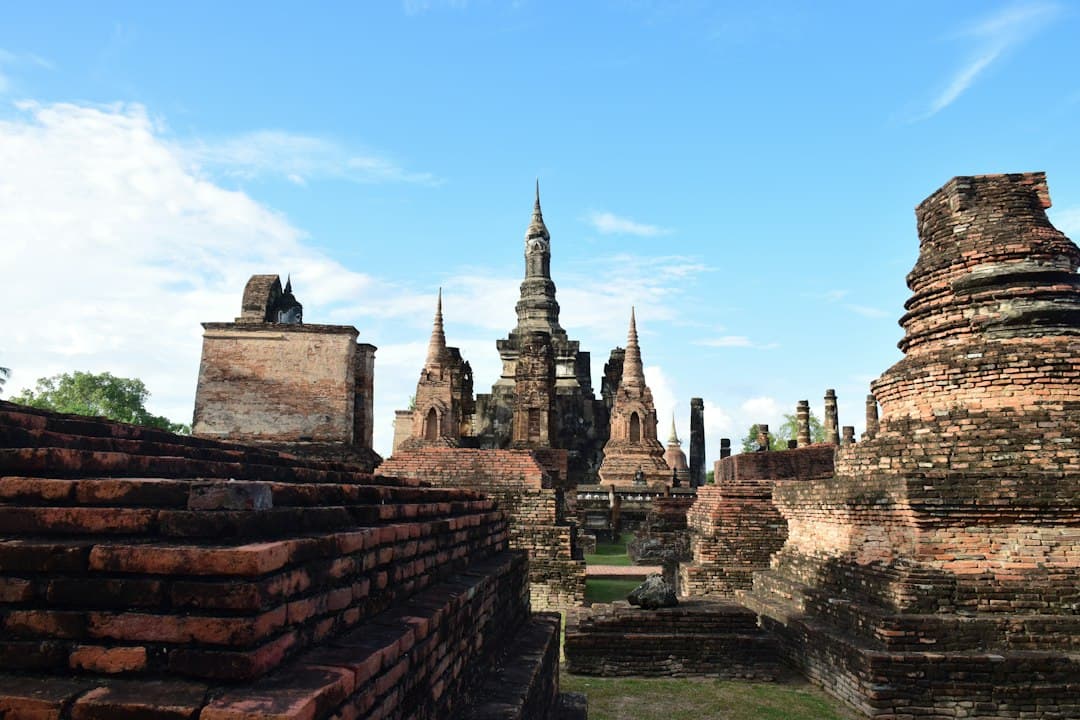
The park contains the ruins of palaces and temples, protected by ancient ramparts and moats[1]. A few stops stand out.
- Wat Mahathat: the most important temple of the kingdom, a spiritual and royal center. It is remarkable for its large central lotus-bud chedi, surrounded by smaller stupas and Buddha statues[1].
- Wat Si Chum: north of the central zone, it houses a seated Buddha nearly 15 meters tall, the "Phra Achana" or "Talking Buddha"[1]. It sits in a mondop with only four walls, which gives it a unique and almost magical look[5].
- Wat Si Sawai: its three Khmer-style prangs bear witness to the architectural influences that preceded the emergence of the distinctive Sukhothai style[1].
- Wat Sa Si: set on an artificial island, it offers a particularly serene setting[6].
- Wat Sorasak: a chedi whose base is surrounded by 24 elephant statues that seem to carry it[7].
- Wat Traphang Ngoen, the "temple of the silver lake": built in the 14th century, it has a large lotus-flower-shaped chedi, in front of which sits a large Buddha[7].
The artificial ponds around the ruins reflect the stupas at sunrise and sunset[6].
Experiencing the park: by bike, at the pace of the ruins
Biking is the preferred way to get around the park. The central zone, mostly pedestrian-friendly and shaded, lends itself to a relaxed ride among the ruins, and you can rent bikes at the entrance to the site or from nearby hotels[1]. Expect to pay about 30 THB for the day[8]. Some rental shops close around 5:30 to 6 pm: return your bike before then[9].
The site includes several zones quite far from one another: to see them all, you need a means of transport, since you can't walk from one to another[7]. The heart of the visit is the central zone; the northern and western zones hold less-visited temples, often overrun by vegetation[6]. In the central zone, the main sites are grouped along flat roads: no hiking, no long trips between stops[9].
Before setting out to explore, a visit to the Ramkhamhaeng National Museum helps you understand the history of the region and lets you see objects and sculptures unearthed on the site[1].
Si Satchanalai and Kamphaeng Phet: The Sister Cities
The UNESCO-listed site is a set of three closely linked ancient cities: Sukhothai, Si Satchanalai and Kamphaeng Phet[2]. Sukhothai was the political and administrative capital. Si Satchanalai was the spiritual center of the kingdom, with many Buddhist temples and monasteries, and also the center of the essential export ceramics industry[2]. Kamphaeng Phet, on the southern border of the kingdom, had important military functions, protecting against intruders and securing the trade network[2].
According to many analyses, Si Satchanalai preserves a less altered version of Sukhothai-era architecture than the central park: far from the main roads and less visited, the site has seen less extensive clearing of vegetation and less extensive reconstruction[10]. You can explore temple ruins there, including Wat Chang Lom, the most important temple in Si Satchanalai[7].
Kamphaeng Phet is 77 km from Sukhothai[7]. It is not a major tourist hub, but its historical park is also a UNESCO site[7]. Its name means “diamond wall,” a reference to its role as a fortification[10]. Don't miss Wat Phra Kaew and its reclining Buddha[7].
Living Culture: Loy Krathong, Porcelain and Countryside
Sukhothai hosts one of the most beautiful Loy Krathong festivals in the country, on the full moon of November[8]. Lit candles and floating lotus flowers create a spectacle that the Tourism Authority describes as unforgettable[5]. If you plan to visit during this period, book well in advance[8].
Beyond the ruins, the province offers other visits: the marigold fields of Ban Pak Khwae, Lanna culture in the Thung Saliam district, and the craft of Si Satchanalai porcelain, a centuries-old artisan tradition[5].
Practical Info: When to Go, How to Get There, How Long to Plan For
From November to February, the cool season is the most pleasant for cycling through the park; March to May is very hot[8].
Getting There from Bangkok
Sukhothai is about 430 km north of Bangkok. The direct bus is the simplest and cheapest option[8]. Bus line 965 departs at 7 am, 12 pm and 2 pm and goes to the historical park; other buses arrive at the bus station, about 2 km from New Sukhothai and 12 km from the park, from where a shared songthaew reaches the park for about 30 THB, from 6 am to 5 pm[8]. So check where your bus drops you off[8].
Another option: Bangkok Airways flies from Suvarnabhumi to Sukhothai Airport twice a day, in about 1 hour 20 minutes. The airport is about 27 km north of New Sukhothai, and a minivan drops you at your hotel for about 300 THB[8]. The train to Phitsanulok, then a bus, is a third possibility: Phitsanulok is the closest railway hub[6].
Where to Stay
Staying in Old Sukhothai lets you see the temples at sunrise, before the heat and the tour groups. New Sukhothai has more restaurants and a night market, but requires a 20 to 30 minute songthaew ride each day[8].
How Long to Plan For
With one day, the central zone and Wat Si Chum offer the best interest-to-time ratio[9]. To go further, plan for more time: the duration depends on the areas you want to explore and your mode of transport[7].
Admission
The park is visited by zone, with one ticket per zone. Prices quoted by guides vary widely: for foreigners, from 100 to 200 baht for the central zone depending on the source[9]. Ask at the ticket counter whether the combined ticket covers the zones you plan to visit[9]. The Ramkhamhaeng National Museum charges 150 baht admission according to one travel guide[7].
Caution at a Glance
- Respect the image of the King (including on banknotes), that of the members of the royal family, and depictions of the Buddha: posts taking a stance against them on social media, including simply sharing a post, can lead to criminal proceedings and very severe penalties[11].
- Drive carefully, especially on two-wheelers: in Thailand, 90% of fatal accidents involve two-wheelers[12]. Before renting a vehicle, check the contract for driver, passenger and third-party liability insurance, as well as coverage for damage to the vehicle[11].
- Avoid night buses where possible: poor maintenance of some coaches, excessive speed and overly long driving hours cause very frequent accidents[11].
- As far as personal safety goes, serious violence rarely involves tourists in Thailand[13].
This article gives you the essentials for a stop in Sukhothai. The detailed schedules and prices, step-by-step itineraries from Bangkok, and your precise choice of accommodation require some more research before you leave. To place Sukhothai within a broader itinerary, see also our general article “Thailand: The Essentials, Region by Region.”
Keep exploring
- Thailand: the must-sees, region by region
- Ayutthaya: What to See and Do from Bangkok in One or Two Days
- Kanchanaburi and the River Kwai: History, Waterfalls and a Day Trip from Bangkok
- Chiang Rai and the Golden Triangle: Temples, Markets, Hills and the Mekong
Sources
- 1.^ abcdefghiroutard.com — Visit Sukhothai: Plan Your Stay and Trip to Sukhothai | Routard.com: “Sukhothai, whose name means ‘the dawn of happiness,’ was the first capital of the Kingdom of Siam in the 13th and 14th centuries.”; “This period is often considered a golden age for Thai culture, notably seeing the birth of the first Thai alphabet.”; “Listed as a UNESCO World Heritage Site since 1991, the Sukhothai Historical Park is an exceptional testimony to the beginnings of Thai architecture.” https://www.routard.com/fr/guide/asie/thailande/plaine-centrale/sukhothai (accessed November 9, 2026)
- 2.^ abcdewhc.unesco.org — Historic Town of Sukhothai and Associated Historic Towns - UNESCO World Heritage Centre: “The unique Thai alphabet, invented at Sukhothai, is still in use today.”; “The rapid assimilation of all these elements forged what is known as the Sukhothai style.”; “The Historic Town of Sukhothai and Associated Historic Towns form a serial property made up of three closely linked ancient towns.” https://whc.unesco.org/en/list/574/ (accessed November 9, 2026)
- 3.^ abctourismethai.fr — Sukhothai - สุโขทัย - Tourism Authority of Thailand (French site): “King Ramkhamhaeng the Great also encouraged religion and culture, and through his efforts, Buddhism flourished.”; “The inspiration of faith gave rise to classical forms of Thai religious art. The Buddha images sculpted during the Sukhothai period are cultural treasures that convey a sense of peace and serenity.”; “The end of the first Thai kingdom came in 1365, when it was reduced to a vassal state of Ayutthaya, a new kingdom emerging from the south, which in turn became the capital for four centuries, before Bangkok.” https://tourismethai.fr/nord/sukhothai/ (accessed November 9, 2026)
Show 10 more sourcesShow less
- 4.^tourismethai.fr — Thailand's UNESCO Treasures - Tourism Authority of Thailand (French site): “Considered the cradle of Thai civilization, Sukhothai offers immaculate ruins that bear witness to the beginnings of Thai art, architecture, and culture. A visit here is a journey into the Kingdom of Siam of the 13th century.” https://tourismethai.fr/experiences/tresors-thailandais-de-lunesco/ (accessed November 9, 2026)
- 5.^ abctourismethai.fr — Sukhothai - Tourism Authority of Thailand (French site): “The Buddha sits in a mondop with only four walls, giving it a unique and almost magical appearance.”; “Don’t miss the fascinating Loy Krathong celebration, where the spectacular beauty of lit candles and floating lotus flowers creates an unforgettable sight.”; “Visitors can enjoy the magnificent display of marigolds in the marigold fields of Ban Pak Khwae, discover Lanna civilization in the Thung Saliam district, or marvel at the refined craftsmanship of Si Satchanalai porcelain, a centuries-old artisan tradition.” https://tourismethai.fr/locatie/sukhothai-2-2/ (accessed November 9, 2026)
- 6.^ abcdtour-cambodia.com — Sukhothai: “Wat Sa Si, set on an artificial island, offers a particularly serene setting.”; “The artificial pools surrounding the ruins reflect the stupas at sunrise and sunset.”; “The northern and western areas hold less-visited temples, often overgrown with vegetation.” https://www.tour-cambodia.com/guide-cambodia/destination/sukhothai (accessed November 9, 2026)
- 7.^ abcdefghivoyagetips.com — Sukhothai: The Definitive Guide | How to Visit + Tips | 2026: “Wat Sorasak: a chedi whose base is surrounded by 24 elephant statues that seem to carry it.”; “Wat Traphang Ngoen: its name literally translates to ‘temple of the silver lake.’ Built in the 14th century, it has a large lotus-shaped chedi, in front of which sits a large Buddha.”; “First thing to know: the Sukhothai site actually comprises several zones quite far from one another. To visit them all, you need a means of transport, as it is not possible to walk from one zone to another.” https://www.voyagetips.com/en/sukhothai/ (accessed November 9, 2026)
- 8.^ abcdefghithailande-pratique.fr — Bangkok to Sukhothai: Bus, Train, Plane, Prices (2026): “The most pleasant option is to rent a bicycle, for about 30 THB a day.”; “Sukhothai hosts one of the most beautiful Loy Krathong festivals in the country, on the full moon of November: you need to book well in advance if you come during that period.”; “From November to February, the cool season is the most pleasant for exploring the park by bike. March to May is very hot.” https://thailande-pratique.fr/bangkok-sukhothai/ (accessed November 9, 2026)
- 9.^ abcdetetono.com — Sukhothai Travel Guide 2026: Historical Park, Fees, Cycling, 2-Day Plan: “Some rental shops close around 5:30 pm–6 pm: return the bike before then.”; “The big advantage is compactness: the main sites are grouped in the central area on flat roads, so there's no hiking or long trip between stops.”; “Only one day? The central area plus Wat Si Chum offers the best value for your time.” https://tetono.com/en/articles/sukhothai-travel-guide-2026/ (accessed November 9, 2026)
- 10.^ abculturalheritageonline.com — UNESCO Sites Near Sukhothai: What to See: “According to many analyses, Si Satchanalai preserves a less altered version of Sukhothai-era architecture than the central Sukhothai Historical Park. Its distance from major routes and smaller number of visitors mean that vegetation clearing and reconstruction of structures were less extensive there.”; “Its name translates as ‘diamond wall,’ reflecting its role as a fortification.” https://culturalheritageonline.com/magazine/unesco-world-heritage-sites-near-sukhothai-historical-park/ (accessed November 9, 2026)
- 11.^ abcdiplomatie.gouv.fr — Thailand - Useful Information | France Diplomatie: “Respect must be shown for the image of the King (including on banknotes), as well as for members of the royal family and depictions of the Buddha. Statements against them on social media (including simply sharing a post) may lead to criminal proceedings and very severe penalties.”; “Before renting a vehicle, it is strongly recommended to check the rental contract for driver, passenger, third-party liability, and vehicle damage insurance coverage.”; “Poor maintenance of some coaches and, more generally, excessive speed and overly long driving times are the cause of very frequent road accidents. Where possible, avoid taking night buses.” https://www.diplomatie.gouv.fr/fr/information-par-pays/thailande/conseils-aux-voyageurs-informations-utiles (accessed November 9, 2026)
- 12.^diplomatie.gouv.fr — Thailand - Safety | France Diplomatie: “Two-wheeled vehicles are particularly dangerous (in Thailand, 90% of fatal accidents occur on two-wheelers).” https://www.diplomatie.gouv.fr/fr/information-par-pays/thailande/conseils-aux-voyageurs-securite (accessed November 9, 2026)
- 13.^Mira Knowledge — In Thailand, violent crimes, including those committed with a firearm, rarely involve tourists. Verified: official source gov.uk. https://www.gov.uk/foreign-travel-advice