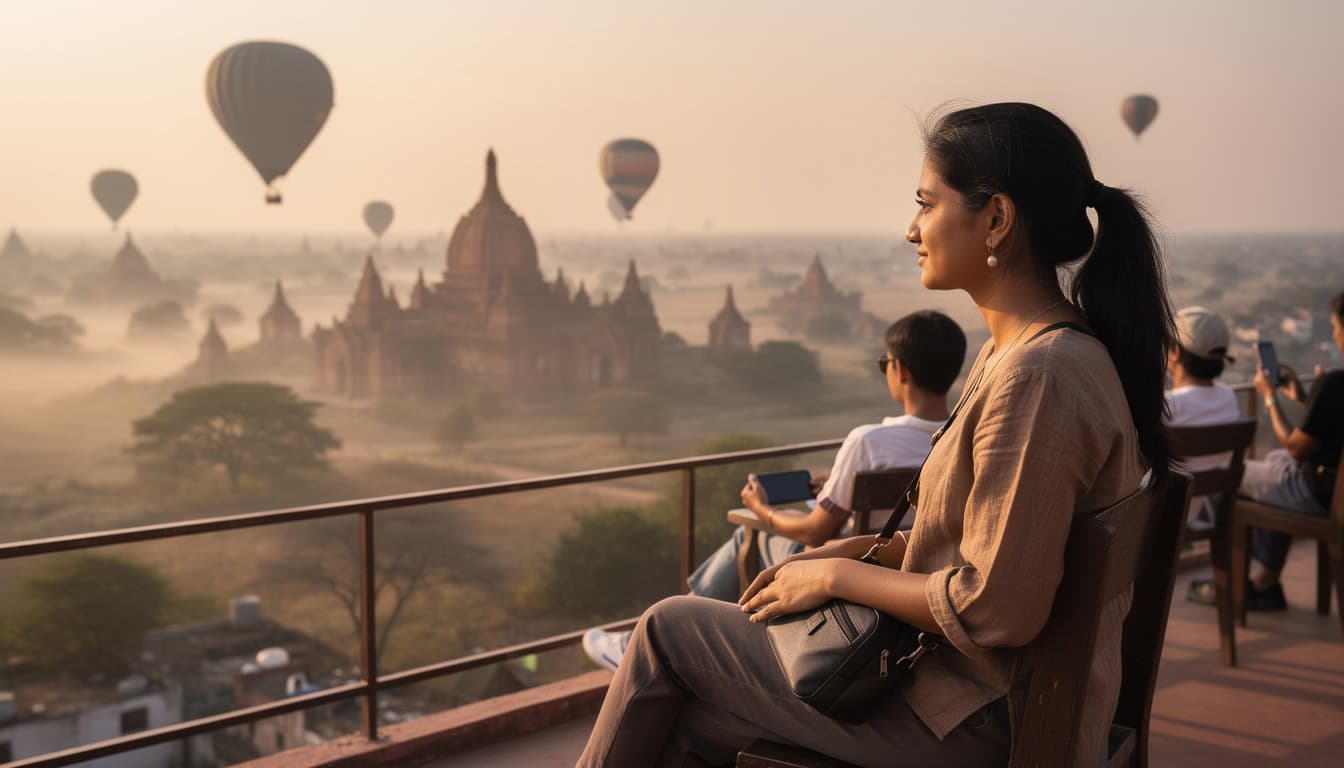
About 80 km north of Bangkok, Ayutthaya was the capital of the Siamese kingdom. Its red brick ruins can be explored in a day, or in two if you want to see them in the evening light. This article helps you choose the temples that matter, decide between a day trip and a night on site, find the right season and time of day, get to the island from Bangkok, and avoid a few common pitfalls.
Why Ayutthaya: a capital destroyed 80 km from Bangkok
Ayutthaya was the capital of the Siamese kingdom from 1350 to 1767, before being destroyed by the Burmese army[1]. It was considered one of the largest cities in Southeast Asia and a major regional power for 417 years[2].
The site owes much to its geography: the temples and ruins are concentrated on an "island" surrounded by the Chao Phraya, Pa Sak and Lopburi rivers[2]. The historical park at the heart of the city is a UNESCO World Heritage Site[2].
The city was never rebuilt on the same site and remains a vast archaeological site today[3]. It was also an important center of diplomacy and trade on a global scale[3]. What you see are the remains of prangs, reliquary towers, and Buddhist monasteries of monumental proportions, which give an idea of the city's former size[3].
Reading the architecture: Khmer prangs, chedis and cross-influences
Ayutthaya's architecture blends Khmer and early Sukhothai styles[2]. Some towers, the prangs, show Khmer influence and resemble those of Angkor Wat. The slimmer stupas are influenced by the Sukhothai style[2].
This diversity is no accident: the Ayutthaya school of art shows the city's civilization's capacity to absorb many foreign influences[3]. While visiting, look for the large tiered towers (prangs) on one hand, and the more slender chedis on the other.
The must-sees
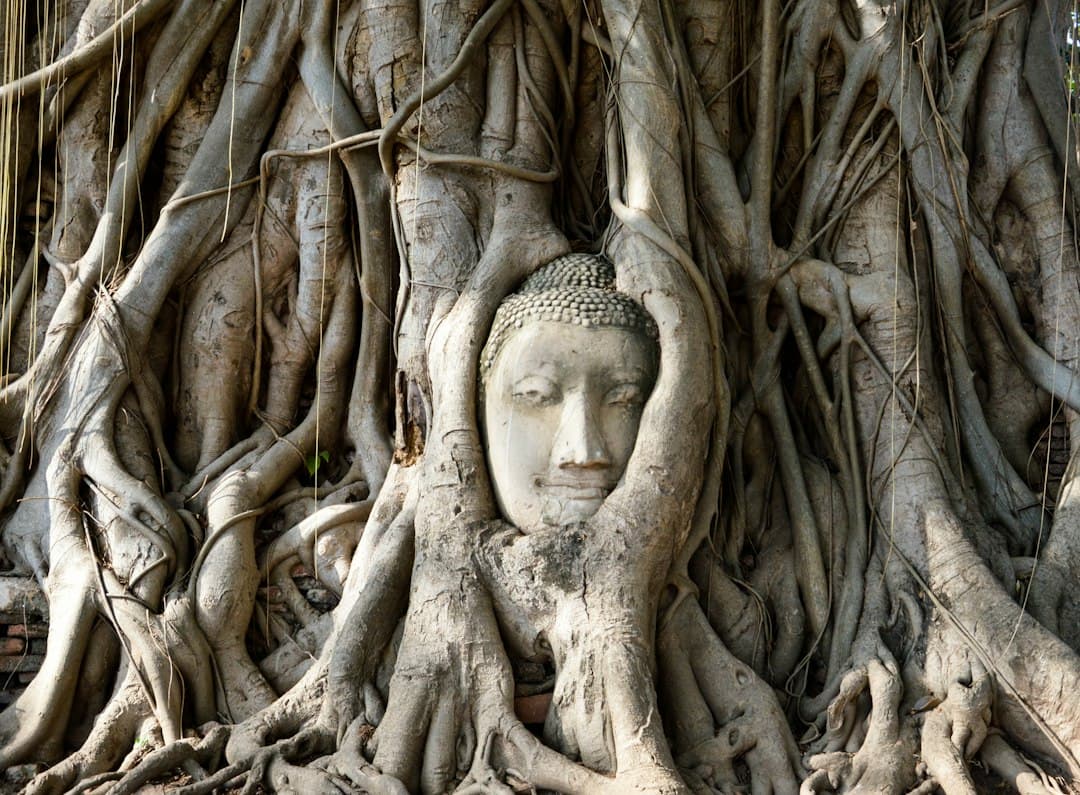
- Wat Mahathat: famous for the Buddha head tangled in the roots of a tree[4].
- Wat Ratchaburana: known for its impressive central prang and its ancient wall murals[4].
- Wat Phra Si Sanphet: the three large chedis lined up in the heart of the former royal palace[1].
- Wat Chaiwatthanaram: a Khmer-style temple on the banks of the Chao Phraya River, one of Ayutthaya's most picturesque ruins, especially at sunset[4].
- Wat Lokayasutharam: its reclining Buddha is free to access[1].
If you only have a few hours, visit Wat Mahathat and Wat Phra Si Sanphet in the morning, in the center of the island, then Wat Chaiwatthanaram in the late afternoon for sunset[1].
Living temples and excursions around the island
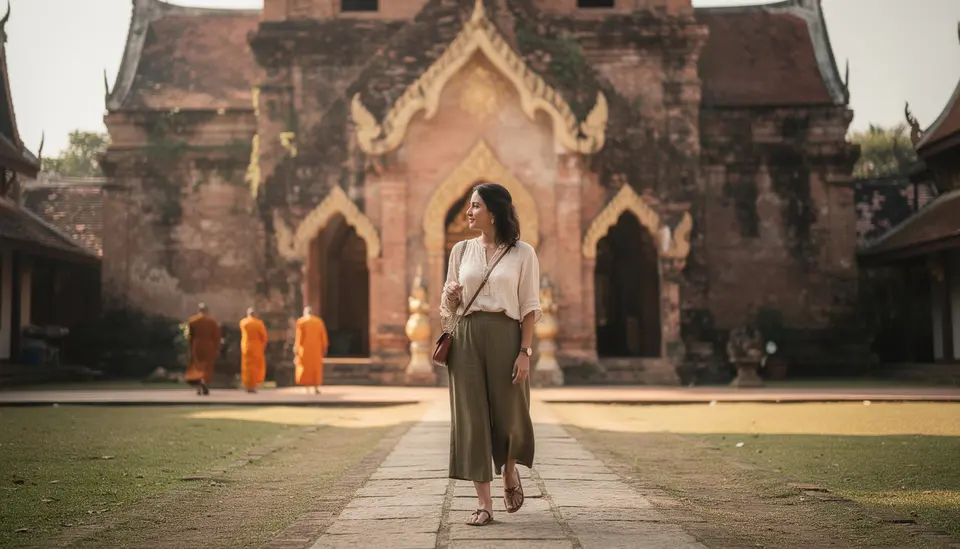
Not all the temples are ruins. Wat Phanan Choeng, one of the oldest in Ayutthaya, built in 1324, houses a seated Buddha 19 meters tall[4]. It is still active, and many local worshippers visit it regularly[4]. Keep this in mind: you are visiting a frequented place of worship, not just a monument.
Outside the city, the Bang Pa-In summer palace, residence of the Thai royal family, combines European and Thai architecture in a peaceful garden setting[4]. Across from the palace, Wat Niwet Thammaprawat is a Buddhist temple with neo-Gothic architecture and stained-glass windows[5].
With an extra day, Lopburi is about an hour by train north of Ayutthaya. It is one of the oldest cities in Thailand, famous for the hundreds of macaques that roam freely in its historic center[6].
To experience: bikes, boats, markets and local food
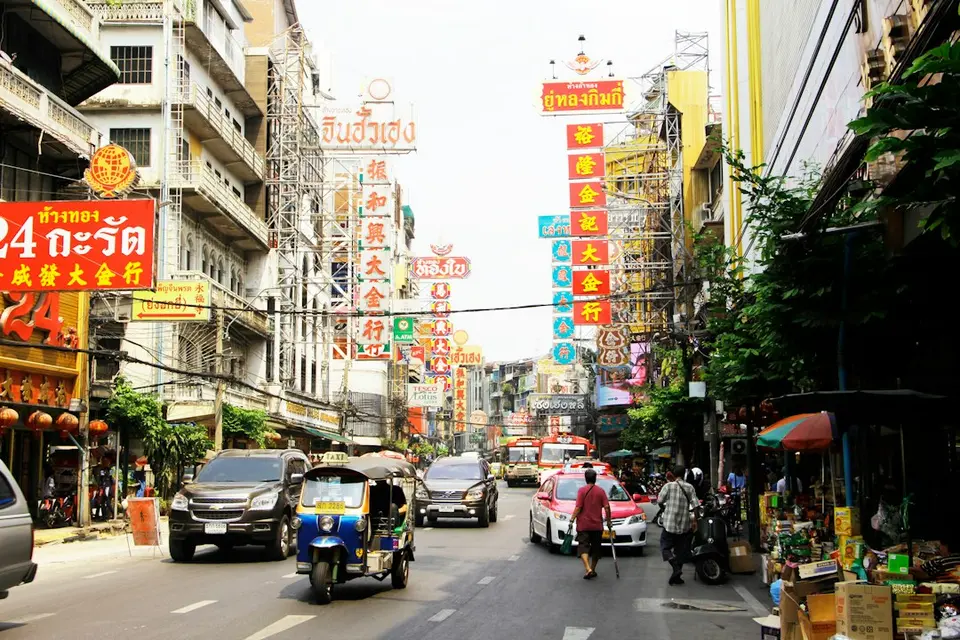
The temples are scattered across the island, so you can visit them by bicycle or tuk-tuk[1]. Renting a bike is one of the most popular ways to explore the ruins[4]. Ayutthaya also has its own version of the tuk-tuk, larger and more comfortable than the ones in Bangkok, and hiring one for the day lets you link several sites together[4].
A boat trip along the Chao Phraya and its canals, locally called “klongs,” offers another view of the historic sites[4].
At the table, try fresh river prawns, fish, noodles, and the city's most famous Thai dessert, cotton candy crepes[2] (roti sai mai), which you'll find at local markets alongside grilled giant prawns and tropical fruit[4].
During certain events organized by the Department of Fine Arts, several temples stay open and are illuminated in the evening, usually from 4:30 pm to 9:30 pm[1]. Outside these periods, the temples close in the late afternoon[1].
How long to plan for and when to go
One day is enough to see the highlights, as the train takes only 50 to 80 minutes from Krung Thep Aphiwat[1]. However, spending a night on site lets you see Wat Chaiwatthanaram at sunset and the temples early in the morning, without the crowds[1].
Arrive before 9:00 am to avoid the heat and the groups coming from Bangkok[1]. The cool season, from November to February, is the most pleasant[1]. From March to May it is very hot: visit early, take a break in the shade during the hottest hours, and leave in the late afternoon[1]. If possible, avoid weekends, when it is busier[1].
Getting there, getting around, tickets
From Bangkok, the train leaves from Krung Thep Aphiwat (50 to 80 minutes) or from Hua Lamphong (slower); minivans and private cars also make the trip[1].
From Ayutthaya station, a ferry crosses the river to the center of the island for about 10 THB (20 THB with a bicycle), and this is where bikes can be rented[1].
For foreigners, each site managed by the Department of Fine Arts costs 80 THB[1]. The combined ticket at 300 THB gives access to seven sites: Wat Mahathat, Wat Phra Si Sanphet, Wat Ratchaburana, Wat Phra Ram, Wat Chaiwatthanaram, Wat Maheyong, and Wat Kudi Dao[1]. It is purchased in cash at the ticket counter of any of these sites[1]. Consider the combined ticket as soon as you plan to visit at least four temples: four individual entries already cost 320 THB. Prices may change, so check at the ticket counter[1].
Other temples that are still active, such as Wat Yai Chai Mongkhon or Wat Na Phra Men, charge a small separate entrance fee[1].
Pitfalls, scams, and things to watch out for
A few situations come up often around tourist sites. Knowing about them is usually enough to avoid them.
- The fake “site closed”: people pose as plainclothes police officers, retired teachers, or official guides, claim the site is closed for a ceremony (often a “Buddha Day”), which is false, and offer an “alternative tour,” negotiating a tuk-tuk for you[7]. Check at the entrance of the site before following anyone.
- The bargain tuk-tuk tour: a driver offers to show you several temples for next to nothing; the route actually includes forced stops at jewelry shops, costume stores, or travel agencies with inflated prices[7].
- The “great deal” jewelry: some guides, sometimes French-speaking, offer to buy authentic jewelry that is sold for two to three times the market price[8]. No legal recourse is possible, as Thai law considers the selling price to have been freely accepted by the buyer[8].
- The scooter: before leaving, photograph and film the vehicle from every angle to protect yourself in case of a dispute, and read reviews before choosing a rental company[7]. Two-wheelers are particularly dangerous: in Thailand, 90% of fatal accidents involve two-wheelers[8].
Steps, in order
- Choose your pace: a day trip from Bangkok, or a night on site for sunset and early morning.
- Leave Bangkok to arrive before 9:00 am, preferably on a weekday and between November and February.
- Take the train, then the ferry to the center of the island, and rent a bicycle or a tuk-tuk.
- In the morning: Wat Mahathat and Wat Phra Si Sanphet, then Wat Ratchaburana.
- Get the combined ticket if you visit more than three paid temples.
- In the late afternoon: Wat Chaiwatthanaram for the sunset.
- With one more day: Wat Phanan Choeng, Bang Pa-In, or Lopburi.
- This article covers the essentials for a visit: train schedules, accommodation, and a detailed day-by-day itinerary. To plan a complete trip, you'll need to dig deeper.
Keep exploring
- Thailand: the must-sees, region by region
- Chiang Rai and the Golden Triangle: Temples, Markets, Hills and the Mekong
- Sukhothai: What to See and Do in Siam's First Capital
- Chiang Mai: What to See and Do in the Rose of the North
Sources
- 1.^ abcdefghijklmnopqrstthailande-pratique.fr — Ayutthaya Historical Park: 2026 Prices, Hours, Temples: “Ayutthaya was the capital of the Kingdom of Siam from 1350 to 1767, before being destroyed by the Burmese army.” ; “Wat Phra Si Sanphet: the three great chedis lined up at the heart of the former royal palace.” ; “The Reclining Buddha at Wat Lokayasutharam is free to visit.” https://thailande-pratique.fr/parc-historique-ayutthaya/ (accessed November 9, 2026)
- 2.^ abcdeftourismethai.fr — Phra Nakhon Si Ayutthaya - Tourism Authority of Thailand: “Once the capital of the Ayutthaya Kingdom, Phra Nakhon Si Ayutthaya was considered one of the largest cities in Southeast Asia and a major regional power for 417 years.” ; “In Ayutthaya, you'll find countless impressive temples and ruins, concentrated on an island surrounded by the Chao Phraya, Pa Sak and Lopburi rivers.” ; “Although there are many sites to see, the Phra Nakhon Si Ayutthaya Historical Park, in the heart of the city, is a UNESCO World Heritage Site and a breathtaking sight.” https://tourismethai.fr/locatie/phra-nakhon-si-ayutthaya-2/ (accessed November 9, 2026)
- 3.^ abcdunescotracker.net — Historic City of Ayutthaya – UNESCO Heritage Tracker: “The city was never rebuilt on the same site and remains known today as a vast archaeological site.” ; “Once an important center of global diplomacy and trade, Ayutthaya is now an archaeological ruin, marked by the remains of towering prangs (reliquary towers) and Buddhist monasteries of monumental proportions, which give a sense of the city's past size and the splendor of its architecture.” ; “The Ayutthaya school of art highlights the ingenuity and creativity of the Ayutthaya civilization, as well as its ability to absorb a multitude of foreign influences.” https://www.unescotracker.net/fr/sites/1058/historic-city-of-ayutthaya (accessed November 9, 2026)
Show 5 more sourcesShow less
- 4.^ abcdefghijwtp.travel — Ayutthaya Travel Guide - Thailand | World Travel Package: “Wat Mahathat: famous for the Buddha head entangled in the roots of a tree.” ; “Wat Ratchaburana: known for its impressive central prang (tower) and its ancient wall murals.” ; “This temple in the Khmer style, on the banks of the Chao Phraya River, is one of the most picturesque ruins in Ayutthaya, especially at sunset.” https://wtp.travel/fr/guides-voyage/thailande/ayutthaya/ (accessed November 9, 2026)
- 5.^asiavela.com — Ayutthaya travel guide: where to stay, ruins and Lopburi: “Facing the palace, Wat Niwet Thammaprawat is a Buddhist temple in neo-Gothic architecture, with stained-glass windows.” https://asiavela.com/en/thailand/ayutthaya/ (accessed November 9, 2026)
- 6.^thailandia.net — Ayutthaya: practical guide to the ancient capital of Siam: “If you have one more day, about an hour by train north of Ayutthaya lies Lopburi, one of the oldest towns in Thailand, famous for the hundreds of macaques that roam freely in the historic center.” https://thailandia.net/ayutthaya (accessed November 9, 2026)
- 7.^ abcthailande-et-asie.com — Traveling in Thailand: scams to know about and how to avoid trouble: “They present themselves as plainclothes police officers, retired teachers, or official guides.” ; “Seeming trustworthy, they claim the site is closed for a ceremony (often a Buddha Day) — which is obviously false — and offer an alternative visit, even helping by stopping and negotiating a tuk-tuk for you (often with the famous 20-baht tour combo).” ; “A driver offers to show you several temples for next to nothing.” https://thailande-et-asie.com/voyage-en-thailande-arnaques-a-connaitre-comment-eviter-les-galeres (accessed November 9, 2026)
- 8.^ abcdiplomatie.gouv.fr — Thailand - Safety | France Diplomatie: “Some guides, French-speaking people, or even French nationals, offer to make good deals by buying jewelry.” ; “These are genuine but sold at two to three times the market price.” ; “This scam cannot lead to legal action, as Thai law considers the sale price to have been freely accepted by the buyer.” https://www.diplomatie.gouv.fr/fr/information-par-pays/thailande/conseils-aux-voyageurs-securite (accessed November 9, 2026)