About two hours from Bangkok, Kanchanaburi combines a World War II history that is best visited with respect and a landscape of waterfalls and forests. This article helps you plan a two- to three-day escape: what you need to know about the history of the Thailand-Burma Railway, what to see in and around town, how to take the train and how much time to allow. It ends with a few practical points to watch out for.
A Place of Remembrance by the Water
Kanchanaburi is only two hours from Bangkok, by road or by train[1]. The town sits at the confluence of the Khwae Noi and Khwae Yai rivers, which form the Mae Klong[1]. The water sets the tone: you come here for the history, but also to sit by the river.
The region attracts three distinct kinds of visitors: remembrance pilgrims (veterans and their descendants), hikers and nature lovers, and half-day excursionists from Bangkok[2]. You can be a bit of all three, as long as you don't try to fit everything into one day.
The History of the Thailand-Burma Railway
It was here, in 1942-1943, that the occupying Japanese army began building the Death Railway, a 415 km line meant to connect Bangkok and Rangoon in Burma, in order to transport war materiel[2]. It is estimated that 12,000 prisoners of war and tens of thousands of Asian laborers died during its construction, across one of the most difficult terrains in Southeast Asia[3].
The British had studied this route before the war, then abandoned it, judging it too difficult and too costly[2]. As for the bridge, it became famous thanks to Pierre Boulle's novel and David Lean's film (1957)[2]. That work shaped Western memory of the episode, even though it takes liberties with history[2].
The River Kwai Bridge and the Town's Memorial Sites
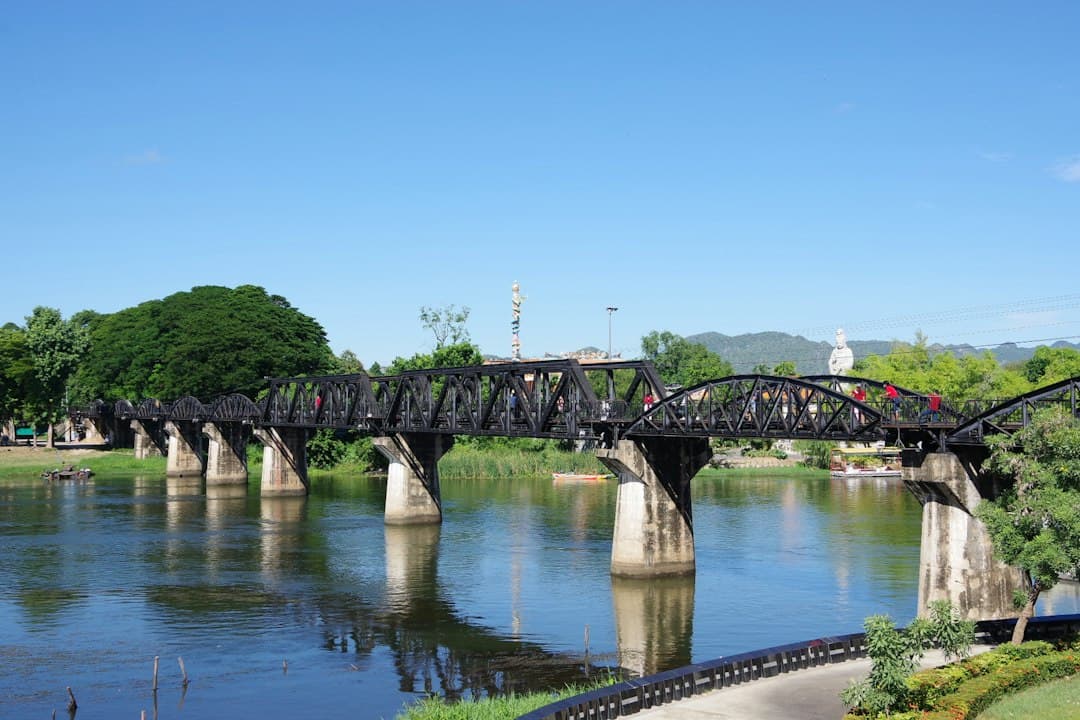
You can walk across the metal structure, free of charge and at any hour[3]. The visit is short, but the bridge carries an immense symbolic weight[2]. It was partially rebuilt after Allied bombings: the curved spans are original, while the two central trapezoidal spans date from after the war[2]. For photos and calm, a guide's advice is to go early in the morning[4].
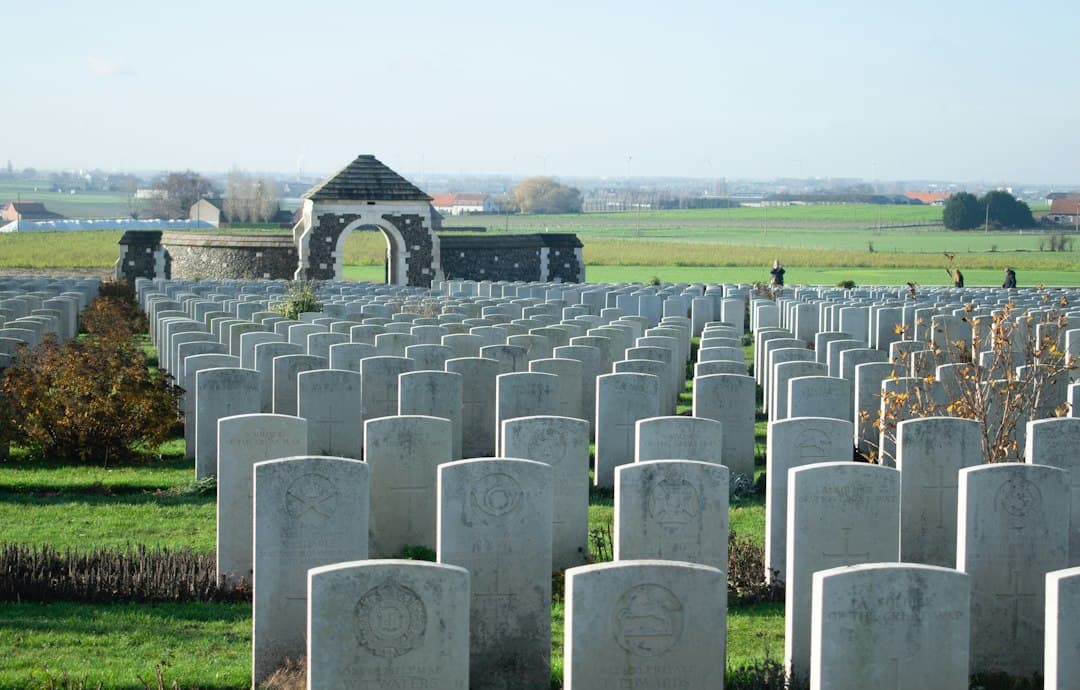
Directly opposite is the Kanchanaburi War Cemetery (Don Rak), the resting place of nearly 7,000 Allied prisoners of war, mostly British, Australian and Dutch; a moving but essential visit[3]. The smaller Chungkai cemetery sits on the former site of a camp and contains the remains of more than 1,700 prisoners[5]. It is therefore less crowded, which suits those seeking quiet reflection.
To understand what the prisoners endured, two museums offer a documented perspective on the building of the line and their living conditions: the JEATH War Museum and the Thailand-Burma Railway Centre[5].
The Death Railway Train to Nam Tok
After the bridge, the ordinary train climbs the Khwae Noi valley for about an hour and a half to Nam Tok, the current terminus[6]. The journey offers spectacular views, notably of the Tham Krasae wooden trestle, which hugs the cliff[7].
The ordinary train has only third-class, ventilated carriages with no reservations: buy your ticket at the Thonburi counter on the day and arrive at least 30 minutes before departure[6].
Watch out for works and flooding: at the end of September 2026, floods closed the section between Tha Kilen and Nam Tok, Tham Krasae viaduct included, and trains were stopping at Tha Kilen, with no reopening date announced as of early October 2026. Check with the SRT (line 1690) before you leave[6].
Hellfire Pass: The Cutting Carved by Hand
About 80 km northwest of the city, the “Hellfire Pass” is a 75 m long, 25 m deep cutting carved into the rock by prisoners, using sledgehammers, drills, and explosives[2]. The Australian memorial is remarkable; a trail of about one hour and a free audio guide accompany the visit[2]. It is the most moving sight in the province[2].
The interpretive center, run by the Australian government, is open daily from 9:00 am to 4:00 pm, free of charge, and closed for three weeks in May[6]. It also closed at the end of September 2026 due to rains: check that it has reopened before you go[2]. Getting there is easier by car or on an organized tour than by train[6].
Waterfalls and National Parks
Erawan National Park is one of the jewels of the province, famous for its seven-tier waterfall with turquoise pools where swimming is allowed[7]. To enjoy the pools when they are almost empty, arrive early[4]. Entry costs 300 baht for foreigners[6].
Farther into the province, Sai Yok National Park is home to waterfalls, caves, and the Khwae Noi River, a peaceful escape away from the more crowded attractions[8].
Along the River: Culture and Local Life
In town, local markets such as the JJ Night Market let you soak up the atmosphere[5]. To the south, Wat Tham Khao Pun is a cave temple housing Buddha statues amid stalactites and stalagmites[5].
A travel guide who knows the region well puts it this way: everything is concentrated around the bridge, and it's better to go further, because the villages there are little known and rarely visited[9]. Farther north, in Sangkhla Buri, near the Burmese border, the population includes several ethnic groups, among them the Mon, the Burmese, and some Karen communities[9].
How Long to Stay and How to Get There
Plan 2 to 3 days for the essentials (the bridge, museums, Hellfire Pass, Erawan Falls) and 4 to 5 days if you add Sai Yok and Sangkhla Buri[10]. A day trip from Bangkok is still possible, but it leaves little time on site once you count two to three hours of travel each way, depending on the mode of transport[4].
As for transport, the ordinary train leaves from Thonburi station and costs 100 baht for foreigners, regardless of distance; buses and minivans also leave from the Southern Bus Terminal[6].
Traps, Scams, and Things to Watch For
- Jewelry and “bargains” offered by guides or touts: the French Ministry of Foreign Affairs warns of jewelry sold for two to three times its real value[11].
- Bag snatching by a motorcycle driver and his rear passenger, regularly reported, especially in Bangkok[12].
- Theft on overnight buses: the most frequent cases are reported on the Surat Thani–Bangkok route, involving checked luggage as well as the belongings of passengers who are asleep[12].
- Roads: the accident rate is one of the highest in the world, and riding two-wheelers is especially dangerous[12].
- Drinks and meals: extra caution is advised in certain neighborhoods, especially in budget hotels, as drinks and meals may contain sedatives or drugs[12].
- Train: if the section to Nam Tok is still closed, plan another means of transport (bus, minivan, or organized tour) and call the SRT (1690) before setting out[6].
Steps to Plan Your Getaway
- Choose your length of stay: 2 to 3 days for the essentials, 4 to 5 to go as far as Sai Yok and Sangkhla Buri.
- Check the status of the train line and the reopening of the Hellfire Pass center before you leave.
- Arrive early at the bridge and at Erawan to avoid the crowds.
- Bring a swimsuit for the Erawan pools and change for the entrance fee (300 baht).
- Set aside time for the Don Rak cemetery and a museum, to place the landscape within its history.
This article covers the essentials: if you plan to sleep on site or explore further, you will still need to choose accommodation, confirm museum hours and admission prices, and prepare a detailed itinerary.
Keep exploring
- Thailand: the must-sees, region by region
- Sukhothai: What to See and Do in Siam's First Capital
- Pai: What to See and Do in the Valley, from Chiang Mai to Mae Hong Son
- Ayutthaya: What to See and Do from Bangkok in One or Two Days
Sources
- 1.^ abtourismethai.fr — Kanchanaburi - Thailand's National Tourism Office: “Kanchanaburi is only two hours from Bangkok and is accessible by road or by train, the latter being a popular option for day trips on weekends and public holidays.”; “The city of Kanchanaburi, located at the confluence of the Khwae Noi and Khwae Yai rivers, which form the Mae Klong River, is a popular holiday destination.” https://tourismethai.fr/locatie/kanchanaburi-2/ (accessed November 11, 2026)
- 2.^ abcdefghijkthailande-pratique.fr — Kanchanaburi: What to See Between the Bridge over the River Kwai and the Waterfalls | Thaïlande Pratique: “The region attracts three distinct audiences: pilgrims of memory (veterans and their descendants), hikers and nature lovers, and half-day excursionists from Bangkok.”; “It was here, in 1942 and 1943, that the occupying Japanese army began building the Death Railway (Voie ferrée de la mort), a 415-kilometer line meant to connect Bangkok to Rangoon in Burma to transport war materiel.”; “The British had studied this route before the war, then abandoned it, judging it too difficult and too costly.” https://thailande-pratique.fr/provinces-de-thailande/kanchanaburi/ (accessed November 11, 2026)
- 3.^ abcwaddat.com — Kanchanaburi 2026: River Kwai Bridge & Erawan Falls | Waddat: “It is estimated that 12,000 prisoners of war and tens of thousands of Asian laborers died building this 415-kilometer line through one of the most difficult terrains in Southeast Asia.”; “You can walk across the original steel bridge for free, at any time of day.”; “It sits directly opposite the Kanchanaburi War Cemetery (Don Rak), a beautifully maintained resting place for nearly 7,000 Allied prisoners of war, mostly British, Australian, and Dutch: a visit that makes you think, but is essential.” https://www.waddat.com/thailand/kanchanaburi/ (accessed November 11, 2026)
Show 9 more sourcesShow less
- 4.^ abcairasia.com — Things to Do in Kanchanaburi: History, Waterfalls and More: “Enjoy the tranquility of early morning to photograph the River Kwai Bridge.”; “For a richer experience at Erawan Falls, arrive early to enjoy the birdsong and the pools without crowds.”; “A day trip from Bangkok is possible, but it often leaves little time on site once you count two to three hours of travel each way.” https://www.airasia.com/blog/thailand/kanchanaburi/things-to-do-in-kanchanaburi/ (accessed November 11, 2026)
- 5.^ abcdroutard.com — Visiting Kanchanaburi: plan your stay and trip to Kanchanaburi | Routard.com: “Farther south, on the other bank of the river, the smaller Chonk Kai cemetery, located on the former site of a camp, holds the remains of more than 1,700 prisoners.”; “The JEATH War Museum and the Thailand-Burma Railway Centre offer a documented perspective on the railway's construction and the living conditions of the prisoners.”; “Local markets, such as the JJ Night Market, let you soak up the local atmosphere.” https://www.routard.com/fr/guide/asie/thailande/plaine-centrale/kanchanaburi (accessed November 11, 2026)
- 6.^ abcdefghbangkokauthority.com — Kanchanaburi and the Bridge on the River Kwai from Bangkok: train, timetable and sights: “After the bridge, the ordinary train follows the Khwae Noi valley for about an hour and a half to Nam Tok, the current terminus.”; “The ordinary train has only third-class, ventilated cars with no reservations: buy your ticket at the Thonburi counter on the day and arrive at least 30 minutes before departure.”; “At the end of September 2026, flooding closed the section between Tha Kilen and Nam Tok, including the Tham Krasae viaduct, and trains were stopping at Tha Kilen; no reopening date had been announced in early October 2026: check with the SRT (line 1690) before you go.” https://bangkokauthority.com/en/attractions/kanchanaburi-pont-riviere-kwai (accessed November 11, 2026)
- 7.^ abroutard.com — Visiting River Kwai: plan your stay and trip to River Kwai | Routard.com: “The journey offers spectacular views, notably of the Tham Krasae wooden viaduct that hugs the cliff.”; “Erawan National Park is one of the jewels of the province, famous for its seven-tier waterfall with turquoise pools where swimming is possible.” https://www.routard.com/fr/guide/asie/thailande/plaine-centrale/kanchanaburi/riviere-kwai (accessed November 11, 2026)
- 8.^wtp.travel — Kanchanaburi Travel Guide - Thailand | World Travel Package: “Home to waterfalls, caves, and the Khwae Noi River, Sai Yok National Park offers a peaceful escape away from the more popular attractions.” https://wtp.travel/fr/guides-voyage/thailande/kanchanaburi/ (accessed November 11, 2026)
- 9.^ abvoyages-exception.fr — River Kwai: nature, history and culture: “Everyone goes to the River Kwai bridge and everything is concentrated there. I really recommend going further, the villages are little known and seldom visited.”; “Farther north, in Sangkhla Buri near the Burmese border, the population includes various ethnic groups, among them Mons, Burmese, and certain Karen groups.” https://www.voyages-exception.fr/guide/asie/guide-thailande-riviere-kwai (accessed November 11, 2026)
- 10.^sawadiscovery.com — Kanchanaburi: Complete Guide to the River Kwai and Erawan Waterfalls: “Plan 2 to 3 days for the essentials: the River Kwai Bridge, the museums, Hellfire Pass, and Erawan Falls. For a deeper exploration including Sai Yok and Sangkhla Buri, allow 4 to 5 days.” https://www.sawadiscovery.com/guide-thailande/destination/kanchanaburi?from_circuit=kanchanaburi-death-railway-and-elephant-haven (accessed November 11, 2026)
- 11.^francothai.fr — Places to Avoid in Thailand 2026: dangers and pitfalls: “The French Ministry of Foreign Affairs reports jewelry sold at two to three times its actual value.” https://www.francothai.fr/infos-pratiques/dangers-thailande-securite/ (accessed November 11, 2026)
- 12.^ abcddiplomatie.gouv.fr — Thailand - Safety | France Diplomatie: “Bag snatchings by a motorcycle driver and a rear passenger occur regularly, particularly in Bangkok.”; “The thefts most frequently reported take place on the overnight bus line between Surat Thani and Bangkok (in both directions). Thefts (of passports and money, in particular) target both checked luggage and passengers' belongings while they sleep.”; “The road accident rate is one of the highest in the world, and on average more than 17,000 people die each year on Thai roads.” https://www.diplomatie.gouv.fr/fr/information-par-pays/thailande/conseils-aux-voyageurs-securite (accessed November 11, 2026)