From Chiang Mai, Chiang Rai can be visited in two to four days: artists' temples, markets, mountain gardens and the Golden Triangle. This article helps you choose what to see, know how to get there and avoid the bad surprises of a poorly prepared trip.
Chiang Rai, a city of artists at the gates of the Mekong
Chiang Rai is Thailand's northernmost province, with its mountain ranges and its Lanna culture[1]. It sits at the crossroads of Thailand, Myanmar and Laos[1].
It is best known as a starting point for trips to the Golden Triangle and the hill villages. But those who linger in this small town of about 70,000 residents will find colorful temples to fill their days of sightseeing, flavorful cuisine, a community of creative artists and a history as old as Thailand's own[2]. That is what makes it worth a full stay rather than a simple stopover.
History: from King Mengrai's founding to the Lanna kingdom
Chiang Rai was founded by King Mengrai in 1262. It was the initial capital of the Lanna kingdom, before a new city, Chiang Mai, was built and became the capital in 1296[3].
The first king of the Lanna kingdom is still revered today throughout Northern Thailand. In Chiang Rai, locals pay their respects at his monument in the city center[3]. Wat Mengrai Maha Rat, an urban monastery, also honors him[2].
Temples and art sites: White Temple, Blue Temple, Black House
The city's most famous sites are its modern Buddhist temples, in dazzling white, blue and red[2]. Three art-driven sites give Chiang Rai its distinctive character.
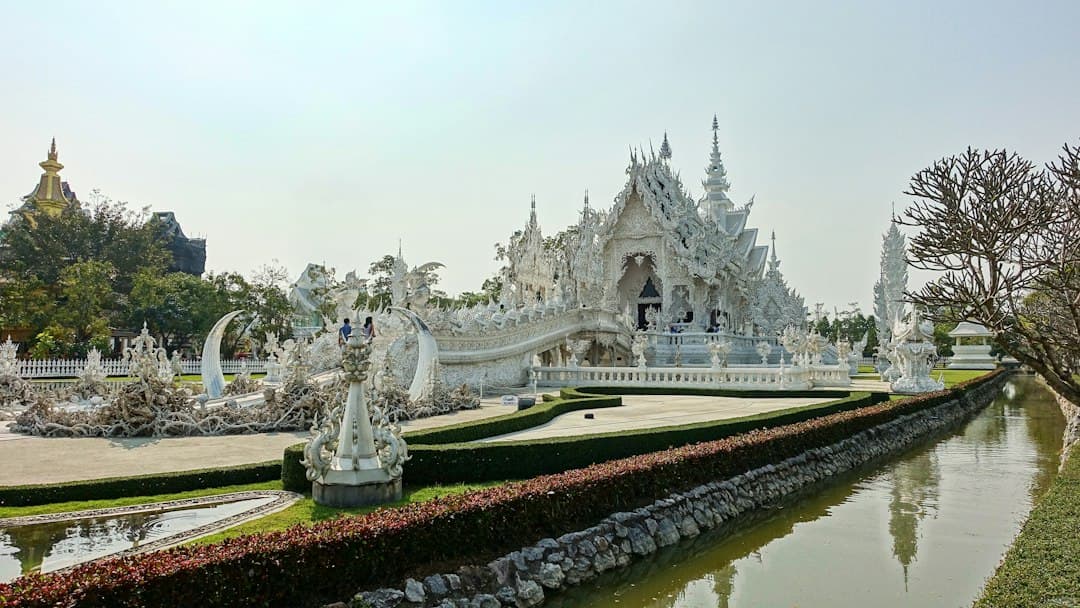
White Temple (Wat Rong Khun)
The White Temple is the work of Chalermchai Kositpipat, who began it in 1997[3]. It is located about 13 km southwest of the center[2]. Visitors must have their shoulders and knees covered and remove their shoes[4].
Blue Temple (Wat Rong Suea Ten)
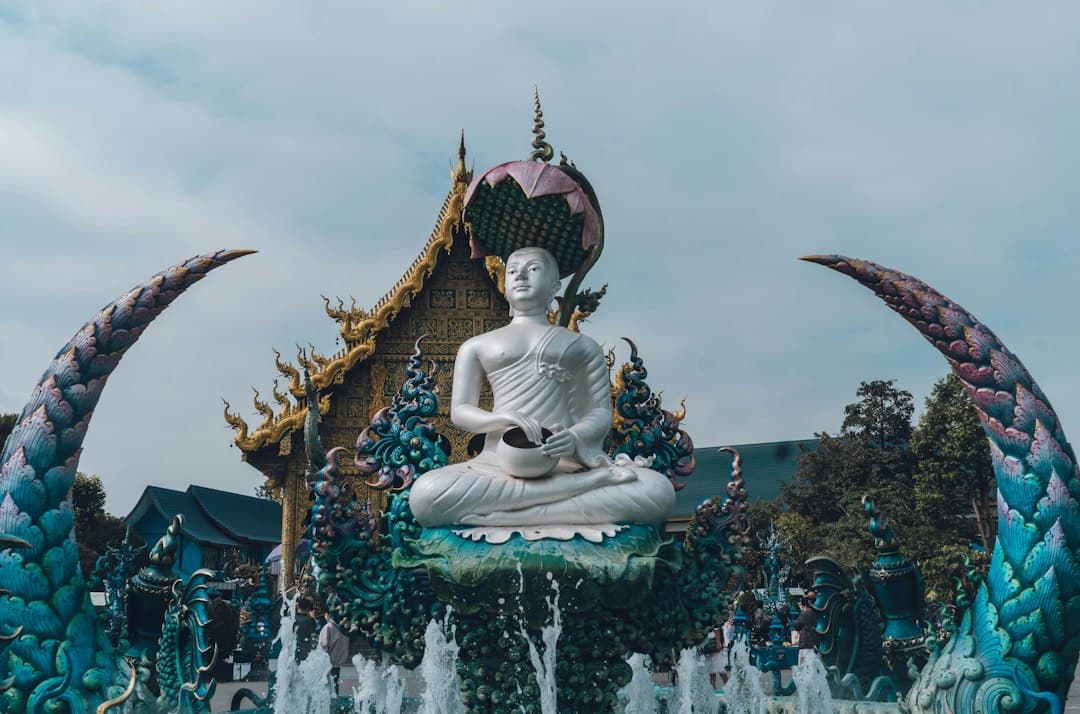
Completed in 2016, the Blue Temple sits across the Kok River, north of the city center[3]. It is the work of Phuttha Kabkaew, a protégé of Chalermchai: it replaces the reds, golds and greens of traditional architecture with shades of royal blue[5]. Inside, a pure white Buddha statue is bathed in blue light[5].
The Black House (Baan Dam)
The Black House brings together the artworks of Thawan Duchanee[1]. His work reflects themes of life, death, human suffering and Buddhism[3].
More places to add to your list
- The golden clock tower, designed by the artist behind the White Temple: at 7 pm, 8 pm and 9 pm, it puts on a laser light show with music[2]; another source also mentions a show at midnight[3].
- The Red Temple (Wat Chiang Ruen), painted in vermilion and gold, blends 19th-century Lanna architecture with Burmese-style wood carvings[2].
- Wat Huay Pla Kang, home to a giant statue of Guanyin, the Buddhist goddess of Mercy, atop a hill[2].
Markets, Northern cuisine and local arts
Chiang Rai has markets that rival those of Chiang Mai. The Saturday Walking Street is the city's largest night market: it fills Thanalai Road from 5 pm until late every weekend[5].
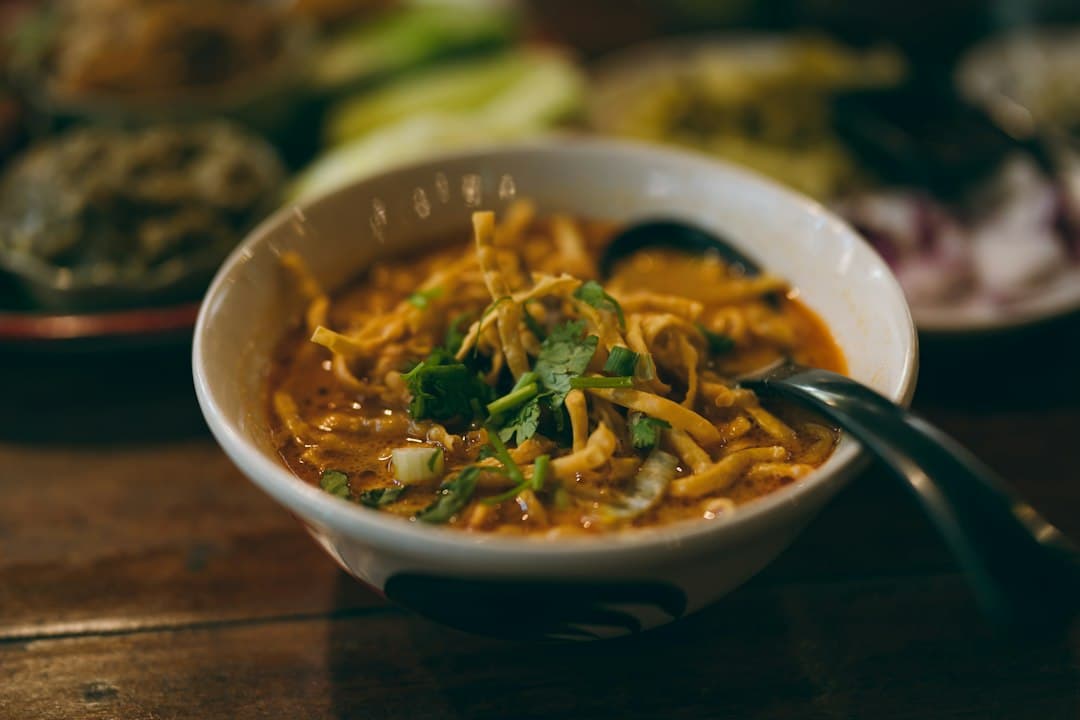
On the plate, khao soi stands out in Northern cuisine for its coconut milk, while other coconut-based curries come from the south[5]. Sai oua is also among the Northern dishes worth tasting[6].
For a day of art, start at the Mae Fah Luang Art & Cultural Park[5].
Mountains, Gardens, and Hill Villages
The mountains offer cooler air, beautiful views, and the gardens of Doi Tung. This mountain, about an hour's drive north of the city (it is close to the Burmese border, the entire length of which France Diplomatie formally advises against travelling to, with the sole exception of Mae Sot: check its travel advice before you leave), was one of the favorite destinations of Princess Srinagarindra, mother of King Bhumibol Adulyadej. A royal villa was built for her there; the hill communities she helped so much called her “Mae Fah Luang”[3]. The estate lets you learn more about her and the royal projects she launched for these communities[3]. The winter flowers of the Mae Fah Luang gardens are best admired around the Doi Tung palace[1].
For nature, two viewpoints: sunrise over the Mekong and the sea of mist at Doi Pha Tang, and the 360° panoramic view over the sea of mist at Phu Chi Dao[1]. The Tham Luang-Khun Nam Nang Non forest park recalls the “13 Wild Boars” event[1]. Singha Park, with its trails, lakes, meadows, and restaurants, makes a pleasant excursion from the city[3]. You can go cycling there between tea plantations and flower fields[7].
Visiting Hill Villages Respectfully
Chiang Rai is home to several hill communities, including the Karen, Akha, and Lisu. Before visiting any of these villages, stop by the Hill Tribe Museum in the city center: you can learn about each community's culture there and get advice on etiquette and responsible tourism[3]. This nonprofit museum offers an informative introduction to the hill peoples and the challenges they face[5]. Travelers should choose ethical operators that respect the well-being of the communities[7].
The Golden Triangle: Opium History and Mekong Landscapes
The Golden Triangle is located at Sop Ruak, at the confluence of the Mekong and the Ruak River, where the borders of Thailand, Laos, and Myanmar meet[8]. Historically, it was one of the world's largest centers of opium poppy production[8]. Government initiatives replaced these crops with tea and coffee, which brought peace to the region and encouraged tourism[8]. Today, opium has given way to homestays in hill communities, jungle treks to caves and waterfalls, and visits to tea and coffee plantations[5].
At Sop Ruak, a developed viewpoint overlooks all three countries, and a large golden Buddha statue dominates the site[8]. The Hall of Opium traces the history of opium, from its origins to its global impact, and the efforts to eradicate its cultivation[8]. You can also rent a boat to cruise the Mekong[8]. Chiang Saen, a few kilometers to the south, was one of the capitals of the Lanna kingdom; it still has city walls, moats, ruined temples, and a national museum of Lanna-style objects and Buddhas[8].
A trip to Doi Tung can be done in a day from Chiang Rai[6]; the Golden Triangle, however, lies on the Burmese border, which France Diplomatie formally advises against: we recommend skipping it[4].
Practical Info: Season, Duration, Access
- Season: from November to February, the North is dry and cooler; from February to April, the burning season often degrades air quality[4].
- Duration: three days is enough for the most famous temples and museums and the local cuisine[2].
- From Chiang Mai: Green Bus runs frequent services, for a journey of about three hours[6]. Frequent flights also connect Bangkok to Chiang Rai[6].
- On site: taxis, tuk-tuks, and songthaews are easy to find; the Grab app works well and is cheaper than a tuk-tuk[2].
- White Temple entrance: 200 THB for foreigners since January 1, 2026 (100 THB previously)[4].
Pitfalls, Scams, and Points of Caution
- Border with Myanmar: France Diplomatie states that the entire length of this border is formally advised against, with the sole exception of the town of Mae Sot[9]. Sop Ruak, where the Golden Triangle is located, sits on this border[10]. Before booking a tour, check whether the itinerary includes the Golden Triangle[4].
- Fraudulent job offers: "online sales" positions based in Thailand circulate on social media; in reality, they are used to recruit labor for online scam centers located in border areas of Myanmar or Cambodia[9].
- Online scam centers: the border areas of Myanmar and Cambodia host them, and they recruit their staff through deception or force[9].
- "Bargain" jewelry: some guides, sometimes French-speaking, offer to sell you jewelry; the pieces are genuine, but they are sold for two to three times more than on the open market[9].
- Excursions: common scams include tours sold at inflated prices, programs altered from what was advertised, and services of lower quality than promised; Thailand publishes a list of tour operators certified by the Department of Tourism[11].
- Fake calls for help: some foreigners claiming to be in serious financial difficulty give a phone number presented as the duty officer line at the French Embassy, where an accomplice answers; the embassy advises contacting it to verify any claim of this kind[9].
Checklist Before You Leave
- Choose your timing: November to February for cooler, drier air.
- Plan three days for the temples, museums, and markets, plus one day for Doi Tung. Skip the Golden Triangle, as the Burmese border is officially advised against.
- Before booking an excursion, check that entrance fees and lunch are included and that the itinerary matches what was advertised.
- Dress to cover your shoulders and knees for the temples.
- Visit the hill tribe museum before visiting a hill village.
This article gives you the essentials for planning your getaway. Day-by-day itineraries, precise opening hours and ticket prices for each site, and accommodation choices require going further. To place Chiang Rai within the rest of the country, see "Thailand: The Highlights, Region by Region."
Go Further
- Thailand: The Highlights, Region by Region
- Chiang Mai: What to See and Do in the Rose of the North
- Ayutthaya: What to See and Do from Bangkok in One or Two Days
- Bangkok: What to See and Do, from River Temples to Chinatown
Sources
- 1.^ abcdeftourismethai.fr — Chiang Rai - Tourism Authority of Thailand: "Chiang Rai is Thailand's northernmost province, filled with the atmosphere of a complex of mountain ranges and the precious Lanna culture." ; "Chiang Rai is a province located at the crossroads of Thailand, Myanmar, and Laos." ; "Baan Dam Museum is a place that brings together artworks by Ajarn Thawan Thanchanee." https://tourismethai.fr/locatie/chiang-rai/ (accessed November 9, 2026)
- 2.^ abcdefghilonelyplanet.com — A guide to Chiang Rai, Thailand - Lonely Planet: "Visitors who choose to linger in this warm, laid-back community of about 70,000 residents will find unique, colorful temples to fill their days of sightseeing, vibrant flavors, a creative art community, and a history as old as Thailand itself." ; "Wat Mengrai Maha Rat is a beautiful urban monastery that pays tribute to King Mengrai, founder of Chiang Rai and the Lanna kingdom." ; "Chiang Rai's most famous sights are its modern, colorful Buddhist temples, which shine in brilliant white, blue, and red." https://www.lonelyplanet.com/articles/guide-to-chiang-rai-thailand (accessed November 9, 2026)
- 3.^ abcdefghijtourismethai.fr — Discover Chiang Rai - Tourism Authority of Thailand: "Founded by King Mengrai in 1262, Chiang Rai was the initial capital of the Lanna kingdom before a new city, Chiang Mai, was built and became the new capital in 1296." ; "The first king of the Lanna kingdom is still revered today throughout Northern Thailand, and in Chiang Rai you can see locals paying respects at the King Mengrai monument in the city center." ; "It was there, in 1997, that he began his labor of love, which visitors from around the world now know as the White Temple." https://tourismethai.fr/actualites/decouvrez-chiang-rai/ (accessed November 9, 2026)
Show 8 more sourcesShow less
- 4.^ abcdethailande-pratique.fr — Chiang Mai to Chiang Rai in One Day: White Temple, Blue Temple: "Covered shoulders and knees are mandatory, shoes must be removed, and photography is prohibited inside the main sanctuary." ; "Season: November to February, when the North is dry and cooler, is the best time for this day." ; "From February to April, the burning season often degrades air quality in the North." https://thailande-pratique.fr/itineraires/excursion-chiang-rai-depuis-chiang-mai/ (accessed November 9, 2026)
- 5.^ abcdefglonelyplanet.com — The 9 best things to do in Chiang Rai, Thailand - Lonely Planet: “Next comes the Blue Temple, Wat Rong Suea Ten, created by Phuttha Kabkaew, a protégé of Chalermchai, who replaces the usual reds, golds and greens of traditional temple architecture with stunning shades of royal blue.” ; “Visitors come in large numbers to pray before the magnificent statue of a pure white Buddha, lit by a bright blue light in the main prayer hall.” ; “Saturday’s Walking Street is the city’s largest temporary market; it fills Thanalai Road from 5 pm until late every weekend.” https://www.lonelyplanet.com/articles/top-things-to-do-in-chiang-rai (accessed November 9, 2026)
- 6.^ abcdtourismethai.fr — The North Off the Beaten Track - Tourism Authority of Thailand: “Taste local dishes such as khao soi, sai oua and kep moo.” ; “An excursion to the Golden Triangle or to Doi Tung can be done in a day trip from Chiang Rai.” ; “The very reliable Green Bus company runs frequent connections between Chiang Mai and Chiang Rai, with a journey time of about three hours.” https://tourismethai.fr/actualites/le-nord-hors-des-sentiers-battus/ (accessed November 9, 2026)
- 7.^ abwaddat.com — Chiang Rai Travel Guide 2026: White & Blue Temples | Waddat: “Singha Park, a vast agricultural estate on the outskirts of the city, lets you cycle through tea plantations and flower fields.” ; “Travelers should, however, choose ethical operators that respect the well-being of local communities.” https://www.waddat.com/thailand/chiang-rai/ (accessed November 9, 2026)
- 8.^ abcdefgroutard.com — Visit the Golden Triangle: plan your stay and trip to the Golden Triangle | Routard.com: “The region takes its name from its position at the confluence of the Mekong River and the Ruak River, marking the meeting point of the borders of Thailand, Laos and Myanmar.” ; “Historically, the Golden Triangle was one of the world’s largest opium poppy production centers, where the drug was exchanged for gold. Government initiatives replaced these crops with alternative products such as tea and coffee, bringing peace to the region and fostering the development of tourism.” ; “The heart of the visit is in Sop Ruak, where a purpose-built viewpoint lets you take in all three countries at once. The panorama opens onto the Mekong, with Laos on one bank and Myanmar on the other. An imposing golden Buddha statue, seated on a structure shaped like a ship, dominates the site and is a major attraction.” https://www.routard.com/fr/guide/asie/thailande/nord-montagneux/triangle-d-or (accessed November 9, 2026)
- 9.^ abcdediplomatie.gouv.fr — Thailand - Safety | France Diplomatie: “The entire border with Burma is formally advised against, with the sole exception of the town of Mae Sot.” ; “Job offers in online telemarketing are regularly posted on social media with a location in Thailand. These fraudulent offers are in fact meant to recruit labor for online scam centers located in the border areas of Burma or Cambodia.” ; “The border areas with Burma and Cambodia also host online scam centers (known as scam centers) that recruit their employees through deception or force.” https://www.diplomatie.gouv.fr/fr/information-par-pays/thailande/conseils-aux-voyageurs-securite (accessed November 9, 2026)
- 10.^thailande-pratique.fr — Golden Triangle Thailand: what to see at Sop Ruak from Chiang Rai: “Sop Ruak is on the Burmese border, which France Diplomatie classifies as formally advised against in its entirety, with the sole exception of the town of Mae Sot.” https://thailande-pratique.fr/triangle-or-thailande/ (accessed November 9, 2026)
- 11.^qa.thailand.go.th — Safety measures to protect against fraudulent exploitation - THAILAND.GO.TH: “Problems linked to travel agencies and tour guides include scams involving selling overpriced tours, changing the itinerary from what was advertised in the package, and providing lower-quality services.” ; “They publish tours from companies certified by the Department of Tourism, which tourists can trust.” https://qa.thailand.go.th/guide-book-detail/001_04_059 (accessed November 9, 2026)