Since October 1, Spain has been applying a reform of its General Traffic Regulations. This article helps you tell apart what already applies from what has been postponed by one year. You'll learn what the reform means for drivers, motorcyclists, moped riders, cyclists, and e-scooter users, and spot the points that the official pages we read do not confirm. It also tells you where to check each rule before you hit the road.
What Changes Since October 1: The Reform of the General Traffic Regulations
The amendments to the Reglamento General de Circulación approved by Royal Decree 518/2026 of June 24 took effect on October 1[1]. The DGT, Spain's traffic authority, presents the safety of vulnerable road users as its top priority. It explains that the rules are being adapted to twenty years of change in mobility, where attention has shifted from the road and the vehicle to people and the ways they travel[1].
Most measures have applied since October 1. Two of them are exceptions and have been pushed back by one year: mandatory lighting for PMVs (personal mobility vehicles, including e-scooters), and the use of approved helmets by moped riders[2].
Vulnerable Road Users: Who Is Affected and What the New Title VI Brings to Cities
For the first time, the Regulation formally defines the « usuario vulnerable de la vía ». The definition refers to the means of travel, but also to the physical characteristics and age of the people most exposed to injury or the most serious injuries in a crash[1]. The category includes:
- pedestrians, with particular attention to children, older people, and people with disabilities[1];
- cyclists[1];
- PMV users[1];
- motorcycle and moped drivers and passengers[1].
The Regulation also adds a new Title VI, devoted to traffic rules specific to urban areas[1]. This title sets a common national framework, while recognizing, according to the DGT, that municipalities have wide room to organize how different modes of travel share the street[2]. In practice, a city's ordinances and signage may therefore add to these rules: follow the signs you see on the spot.
If You Drive: Overtaking a Stopped Vehicle, Flashing Amber Lights, and Snow
Overtaking a Stopped Vehicle
A vehicle stopped following a crash, a breakdown, a roadside assistance operation, maintenance, or traffic management can no longer be overtaken casually. Vehicles passing it must leave a lateral gap of 1.5 meters and reduce their speed by at least 20 km/h below the lane limit[1]. On a road with a 90 km/h limit, this means not exceeding 70 km/h at that point.
Flashing Amber Lights at Pedestrian Crossings
As a general rule, at signalized pedestrian crossings, the flashing amber light for vehicles cannot coincide with the steady green light for pedestrians[1]. The phrase « general rule » matters: the DGT specifies in an instruction that this is not an absolute ban. Exceptions are possible if the municipality justifies them with a technical report demonstrating their benefits for traffic flow and road safety[3]. The full detail of the rule was not read in the text of the Royal Decree itself; consult it or the dedicated DGT page if you need more precision.
Snow on Motorways and autovías
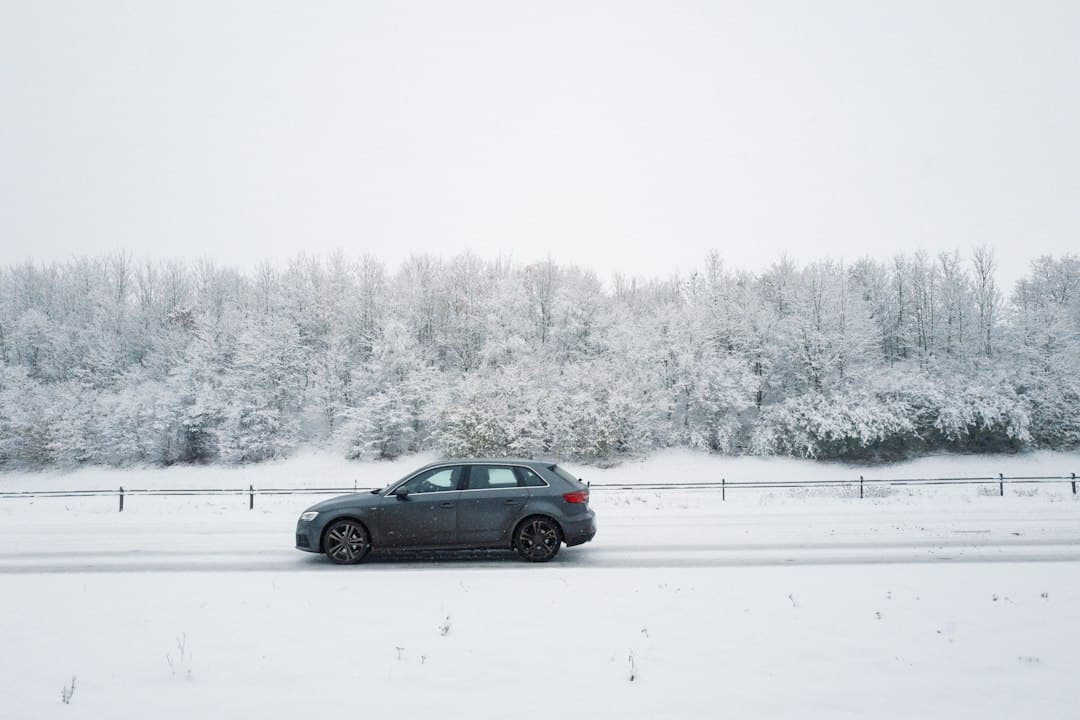
On motorways and autovías, overtaking is prohibited when snow hampers traffic, and the left lane must stay clear for emergency vehicles and snowplows[1].
If You Ride a Motorcycle or Moped
Motorcycle and moped drivers and passengers are among the vulnerable road users defined by the reform[1]. The most concrete measure for moped riders concerns helmets: the reform requires an approved helmet, not merely a certified one, starting October 1, 2027[1]. This requirement is one of the two measures postponed by one year[2]: it does not yet apply.
If you ride a motorized two-wheeler, check the text of Real Decreto 518/2026 or the DGT page dedicated to the reform.
If you ride a bicycle or an e-scooter (VMP)
Cyclists and VMP users fall within the definition of vulnerable road users[1]. Outside urban areas, riding is permitted on roadways separated from motorized traffic, such as cycle lanes and bike strips, unless signposted otherwise[1].
For VMPs, mandatory lighting at all times, including during daytime, applies starting October 1, 2027[1]. This is the other measure postponed by one year[2].

A rule mentioned in the starting idea for this article, the one that would place bicycles in the center of the lane in the city, is not confirmed by the excerpts of the DGT we reviewed. It is therefore not presented here as a fact: check it against the official text.
Pedestrians and school areas
Pedestrians are at the heart of the reform, with special attention to minors, older people and people with disabilities[1]. The reform gives legal existence to “caminos escolares seguros”: routes designed so that minors can reach their school on foot, by public transport or by non-motorized means of mobility[1].
Pedestrian priority on single-platform streets was part of the starting idea. Before taking it for granted, check it against the official text.
Points to watch
- Not everything applies from October 1: mandatory lighting for VMPs and the approved helmet for moped riders are postponed by one year[2], to October 1, 2027[1]. Do not treat them as already mandatory.
- In cities, municipalities have considerable room to act[2]: for the flashing amber light, for example, a local exception remains possible if justified by a municipal technical report[3]. On-site signage prevails.
- If you drive a vehicle registered abroad, do not confuse it with a vehicle registered in Spain regarding the V-16 beacon: a foreign vehicle in international circulation complies with the standard if it carries, or uses when necessary, warning triangles or any equivalent device provided for by the legislation of its country of origin[4].
- The fine scales and point deductions linked to these rules have not been verified: no amounts are given here. To find them, consult the DGT or the text of Real Decreto 518/2026.
- Be wary of articles that present announced or postponed measures as already applicable: rely on DGT press releases and on the text published in the BOE.
Checking the Rules: Official Sources and a Practical Memo
The DGT gathers its standards, instructions and regulations in a section called “Conoce las normas de Tráfico”[3]. The Punto de Acceso General, for its part, lists Real Decreto 1428/2003, which approves the General Traffic Regulation[5], which Real Decreto 518/2026 amends[1].
Before you hit the road, here is the memo:
- Already applicable: a lateral distance of 1.5 meters and a speed reduction of at least 20 km/h when passing a stopped vehicle; as a general rule, the flashing amber light and the green pedestrian light do not coincide; overtaking is prohibited when snow impedes traffic on motorways and autovías; riding is permitted outside urban areas on roadways separated from motorized traffic.
- Postponed by one year: mandatory lighting for VMPs and approved helmets for moped riders.
- To be confirmed against the official text: closed shoes for motorcyclists, bicycles in the center of the lane in cities, pedestrian priority on single-platform streets, the full details of the flashing amber light rule, the sanctions scale.
- On site: in the city where you are driving, locate the municipal ordinance and local signage.
Sources
- 1.^ abcdefghijklmnopqrstdgt.es — DGT - Reform of the Traffic Regulations Takes Effect to Strengthen Protection for Vulnerable Road Users: « From tomorrow, October 1, the amendments to the General Traffic Regulations approved by Royal Decree 518/2026 of June 24 take effect. » ; « This reform has as its primary goal to increase the safety of vulnerable road users, by adapting the regulations to the transformation of mobility over the past twenty years, during which the approach focused on the road and the vehicle has shifted toward people and the ways they travel. » ; « For the first time, the Regulations contain a formal definition of vulnerable road user, which refers both to the means of travel and to the physical characteristics and age of those who are more likely to be injured, or to suffer more serious injuries, in a traffic accident. » https://www.dgt.es/comunicacion/notas-de-prensa/20260930-reforma-del-reglamento-de-circulacion-usuarios-vulnerables/ (accessed October 11, 2026)
- 2.^ abcdefdgt.es — DGT - Traffic Authority Brings Together City Networks and Vulnerable User Organizations to Present New Protection Rules for This Group: « Most of the reforms introduced by Royal Decree 518/2026 of June 24 will take effect this October 1, with the exception of those concerning mandatory lighting on personal mobility vehicles (VMP) and the use of approved helmets by moped riders, which are postponed by one year. » ; « A new title dedicated to rules specific to urban areas has been included: it establishes a common national framework while also recognizing a broad space for municipal action to organize coexistence among the different modes of travel. » https://www.dgt.es/comunicacion/notas-de-prensa/20260924-jornada-sobre-el-nuevo-reglamento-general-de-circulacion/ (accessed October 11, 2026)
- 3.^ abcdgt.es — DGT - Know the Traffic Rules: « As the text expressly states, the non-coincidence of the flashing yellow light for vehicles with the steady green light for pedestrians is the general rule, and therefore does not imply an absolute prohibition. Exceptions may exist, provided they are justified by a technical report prepared by the city council, demonstrating the benefits that the exception to the general rule brings to traffic flow and road safety. » ; « In response to the growing number of requests to install cameras on interurban roads and crossings where the Ministry of the Interior is responsible for traffic regulation, organization, and management, a set of rules must be established governing the management and formalization of camera installation requests from other public administrations, particularly local authorities. » https://www.dgt.es/muevete-con-seguridad/conoce-las-normas-de-trafico/ (accessed October 11, 2026)
Show 2 more sourcesShow less
- 4.^dgt.es — DGT - Traffic Authority Publishes an Instruction to Clarify the Use of Sign V-16 in Cases of International Travel: « they will comply with the regulations if they carry, or use when necessary, the advance hazard warning triangles or any other analogous device provided for under the regulations of the country of origin. » https://www.dgt.es/comunicacion/notas-de-prensa/20250124-trafico-publica-instruccion-usos-v-16-en-circulacion-internacional/ (accessed October 11, 2026)
- 5.^administracion.gob.es — General Access Point | Traffic regulations: « Royal Decree 1428/2003 of July 21 approving the General Regulation on Road Traffic. » https://administracion.gob.es/en/tu-espacio-europeo/derechos-obligaciones/ciudadanos/vehiculos/normas-trafico-viales/trafico (accessed October 11, 2026)