In Spain, a high-speed train can be delayed or canceled, and e-scooter rules vary from one city to another. This article helps you understand your rights if your train is disrupted, what obligations apply to an e-scooter, and what to check with Renfe before you board with one. It also flags practical traps: exemptions, separate tickets, claim deadlines, and insurance.
A rail disruption in one sentence: why you should build in a buffer
A high-speed route can be interrupted by a technical problem or an unexpected event on the line. That means the last possible train is not a safe choice for a flight, an appointment, or any important deadline. Build in a buffer, sized to what is at stake for your trip.
Check traffic status before you leave
Before you leave, check the official channels of the operator you are traveling with, Renfe or Ouigo. You will find traffic tracking information there.
Also check how flexible your ticket is. According to Renfe's conditions, AVE, Alvia, Euromed, and Intercity tickets can only be changed if the fare you bought includes that option or if a modification add-on was purchased, unless stated otherwise for certain fares[1].
Finally, keep a plan B: a second departure time, another mode of transport, or a buffer hotel night. This is common sense, not a rule.
Your rights in case of interruption or delay
The European rules on rail passenger rights apply to train journeys within the EU and, in principle, to all rail journeys and services[2].
If your train is canceled and you would reach your final destination more than 60 minutes late, you can choose among several options[2]. The European Commission's official pages detail these options, including continuing or rerouting the journey under comparable conditions. Check them for the full details.
For a delay, compensation is 25% of the ticket price for a delay of one to two hours[3]. For more than two hours, it rises to 50%[3].
In exceptional circumstances (extreme weather, serious natural disasters, pandemics), compensation is not due, but ticket refunds or rerouting and assistance remain owed[3].
To claim, contact the rail company within 3 months of the incident[2]. Keep your tickets and any proof of the delay. The European standard claim form can also be used to request a refund or compensation[3]. Check Renfe's own procedure on the company's website.
E-scooters: a helmet in Alicante? A rule to verify locally
Check with the city hall or local authorities of the city where you ride whether helmets are mandatory for e-scooters, along with the enforcement details and any exceptions. Do not generalize to all of Spain what you observe in a single city.
If you plan to rent an e-scooter in the province, ask the rental company before you pay and bring your own helmet: do not assume one will be provided. This is our own precaution, not a sourced requirement.
E-scooters: what the national framework says
The DGT defines personal mobility vehicles (VMP), which include e-scooters, as single-seat vehicles with one or more wheels, powered exclusively by electric motors, with a maximum design speed between 6 and 25 km/h[4].
Each city hall can regulate VMP traffic in its own way[4]. The rules of the city where you ride therefore take priority. All users must nonetheless follow a common baseline, the main points of which are:
- Identification: to ride, a VMP must have the registration certificate in the light personal vehicles register and display the identification label[5].
- Insurance: insurance is mandatory, and not having it is penalized (see the section "Traps, scams, and things to watch out for")[6].
- Alcohol and drugs: riding an electric scooter under the influence of alcohol or drugs can cost between €500 and €1,000 depending on the blood alcohol level, or €1,000 if drugs are involved[4].
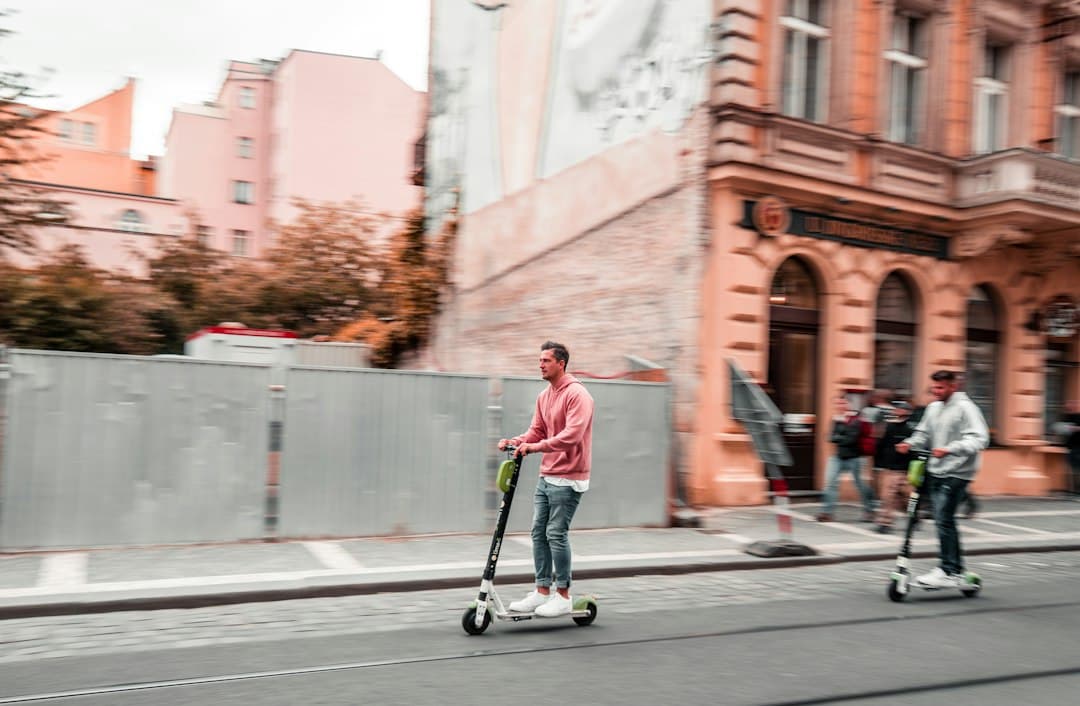
Scooters and Trains: Check Renfe's Rules
Renfe states that starting September 7, 2026, you can travel on certain trains with an electric scooter, a unicycle, or another battery-powered personal mobility vehicle, provided you meet its conditions[7]. The list of eligible trains, the permitted dimensions, and the detailed conditions are not included in the excerpts we have: check Renfe's official page before boarding.
Non-electric scooters count as special luggage: folded or disassembled, they travel in a cover whose total dimensions exceed 180 cm, up to a maximum of 140 x 90 x 40 cm[8]. To travel on AVE, Alvia, Euromed, or Intercity trains with a personal mobility device carried as special luggage, purchasing a supplement is mandatory[1].
The rules have already changed: in December 2023, Renfe and Ouigo Spain banned electric scooters from their trains due to the risk of battery fires[9]. Don't rely on an old article or your memory: Renfe's page is the authority on the day of travel.
Traps, Scams, and Things to Watch Out For
- Exempt services: EU countries may exempt certain rail services (urban, suburban, regional, national long-distance), but not cross-border international journeys[2]. Check your carrier's conditions before booking.
- Separate tickets: your rights in case of a missed connection apply if you have a single ticket. With individual tickets, they do not apply, even if some companies have continuation-of-journey agreements[3]. Find out before you buy.
- Claims: within 3 months of the incident[2], with tickets and proof of delay.
- Helmet in Alicante: rule not confirmed, rental companies' procedure not established. Don't count on a helmet being provided.
- Insurance: a scooter without insurance exposes you to a fine of €202 to €610, and riding a PMD without insurance costs €250 to €800 depending on whether it is classified as a light personal vehicle or a motor vehicle[6].
- Transitional period: uncertified PMDs may be ridden until January 22, 2027, provided they are registered and insured. After that date, they will no longer be allowed on the road[6]. If you buy a used scooter in Spain, check this point.
- Train with a scooter: board with a scooter that complies with Renfe's conditions, which may change[7].
- Local rules: they vary from city to city[4].
Checklist Before You Leave
- Ticket: does the fare allow changes, and is it a single ticket if you have a connection?
- Buffer: don't schedule a key flight or appointment for the last possible train.
- Scooter: registration certificate, label, and insurance in order, or verified with the rental company.
- Helmet: bring your own to be safe, since the rule in Alicante is not confirmed.
- Train with a scooter: review Renfe's page on the day of departure.
- Incident: keep tickets and proof of travel, and note the 3-month deadline for filing a claim.
Sources
- 1.^ abrenfe.com — Regulations: “Tickets for trips on AVE, Alvia, Euromed, and Intercity services may only be changed when the purchased fare option includes this attribute, or when a change-conditions upgrade has been purchased, except for fares where this is expressly indicated.”; “To travel on any AVE, Alvia, Euromed, or Intercity service with a bicycle or another personal mobility device that must be carried as special luggage, purchasing a supplement is mandatory.” https://www.renfe.com/es/es/normativa (accessed October 12, 2026)
- 2.^ abcdeeuropa.eu — Rail passenger rights - Your Europe: “EU rules on rail passenger rights apply when you travel by train within the EU and, in general, to all rail journeys and services.”; “If you are delayed because a train is cancelled, meaning you would arrive at your final destination more than 60 minutes late, you have the right to choose between:”; “EU countries may decide to exempt certain rail services. These exemptions may apply to urban, suburban, regional, long-distance domestic trains and trains operated” https://europa.eu/youreurope/citizens/travel/passenger-rights/rail/index_en.htm (accessed October 12, 2026)
- 3.^ abcdeeuropa.eu — Derechos de los pasajeros de tren - Your Europe: “25% of the ticket price, if the train is between one and two hours late.”; “50% of the ticket price, if the train is more than two hours late.”; “Extreme weather conditions, serious natural disasters or pandemics – incidents” https://europa.eu/youreurope/citizens/travel/passenger-rights/rail/index_es.htm (accessed October 12, 2026)
Show 6 more sourcesShow less
- 4.^ abcddgt.es — DGT - En patinete: “Personal mobility vehicles (VMP, including electric scooters) are single-seat vehicles with one or more wheels, propelled exclusively by electric motors, with a design top speed between 6 and 25 km/h.”; “Each city council may specifically regulate the traffic of VMPs (including electric scooters).”; “Riding an electric scooter under the influence of alcohol or other drugs can result in a fine of €500 to €1,000 depending on the blood alcohol level, or €1,000 in the case of drugs.” https://www.dgt.es/muevete-con-seguridad/viaja-seguro/en-patinete/ (accessed October 12, 2026)
- 5.^dgt.es — DGT - Vehículos de Movilidad Personal (VMP): “To be allowed on the road, VMPs must have the registration certificate in the register of light personal vehicles and display the identification label.” https://www.dgt.es/nuestros-servicios/tu-vehiculo/vehiculos-de-movilidad-personal-vmp/ (accessed October 12, 2026)
- 6.^ abcdgt.es — DGT - Tráfico pone en marcha el Registro de Vehículos Personales Ligeros: “Under the civil liability and insurance law, not having insurance is punishable by a fine of €202 to €610, and riding a VMP without insurance by €250 to €800, depending on whether it is considered a light personal vehicle or a motor vehicle (over 25 kilograms and over 14 kilometers per hour) under that insurance law.”; “These are VMPs that do not meet the technical requirements of the Manual of Characteristics and therefore do not have a factory marking plate. A transitional regime allows them to keep circulating until January 22, 2027, even without a circulation certificate, but they must also be registered in the National Vehicle Register and obtain mandatory insurance.”; “The identification of this type of VMP will be temporary and will cease to have effect on January 22, 2027, from which date these vehicles will no longer be allowed to circulate.” https://www.dgt.es/comunicacion/notas-de-prensa/20260127-trafico-pone-en-marcha-registro-vehiculos-personales-ligeros/ (accessed October 12, 2026)
- 7.^ abrenfe.com — Take Your Bike or Scooter on the Train | Renfe: “From September 7, 2026, you can travel on certain trains with your electric scooter, unicycle or any other battery-powered personal mobility vehicle, provided you meet the conditions set out below.” https://www.renfe.com/es/fr/voyager/informacion-util/bagages/bicyclettes-et-trottinettes (accessed October 12, 2026)
- 8.^renfe.com — Take Your Special Luggage on the Train | Renfe: “All (non-electric) scooters and bicycles that are folded or disassembled, inside a cover whose total dimensions exceed 180 cm, up to a maximum of 140 x 90 x 40 cm (length x height x width).” https://www.renfe.com/es/fr/voyager/informacion-util/bagages/equipajes-especiales (accessed October 12, 2026)
- 9.^lefigaro.fr — In Spain, electric scooters now banned on trains: “Boarding a train of the Spanish rail operator Renfe with an electric scooter has been prohibited since Tuesday, due to the risk of battery fires.” https://www.lefigaro.fr/voyages/en-espagne-les-trottinettes-electriques-desormais-bannies-dans-les-trains-20231212 (accessed October 12, 2026)