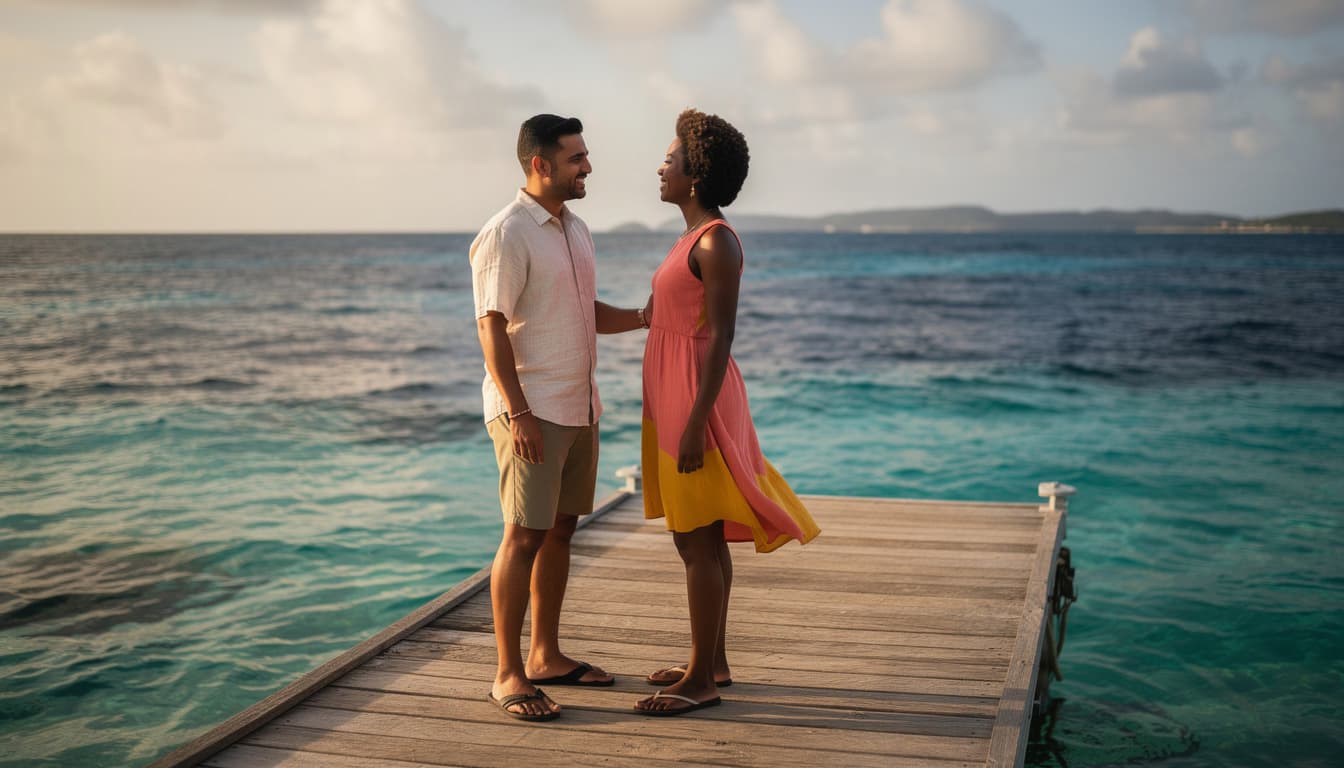
Off the coast of Colombia, the archipelago of San Andrés, Providencia and Santa Catalina brings together beaches, reefs and island culture. This article helps you choose what you want to do there: snorkel, hike up to a lookout, cross over to Santa Catalina, or discover Raizal culture. You'll also find the basics for getting from San Andrés to Providencia and the points to watch before you go.
The Sea of Seven Colors: The Archipelago at a Glance
The archipelago is a small piece of land lost in the Caribbean Sea, much closer to Nicaragua than to mainland Colombia: 190 km separate the islands from Nicaragua, compared with 630 km from the Colombian mainland[1]. This isolation is part of its character: deserted beaches and well-preserved coral reefs, carried by a very easygoing island way of life[1].
San Andrés, the largest island in the archipelago, is also its commercial and administrative hub, and it is where most visitors arrive[1]. Providencia and Santa Catalina, further north, are smaller and quieter islands[2]. Flights leave every day from Bogotá, Cartagena and Medellín to San Andrés; the flight from the capital takes about 2 hr 20 min[1].
The Old Providence National Park, on Providencia, was declared a Seaflower biosphere reserve by UNESCO in 2000[2]. To get your bearings on the sea surrounding these islands: one guide describes San Andrés as a duty-free island fringed by a coral barrier reef[3].
San Andrés: Beaches, Snorkeling and Raizal Culture
San Andrés is very busy in high season, which isn't always easy to enjoy; Colombians particularly appreciate its beaches and duty-free shopping[1]. The island is tax-free: rum, electronics and perfume are noticeably cheaper than on the mainland[3].
West View is a must-visit spot for snorkeling[1]. For a trip to a nearby islet, Johnny Cay is a 15-minute boat ride from San Andrés town and has a festive beach atmosphere on Sundays; the boat costs about 20,000 to 25,000 COP round trip, an indicative price to confirm on site[3].
Culturally, the archipelago offers a blend that stands in sharp contrast with the rest of Colombia, and the Raizal people and Afro-Colombian English-speaking Creole communities are its most faithful ambassadors[1]. San Andrés is marked by a distinct Creole culture shaped by the English-speaking Raizal community[3].
Diving and Snorkeling
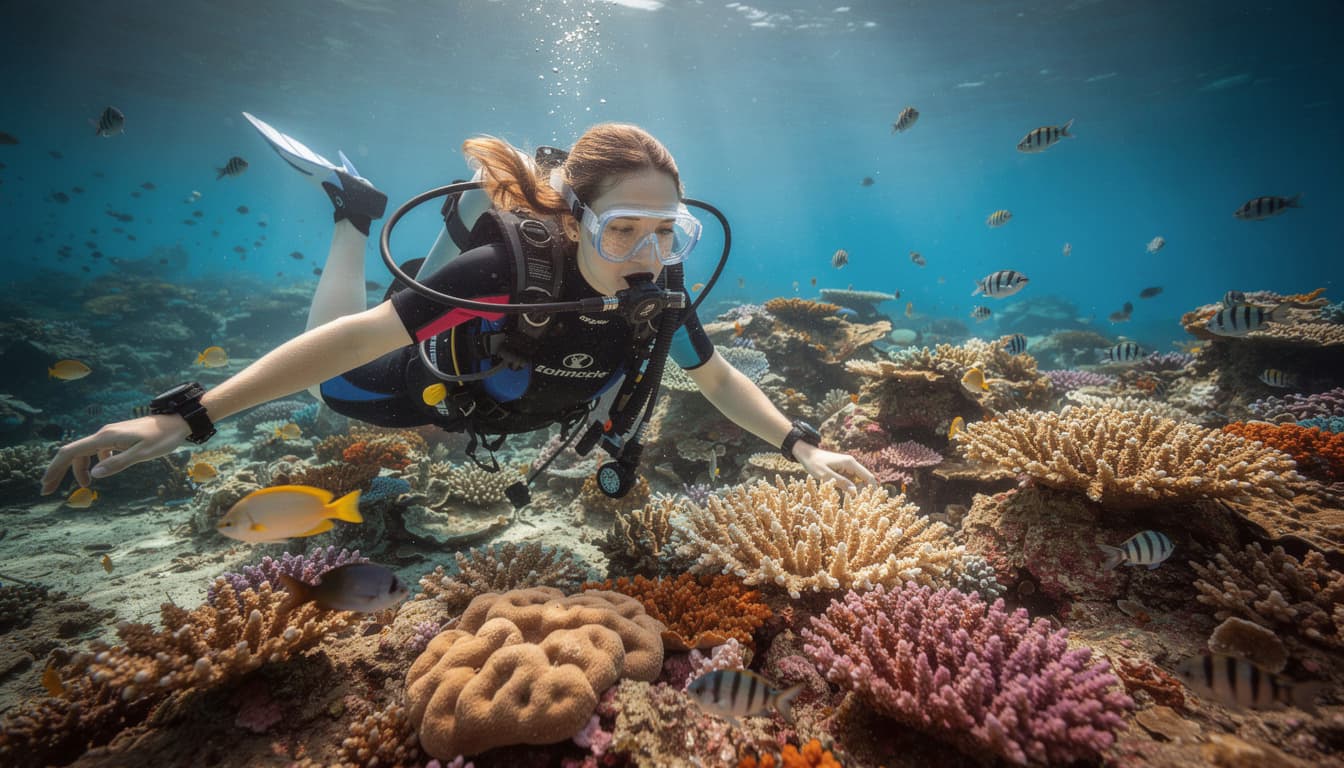
Providencia attracts ecotourism lovers and water sports enthusiasts such as diving and snorkeling, thanks to its coral reefs and the biodiversity visible through its crystal-clear waters[2].
For snorkeling, two spots come up again and again: West View on San Andrés[1] and Cayo Cangrejo (Crab Cay), a small islet ideal for watching colorful fish[2].
For diving, one guide names operators such as Buzos del Caribe or Sharky Divers on San Andrés, with recreational dives at 100,000–160,000 COP[3]. On Providencia, it mentions Bottom House and Felipe's Place among well-regarded local operators[3]. These prices are indicative: confirm them before booking.
Providencia and Santa Catalina: The Hidden Treasure
Providencia covers 17 km² and is the second-largest island in the department[2]. It has kept a pace all its own: there are no large structures or concrete buildings[2]. The colorful wooden Caribbean houses feature handcrafted sculptures of fish and crabs honoring the sea[2]. Less touristy than San Andrés, the island has fewer than 6,000 inhabitants and no duty-free shops[3].
History has left its mark here too: in 1670, the famous buccaneer Henry Morgan set up his headquarters on the island, from where he launched raids on regions of Panama and Santa Marta[1].
- The El Pico lookout, the island's highest point and ideal for hiking, offers a view over all of Providencia[2].
- Santa Catalina is reached by crossing the Lovers' Bridge, a structure dating back to the 1800s[2].
McBean Lagoon Park and the Seaflower Reserve
On arriving in Providencia, start with Old Providence McBean Lagoon National Natural Park, home to the largest coral reef in the country and the third-largest barrier reef in the world[2]. The park combines mangrove forests, coral formations and a small stretch of dry tropical forest[2].
To reach the park, you take a boat from Providencia; the trip lets you admire Cayo de los Tres Hermanos and Cabeza de Morgan[2]. Cayo Cangrejo, inside the park, offers a beautiful view of the sea of seven colors from its summit, at about 30 meters above sea level[2].
How to Get to Providencia and Get Around
There is no direct commercial flight from the mainland: you first pass through San Andrés[3]. From there, the trip is by plane, much faster, or by catamaran, which takes about 3 hours[2]. The flight time is given as about 15 minutes by the Colombian tourism office[2] and about 30 minutes by another guide, who mentions a small propeller plane and a round-trip fare of 50 to 80 USD[3]. Confirm the duration and fare with the airline.
On the island, start in Santa Isabel, the town center: you'll find several supermarkets and the tourist office, useful for organizing your transport and stocking up on supplies[2]. Farther along, Fresh Water Bay (Aguadulce) has cabins for sleeping and a small restaurant area[2]. Manchanel Bay (Manzanillo) is home to the island's most beautiful beaches, where you can also sample local cuisine[2]. Guesthouses in Santa Isabel start around 100,000–180,000 COP per night, according to one guide[3].
Pitfalls, Scams and Things to Watch Out For
- Providencia was hard hit by Hurricane Iota in November 2020; it has largely rebuilt, but check available accommodation before planning your stay[3].
- Given the risk of being secretly drugged (scopolamine), using dating apps is not recommended in Colombia[4]. Never take your eyes off your drink, especially in party venues[5].
- Don't hail a taxi on the street: prefer app-booked taxis, which are traceable, or ones called by phone or through your hotel[5].
- It is essential to have assistance coverage or insurance that covers all medical expenses and medical repatriation; the French embassy does not cover these under any circumstances[6].
- Against dengue, for which there is no curative treatment, prevention relies mainly on protection against mosquito bites[6].
- Carry your medications in their original packaging, with a prescription listing their international nonproprietary names, and never buy medication on the street[6].
Checklist Before You Leave
- Choose your base: San Andrés for beaches, snorkeling and island life; Providencia and Santa Catalina for calm, hiking and the park.
- Plan to pass through San Andrés to reach Providencia, by plane or catamaran, and confirm duration and price with the carrier.
- Book accommodation in Providencia after checking what is available.
- Take out health and repatriation insurance before departure.
- Organize your travel by app-booked taxis or through your accommodation.
- Confirm boat and diving prices on site; the prices given here are indicative.
This article covers the essentials for choosing your islands; organizing your stay in detail (accommodation, precise budget, entry procedures) requires going further.
Going Further
- Colombia: The Essentials, from the Caribbean to the Amazon
- Cartagena de Indias: What to See and Do in the Caribbean's Colonial City
- Barú and Playa Blanca: Turquoise Beaches Near Cartagena
- Nuquí, Colombia's Pacific Coast: Whales, Jungle and Wild Beaches
Sources
- 1.^ abcdefghicolombia-travels.com — San Andres, Providencia & Santa Catalina | Caribbean in Colombia: “These two islands are geographically very close to Nicaragua, exactly 190 km away, compared with 630 km from the Colombian mainland.”; “Here you'll find deserted beaches and exceptional, intact coral reefs, all wrapped in a very gentle island way of life.”; “San Andrés, the largest island in the archipelago, is also the commercial and administrative center, and it is where most travelers arrive.” https://colombia-travels.com/caribbean/san-andres-providencia (accessed November 9, 2026)
- 2.^ abcdefghijklmnopqrcolombia.travel — Providencia, a dazzling Colombian island | Colombia Travel: “Providencia Island, located in the Colombian Caribbean Sea, covers 17 km² and is the second largest in the entire department.”; “This is where you'll find Old Providence National Natural Park, declared a Sea Flower biosphere reserve by UNESCO in 2000.”; “It attracts ecotourism lovers and water-sport enthusiasts, thanks to the coral reefs and the biodiversity you can see beneath its crystal-clear waters, including scuba diving and snorkeling.” https://colombia.travel/fr/providencia (accessed November 9, 2026)
- 3.^ abcdefghijkthecolombiaguide.com — Colombia Islands Guide | The Colombia Guide: “San Andrés is a duty-free Caribbean island with a barrier reef and a truly distinct Creole culture, shaped by its English-speaking Raizal community.”; “The island is duty-free: rum, electronics, and perfume are noticeably cheaper than on the mainland, and the downtown shops cater to Colombian tourists who come specifically to shop.”; “Johnny Cay, a tiny islet 15 minutes by boat from San Andrés town, is famous for its Sunday beach parties; the boat costs about 20,000 to 25,000 COP round trip.” https://www.thecolombiaguide.com/islands/ (accessed November 9, 2026)
Show 3 more sourcesShow less
- 4.^diplomatie.gouv.fr — Colombia - Travel Advice - Latest Updates and Alerts - Page 1 of 1 - France Diplomatie | France Diplomatie: “Given the risk of having drugs or psychotropic substances (scopolamine) administered to you without your knowledge, it is advised not to use dating apps in Colombia.” https://www.diplomatie.gouv.fr/fr/information-par-pays/colombie/dernieres-minutes-et-alertes (accessed November 9, 2026)
- 5.^ abdiplomatie.gouv.fr — Colombia - Safety | France Diplomatie: “You should also never take your eyes off your drink, especially in party venues, or at home, particularly after meeting someone through an app.”; “Prefer taxis booked through apps, which are therefore traceable (Uber, Cabify, Taxis Libres, etc.).” https://www.diplomatie.gouv.fr/fr/information-par-pays/colombie/conseils-aux-voyageurs-securite (accessed November 9, 2026)
- 6.^ abcdiplomatie.gouv.fr — Colombia - Health | France Diplomatie: “These costs can in no case be covered by the French Embassy on site.”; “There is no curative treatment.”; “Individual prevention relies essentially on means of protection against mosquito bites.” https://www.diplomatie.gouv.fr/fr/information-par-pays/colombie/conseils-aux-voyageurs-sante (accessed November 9, 2026)