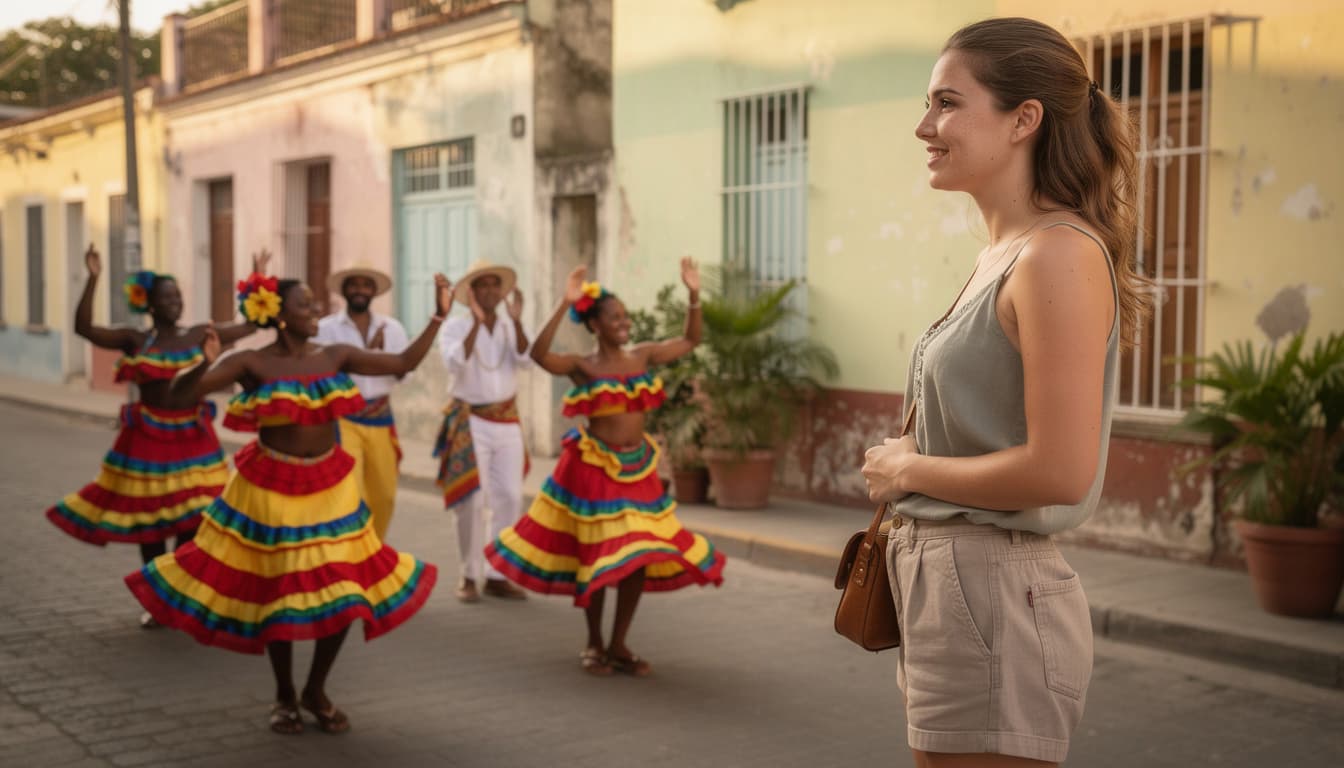
About 50 km from Cartagena, San Basilio de Palenque is a village born from escape and freedom won from slavery. This article explains where its title of "first free village of the Americas" comes from, who Benkos Biohó was, what the Palenquero language represents, and UNESCO's recognition. You will also learn how to organize a one-day visit from Cartagena and which safety habits to keep in mind.
A Village Born from Escape: The Story of a First Free Village
San Basilio de Palenque is a village of about 3,500 inhabitants, located in the municipality of Mahates (Bolívar department), an hour and a half southeast of Cartagena. It was founded in the 17th century by Africans who had escaped from the Cartagena slave port[1].
The word "palenque" refers to a refuge for people who escaped slavery. Palenque de San Basilio is the only one to have survived among all those that existed[1]. The village is presented as a place far from the colonies, where enslaved Africans fled to live in freedom, with autonomy and independence[2].
The title of "first free village of the Americas" rests, according to the Instituto Caro y Cuervo, Colombia's state language institute, on a royal decree. On August 23, 1691, the King of Spain reportedly granted freedom to the palenqueros of the Sierra de María, which would make Palenque de San Basilio the first free village of the Americas[1]. The institute adds that Governor Gerónimo Suazo had already been forced to sign a peace capitulation with the new village as early as 1603[1].
The Ministry of Culture's safeguarding plan tells this freedom differently, without using the expression. It draws on the account of the Bishop of Cartagena, Diego de Peredo, in 1772: the fugitives settled in the mountains could not be brought back into servitude even by force of arms, until, at the beginning of the century, Bishop Antonio María Cassiani, with the governor's agreement, obtained their submission in exchange for a general pardon and the enjoyment of their liberties, on the condition that they would no longer take in runaway slaves[1].
The two versions therefore do not give the same date for this freedom.
Benkos Biohó, Founding Figure
The name everyone cites is that of Benkos Biohó. According to the encyclopedia of the Banco de la República, he was brought from West Africa on a slave galleon at the end of the 16th century and escaped in 1599[1]. In 1603, he and other Africans had built a large palenque on the banks of the Ciénaga de la Matuna[1].
In 1605, after a failed attack, the Spanish authorities recognized his authority, left his settlements alone, and allowed his people to enter Cartagena freely[1]. He was captured in the city in 1619, then hanged in one of its squares on March 16, 1621[1].
The Ministry of Culture describes Palenque de San Basilio as a place of Africa in Colombia, because of its role in the 17th-century maroon uprising led by Biohó. His statue, arm raised and mouth open in a cry, stands in the village square[1]. This square, the Plaza Benkos Biohó, is one of the emblematic sites visited on the guided tour[2].
The Palenquero Language and Cultural Identity
The village has its own culture and its own language[2]. Palenquero is a creole specific to Palenque[1]. This distinctiveness is old: as early as 1772, the Bishop of Cartagena noted that the inhabitants spoke among themselves a particular language that was their own[1].
Music, Rites, and Culture: Heritage Recognized by UNESCO
UNESCO proclaimed the cultural space of Palenque de San Basilio a Masterpiece of the Oral and Intangible Heritage of Humanity on November 25, 2005. It was inscribed on the Representative List in 2008, and Colombia added it to its own national list in 2009[1].
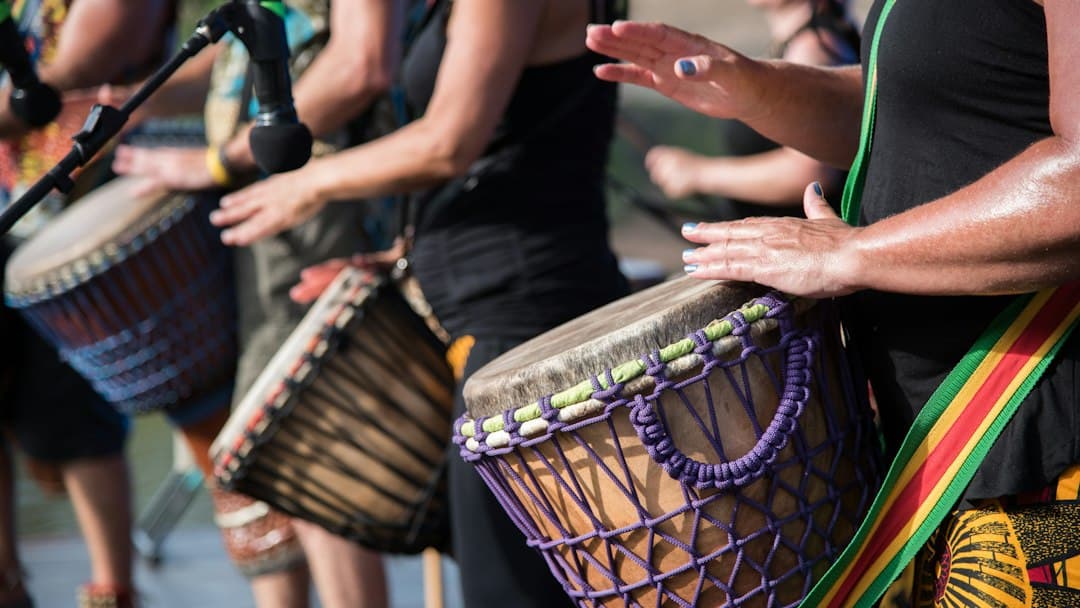
For visitors, this culture is discovered concretely: a day trip lets you explore the Afro-Colombian history, music, dance, and cuisine that have developed there[2].
Take the Day Trip from Cartagena
The village is about 50 km southeast of Cartagena[2]. The transfer takes roughly 1 h 30, depending on traffic[2]. In general, most of the tourist sites in the Bolívar department are reachable by road from Cartagena, from San Basilio de Palenque to Santa Cruz de Mompox[3].
On the day trip offered from Cartagena, a local guide takes you to the village's cultural center, where you discover the history and traditions of the community. You then walk through the landmark places and historic sites, such as Benkos Biohó Square, before having lunch at a palenquero restaurant[2]. Private transfers between Cartagena and San Basilio de Palenque are also available[4].
Booking and Planning Your Day
To book the day trip, choose your date and follow the steps on the provider's website; you can add other excursions to your cart before confirming[2].
This provider requires a minimum of two people to confirm the service. If that minimum isn't reached, it offers the closest available dates or a full refund[2]. Plan for a full day: the transfer, the guided visit, and lunch are all included.
As for cancellations, refund conditions depend on the provider: check those of your booking before you pay. For this excursion, the provider also offers a 100% refund if it is suspended due to weather[2].
Things to Watch Out For
The recommendations below come from the French Ministry of Foreign Affairs' traveler advice for Colombia.
- In Cartagena, the situation is satisfactory inside the walls of the old town and in the neighborhoods of Bocagrande, Castillogrande, and Getsemaní, but caution is still advised in the alleys of the historic center, which are emptier at night: armed robberies and knife attacks have been reported there[3].
- Do not hail taxis in the street, due to the risks of assault, theft, or express kidnapping. Prefer taxis booked through an app, which are traceable (Uber, Cabify, Taxis Libres)[3].
- The Colombian road network is in poor condition. It is strongly recommended to travel only during the day and only on main roads[3]. An organized transfer spares you from driving yourself.
- For any tourist activity, it is recommended to rely on a recognized support organization: a travel agency, an association, or a professional guide[3].
Go Further
- Colombia: The Highlights, from the Caribbean to the Amazon
- Cartagena de Indias: What to See and Do in the Caribbean's Colonial City
- Barú and Playa Blanca: Turquoise Beaches Near Cartagena
- Mompox, the Colonial Town Frozen in Time on the Magdalena River
Sources
- 1.^ abcdefghijklmcielo.travel — San Basilio de Palenque From Cartagena: Honest 2026 Guide: “A village of about 3,500 inhabitants, an hour and a half southeast of Cartagena, in the municipality of Mahates (Bolívar), founded in the 17th century by Africans who escaped slavery in the port; the only surviving palenque among all that once existed, home of the Palenquera creole language, and a cultural space that UNESCO proclaimed a Masterpiece of the Oral and Intangible Heritage of Humanity in 2005.”; “The Instituto Caro y Cuervo, the state language institute, indicates that Governor Gerónimo Suazo was forced to sign a peace capitulation with the new village as early as 1603, and that on August 23, 1691, the King of Spain issued a royal decree granting freedom to the palenqueros of the Sierra de María, which, in the institute's words, made Palenque de San Basilio the first free village in the Americas.”" https://cielo.travel/san-basilio-de-palenque/ (accessed November 9, 2026)
- 2.^ abcdefghijnomades.com — San Basilio de Palenque Day Tour | Nomades: “Palenque was the first free African village in the Americas, and in 2005 it was declared a Masterpiece of the Oral and Intangible Heritage of Humanity by UNESCO: a place far from the colonies, where enslaved Africans fled to live in freedom, with autonomy and independence.”; “You will also tour the village's iconic landmarks and historic sites, such as Benkos Biohó Square.”; “This village has its own culture and its own language, and on this excursion you can explore its fascinating history, music, dance, and cuisine in a single day.” https://www.nomades.com/en/cartagena/san-basilio-palenque-id1559 (accessed November 9, 2026)
- 3.^ abcdediplomatie.gouv.fr — Colombia - Security | France Diplomatie: “From Cartagena, most of the tourist sites in the Bolívar department are accessible by road, from San Basilio de Palenque to Santa Cruz de Mompox.”; “The security situation varies from one neighborhood to another. It is satisfactory inside the walls of Cartagena's old city and in the neighborhoods of Bocagrande, Castillogrande, and Getsemaní, although caution is advised in the narrow streets of the historic center, which are necessarily emptier at night: armed robberies and muggings with bladed weapons have been reported there.” https://www.diplomatie.gouv.fr/fr/information-par-pays/colombie/conseils-aux-voyageurs-securite (accessed November 9, 2026)
- 4.^aaa.com — aaa-travel-icon: “Private transport from Cartagena to San Basilio de Palenque.” https://www.aaa.com/tripcanvas/thing-to-do/9-transportation-san-basilio-de-palenque-from-cartagena-private-173897P34 (accessed November 9, 2026)