Mallorca is about beaches, yes, but also UNESCO-listed mountains, stone villages, fortresses and museums. This article helps you plan a cultural and nature trip: the highlights of Palma, the Serra de Tramuntana and its villages, the coves, caves and gardens, the Arab heritage, and the artists who left their mark on the island. You'll also find practical points to watch out for before you go.
Mallorca at a glance: why go
The island combines white-sand beaches with spectacular mountains[1]. Its history can be read in its stone villages and ancient fortresses[1]. As for activities, the choice is wide: hiking in the Tramuntana, sailing in turquoise waters[1], but also birdwatching for migratory species, climbing, cycling or diving[2].
Inland, the peaks reach 1,500 meters above sea level[3]. According to the list of natural parks of the Balearic Islands, four are located on Mallorca: s'Albufera de Mallorca, Mondragó, sa Dragonera and the Llevant peninsula[2]. The Tramuntana, a UNESCO site, falls under a separate designation[4]. The natural parks offer information at their visitor centers, guided tours and maps[2].
Palma: cathedral, palace and old town
The island's capital enjoys a favorable climate all year round, with an average annual temperature of 17.9 °C[3]. It is best known for its sun and beaches, but it also has a superb historic center[3]. The cathedral, the Almudaina Palace, the markets and the Plaza Mayor are among the must-see sights[3].
- La Seu: this imposing Gothic cathedral stands in the heart of Palma and remains a masterpiece of architecture[1].
- The Almudaina Palace: next to the cathedral, it was originally built as a Muslim fortress; despite the changes of the centuries, elements of its Islamic heritage survive in its structure and decoration[1].
- Bellver Castle: this medieval fortress on a hill near Palma offers panoramic views over the city and houses a museum dedicated to the city[1].
The city's Arab baths are a well-preserved example of Islamic architecture on the island[1].
Palma for art lovers: Miró and Es Baluard
The Fundació Pilar i Joan Miró a Mallorca is located in Cala Major, on the grounds where Miró lived and worked from 1956 until his death in 1983[5]. Visitors can see his studios, a sculpture garden and the building by Rafael Moneo[5]. The full-price adult ticket costs €10[5]. The site is closed on Mondays, December 25 and January 1[5]. Opening hours vary by season: check them before you come.
Es Baluard, a contemporary art museum that opened in 2004, occupies the Renaissance bastion of Sant Pere, part of Palma's former ramparts, and offers a view of the harbor[6]. The full-price adult ticket costs €8[6]. Check opening hours and prices before your visit.
Serra de Tramuntana: mountains, villages and hiking
Listed as a UNESCO World Heritage Site, the Tramuntana natural park combines nature, culture and heritage[4]. It spans more than 20 municipalities, from Andratx to Pollença[7], and several of its summits rise above 1,000 meters[4].
For walking, the GR 221, or Ruta de Pedra en Sec, is the island's most famous and best-maintained route: about 280 kilometers in eight stages, from Andratx to Pollença[4]. At the end of each stage, a network of refuges provided by the Consell de Mallorca lets you spend the night[4]. For an easier walk, the climb to the hamlet of Maristella and the Fita del Ram, starting from Esporles, takes about two hours and suits families[4].
Without walking, you can take the Sóller train from Palma. The journey takes about an hour and passes through viaducts, bridges and 13 tunnels[4]. Cycling is also very popular: the island is one of the best cycling destinations[4]. Finally, a Wine Route lets you taste Mallorcan wine along the mountain roads[4].
The villages not to miss
- Valldemossa: the most touristic mountain village, famous for its 14th-century monastery where Chopin and George Sand spent a winter[1]. Its cobbled lanes and charming atmosphere are part of its reputation[1].
- Deià: on the west coast, smaller and less touristy than Valldemossa, yet just as charming; for many years it has attracted artists and writers, including Robert Graves[4].
- Fornalutx: at the top of the Serra de Tramuntana, above the Sóller valley, it is renowned for the preservation of its buildings[4].
- Pollença: at the foot of the Tramuntana, in the northeast, it is presented as a unique place on Majorca, whose residents are said to speak a dialect of their own, specific to the island[4].
Beaches, coves, caves and gardens
Majorca has many white-sand beaches and coves with crystal-clear waters; among the best known are Cala Millor, Cala d'Or, Cala Agulla and Es Trenc[1].
- The Drach Caves, in Manacor, on the southeast coast: one of the island's main tourist sites, with a walking tour, a boat ride and a classical music concert on an underground lake[1].
- The Alfabia Gardens, in Bunyola, in the heart of the Tramuntana: a house, a garden and a farm whose history is documented back to the Arab period[1].
- Protected areas: s'Albufera, Mondragó, Llevant and Dragonera, ideal for birdwatching and walks[2].
History and culture: the Arab legacy and the artists
The island is dotted with coastal defense towers inherited from the Muslim period. The Torre d'en Rovira, in Port de Sóller, and the Torre de Canyamel, on the east coast, were built to protect it from attacks by sea[1]. The Alaró Castle, in ruins in the Tramuntana, was built by the Muslims as a defensive fortress and retains its Islamic origins, even though most of the current structure dates from later periods[1].
Majorca is also an island of artists: Chopin and George Sand in Valldemossa[1], Robert Graves in Deià[4], Joan Miró in Cala Major[5]. When it comes to dining, the island has nearly a dozen restaurants with a Michelin star, notably in Palma, Sóller and Llucmajor[1].
Planning your stay: transport
Son Sant Joan Airport is 8 kilometers from Palma[3]. Regular buses (lines A1, A2 and 34) and taxis serve the city and the port[3], and direct flights connect many European cities in about two hours[3]. By sea, regular ferries link Palma with Barcelona, Valencia and Denia[3].
In Palma, a bus network gets you to the tourist sites and beaches[3], and two metro lines (M1 and M2) complete the options[3]. The train is a good way to explore the island, with three main lines: Inca, Sa Pobla and Manacor[3]. To cover the whole island, renting a car is one of the best solutions; in the city, a bike or the bus is preferable, as parking is difficult[8].
Pitfalls, scams and things to watch out for
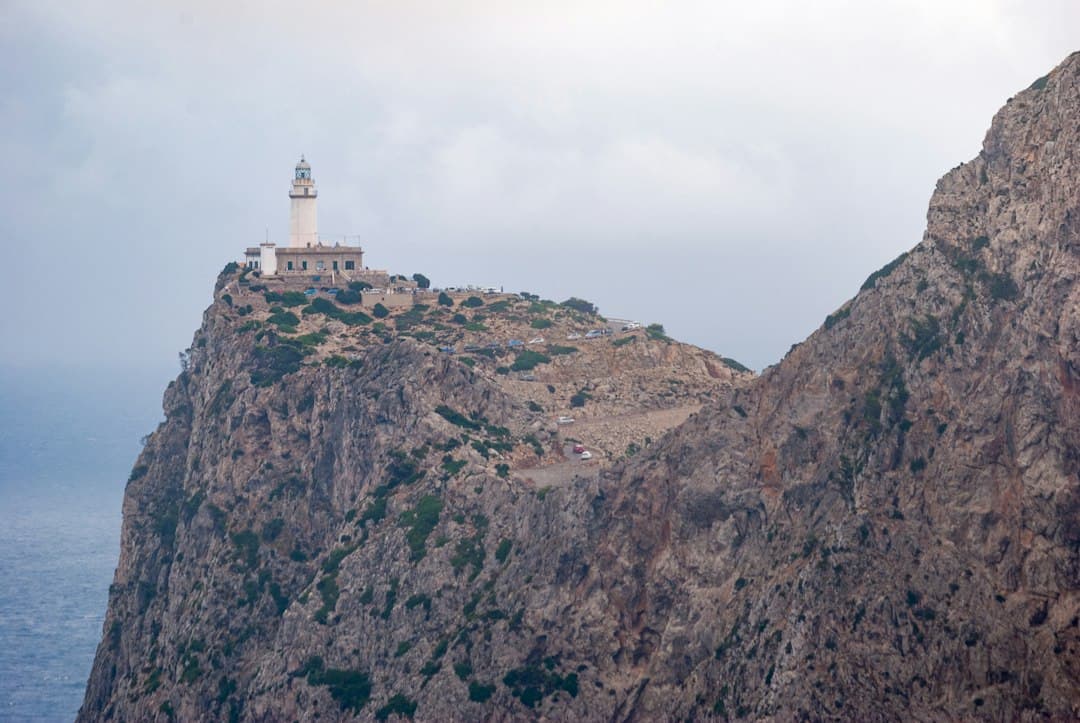
- Cap de Formentor lighthouse: from June to September, private cars are not allowed to access the lighthouse between 10 am and 10 pm; park in Port de Pollença and take the shuttle (bus 334)[8]. Ignoring the signs can result in fines[8].
- Car rental: in high season, counter prices are 2 to 3 times higher than online rates. Book online at least two weeks ahead[9]. To avoid hidden fees and insurance forced on you at the counter by major international companies, many travelers favor local rental agencies; for fuel, opt for "full-to-full"[8].
- Overcrowded areas: Playa de Palma and Magaluf experience heavy crowds and disturbances in summer[10]. At Caló des Moro, which is heavily photographed, it's best to arrive before 8 am; in summer, the coves to the north or east (Cala Torta, Cala Agulla) are more spacious[8].
- Restaurants facing tourist beaches: often the most expensive and the least good[9].
- Pickpocketing: some areas of the island, especially very busy districts, are known for frequent pickpocketing[10]. Avoid displaying phones and wallets in crowded places and on public transport, and keep important documents at your accommodation[10].
Key takeaways
- Combine Palma (La Seu, Almudaina, Bellver, Miró, Es Baluard) with at least one day in the Tramuntana.
- Choose your villages based on the atmosphere you want: Valldemossa for its fame, Deià and Fornalutx for calm.
- Book your car online, and plan for the shuttle to Cap de Formentor in summer.
- For beaches and coves in summer, leave early and aim for the north or east.
- This article covers the essentials: choosing accommodation, gastronomy and detailed itineraries require going further to plan a tailor-made stay.
Keep exploring
- Spain: The Highlights, Region by Region
- Santiago de Compostela: What to See and Do in a Few Days
- Ibiza: What to See and Do Beyond the Party, from Heritage to Nature
- Bilbao and San Sebastián: What to See and Do in the Basque Country
Sources
- 1.^ abcdefghijklmnopspain.info — Tourism in Majorca. What to See and Do | Spain.info GCC: “Majorca offers incomparable beauty, with its pristine beaches and breathtaking mountain landscapes. Its rich history shows in its charming stone villages and ancient fortresses.”; “From hiking in the Tramuntana mountains to sailing the island's turquoise waters, you can enjoy a wide variety of outdoor activities.”; “Also known as La Seu, this imposing Gothic cathedral stands in the center of Palma, the capital of Majorca, and remains an architectural masterpiece.” https://www.spain.info/gcc/en/destinations/majorca/ (accessed November 18, 2026)
- 2.^ abcdillesbalears.travel — Natural Landscapes (Mallorca): “You can watch colorful migratory birds, walk from refuge to refuge, swim in a secluded rocky cove, climb vertical cliffs, descend gorges, sail, cycle, and dive.”; “The 6 natural parks of the Balearic Islands are s'Albufera de Mallorca, Mondragó, s'Albufera des Grau (Maó), sa Dragonera, ses Salines (Eivissa-Formentera), and the Llevant peninsula.”; “You can get information at the visitor centers. All these parks have great ecological value and offer guided tours and maps.” https://www.illesbalears.travel/en/mallorca/natural-landscapes (accessed November 18, 2026)
- 3.^ abcdefghijkspain.info — Tourism in Palma. What to See. Tourist Information | spain.info: “The interior reveals typical Majorcan villages and highlands reaching 1,500 meters above sea level.”; “Palma enjoys a privileged climate all year round (annual average temperature of 17.9 °C).”; “Best known for its sunshine and beaches, it nonetheless boasts a superb historic center.” https://www.spain.info/fr/destination/palma/ (accessed November 18, 2026)
Show 7 more sourcesShow less
- 4.^ abcdefghijklmillesbalears.travel — Serra de Tramuntana: Guide for Visiting It (Mallorca): “Designated a UNESCO World Heritage Site, the Tramuntana natural park is one of the finest examples of human presence perfectly integrated into nature, offering a very interesting combination of culture, heritage, and nature.”; “Its impressive views, with peaks over 1,000 meters, will captivate everyone who ventures onto its paved trails.”; “The route, roughly 280 kilometers long, has eight stages and runs from Andratx to Pollença.” https://www.illesbalears.travel/en/mallorca/serra-de-tramuntana-guide-for-visiting-it (accessed November 18, 2026)
- 5.^ abcdemusa.guide — Fundació Miró Mallorca: Visitor Guide | Musa: “The Fundació Pilar i Joan Miró in Mallorca is located in Cala Major, on the grounds where Miró lived and worked from 1956 until his death in 1983.”; “It houses his studios (the Taller Sert and Son Boter), a sculpture garden, and the building by Rafael Moneo, opened in 1992.”; “At Fundació Miró Mallorca, the full-price adult ticket costs €10.” https://www.musa.guide/fr/discover/palma/fundacio-miro-mallorca (accessed November 18, 2026)
- 6.^ abmusa.guide — Es Baluard Museu d'Art Contemporani de Palma: Visitor Guide | Musa: “Es Baluard opened in 2004 in the Renaissance bastion of Sant Pere, part of Palma's old city walls, with views over the harbor.”; “At Es Baluard Museu d'Art Contemporani de Palma, the full-price adult ticket costs €8.” https://www.musa.guide/fr/discover/palma/es-baluard (accessed November 18, 2026)
- 7.^illesbalears.travel — Natural Landscape Serra de Tramuntana (Mallorca): “The natural landscape stretches across more than 20 municipalities, each more charming than the last, from Andratx to Pollença.” https://www.illesbalears.travel/en/mallorca/naturliche-landschaft-serra-de-tramuntana (accessed November 18, 2026)
- 8.^ abcderoutard.com — Majorca Travel and Vacation Guide: “Renting a car is one of the best ways to get around the entire island. Several car rental companies are located at Palma airport. In town, it's better to get around by bike or bus, since parking is difficult.”; “The Cap de Formentor trap: this is alert no. 1. From June to September, private cars are strictly forbidden from accessing the lighthouse between 10 am and 10 pm. Insider tip: park at Port de Pollença and use the shuttle (bus 334).”; “A spectacular road, but it can quickly turn into a nightmare of fines if you ignore the signs.” https://www.routard.com/fr/guide/europe/espagne/baleares/majorque (accessed November 18, 2026)
- 9.^ abvisiter-majorque.com — Majorca Mini-Guide 2026 (Free): The Essentials Before You Go | Visiter Majorque: “During peak season, prices at the counter are 2 to 3 times higher than online.”; “Book online at least 2 weeks in advance.”; “Restaurants facing the tourist beaches are often the most expensive and the least good.” https://visiter-majorque.com/guide-gratuit (accessed November 18, 2026)
- 10.^ abcjolisvoyages.fr — Places to Avoid in Majorca: Tourist Traps and Areas to Steer Clear of in 2024 - Jolis Voyages: “Major sites such as Playa de Palma and Magaluf suffer from heavy overcrowding, especially in summer, creating crowds and nuisances.”; “Some areas, such as Son Gotleu and El Arenal, are known for frequent pickpocketing.”; “Avoid displaying valuables, especially phones and wallets, in busy places or on public transport.” https://www.jolisvoyages.fr/les-endroits-a-eviter-a-majorque/ (accessed November 18, 2026)