
Moving abroad to work doesn't automatically take you off the French tax system. This article helps you understand the criteria under which France considers you a resident, what you declare and where, what a foreign company does (or doesn't) change, and which points to check before you leave. It does not replace a check with the tax authorities: on tax matters, nothing here should be taken as certain for your personal situation.
Before you leave: defining your tax residence
The first question isn't "where do you sleep?" but "where does the law place you?" Under French law, you are fiscally domiciled in France if you meet at least one of the three criteria in Article 4 B of the French General Tax Code[1][2]. One is enough.
- Your household (spouse or civil-partner and children) remains in France, even if you stay elsewhere for professional reasons, temporarily or for most of the year. If there is no household, your main place of stay is what counts[1].
- You carry on a professional activity in France, whether as an employee or self-employed, unless it is merely incidental[1].
- You have the center of your economic interests in France: the location of your main investments, your business headquarters, the center of your professional activities, or the place from which you derive most of your income[1].
For a freelancer, the second and third criteria often carry the most weight: where do you carry out your services, and where does most of your revenue come from? If most of your activity remains in France, physically leaving will not by itself change your situation.
When two countries claim you
Each country's domestic law can result in you being considered a tax resident of several countries at once[1]. In that case, international tax treaties provide tie-breaker criteria that override the domestic rules, and these criteria differ from one treaty to another: you need to read the one that applies to your situation[1]. Without a treaty between the two countries concerned, each country's domestic law applies[2].
The 183-day myth
"Fewer than 183 days in France, so I'm not a resident": this is the most common and most risky shortcut. The 183-day threshold is only an indicator: your household, your main activity, or your economic interests are enough to tie you to France[3]. A digital nomad who spends no more than 183 days anywhere is not, for that reason, a resident nowhere[3].
In other words, counting your nights does not replace the analysis of the three criteria above. And if another country also considers you a resident, the tax treaty between the two states decides, using criteria that vary from case to case[1]. The official page refers to impots.gouv.fr, under International > International Conventions, to find the applicable treaty[1].
What you declare in France, what you declare in your host country
It all depends on your status for the French tax authorities.
- French tax resident: you declare in France all of your income, including income of foreign origin[4]. Any double taxation is handled by tax treaties; without a treaty, French law applies in full, even if some income has already been taxed in its country of origin[4].
- Non-resident: your tax obligation is limited to your French-source income, taxable in France subject to tax treaties[2]. Without such income, you have no filing obligation in France[4].
Watch the definition of "French-source" income: income from self-employed activities is treated as French-origin income when the activity is carried out in France[4]. French-source income is listed in Article 164 B of the CGI: rental income, dividends, income from activities carried out in France, capital gains, and pensions paid by a payer established in France[2].
On the host-country side, the French administration is explicit: if you live outside France, always contact the local tax authority to clarify your filing and payment obligations, even if you pay taxes in France[2]. In some cases, the treaty in force requires you to declare the same income both in France and in the other state[2].
If you leave as a couple
Your situation is assessed for each member of the household: you may be considered a French tax resident while your spouse is considered a non-resident, in which case you will be taxed differently[2].
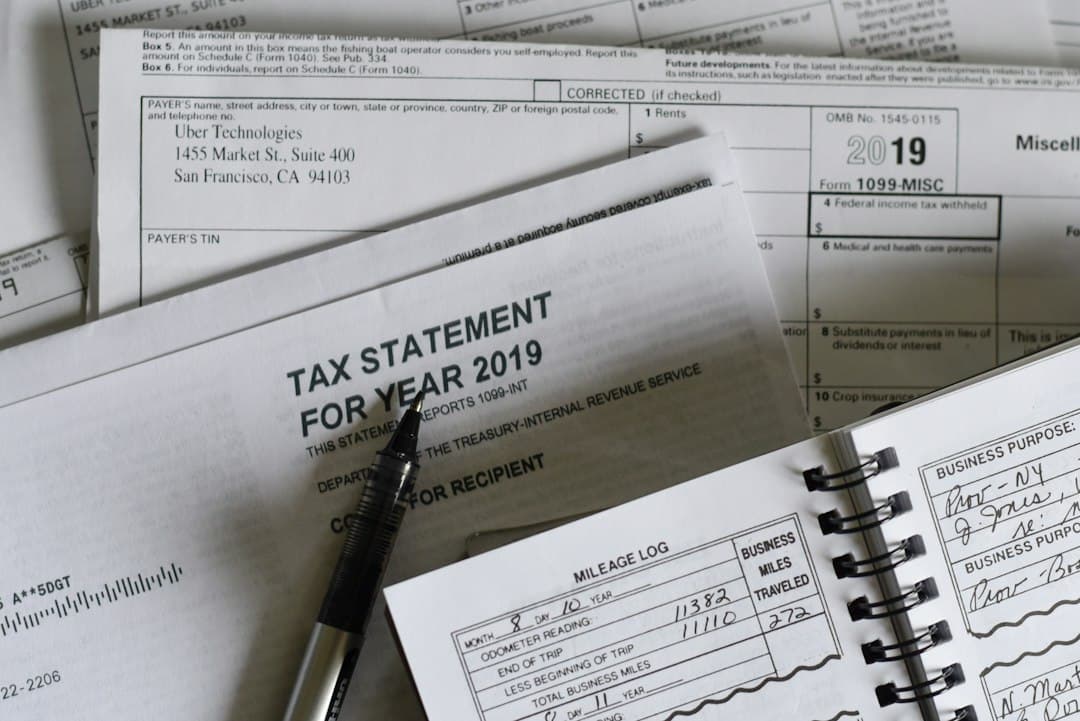
Foreign Company, e-Residency: What They Change (and What They Don't)
Creating a company abroad does not change your personal tax residence[3]. If you remain a French tax resident, you must declare your worldwide income in France, including income earned through your foreign company[3].
Estonia's e-Residency illustrates the confusion well. The official program states it: e-Residency is not a tax residence, either for you or for your company[3]. An OÜ may even be taxed elsewhere if the business is carried out there[3]. Its appeal lies elsewhere: since the 2023 reform, the minimum share capital of an OÜ is €0.01 per partner, compared with €2,500 previously[5].
A U.S. LLC, on the other hand, can add obligations: the IRS imposes a penalty of $25,000 for each failure to file Form 5472, which an LLC owned by a non-U.S. resident must often file[3].
On the French side, two anti-abuse provisions are worth knowing. Article 155 A of the CGI allows income collected by a foreign entity for services you perform from France to be taxed in your name; Article 123 bis targets the profits of an entity subject to a privileged tax regime in which you hold at least 10%[3]. These two points come from an unofficial source: verify them on the tax administration's website before making any decision.

Special Tax Regimes in Certain Host Countries
Some countries offer favorable tax regimes to newcomers. Here are two examples, which mainly show that the conditions matter more than the advertised benefit.
Spain: the regime for displaced workers (the "Beckham Law," Article 93 of the Ley del IRPF) allows people who became Spanish tax residents following a work-related move to opt for taxation as non-residents during the year of arrival and the following 5 years[6]. The flat rate is 24% (19% for EU/EEA residents) on employment income up to €600,000, instead of the progressive scale[6].
Greece: a 50% exemption from income tax on employment or self-employment income earned in Greece, for a maximum of 7 tax years, non-renewable[7]. The conditions are cumulative: not having been a Greek tax resident for 5 of the 6 years preceding the transfer, transferring residence from an EU/EEA country or a country with an administrative cooperation agreement, and working for a Greek entity or carrying on a self-employed activity there[7].
Our file does not detail all the conditions of these regimes (the Greek list is truncated in the source): confirm your eligibility with the tax administration of the country concerned before you move.

Pitfalls and Points to Watch
The points below are the ones that most often end up being costly. Several rely on unofficial sources: every rule cited must be confirmed on impots.gouv.fr or with the competent administration before you act.
Keeping Your Clients in France
If your main clients remain French, your center of economic interests is in France: you remain a French tax resident despite your physical residence abroad[8]. This is consistent with the official criterion of the place from which you derive the majority of your income[1].
Not Declaring Your Departure
According to an unofficial source, the transfer of tax domicile must be reported using Form 2042 (box HZ); negligence exposes you to a risk of double taxation and reassessment[8]. Check the exact procedure on impots.gouv.fr.
The Company Without Substance
According to the same source, an Estonian, Dubai, or Cypriot company with no office, employee, or real activity in the country would be reclassified in France as a French company (abuse of law)[8]. The risk comes from the gap between paperwork and reality: a foreign company is not illegal in itself, but if you live and work in France, the actual place of work does not change[3].
Forgetting French-source income
Even as a non-resident, you must declare French-source income in France, for example rental income or dividends from an SCI[8]. The tax administration offers 36 practical guides by country covering the main types of income to declare, in the International section of impots.gouv.fr[2].
Accounts held abroad
As long as you remain a French tax resident, all your accounts held abroad must be declared (form 3916)[8]. The penalty amounts and procedures are not confirmed by an official source in our file: check impots.gouv.fr.
The exit tax
The exit tax (article 167 bis of the CGI) taxes unrealized capital gains when you transfer your tax residence out of France, if you hold at least 50% of a company or securities whose total value exceeds €800,000[8]. These thresholds come from an unofficial source: confirm them before leaving if you hold securities.

VAT and a foreign company invoicing in France
A foreign company not established in France may owe French VAT on certain transactions located in France; a foreign company without a permanent establishment that owes this VAT also goes through an approved platform for e-reporting, starting September 2027 for a small structure[3]. These points come from an unofficial source: check the VAT rules applicable to your case with the French tax administration.
Social security affiliation
If your foreign company pays you a salary while you work from France, you in principle remain affiliated with the French system; URSSAF has a dedicated service for foreign companies without an establishment in France that employ a person covered by French social security[3]. We were unable to read URSSAF's pages: confirm your coverage with them.
Currency exchange limits
Some countries restrict currency conversions. In China, for example, SAFE imposes a limit of US$50,000 per year per individual for residents converting CNY into foreign currency, with no way to get around it by splitting transactions[9]. This example relates to a single country and its source is of low reliability: find out about the country you are moving to.
Social security, status, and support solutions
On status, an unofficial source indicates that in principle the auto-entrepreneur status is reserved for French tax residents, and that an expat must regularize by switching to a status suited to the host country[8]. Confirm with the administration before you leave.
If you own an EURL or SASU, you can invoice from abroad as long as the company's registered office address remains in France[10]. But the company and you are two distinct persons: your personal tax residence must be analyzed separately[10], according to the criteria seen above.
Employee leasing or outsourced management offers exist to relieve you of administrative work[10]. These are commercial offers, presented here by their own publishers: compare them before committing.
Finally, if two institutions disagree on the applicable social security legislation, the institutions concerned follow the dialogue and conciliation procedure set out in decision A1 of June 12, 2009 by the Administrative Commission for the Coordination of Social Security Systems[11].
Checklist before you leave
- Test each of the three criteria in Article 4-B against your real situation (home, activity, economic interests).
- Identify the tax treaty between France and your host country and read its tie-breaker criteria.
- Contact the local tax authority to learn your obligations in the host country.
- Sort your French-source income from your foreign income.
- Check the formalities for leaving on impots.gouv.fr: declaration of transfer of tax residence, accounts held abroad, exit tax if you hold securities.
- If you are considering a foreign company, make sure it is based on real activity in that country.
- Confirm your social protection scheme with URSSAF or CLEISS.
Sources
- 1.^ abcdefghiimpots.gouv.fr — Am I a non-resident for tax purposes? | impots.gouv.fr: “Under French law (article 4-B of the General Tax Code), you are considered domiciled for tax purposes in France if: ” ; “Your household (spouse or PACS partner and children) remains in France, even if, due to professional necessity, you are required to stay in another country temporarily or for most of the year. In the absence of a household, tax domicile is defined by your main place of residence.” ; “You carry on a professional activity in France, whether as an employee or self-employed, unless it is ancillary.” https://www.impots.gouv.fr/particulier/suis-je-bien-non-resident (accessed October 12, 2026)
- 2.^ abcdefghimpots.gouv.fr — Non-resident in France | impots.gouv.fr: “Subject to international tax treaties, you are considered domiciled for tax purposes in France if you meet one or more of the following criteria: ” ; “In the absence of a treaty between the two countries concerned, the domestic law of each country applies.” ; “If you are not a tax resident in France, you are subject to limited tax liability on your French-source income, taxable in France subject to tax treaties.” https://www.impots.gouv.fr/non-resident-de-france (accessed October 12, 2026)
- 3.^ abcdefghijklefreelance.fr — Foreign company, French freelancer: 2026 tax risks: “No, not on its own. Setting up a company elsewhere does not change your personal tax residence. If you remain a French tax resident, you must declare your worldwide income in France: salaries, dividends, income from your foreign company.” ; “The 183-day threshold is only an indicator: your household, your main activity or your economic interests are sufficient to link you to France. A nomad who spends fewer than 183 days anywhere is not for that reason resident nowhere.” ; “The official e-residency programme states it plainly: e-residency is not a tax residence, either for you or for your company. The Estonian tax authority specifies that an OÜ may be taxed elsewhere if the business is carried on there.” https://lefreelance.fr/articles/societe-etrangere-freelance-france/ (accessed October 12, 2026)
Show 8 more sourcesShow less
- 4.^ abcdimpots.gouv.fr — What is taxed in France | impots.gouv.fr: “You must declare in France all of your income, including income of foreign origin.” ; “In the absence of a treaty, French domestic legislation applies without restriction, resulting in all income being taxed in France, even if some of it has already been taxed in the country of origin.” ; “If you have no such income, you have no reporting obligation in France.” https://www.impots.gouv.fr/particulier/ce-qui-est-impose-en-france (accessed October 12, 2026)
- 5.^Mira Knowledge — Since the 2023 reform of Estonian company law, the minimum share capital of an OÜ is €0.01 per partner, down from €2,500 previously. Verified on June 13, 2026: 2 consistent sources (learn.e-resident.gov.ee, addressinestonia.com). https://learn.e-resident.gov.ee/hc/en-gb/articles/360000633557-Private-limited-company-O%C3%9C (accessed June 13, 2026)
- 6.^ abMira Knowledge — Spain offers a special tax regime for displaced workers (the “Beckham Law,” article 93 of the Spanish IRPF Act): an option to be taxed as a non-resident in the year of arrival and the following 5 years, at 24% (19% for EU/EEA residents) on employment income up to €600,000. Verified on June 11, 2026: 2 consistent sources (sede.agenciatributaria.gob.es, taxsummaries.pwc.com). https://sede.agenciatributaria.gob.es/ (accessed June 11, 2026)
- 7.^ abMira Knowledge — Greece grants a 50% exemption from income tax on employment or self-employment income earned in Greece, for up to 7 tax years, non-renewable, subject to cumulative conditions. Verified on June 11, 2026: 2 consistent sources (taxsummaries.pwc.com, aade.gr). https://taxsummaries.pwc.com/greece/individual/other-tax-credits-and-incentives (accessed June 11, 2026)
- 8.^ abcdefgtjmetre.fr — Expat freelancer / digital nomad: 2026 taxation: “Keeping a freelance activity in France after moving abroad: if your main clients are still French, your centre of economic interests is in France; you remain a French tax resident despite being physically abroad.” ; “Not declaring your departure: you are required to report the transfer of your tax domicile using form 2042 (box HZ). Negligence creates a risk of double taxation and adjustment.” ; “Setting up an offshore company without substance: an Estonian, Dubai or Cypriot company with no office, employee or real activity in that country may be reclassified in France as a French company (abuse of law).” https://tjmetre.fr/freelance-expatrie (accessed October 12, 2026)
- 9.^Mira Knowledge — SAFE imposes on Chinese residents a foreign exchange cap of USD 50,000 per year per individual for converting CNY into foreign currency, with no possibility of circumvention through splitting. Verified on June 11, 2026. (accessed June 11, 2026)
- 10.^ abchightekers.com — Digital Nomad: staying compliant on tax: “If you own an EURL or a SASU, you can obviously invoice from abroad as long as your company's registered office address remains based in France.”; “Since the legal entity (your company) and the natural person (you) are separate, your company will always be a French company able to deliver services to clients in France or internationally. But regarding your income, it's important to understand where your tax residence is, depending on your situation.”; “By hosting your freelance activity with an activity management company specialized in international invoicing, such as Hightekers, you free yourself from the administrative burden (and complexity).” https://www.hightekers.com/fr-fr/blog/digital-nomad-regles-fiscales (accessed October 12, 2026)
- 11.^Mira Knowledge — If two institutions disagree on which legislation applies, they follow the dialogue and conciliation procedure provided for in decision A1 of June 12, 2009 by the Administrative Commission for the Coordination of Social Security Systems. Verified: official source cleiss.fr. https://www.cleiss.fr/reglements/883_legislation_applicable.html