Moving to a new country every one to three months means relearning how to grocery shop at each stop. This article helps you estimate how much food takes up your budget, choose where to buy, cook local food without overspending, and eat safely. It also details the costly pitfalls: imported products, delivery fees, and EU rules on bringing food into the country.
How much does a digital nomad's grocery shopping cost?
Your food budget depends first on the price level of the destination, then on your habits. According to a travel website, typical monthly food spending is $180 to $700 in a low-cost country, $300 to $1,300 in a mid-cost country, and $500 to $2,000 or more in a high-cost country, depending on how often you eat at restaurants[1]. These figures are benchmarks from travel websites, not official averages.
Restaurants are the first lever. Eating out often typically adds $300 to $1,000 or more per month to your budget[1]. A routine centered on restaurants, with a daily coffee, can raise spending from about $400 a month to over $900 in the same destination[2].
Where to buy: markets, supermarkets, and wholesale stores
Every country has its own chains, so it's worth identifying the main ones before you arrive. In the Philippines, for example, SM Markets is the largest network, Puregold Price Club is a popular discount chain, and Robinsons Supermarket is mid-range[3].
For bulk purchases, S&R Membership Shopping and Landers Superstore operate on the Costco model, with a paid membership[3]. This can suit a stay of several months or several people sharing accommodation.
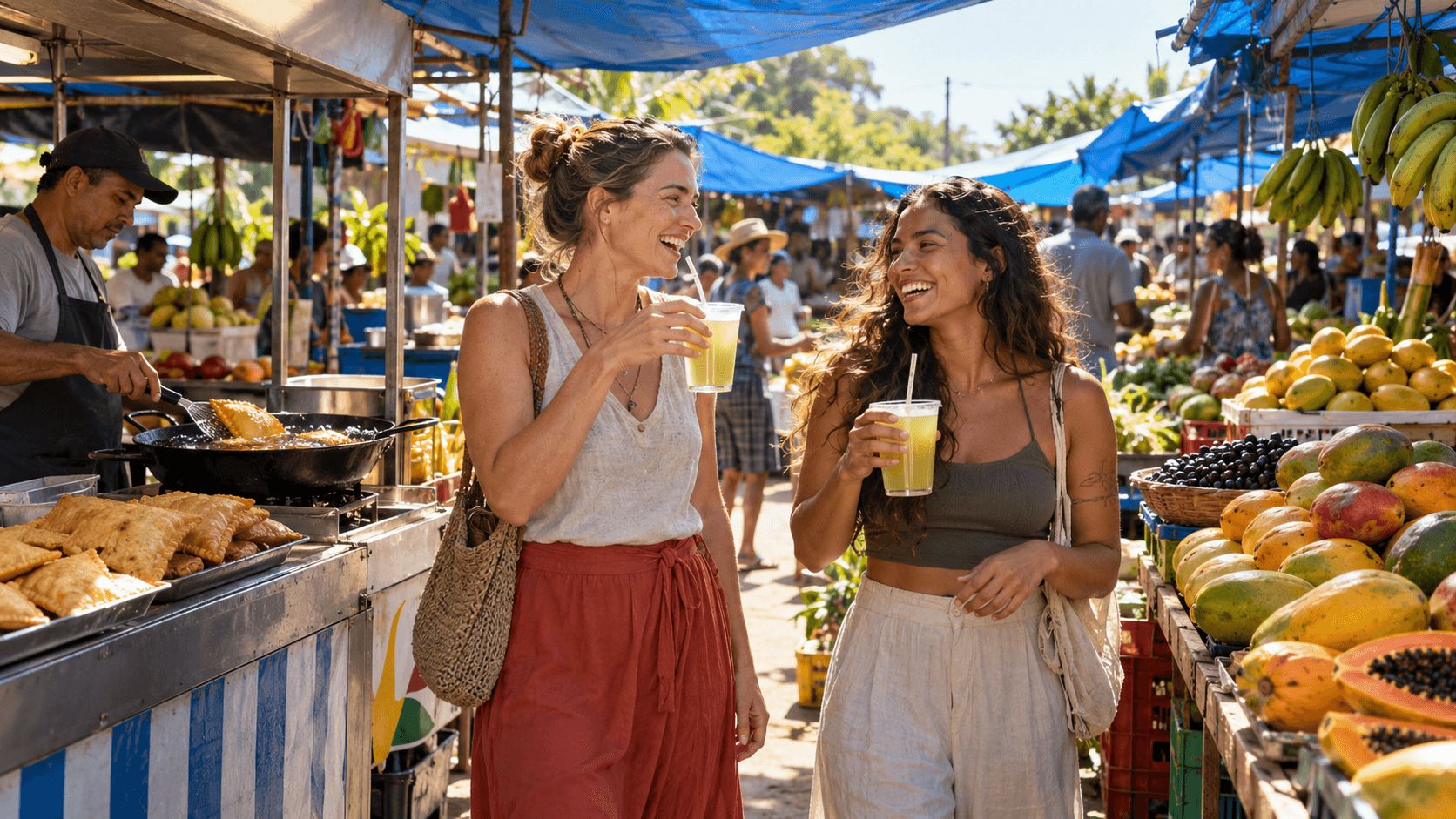
To eat local, follow the locals. Morning markets in Southeast Asia sell tropical fruit at low prices, Turkish lokantas serve home-style meals for a fraction of restaurant prices, and Mexican mercados offer tacos[4]. Conversely, avoid expat-oriented stores with their imported cheese and cereal aisles[4].
Cooking local without going broke
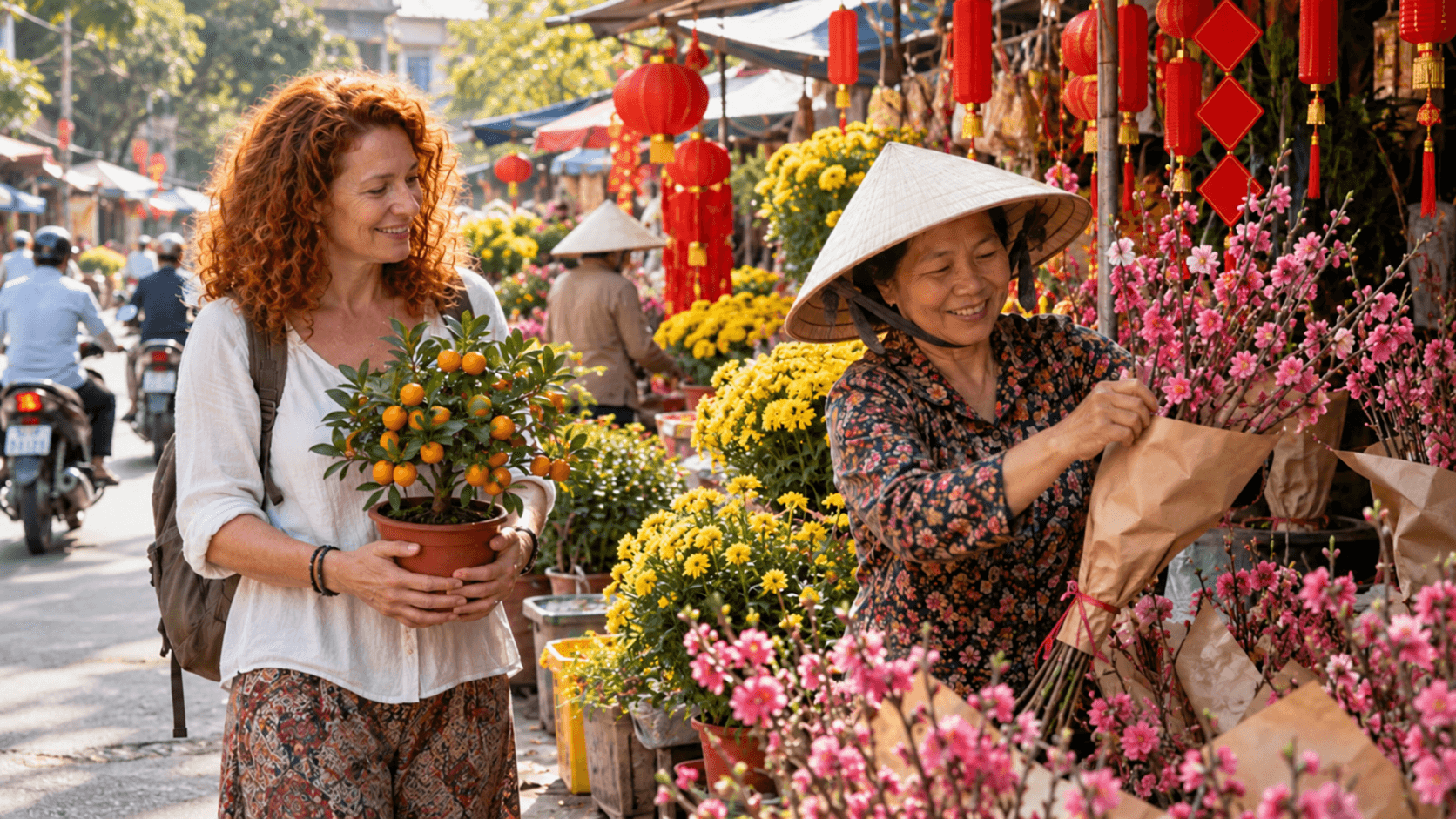
Learn a few basic dishes using local ingredients. In India, a simple dal with rice costs very little; in Georgia, fresh bread, local cheese, and tomatoes are enough for a meal[4].
A bottle with a built-in filter eliminates the small, repeated expense of bottled water[4]. These habits add up: saving $5 a day on food and drinks adds $150 to your monthly budget[4].
Grocery delivery: convenient, but not always cheaper
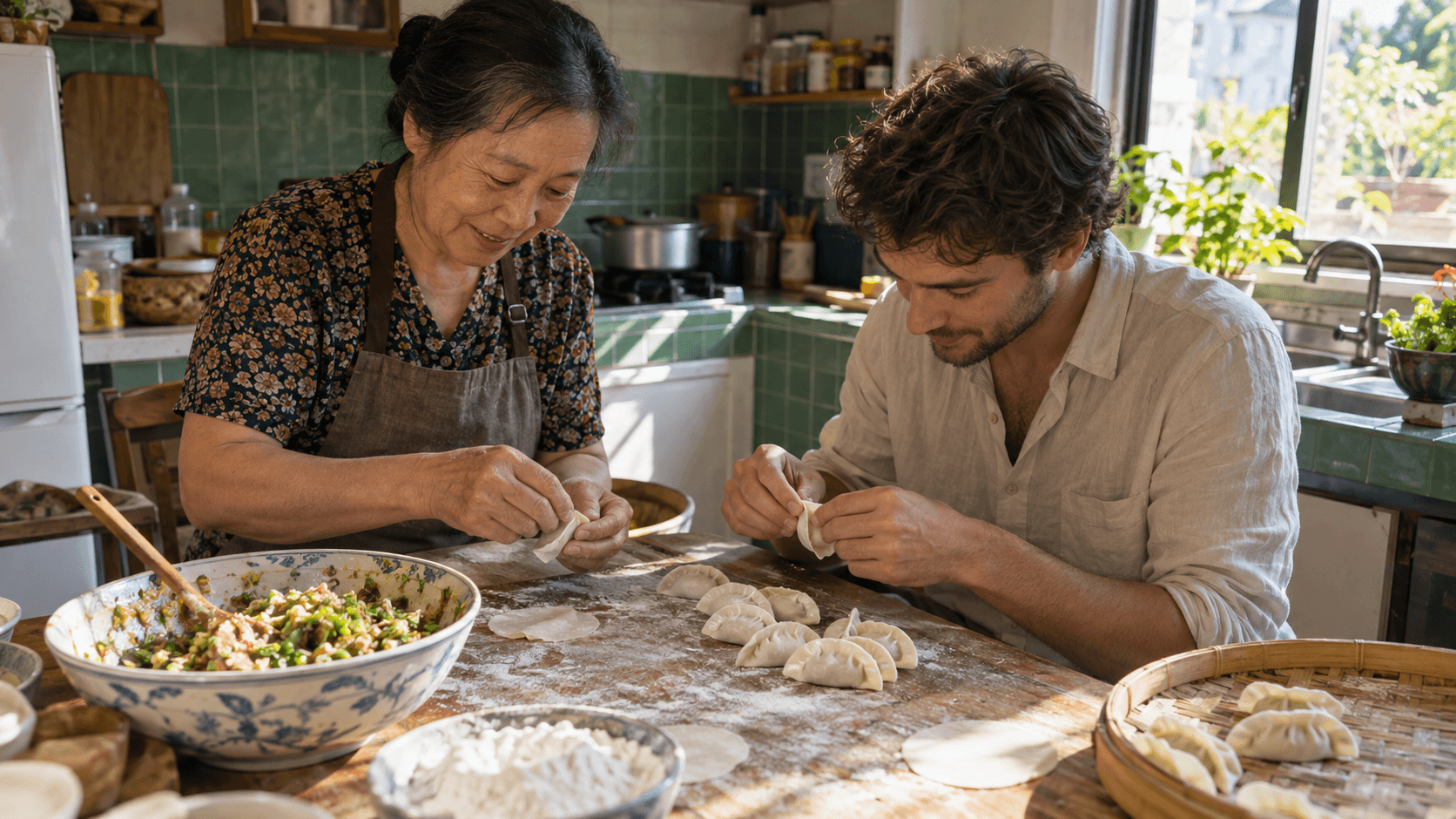
In some countries, grocery delivery has become common. In South Africa, Checkers Sixty60 is a popular app for grocery delivery, and Uber and Bolt are used for getting around[5]. Stores and apps differ from one country to another, so look up those in your destination once you arrive.
Compare the final price with what you'd pay in store: delivery fees and minimum order amounts often add $3 to $10 per order, not counting markups on products[2].
Opening hours, language, and everyday payments
Opening hours vary widely. In South Africa, stores generally open Monday to Friday from 9:00 am to 5:00 pm and Saturday from 9:00 am to 1:00 pm, and some shopping centers open Sunday from 10:00 am to 4:00 pm[6]. Check the hours in the country where you arrive before counting on shopping in the evening or on weekends.
As for language, shopping vocabulary sits at an elementary level: according to the Common European Framework of Reference, an elementary user understands sentences and very frequent vocabulary related to areas of immediate relevance, including shopping[7]. A few words learned before departure are therefore enough to get started.
Finally, the payment method can vary from one country to another: in China, WeChat Pay and Alipay are the two main digital payment methods[8].
Food Hygiene and Safety When Traveling
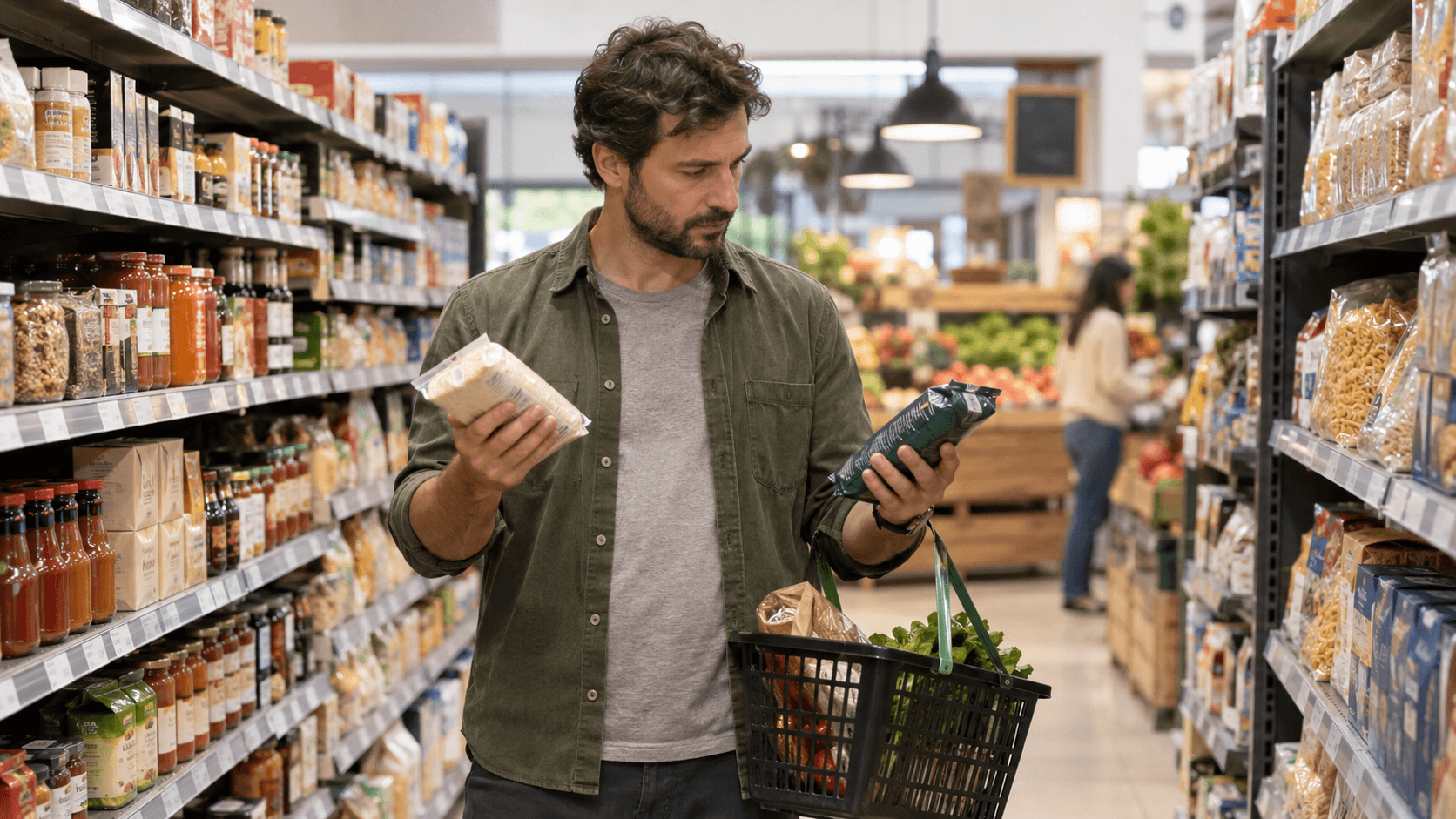
In 2021, one in nine people fell ill after eating an unsafe food[9]. The WHO's "Five Keys to Safer Food" come down to five practices: keep clean, separate raw and cooked food, cook thoroughly, keep food at safe temperatures, and use safe water[9].
When grocery shopping, the WHO advises you to head straight home and never leave food in a car during a heat wave[10].
Traps, Scams, and Points to Watch Out For
- Imported products and Western restaurants are heavily marked up everywhere, from Bali to Bulgaria[4]. Avoid shops geared toward expats.
- Delivery fees and minimum order amounts add to the bill: typically $3 to $10 per order, plus the markup on products[2].
- Within the EU, you may bring meat or dairy products for your personal consumption. If you arrive from a non-EU country, you generally are not allowed to bring them, except for powdered baby formula, infant food, and foods required for medical reasons, up to a limit of less than 10 kg[11].
- Within the EU, if an online order is not delivered within 30 days or within the agreed timeframe, you must contact the seller and give them a reasonable additional period to deliver[12].
Ordering Groceries Online: Your Rights in the EU
If you buy within the EU, several rights apply, whether the purchase is made online, in a store, or by mail order. The minimum warranty is two years, at no cost[12]. If a product is defective or does not match the description, the seller must repair or replace it free of charge, or grant you a price reduction or a full refund[12].
For an online purchase, you have 14 days to cancel and return your purchase, for any reason[12]. This period does not apply to certain purchases, including airline and train tickets, hotel bookings, personalized goods, or goods bought from a private individual[12].
The seller is liable for damage to goods between shipment and receipt[12]. The total price, including delivery and any additional charges, must always be clearly shown to you[12].
Checklist Before Your Next Arrival
- Locate the local markets and neighborhood supermarket chains, and check whether there is a membership-based wholesale store.
- Learn a few grocery-related words and check opening hours, including on Sundays.
- Plan for the country's dominant payment method.
- Bring a water bottle with a filter.
- Bring an insulated bag for fresh products and head straight home after shopping.
- If you order online within the EU, check the total price before confirming and note the order date so you can follow up with the seller after 30 days.
Sources
- 1.^ abouttathecomfortzone.com — What are typical monthly expenses for digital nomads? - Outta the Comfort Zone: “Typical monthly food spending is $180 to $700 (low cost), $300 to $1,300 (mid cost), and $500 to $2,000 and more (high cost), depending on how often you eat at restaurants.”; “If you're trying to control costs, eating out often is usually the fastest way to add $300 to $1,000 and more per month to your budget.” https://www.outtathecomfortzone.com/digital-nomad-monthly-expenses/ (accessed October 20, 2026)
- 2.^ abcouttathecomfortzone.com — What expenses should digital nomads expect each month? - Outta the Comfort Zone: “In practice, a restaurant-focused routine with a daily coffee can easily push spending from about $400 a month to over $900 in the same destination.”; “Avoid delivery fees and minimum order amounts; they often add $3 to $10 per order, plus the markup on prices.” https://www.outtathecomfortzone.com/digital-nomad-cost-breakdown/ (accessed October 20, 2026)
- 3.^ abMira Knowledge — In the Philippines, SM Markets is the largest chain, Puregold Price Club is a popular discount chain, and Robinsons Supermarket is a mid-range chain; S&R and Landers operate on the Costco model, with a paid membership. Verified 06/11/2026: reference source en.wikipedia.org. https://en.wikipedia.org/wiki/List_of_supermarket_chains_in_the_Philippines (accessed June 11, 2026)
Show 9 more sourcesShow less
- 4.^ abcdefmotoworldexplorer.com — 15 Cheapest Digital Nomad Destinations in 2026 for Under $1000/Month - 𝗠𝗢𝗧𝗢 𝗪𝗢𝗥𝗟𝗗 𝗘𝗫𝗣𝗟𝗢𝗥𝗘𝗥 : “Southeast Asia’s morning markets sell fresh tropical fruit for a few cents. Turkish lokantas serve hearty, home-style meals for a fraction of restaurant prices. Mexican mercados stalls sell tacos that cost less than the raw ingredients at the supermarket.” ; “Avoid expat-oriented grocery stores with their imported cheese and cereal aisles.” ; “In India, mastering a simple dal with rice costs next to nothing. In Georgia, fresh bread, local cheese and tomatoes make a feast.” https://www.motoworldexplorer.com/2026/08/15-cheapest-digital-nomad-destinations.html (accessed October 20, 2026)
- 5.^Mira Knowledge — In South Africa, Uber and Bolt are essential for getting around, and Mr D Food and Checkers Sixty60 (grocery delivery) are popular for deliveries. Verified on 06/12/2026: official source gov.uk. https://www.gov.uk/foreign-travel-advice/south-africa (accessed June 12, 2026)
- 6.^Mira Knowledge — Typical store opening hours in South Africa: Monday to Friday 9:00 am to 5:00 pm, Saturday 9:00 am to 1:00 pm; some shopping centers open on Sunday from 10:00 am to 4:00 pm. Verified on 06/12/2026: reference source worldtravelguide.net. https://www.worldtravelguide.net/guides/africa/south-africa/money-duty-free/ (accessed June 12, 2026)
- 7.^Mira Knowledge — A person at this CEFR level understands sentences and the most frequently used vocabulary related to areas of immediate personal relevance, such as basic personal and family information, shopping, the local area and employment. Verified: official source europa.eu. https://europass.europa.eu/en/common-european-framework-reference-language-skills
- 8.^Mira Knowledge — WeChat Pay and Alipay are the two main digital payment methods in China. Verified: official source english.shanghai.gov.cn. https://english.shanghai.gov.cn/en-UsefulApps/20231214/3cac2d8cc7f847da92a72252bae06705.html
- 9.^ abwho.int — Promoting safe food-handling behaviours : “In 2021, one in ten people fell ill after eating unsafe food.” ; “The key messages of the Five Keys to Safer Food are: keep clean; separate raw and cooked; cook thoroughly; keep food at safe temperatures; use safe water.” https://www.who.int/activities/promoting-safe-food-handling (accessed October 20, 2026)
- 10.^emro.who.int — WHO EMRO - Food safety : “Go straight home after shopping. Never leave food in the car during a heatwave.” https://www.emro.who.int/health-topics/food-safety/ (accessed October 20, 2026)
- 11.^europa.eu — Taking animal products, food or plants with you in the EU - Your Europe : “If you are travelling to the EU from a non-EU country, you are not allowed to bring meat or dairy products.” ; “You may bring a limited quantity (less than 10 kg) of powdered baby milk and baby food,” ; “If you are travelling within the EU, you may carry meat or dairy products provided they are for your personal consumption.” https://europa.eu/youreurope/citizens/travel/carry/meat-dairy-animal/index_en.htm (accessed October 20, 2026)
- 12.^ abcdefgop.europa.eu — SHOPPING ONLINE WITHIN THE EU : “If you do not receive anything within 30 days or within the agreed period, you must contact the seller and give them a reasonable additional period to deliver.” ; “You are always entitled to a minimum 2-year guarantee, free of charge, whether you bought your goods online, in a store or by mail order.” ; “If you bought defective goods or goods that do not match the description within the EU, the seller must repair or replace them free of charge, or give you a price reduction or a full refund.” https://op.europa.eu/webpub/grow/factsheets/shopping-online/en/ (accessed October 20, 2026)