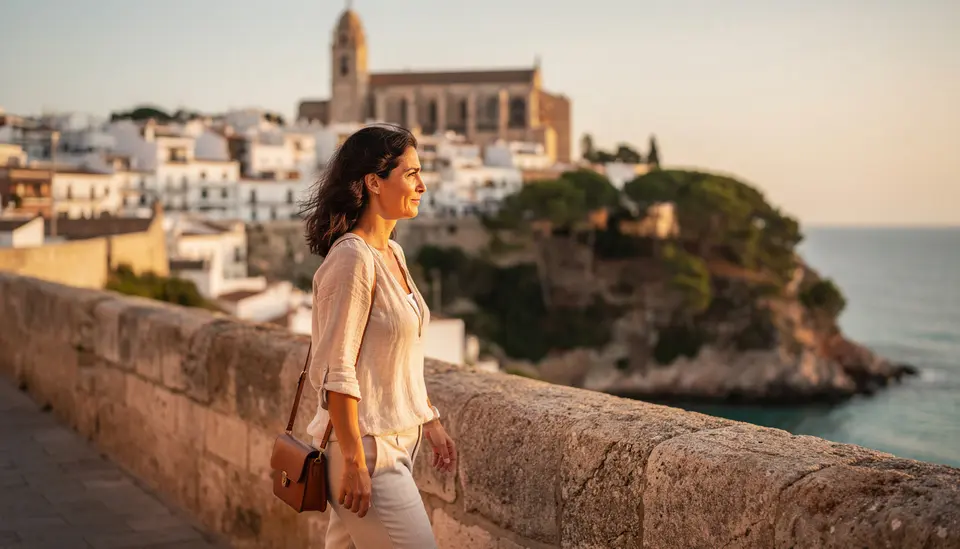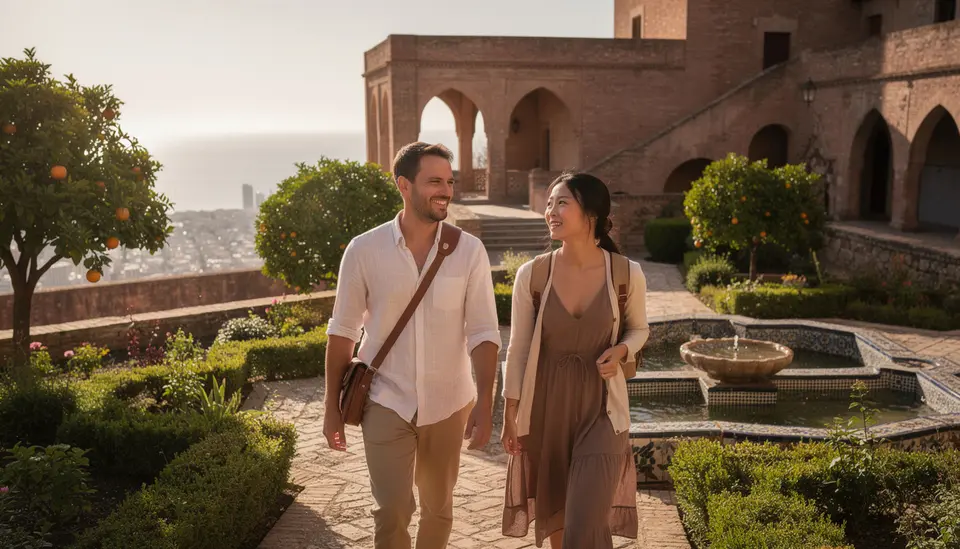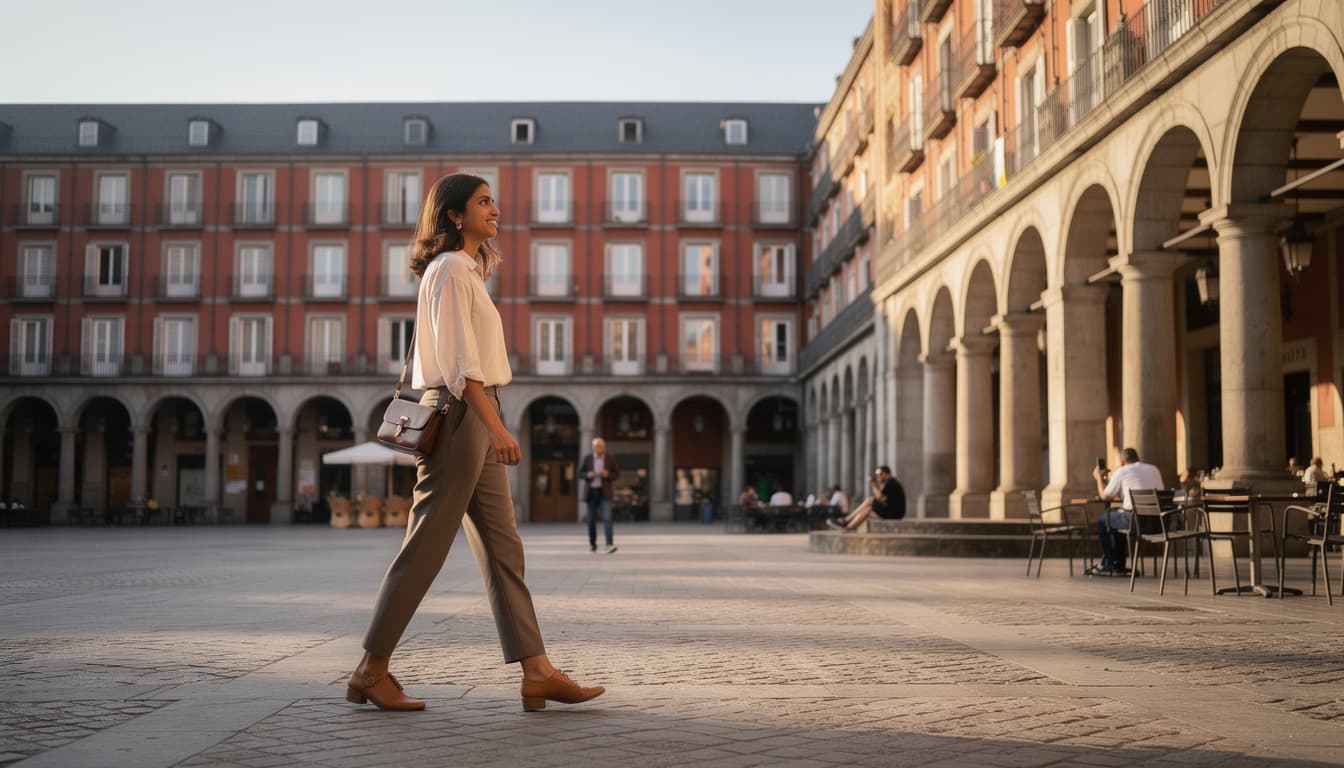
Salamanca is best explored on foot, and its historic centre is a UNESCO World Heritage Site. This article helps you choose the order of your visits: the square, the university, the cathedrals, the palaces, the museums and the towers. You will also find the legends to look for in the stone, ideas for restaurants and outings, the year's events, the best season to go, and how to get there from Madrid.
Why Salamanca Captivates You: A City of Gold and Learning
Strolling through the historic centre of Salamanca, a UNESCO World Heritage Site, means walking through centuries of history, art and knowledge[1]. The city is home to one of the oldest universities in Europe, which still welcomes thousands of students[1]. Guides describe it as one of the most beautiful cities in Spain[2].
In the late afternoon, the light bathes the monuments in a golden hue, thanks to the stone used to build them[1]. This tone comes from the piedra franca of Villamayor, which turns yellower as it oxidizes[2]. At sunset, this is what gives the visit its unforgettable character[3].
The city is not a frozen backdrop. It is a lively, young and very busy university city, by day and by night[2]. The best way to discover it is on foot: it is the only way to find the squares, the narrow streets and the nooks of a welcoming town[3].
The Plaza Mayor, the Perfect Starting Point
The Plaza Mayor is one of the great ensembles of Spanish Baroque and the city's main monumental space; its construction stretched from 1729 to 1755[4]. It serves as a natural starting point for a visit[3].
You can have a coffee at the legendary Novelty bar, admire the 88 arches or settle onto one of the terraces[1]. The Novelty presents itself as the oldest café in the city (1905), and its location on the square is unbeatable[5].
The square is also a place of everyday life: art exhibitions, craft fairs and, in the weeks leading up to Christmas, festive markets are held here[5]. It is especially spectacular during the Semana Santa processions, when it fills up for the night processions under the golden glow of the spotlights[5].
Under the arcades, the market is worth the detour, especially since its restoration, with its stalls of fruit and vegetables, cheeses, cured meats, fish and seafood[2].
The University and the Two Cathedrals
The façade of the university features a stone frog, which was said to bring luck to students[1]. Guided groups pause for a few minutes to try to spot it among the carved coats of arms, mythical beasts and skulls[5].
To escape the cameras, turn your back on this façade and pass through the discreet doorway at the far end of the Patio de Escuelas: you will reach the Patio de las Escuelas Menores, home to the painted dome of the Cielo de Salamanca[5]. According to Lonely Planet, this small courtyard is an ideal place to soak up the atmosphere of old Salamanca[5].
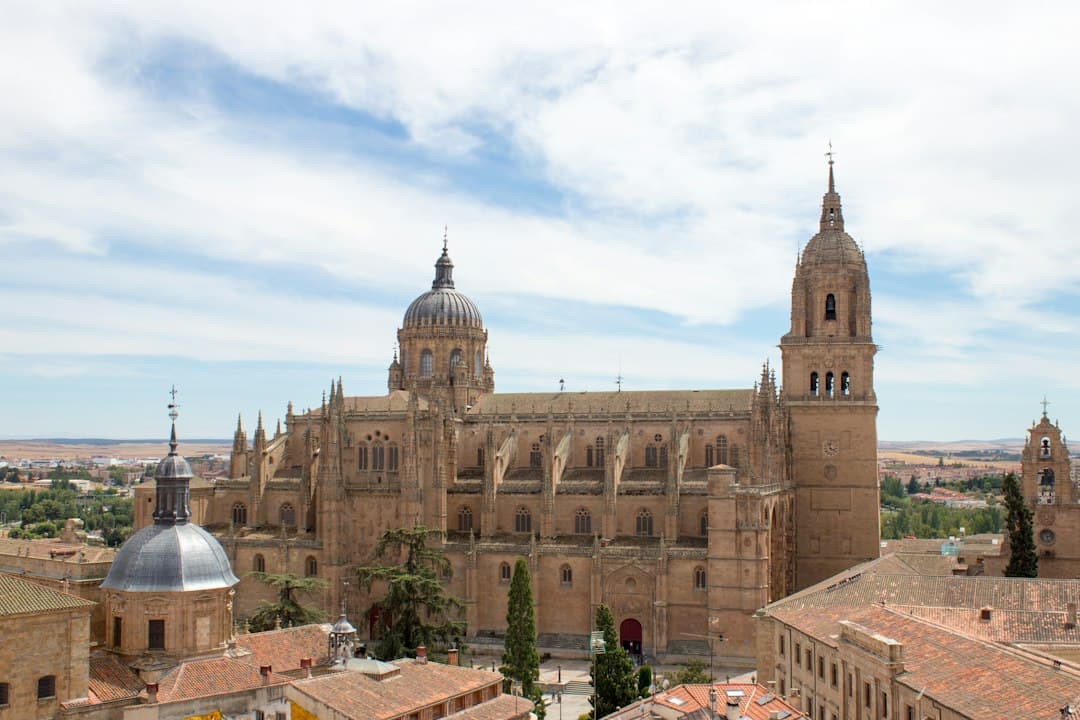
The two cathedrals, the new and the old, stand side by side[1]. The old cathedral was, exceptionally, not demolished when the new one was built, which is why two very differently styled buildings share a wall[2]. You reach the old cathedral from inside the new one[2].
On the Ramos Gate of the new cathedral, look for the astronaut carved into the stone, then climb the towers with the "Ieronimus" tour for an incomparable view[1].
Palaces, Convents and Museums Not to Miss
- Casa de las Conchas: a noble mansion from the era of the Catholic Monarchs, where late Gothic, Mudéjar art and Renaissance elements coexist[4]. Its façade is adorned with some 366 shells[2].
- La Clerecía and Scala Coeli: the tour through the towers of the Clerecía church, former Royal College of the Holy Spirit[4]. From the towers, the view over the city is spectacular, stork nests included[2].
- The Convent of San Esteban: one of the most remarkable ensembles of Spanish religious architecture[4].
- Casa Lis: the most important Modernist building in Salamanca, housing a museum of Art Nouveau and Art Deco[4].
- The Roman Bridge, one of the city's most emblematic constructions[4], and the Cerro de San Vicente Museum, a contemporary and interactive exhibition space opened in 2025[4].
- The Palacio de Monterrey, a few meters from the Plaza Mayor, one of the great landmarks of the Plateresque style[4].
Legends and Secrets in Stone
Salamanca tells its monuments through legends. Beyond the university's frog and the astronaut on the Ramos Gate, the Casa de las Conchas is said to hide a treasure, according to legend[1]. The Huerto de Calixto y Melibea is a garden tied to a literary story[1]. In the Cave of Salamanca, it is said that the devil taught witchcraft there[1].
Food, Tapas, and Nights Out
Good food is no secret in Salamanca. Typical products include cured meats, Guijuelo ham, and the hornazo, a pastry filled with eggs, pork, chorizo, and more[1]. You can buy them to take away, but enjoying them on the spot is a real pleasure[1].
Around the Plaza Mayor, restaurants focus on traditional grilled meats and are pricier; prices drop as you move away from the square[5]. The pedestrian Calle de Meléndez and the Rúa Mayor have more restaurants with terraces[5].
For shopping, the pedestrian streets Calle Toro and Calle Zamora are full of shops, and on the Plaza del Liceo you can even shop inside the converted church of the former San Antonio el Real convent[1].
Students keep the city lively day and night[1]. Go for tapas on Calle Van Dyck, which has an alternative culture, and in the Barrio del Oeste, with its garages and walls covered in street art[1]. In the evening, you can see the monuments lit up, catch a concert, or grab a drink at a bar[1]. Nightlife starts very late: many bars only fill up after midnight, and some café-bars turn into nightclubs[5].
Culture and Events Through the Year
- Every June, the International Arts Festival (FÀCYL) showcases the latest creations in dance, theater, electronic music, and graffiti[6].
- In spring and autumn, a program of free guided walks around the city is organized[6].
- In November and December, the "Keys to the City" program opens a selection of heritage sites for free, with guided tours[6].
- During Semana Santa, the Plaza Mayor fills with penitents and worshippers for the night processions[5].
When to Go, How to Get There, How Long to Plan
May and June, September and October are the most beautiful months to stroll through the historic center, largely pedestrianized[2]. Salamanca sits at 800 m above sea level on a high Castilian plateau, buffeted by cold winter winds and warmed by summer sun[2].
From Terminals 1 and 4 at Madrid-Barajas Airport, an Avanza Bus line runs directly to Salamanca[7]. The alternative is the metro to Madrid-Chamartín station, then a train to Salamanca in just over 1 hour 30 minutes[7]. Salamanca's train station is about a 20-minute walk from the historic center[7].
Two days is enough, according to the tourist office, to explore the city and enjoy its nightlife[4]. Before you go, download the opening hours document for the main museums and monuments, or stop by the tourist office[4].
This article covers the essentials for deciding what to see. To place Salamanca within a broader trip through Spain, check out our article "Spain: The Essentials, Region by Region."
Keep Reading
- Spain: The Essentials, Region by Region
- Segovia: What to See and Do, from the Roman Aqueduct to the Alcázar
- Barcelona: What to See and Do, from Gaudí to the Beaches
- Toledo: What to See and Do in One or Two Days from Madrid
Sources
- 1.^ abcdefghijklmnopspain.info — Tourism in Salamanca. What to See | spain.info: "Strolling the streets of its historic center, a UNESCO World Heritage Site, means walking through centuries of history, art, and knowledge." ; "It is also charming with its beautiful and famous university, one of the oldest in Europe, which still welcomes thousands of students today." ; "Late in the afternoon, the light bathes its monuments in a golden color because of the stone used to build them." https://www.spain.info/fr/destination/salamanque/ (accessed November 16, 2026)
- 2.^ abcdefghijroutard.com — Visit Salamanca: plan your stay and trip to Salamanca | Routard.com: “Salamanca is quite simply one of the most beautiful cities in Spain.”; “This is due to the properties of the piedra franca of Villamayor, which turns yellow as it oxidizes.”; “Far from resting on its prestigious past, Salamanca remains a lively, young and very vibrant university city, with an exciting life by day and by night...” https://www.routard.com/fr/guide/europe/espagne/castille-et-leon/salamanca-salamanque (accessed November 16, 2026)
- 3.^ abcturismo.lasalina.es — Salamanca, World Heritage | Drupal: “At sunset, the rays of the sun seem to light up the single sandstone of Villamayor on the façades, which makes visiting Salamanca an unforgettable experience.”; “The best way to get to know Salamanca is to wander through its streets. It is the only way to discover the squares, the small streets and the nooks of a welcoming, lively city, an amazing city.”; “The Plaza Mayor can be your starting point, as it is the most important place in the city.” https://turismo.lasalina.es/en/que-hacer/cultural/salamanca-world-heritage (accessed November 16, 2026)
Show 4 more sourcesShow less
- 4.^ abcdefghijsalamanca.es — Salamanca Tourism: “The Plaza Mayor of Salamanca is one of the great ensembles of Spanish Baroque and the main monumental space of the city. It was built between 1729 and 1755.”; “The Casa de las Conchas is a remarkable noble residence built during the time of the Catholic Monarchs, where forms of late Gothic, Mudéjar art and the Renaissance coexist in balance.”; “Scala Coeli (Stairway to Heaven) is the route through the towers of the Clerecía church, the former Royal College of the Holy Spirit, which now houses the Pontifical University.” https://www.salamanca.es/es/turismo (accessed November 16, 2026)
- 5.^ abcdefghijlonelyplanet.com — The 11 best things to do in Salamanca, Spain - Lonely Planet: “Café Novelty, which claims to be Salamanca's oldest café (1905), may not be the coziest spot, but its location on the Plaza Mayor is unbeatable.”; “These days, it often hosts art exhibitions and craft fairs, or festive markets in the weeks leading up to Christmas.”; “The Plaza Mayor is arguably at its most spectacular during the Easter processions, especially those of Semana Santa, when the square fills with penitents and worshippers for the night processions under the golden, eerie glow of the spotlights.” https://www.lonelyplanet.com/articles/top-things-to-do-in-salamanca (accessed November 16, 2026)
- 6.^ abcsalamanca.es — Salamanca City of Culture | Salamanca Tourism: “Every June, Salamanca becomes the stage for the International Arts Festival (FÀCYL), which presents the latest creations in dance, theater, electronic music, graffiti art...”; “especially in autumn and spring, Salamanca organizes WALKS THROUGH SALAMANCA, a program of free guided tours of the city.”; “The Keys to the City program is a great opportunity to discover the unseen side of this historic city.” https://salamanca.es/en/what-to-do/cultura (accessed November 16, 2026)
- 7.^ abcspain.info — Tourism in Salamanca. What to see | spain.info: “From Terminals 1 and 4 of Madrid-Barajas Adolfo Suárez Airport, an Avanza Bus line goes directly to Salamanca.”; “you can take the metro to Madrid-Chamartín railway station, then a train to Salamanca, for a journey of just over 1 hour 30 minutes.”; “Salamanca's railway station is located on Avenida de la Estación, about a 20-minute walk from the historic center of the city.” https://www.spain.info/es/destino/salamanca/ (accessed November 16, 2026)