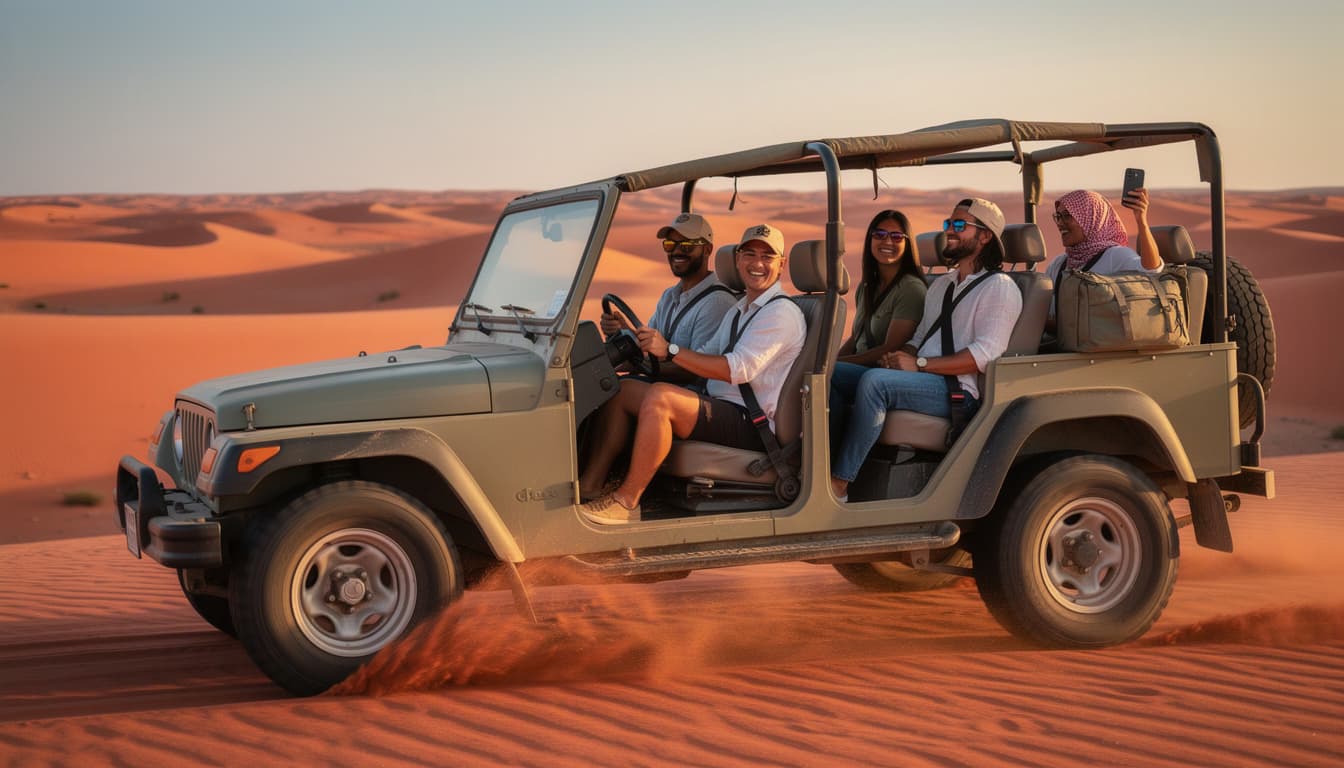
At the far north of Colombia, a desert runs into the Caribbean Sea, and the track almost ends at the edge of the continent. This article helps you decide whether La Guajira is worth a few days of your time: what you'll see at Cabo de la Vela and Punta Gallinas, how a night with the Wayuu unfolds, how many days to plan and what budget to expect. You'll also learn what to prepare before climbing into the 4×4.
The edge of the continent: why La Guajira fascinates
La Guajira is the desert peninsula that Colombia shares with Venezuela[1]. It is the northernmost peninsula of South America[2]. At its tip, Punta Gallinas (12° 28′ N) is considered the northernmost point of the South American mainland[2]. The cape lies in Alta Guajira, in the municipality of Uribia, in the department of La Guajira[3].
The landscape rests on three elements: dunes, salt flats and the Caribbean Sea, where the arid peninsula meets the water[3]. The region is among the most striking places in Colombia, with dunes that drop into the sea, salt pans, flamingos and untouched beaches[4].
This desert is not empty. It is the ancestral territory of the Wayuu, the largest Indigenous people in Colombia[3]. The 2018 census counted 380,460 of them, 97.5% of whom live in La Guajira[1]. You are therefore travelling through inhabited land, which changes the way you travel.
Cabo de la Vela: lighthouse, hills and desert beaches
Cabo de la Vela is a cape and a village on the Colombian side of the peninsula, now a well-known ecotourism destination[2]. It sits in Alta Guajira, on the Caribbean Sea, and is home to the Pilón de Azúcar hill, the lighthouse and Playa Arcoíris[5].
The Pilón de Azúcar is a rocky hill at the foot of which a beach stretches out. From the beach, a wooden staircase climbs to the summit, where you can see the desert and the Caribbean Sea[6]. Playa Arcoíris, Ojo de Agua and Playa Dorada round out the stops, although not every itinerary includes them[5].
The rhythm of a two-day excursion gives a good sense of the place. Day one covers the Manaure salt flats, Uribia, Playa Dorada and the Cabo de la Vela lighthouse at sunset. Day two brings the Pilón de Azúcar, Playa Ojo de Agua and Playa Arcoíris[6]. Bring a swimsuit, sunscreen and cash[5].
For the Wayuu, Cabo de la Vela is Jepira, the land of the dead, where souls go[1]. Keep that in mind before you climb the Pilón de Azúcar for the photo.
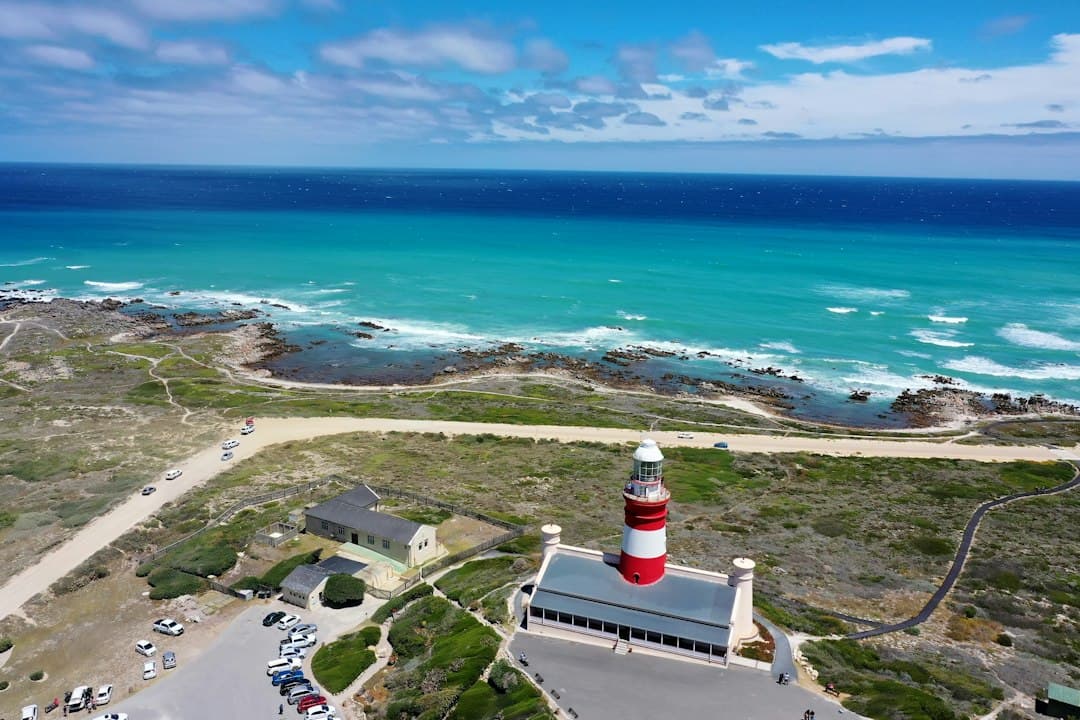
Kitesurfing at Cabo de la Vela
The wind never really stops in this region[1], and Cabo de la Vela is renowned for its excellent wind for kitesurfing[4]. If you kite, that's one more reason to stay several nights rather than rush through on a day trip.
Punta Gallinas and the Taroa dunes
The great treasure of Punta Gallinas is the Taroa dunes: mountains of golden sand that tumble straight into the sea, a landscape you won't find anywhere else on the continent[3]. It is the most extreme and most isolated destination in the Guajira desert[3].
The three-day circuit, by private 4×4 from Riohacha, passes the Manaure salt flats, Uribia, Cabo de la Vela, Bahía Hondita, the Taroa dunes and the Punta Gallinas lighthouse[5]. The four-day version adds a second night at Punta Gallinas and a sunset at Punta Agujas[5].
The area has no marked roads and no mobile network, and access is very difficult: it is essential to travel with reputable operators who know the terrain[3].
Wayuu culture: living in the desert
The Wayuu have developed a culture perfectly suited to this extreme environment, based on goat herding, fishing, salt extraction and craftsmanship. They have kept their language (Wayuunaiki), their worldview and their matrilineal clan organization, thanks to the historic autonomy they preserved in the face of Spanish conquest[3].
This organization is visible in the landscape. The desert is dotted with rancherías, family hamlets of five or six houses, spaced apart so the goats don't mix, belonging to matrilineal clans where the maternal uncle holds authority[1]. Wayuunaiki is still spoken by 85% of the Wayuu[1].
The core experience of the trip is the night in a chinchorro, the hammock, in a ranchería[5]. At Punta Gallinas, you share meals (goat stew, fish or the catch of the day) and discover the crafts, including the famous hand-woven mochila bags[3].
The tracks cross clan territories where people expect to be asked for permission to pass[1]. This is one of the reasons to travel with a local driver-guide, who knows the places and their residents.
How to get there and how much time to plan
The gateway city is Riohacha, the capital of the department, with its small Almirante Padilla airport (RCH), hospitals, banks, bus terminal and hotels[4]. Most excursions to Alta Guajira leave from there; Uribia also serves as a base[4].
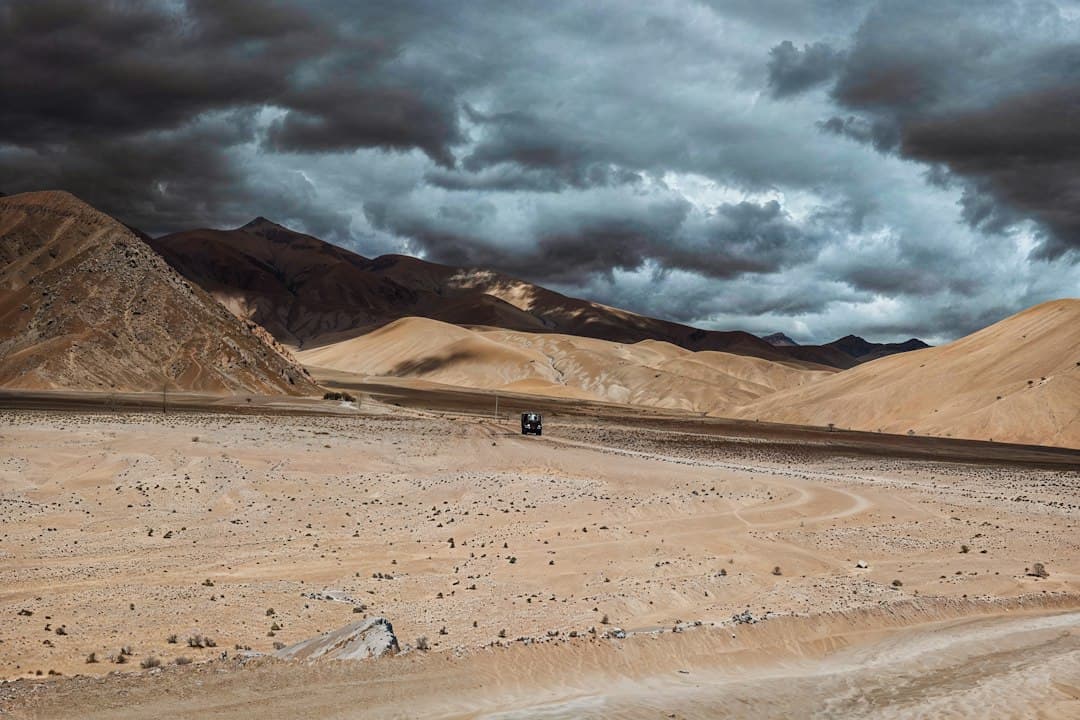
Uribia is where the paved road ends[1]. Beyond it, there is no real public transport, no gas station and no mobile network[1]. From Uribia, the route is a desert track[6], driven in a 4×4[5]. In practice, you therefore go on an organized excursion.
As for duration, two days is enough for Cabo de la Vela: the loop leaves from Riohacha and returns there on the second day after lunch[6]. To set foot at Punta Gallinas, you need at least one more day[6]; reaching the far north takes at least three days, with the classic three-day, two-night excursion[4].
The four-day option adds a second night at Punta Gallinas[5], which allows for a more relaxed pace.
The best time to go is the dry season, when the tracks are passable[4].
Choosing Your Excursion and Budget
A typical departure is from Riohacha at 8:30 am, in a 4×4 with a local driver-guide and medical assistance insurance for the entire duration[6]. Nights are spent in hammocks in Wayuu rancherías[5].
Here are the starting prices noted with one operator, per person for a group of six or more, with a 7% deposit at booking:
- Cabo de la Vela, 2 days: from 409,500 COP[6].
- Punta Gallinas, 3 days: from 900,000 COP[5].
- Cabo de la Vela and Punta Gallinas, 4 days: from 955,500 COP[5].
For the three-day loop, another source gives a range of 850,000 to about 1,200,000 COP per person depending on the operator and season[4]. Compare what each offer includes (meals, accommodation, insurance) and its deposit terms before booking.
Before You Go: Points to Watch
- Go through a reliable agency: French authorities indicate that the tracks near Cabo de la Vela and Punta Gallinas are accessible with local agencies, but that their poor condition has sometimes led to fatal accidents[7].
- Withdraw cash in Riohacha: there are no ATMs and no card payments beyond Uribia[6].
- Plan for the lack of mobile coverage and fuel north of Uribia[1].
- Police or military checkpoints are frequent, and access to certain areas may be prohibited at any time for security reasons[7]. Check your country's official travel advice before booking[6].
Steps, in Order
- Choose your duration: two days for Cabo de la Vela, three or four to add Punta Gallinas.
- Aim for the dry season.
- Compare several operators on price, what's included and the deposit.
- Get to Riohacha the day before departure, scheduled for 8:30 am.
- Withdraw cash in Riohacha and pack a swimsuit and sunscreen.
- Travel with a local driver-guide, and remember you are crossing clan territories.
- Leave time in Cabo de la Vela if kitesurfing appeals to you.
- This article covers the essentials: choosing the exact operator and the booking logistics require going further before you leave.
Keep exploring
- Colombia: The Essentials, from the Caribbean to the Amazon
- Santa Marta: What to See and Do on Colombia's Caribbean Coast
- Tayrona National Park: Your Guide to Planning the Visit
- Ciudad Perdida: The Trek to the Lost City in the Sierra Nevada
Sources
- 1.^ abcdefghijcielo.travel — La Guajira, Colombia: Cabo de la Vela, Punta Gallinas, Wayuu: “La Guajira is the desert at the very top of the map, the peninsula that Colombia shares with Venezuela and that the Wayuu, the country’s largest Indigenous people, have never stopped owning.” ; “The 2018 census counted 380,460 people who identify as Wayuu, which makes them, in the DANE’s own words, the country’s largest Indigenous people, 97.5% of whom live in Guajira.” ; “For them, Cabo de la Vela is Jepira, the land of the dead Wayuu, the place where souls go; know this before you climb the Pilón de Azúcar for the photo.” https://cielo.travel/la-guajira-colombia/ (accessed November 9, 2026)
- 2.^ abcen.wikipedia.org — Guajira Peninsula - Wikipedia: “It is the northernmost peninsula in South America.” ; “The northernmost part of the peninsula is called Punta Gallinas (12° 28′ N) and is also considered the northernmost part of continental South America.” ; “A popular ecotourism destination in the area is Cabo de la Vela, a cape and village on the peninsula, on the Colombian side.” https://en.wikipedia.org/wiki/Guajira_Peninsula (accessed November 9, 2026)
- 3.^ abcdefghviajacongus.com — Things to Do in Punta Gallinas: Sights & How to Get There: “Punta Gallinas is the northernmost point of Colombia and of all continental South America, in Alta Guajira, in the municipality of Uribia, in the department of La Guajira.” ; “It is an isolated desert cape where the arid Guajira peninsula plunges into the Caribbean Sea, and where Wayuu communities live.” ; “Punta Gallinas is above all the ancestral territory of the Wayuu people, the largest Indigenous group in Colombia, who inhabit the Guajira peninsula on both sides of the Venezuelan border.” https://viajacongus.com/en/colombia/punta-gallinas/ (accessed November 9, 2026)
Show 4 more sourcesShow less
- 4.^ abcdefgviajacongus.com — Things to Do in La Guajira: Sights & How to Get There: “La Guajira brings together dunes that fall into the sea, salt flats, Wayuu rancherías, flamingos, unspoiled beaches and the northernmost point of continental South America (Punta Gallinas).” ; “Cabo de la Vela, with its desert-and-sea appeal and excellent wind for kitesurfing.” ; “The service town and gateway is Riohacha, the department’s capital, with its small Almirante Padilla airport (RCH), hospitals, banks, a bus terminal and a range of hotels.” https://viajacongus.com/en/colombia/guajira/ (accessed November 9, 2026)
- 5.^ abcdefghijkpuntagallinastours.com — Cabo de la Vela, Colombia: things to do and where to stay: “Cabo de la Vela is located in Alta Guajira, on the Caribbean Sea, and is home to the Pilón de Azúcar hill, the Cabo de la Vela lighthouse and Playa Arcoíris.” ; “Playa Arcoíris, Ojo de Agua and Playa Dorada round out the stops, although not every itinerary includes them.” ; “Bring a swimsuit, sunscreen and cash.” https://puntagallinastours.com/en/destinations/cabo-de-la-vela (accessed November 9, 2026)
- 6.^ abcdefghipuntagallinastours.com — Cabo de la Vela Tour 2 Days from Riohacha | 2026 prices: “From the beach at its base, a wooden staircase climbs to the summit, where you can see the desert and the Caribbean Sea.” ; “Day 1: the Manaure salt flats, Uribia, Playa Dorada and the Cabo de la Vela lighthouse at sunset; Day 2: the Pilón de Azúcar hill, Playa Ojo de Agua and Playa Arcoíris.” ; “From Uribia onward the route is a desert track, and there are no ATMs and no card payments: bring the cash you need from Riohacha.” https://puntagallinastours.com/en/tour/cabo-de-la-vela-2-days (accessed November 9, 2026)
- 7.^ abdiplomatie.gouv.fr — Colombie - Sécurité | France Diplomatie: “The tracks in the La Guajira region, notably near Cabo de la Vela and Punta Gallinas, are accessible with local travel agencies, but the poor condition of the tracks is sometimes the cause of fatal accidents.” ; “Police or military checkpoints are frequent, and access to certain areas may be prohibited at any time for security reasons.” https://www.diplomatie.gouv.fr/fr/information-par-pays/colombie/conseils-aux-voyageurs-securite (accessed November 9, 2026)