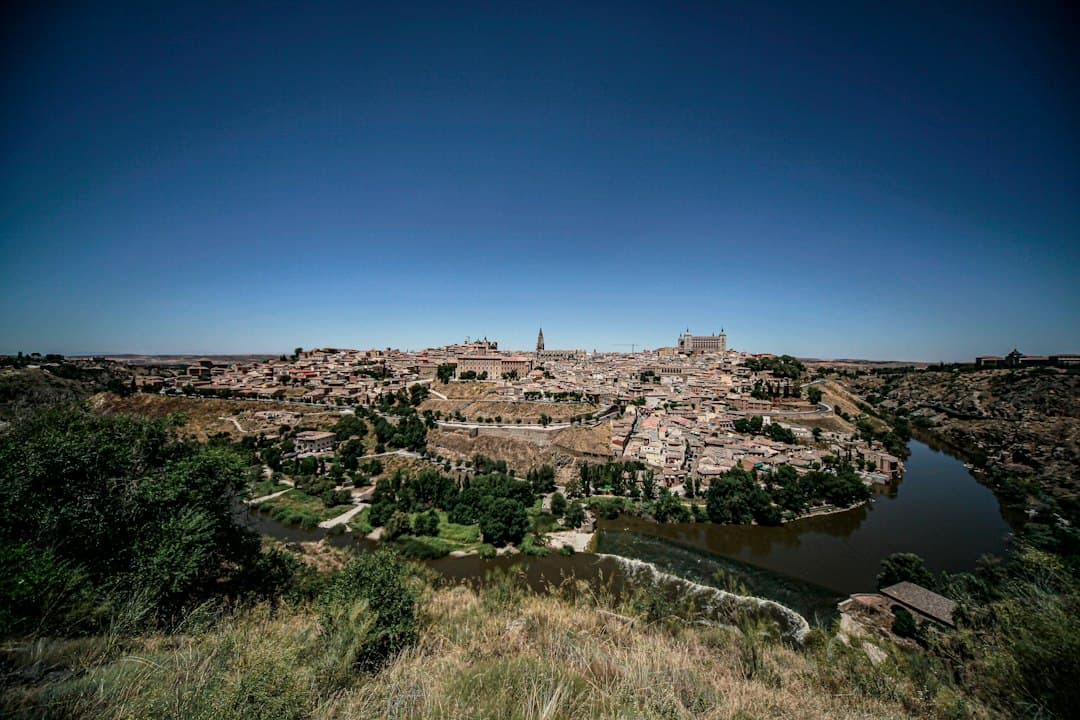
Perched on a promontory wrapped by the Tagus, Toledo can be visited in a day from Madrid, or better yet over two days. This article helps you choose what is worth the detour: the great monuments, the works of El Greco, the Jewish quarter and the Islamic heritage, then the best spots to wander and get a view from above. You will also learn how to get there, how much time to plan, and which practical points to anticipate.
Why Toledo captivates: two thousand years of history on a hilltop
Toledo sits in central Spain, 70 km south of Madrid[1]. It is a natural fortress: the Tagus wraps around it on three sides, and the whole city rests on a hill[2]. This position partly explains the succession of rulers who settled here: a Roman municipium, capital of the Visigothic kingdom, stronghold of the Emirate of Córdoba, then, in the 16th century, temporary seat of supreme power under Charles V[1].
UNESCO listed its historic center as a World Heritage Site in 1986[3]. Toledo is nicknamed “the city of three cultures”: Christianity, Islam and Judaism left their buildings, their narrow streets and their history within the same walls[2]. Synagogues, mosques and churches stand side by side along narrow streets, amid a mix of artistic styles[1].
This story should be read with nuance: these monuments tell a tale of exchange, power and rupture, not a smooth narrative of coexistence[3].
The great monuments not to miss
The cathedral is one of the highlights of the visit. Begun in 1226 on the site of a former Visigothic church, it took more than two centuries to build[4] and was only completed in 1493[3]. Its interior impresses with immense vaults and a nave 120 m long and 60 m wide[4]. The Transparente opens onto a theatrical shaft of light[3]. The sacristy houses a rich collection of paintings by El Greco, Luca Giordano, Van Dyck and Goya[5]. A local curiosity: each of the red archbishop’s hats hanging from the ceiling marks the tomb of its owner[4]. Allow an hour and a half for the visit[2].
The Alcázar, which houses the Army Museum, dominates the city from its highest point. Restored in the 16th century by Charles V with massive walls and four identical corner towers[4], it was rebuilt after its destruction during the Spanish Civil War[5].
The monastery of San Juan de los Reyes is one of the jewels of Isabelline Gothic, with Mudéjar influences visible in its decoration and cloister[6]. It stands in the historic center, in the heart of the former Jewish quarter[6].
The city walls also deserve a look. Among the many gates that punctuate them, the most representative is the Puerta de Bisagra, whose upper section bears the coat of arms of the Imperial City[5].
Following in the footsteps of El Greco
El Greco arrived in Toledo in 1577 and lived there until his death in 1614[7]. His works are scattered across several sites[2].
- At the church of Santo Tomé, The Burial of the Count of Orgaz (1586-1588) is admired in its small chapel[3]. The church is a seven-minute walk from the cathedral, on the way to the Jewish quarter[2]. Allow half an hour[2].
- In the cathedral sacristy, his Disrobing of Christ is displayed alongside works by Titian, Goya and Caravaggio[3].
- The El Greco House Museum, very close by, completes the sequence: with Santo Tomé, allow an hour and a half[2].
The Jewish quarter and the Islamic heritage
The former Jewish quarter is calmer than the streets around the Zocodover square[3]. Its stone lanes lead to two synagogues: Santa María la Blanca and El Tránsito, today a Sephardic museum[3].
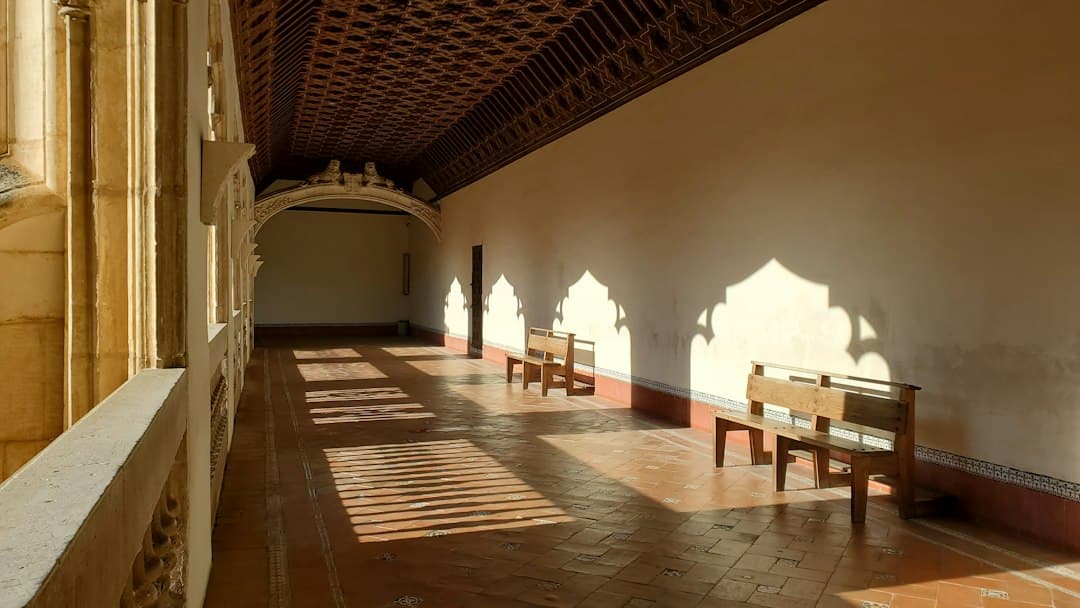
At Santa María la Blanca, rows of horseshoe arches and carved capitals rise beneath a white ceiling; Muslim craftsmen built this synagogue for a Jewish community[3]. The synagogue of El Tránsito, founded in 1357, is striking for its Mudéjar decoration[2]. Together, they tell a story of coexistence and conversions: Christians owning a Jewish building constructed by Muslim craftsmen[2]. Plan about an hour for both[2].
On the Islamic side, the small mosque of Cristo de la Luz was completed in 999[3]. It ranks among the most important monuments of Hispano-Muslim and Mudéjar architecture in Spain[6]. A construction detail: it was built over a Visigothic church, to which a Mudéjar apse was added later[8].
Wander, Taste, Take in the Views
The old walled quarter is a tight maze of cobbled lanes, passageways between convents, and unexpected viewpoints over the Tagus[3]. Getting lost in these streets lets you discover churches, convents, and palaces that don't appear in every guidebook[6].
Around the Zocodover square and the cathedral, the major monuments sit alongside taverns serving carcamusas, the slow-cooked pork stew typical of the city[3]. For sweets, you can buy pastries directly from the nuns through the *torno*, the silent revolving hatch at convents such as Santo Domingo el Antiguo[8].
For a higher vantage point, the Mirador del Valle offers a sunset view of the Alcázar and the cathedral[6]. Another option: cross to the south bank, on foot over the Alcántara Bridge, by bus, or by taxi, and head to the lookout near the parador, where the old town reveals itself in one piece[2].
How Much Time to Plan and Where to Start
A full day is enough to see the main monuments, but two days offer a richer and more relaxed experience[9]. In one day, you can visit the cathedral and the Alcázar and wander the Jewish quarter; with two days, you have time to explore the synagogues and lesser-known churches, as well as the museums[9].
For a simple visiting order, a 5.3 km walking loop takes 2 h 10 min and links 24 sites[9]. It starts at the cathedral, dips into the former juderia, reaches San Juan de los Reyes and then the western gates, crosses the Tagus by the Alcántara Bridge, climbs back toward Zocodover, and ends beneath the towers of the Alcázar[9]. Plan considerably more time if you enter each monument.
The vast majority of visitors come on a day trip from Madrid[2]. Staying overnight lets you enjoy quieter lanes once the day-trippers have left[3]. One online itinerary cites April, May, and October as the best months[8].
Getting There and Finding Your Way
Toledo is 33 minutes from Madrid by high-speed train[2]. The Avant train departs from Madrid-Atocha roughly once an hour[10]. The station sits outside the historic city, but local buses and taxis reach the center quickly[9]. Lines 5, 511, 61, and 62 drop you off at Zocodover square[10].
It's best to leave the car behind: access and driving are complicated, and parking in the historic center is almost entirely reserved for residents[10]. The best approach is to park in a lot outside the city walls[9]. Escalators then make it easier to reach the upper parts of the city from the car parks[9]; the free escalators at Safont/Miradero and Recaredo help with the climb[3].
The streets are steep and paved with cobblestones and setts: wear comfortable, supportive shoes suited to uneven ground[10]. Cycling is impractical in the steep, cobbled old town[3].
Tickets, Passes, and Opening Hours: What to Plan Ahead
The Pulsera Turística at €12 gives access to seven monuments, but not to transport[3]. It allows one entry to each of these monuments, including Santo Tomé and the Tránsito Synagogue[8]. Some single-site prices: €12 for the cathedral (single rate covering the nave, choir, treasury, and cloister), €4 for Santo Tomé, €3 for the Greco house-museum, and €4 for each of the two synagogues[2]. These prices, as checked in July 2026, may change.
As for opening hours, many monuments close on Mondays, and some religious sites have reduced hours on Sunday mornings because of services[9]. Check hours before your visit, especially on public holidays, when changes are frequent[9]. For San Juan de los Reyes, hours can vary by season: check the current official schedule[6].
Pitfalls, Scams, and Things to Watch Out For
- Public holidays and religious services change opening hours: check them before you go, especially on a Monday or Sunday morning[9].
- On Toledo's city buses, you can't pay by bank card or by phone[10]. Bring coins or small bills: a single ticket costs about €1.40 in 2026[3].
- Most shops accept cards, but a few establishments don't: keep some cash on hand[10].
- Around Zocodover and in the queues at the cathedral, keep an eye on your bags[3]. Also decline the sprigs of rosemary offered as a blessing: it's a well-known distraction used to pressure you into paying[3].
- On slippery cobblestones and steep streets, non-slip shoes will spare you the most common discomfort[3].
Key Points for Planning Your Visit
- Choose your plan: one day for the highlights, two to see things without rushing[9].
- Take the Avant train from Atocha[10], then a bus to Zocodover[10].
- Start with the cathedral, continue to Santo Tomé and the Jewish quarter, then finish at the Alcázar[9].
- Save the end of the day for a viewpoint over the Tagus[6].
- Pack comfortable shoes, some cash, and check the day's opening hours[10].
This article covers the essentials for deciding what to see. To continue your route, explore our selection "Spain: The Must-Sees, Region by Region."
Sources
- 1.^ abcwhc.unesco.org — Historic City of Toledo - UNESCO World Heritage Centre: “Toledo is a city located in central Spain, 70 km south of Madrid.”; “Successively a Roman municipium, capital of the Visigothic kingdom, stronghold of the Emirate of Córdoba, outpost of the Christian kingdoms fighting the Moors and, in the 16th century, temporary seat of supreme power under Charles V, Toledo is the guardian of more than two millennia of history.”; “Synagogues, mosques and churches stand side by side in Toledo's narrow streets, characterized by a blend of artistic styles.” https://whc.unesco.org/en/list/379/ (accessed November 9, 2026)
- 2.^ abcdefghijklmntravelers-route.com — Toledo — the City of Three Cultures, 33 minutes from Madrid - Travelers Route: “Toledo is a natural fortress: the Tagus wraps around it on three sides and the entire city sits on a hill.”; “It is called the City of Three Cultures because Christianity, Islam and Judaism left their buildings, their alleys and their history within the same walls — a rare situation.”; “Entry €12 (single rate covering the nave, choir, treasury and cloister; July 2026), allow an hour and a half for the visit.” https://travelers-route.com/fr/tolede-guide/ (accessed November 9, 2026)
- 3.^ abcdefghijklmnopqrstaudiala.com — Toledo, Spain: 2026 Travel Guide: “UNESCO inscribed its historic center as a World Heritage Site in 1986; its monuments tell a story of exchange, power and rupture, not a neatly smoothed-over tale of coexistence.”; “The small Cristo de la Luz mosque was completed in 999; the Gothic cathedral, whose construction began in 1226, was not finished until 1493.”; “The cathedral's Transparente opens onto a theatrical shaft of light.” https://audiala.com/fr/espagne/tolede (accessed November 9, 2026)
Show 7 more sourcesShow less
- 4.^ abcdroutard.com — Visiting Toledo: plan your stay and trip | Routard.com: “Begun in 1226 on the site of a former Visigothic church (converted into a mosque), construction took more than 2 centuries.”; “The interior is even more impressive, with immense vaults and a nave stretching 120 m long and 60 m wide.”; “A curiosity unique to Toledo: each red archbishop's hat hanging from the ceiling marks the burial place of its owner.” https://www.routard.com/fr/guide/europe/espagne/castille-la-manche/toledo-tolede (accessed November 9, 2026)
- 5.^ abcesmadrid.com — Toledo | Madrid Tourism: “The sacristy houses a rich collection of paintings by El Greco, Lucas Jordan, Van Dyck and Goya.”; “With the invasion of French troops and the Spanish Civil War, it was completely destroyed, but since its reconstruction it has housed the Army Museum and military annexes.”; “A large number of gates punctuate the city, the most representative being the Bisagra Gate, which gives access to this historic city and bears on its upper part the coat of arms of the Imperial City.” https://www.esmadrid.com/fr/tolede (accessed November 9, 2026)
- 6.^ abcdefgspainroutes.com — What to see in Toledo: cathedral and Alcázar: “The monastery of San Juan de los Reyes is one of the most remarkable jewels of Isabelline Gothic, with Mudéjar influences visible in its decoration and cloister.”; “It is located at calle Reyes Católicos, 17, in the historic center, within Toledo's judería, and offers an audio guide for the visit.”; “The Mosque of Christ of Light is one of Spain's most important monuments of Hispano-Muslim and Mudéjar architecture, and the most remarkable expression of Islamic art in Toledo.” https://spainroutes.com/fr/ciudad/tolede/ (accessed November 9, 2026)
- 7.^turismo.toledo.es — Official Tourism Website, Toledo City Council: “El Greco arrived in Toledo in 1577 and lived there until his death in 1614.” https://turismo.toledo.es/ (accessed November 9, 2026)
- 8.^ abcdexplorinder.com — Toledo in 5 Days: Day-by-Day Itinerary from €315: “A tiny ancient mosque from the year 999, built on top of a Visigothic church, to which a Mudéjar apse was added later.”; “To buy pastries directly from the nuns, use the silent *torno* (rotating window) of convents such as Santo Domingo el Antiguo.”; “Budget around €715 per person for a mid-range trip, or €315 on a tight budget. Best months: April, May, or October.” https://explorinder.com/fr/itineraries/5-days-in-toledo (accessed November 9, 2026)
- 9.^ abcdefghijklryo.co — Visiting Toledo in 1 Day: 25 Things to Do and See on Foot: “A full day lets you see Toledo's main monuments, but two days will give you a richer and more relaxed experience.”; “In one day, you can visit the cathedral, the Alcázar, and wander the Jewish quarter. With two days, you'll have time to explore the synagogues, the lesser-known churches, and truly soak up the city's unique atmosphere.”; “If you have more time, you can go deeper and visit the museums.” https://ryo.co/fr/destinations/espagne/ryocity/tolede/ (accessed November 9, 2026)
- 10.^ abcdefghiturismo.toledo.es — Toledo Travel FAQ: “The high-speed AVE train departs from Madrid-Atocha roughly every hour.”; “The lines that stop at Plaza de Zocodover (city center) are 5, 511, 61, and 62.”; “Driving and parking in Toledo are complicated; parking in the historic center is almost entirely reserved for residents.” https://turismo.toledo.es/prepara-tu-viaje/preguntas-frecuentes.html (accessed November 9, 2026)