Bangkok reveals itself in layers: the royal and the sacred in Rattanakosin, life on the water, the street food of Chinatown, the markets and the skyscrapers. This article helps you plan your days, choose a neighborhood to stay in, know which season to aim for, and avoid the most common scams. A guide for a first visit, lasting a few days or a few weeks.
Bangkok at a glance: a city in many layers
Bangkok is a megacity of more than 10 million people, blending Asian traditions with modern life[1]. It has 400 temples, parks, day and night markets, old neighborhoods, huge malls and ultramodern skyscrapers[1]. The temples are also a good way to understand the place of Buddhism in residents' daily lives[1].
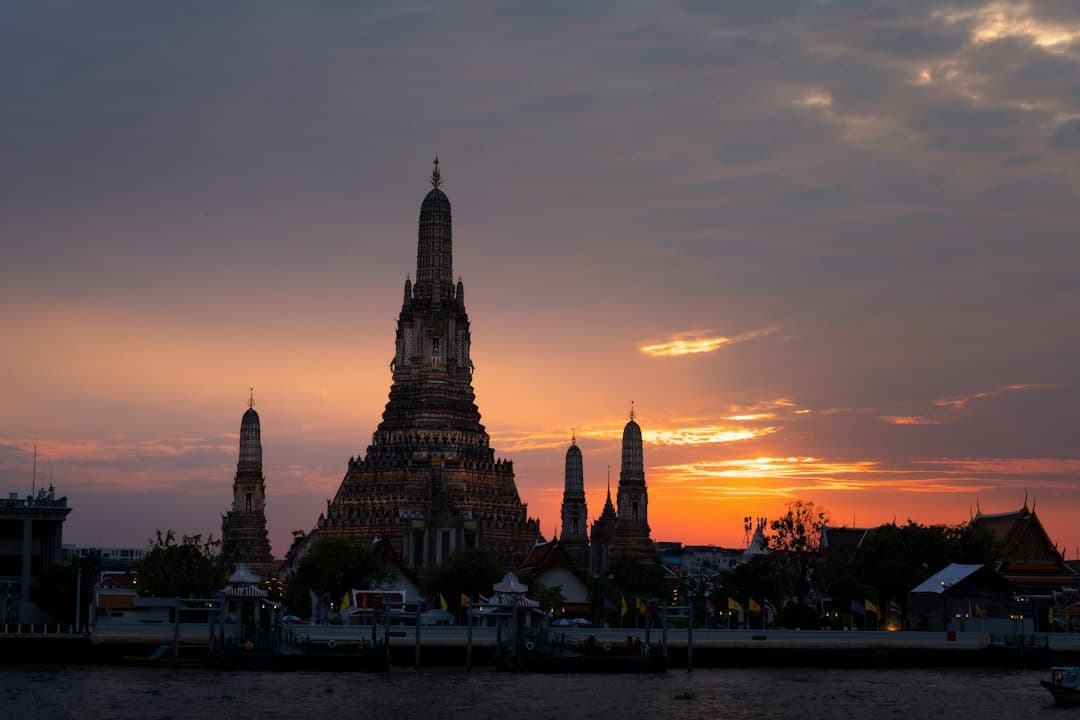
One good way to approach this sprawling city is by water. The khlongs (canals) earned Bangkok the nickname "Venice of Asia," and they are best explored early in the morning, when the city wakes up, or at sunset, when the light sets Wat Arun aglow[1].
Rattanakosin: the Grand Palace, Wat Pho and Wat Arun
The great temples are concentrated on Rattanakosin Island, the old city, on the banks of the Chao Phraya[2]. The three flagship sites are all along the river and can be visited in a single day[2].
The Grand Palace and Wat Phra Kaew
The oldest parts of the royal complex date back to 1782. It houses palaces, audience halls, temples and courtyards, and it is the city's top tourist attraction[3]. The main reason to visit is the neighboring Wat Phra Kaew, which houses the Emerald Buddha, the most sacred religious object in Thailand[3]. Tickets cost 500 THB for foreigners; the site opens at 8:30 am and tickets are sold until 3:30 pm[2]. Arrive at opening time, before the tour groups and the heat[2].
The Queen Sirikit Textile Museum is located within the Grand Palace grounds and can be a natural extension of your visit[4].
Wat Pho
This 16th-century sanctuary houses a 46-meter reclining Buddha, within a complex of stupas and prayer halls covered in mosaics[3]. The monastery is also the birthplace of Thai massage: treatments are offered every day, and it has its own massage school[3]. Entry costs 300 THB[2].
Wat Arun
Across the river from Wat Pho, the prang covered in porcelain is one of the city's most photographed monuments[2]. Entry costs 200 THB and the site is open from 8 am to 6 pm; you can reach it by ferry from the Tha Tien pier in a few minutes[2]. The best view is from the Tha Tien bank at sunset[2].
Dress code
At all these sites, shoulders and knees must be covered, and shoes must be removed before entering the halls[2].
The river and the khlongs: Bangkok seen from the water
Public express boats travel up the Chao Phraya, stopping at the temples, Chinatown and Khao San. For a few dozen baht, it is the most scenic way to get around the old city[2]. Fares range from 17 to 36 THB[5].
The hop-on hop-off tourist boat costs 150 THB per day, with unlimited stops along its route[5].
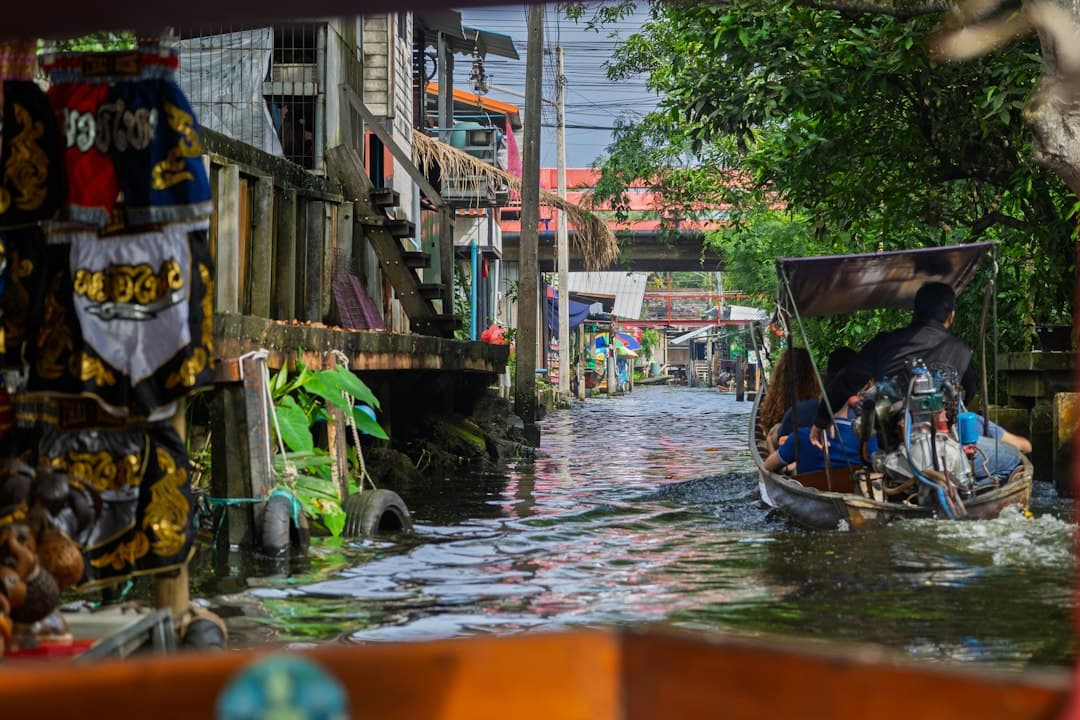
To see another side of Bangkok, rent a long-tail boat from the piers of the old city. It takes you into the khlongs of Thonburi, past stilt houses, riverside temples and neighborhood life[2]. Agree on the price and duration before you board[2]. Thonburi, on the western bank of the Chao Phraya, briefly served as the capital of the Kingdom of Siam, from 1767 to 1782[1].
In the evening, a dinner cruise glides past the illuminated Grand Palace and Wat Arun[6].
Old city, Khao San and Golden Mount: neighborhood temples and popular life
Between the Grand Palace, the Democracy Monument and the Golden Mount, you'll find amulet shops, workshops, noodle stalls and neighborhood temples[2]. From Wat Saket, at the top of Phu Khao Thong (the Golden Mount), you can watch the sunset over Bangkok[1]. The neighboring temple of Wat Suthat is known for its giant red swing, more than 21 meters tall[1].
When it comes to museums, the National Museum brings together masterpieces of Thai art across several buildings, former pavilions and temples: an excellent warm-up before visiting the temples[7]. The Museum Siam, near Wat Pho, offers a playful look at what it means to be “Thai”[2].
Khao San Road, a packed backpacker hub, is lively and buzzing in the evening[7]. With its loud bars, it's not the most peaceful place to sleep; the nearby streets, such as Thanon Rambutri or Thanon Phra Athit, offer the same amenities with less noise[8]. To reach the Grand Palace and the major temples, you can also take the ferry like a local[1].
Chinatown, Talat Noi and Street Food
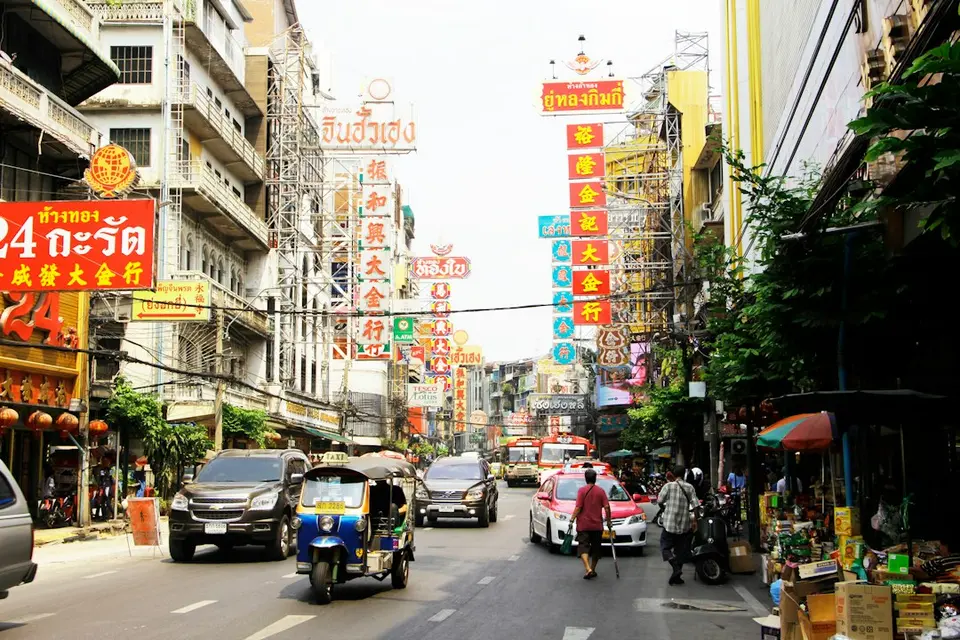
Chinatown, one of the city's oldest neighborhoods, is a whirl of steaming food carts, jewelry shops, atmospheric temples, food markets and family homes[3]. It's a city within the city, with fabric and jewelry shops and street eateries that set their tables out on the sidewalk[7].
Wat Traimit houses the world's largest solid gold statue: a 3-meter-tall Buddha weighing 5.5 tons[1].
Right next to Chinatown, along the riverbank, Talat Noi blends garage-lined alleys, old Chinese shophouses, cafés set up in warehouses and painted walls; it's perfect in late afternoon, before Yaowarat[2]. Just get lost in its maze of alleys[1].
As for street food, Bangkok arguably has the most vibrant street food culture in the world: stir-fried noodles, dumplings, curries served with jasmine rice, grilled skewers, fresh tropical fruit and fried desserts are sold on almost every corner[3].
Markets, Museums and Panoramas
- Chatuchak, one of the largest markets in Bangkok, where you'll find absolutely everything, from fragrant curry to unusual antiques[7].
- A night market set up in old warehouses along the river, with a Ferris wheel: more touristy than neighborhood markets, but pleasant for a relaxed evening[2].
- The Jim Thompson House, considered the largest teak house in the world, with interior décor reconstructed as it was under the reign of Rama V[7].
- Baiyoke II Tower, the tallest building in Thailand (309 m), with a glass elevator and panoramic city views, best enjoyed at sunset[7].
Thais also gather in the city's more than 500 shopping malls to chat, eat, take selfies and, sometimes, shop: do as they do[8].
Where to Stay Depending on Your Mood
- Shopping and dining: Siam Square, Pratunam, Phloen Chit and Ratchathewi[8].
- Modern city life: Sukhumvit[8]. Restaurants and accommodation there are generally pricier, from Soi 1 all the way to Soi 65[5].
- Historic roots meet modernity: Bangrak, with its skyscrapers along Silom Road and its hotels along the Chao Phraya[1]. The riverside is picturesque[1].
- Backpacker vibe: Khao San Road, in the historic Banglamphu district; lively and easy to reach from the old town, it is no longer the best-value neighborhood, and it remains noisy[8].
- More local atmosphere: Thewet, Dusit or northern Bangkok[8].
How Long, Which Season, and How to Plan
High season runs from mid-November to early March: hotels and guesthouses are then very busy and charge full rates[5]. The week before Christmas and the week after New Year's are even more expensive, with some accommodation providers adding temporary surcharges of 25% to 35%[5].
Around April, for Thai New Year (Songkran), the city slows to a crawl and turns into a massive multi-day water fight: you will be splashed with water or talcum powder, and don't count on your favorite restaurant, museum or monument being open (shopping malls, however, stay open)[8].
Plan some slack in the middle of the day: the heat is overwhelming at noon, and if a sudden downpour hits, most rain showers pass within an hour[6]. To take cover, there are air-conditioned shopping malls, the Jim Thompson House, a cooking class or a spa session[6].
Beyond Bangkok: One- to Three-Day Escapes
- Ayutthaya, the former capital of the Kingdom of Siam from 1351 to 1767, is a UNESCO World Heritage Site; located 80 km north, it is easily reached by train, bus, or taxi[9].
- Kanchanaburi, about 2.5 hours' drive to the west: the famous Bridge over the River Kwai, the Death Railway train, and Hellfire Pass, a memorial site[9].
- Suphan Buri, about 100 km to the northwest: rural Thailand, with the century-old Sam Chuk market[9].
- Phetchaburi, home to Phra Nakhon Khiri Palace, a former royal palace perched on top of a hill[9].
Traps, Scams, and Points of Caution
- The "closed temple": as you approach a temple, locals may tell you it is closed in order to take you somewhere else[10]. In reality, temples are rarely closed: the goal is to sell you a tuk-tuk ride, or even to take you to a partner shop[10]. This also happens outside the gates of the Grand Palace: ignore anyone who tells you it is closed[2].
- "Unbeatable price" gemstones: they are worth far less than the price quoted and, once caught in this trap, it is hard to get out[10].
- Tuk-tuks: fares are not fixed and many drivers inflate their prices[10]. Agree on the price and duration before getting in[2].
- Scooter rentals: some rental operators may threaten to keep the passport you left as a deposit[10].
- Bag snatching by a motorcyclist and his rear passenger happens regularly, especially in Bangkok[11]. The most reported incidents occur on the overnight bus route between Surat Thani and Bangkok, in both directions[11].
- Two-wheelers are particularly dangerous: in Thailand, 90% of fatal accidents involve two-wheelers[11].
Steps, in Order
- Choose your dates, keeping high season and Songkran in mind.
- Choose a neighborhood based on what you're looking for: shopping, modern city life, the old town, or a local atmosphere.
- Spend a day in Rattanakosin: arrive at the Grand Palace at 8:30 am, then Wat Pho, then Wat Arun at sunset.
- Plan a half-day on the water: express boat, or long-tail boat through the khlongs of Thonburi.
- Save an evening for Talat Noi and Yaowarat, late afternoon and then at nightfall.
- Set aside time for markets, the Jim Thompson House, or a viewpoint, which also serve as a backup plan in case of heat or rain.
- If time allows, add a side trip to Ayutthaya or Kanchanaburi.
This article does not cover urban transport, a line-by-line budget, or how to choose a specific place to stay: if you want to truly settle in Bangkok, you'll need to dig deeper on these points. To see where the city fits within the country, check out our article "Thailand: The Highlights, Region by Region."
Keep exploring
- Thailand: the must-sees, region by region
- Chiang Mai: What to See and Do in the Rose of the North
- Chiang Rai and the Golden Triangle: Temples, Markets, Hills and the Mekong
- Ayutthaya: What to See and Do from Bangkok in One or Two Days
Sources
- 1.^ abcdefghijkltourismethai.fr — Bangkok - กรุงเทพฯ - Thailand Tourism Authority: "Straddling the Chao Phraya River, Bangkok, a dynamic metropolis of more than 10 million people, blends Asian traditions with modern life with remarkable skill." ; "Frenetic traffic, 400 temples, parks, day and night markets, old quarters and bustling streets, luxury hotels and dazzling rooftop bars, gigantic malls and ultramodern skyscrapers, a pulsing nightlife…" ; "The vibrant Thai capital is a must-see stop for anyone who wants to discover the country's culture and understand the place Buddhism holds in the lives of its people." https://tourismethai.fr/destinations/bangkok/ (accessed November 12, 2026)
- 2.^ abcdefghijklmnopqrthailande-pratique.fr — What to Do in Bangkok: 30 Sights and Activities with 2026 Prices: "The great temples are concentrated on Rattanakosin Island, the old town, on the banks of the Chao Phraya." ; "The three must-sees: the Grand Palace (500 THB), Wat Pho (300 THB), and Wat Arun (200 THB), all along the river, doable in a single day." ; "500 THB ticket for foreigners, opening at 8:30 am, tickets sold until 3:30 pm." https://thailande-pratique.fr/que-faire-bangkok/ (accessed November 12, 2026)
- 3.^ abcdeflonelyplanet.com — The 16 Best Things to Do in Bangkok - Lonely Planet : “Its oldest sections date back to 1782; the vast complex, once the official residence of the Thai monarchy, houses palaces, reception halls, temples and courtyards, and is unquestionably the city's number one tourist attraction.” ; “But the best reason to come? Visiting the neighboring Wat Phra Kaew, which houses Thailand's most sacred religious object, the Emerald Buddha, carved from jade in the 12th or 13th century.” ; “Within a complex of mosaic-covered stupas and prayer halls, the 16th-century sanctuary of Wat Pho houses a magnificent 46-meter reclining Buddha statue.” https://www.lonelyplanet.com/articles/top-things-to-do-in-bangkok (accessed November 12, 2026)
Show 8 more sourcesShow less
- 4.^royalgrandpalace.th — Home | The Grand Palace : “The Queen Sirikit Museum of Textiles is located in the Ratsadakorn-bhibhathana Building, within the Grand Palace grounds.” https://www.royalgrandpalace.th/en/home (accessed November 12, 2026)
- 5.^ abcdelonelyplanet.com — This is how you visit Bangkok on a budget - Lonely Planet : “Fares range from 17 to 36 baht.” ; “A ticket costs 150 baht and includes unlimited stops on the route for one day, from Sathorn to Phra Arthit between 9:00 am and 7:15 pm, and from Phra Arthit to Sathorn between 8:30 am and 6:30 pm.” ; “As a general rule, restaurants and accommodations along or near Sukhumvit Road, from Soi 1 to Soi 65 to the east, are pricier than in the rest of the city.” https://www.lonelyplanet.com/articles/bangkok-on-a-budget (accessed November 12, 2026)
- 6.^ abcbangkok-spirit.com — Things to Do in Bangkok 2026 — an honest planner : “A dinner cruise glides past the Grand Palace and Wat Arun, all lit up.” ; “When the midday heat is overwhelming, take refuge in an air-conditioned shopping mall, at the Jim Thompson House, in a cooking class or in a spa session.” ; “If a sudden downpour hits, most rain passes in less than an hour.” https://www.bangkok-spirit.com/fr/guides/que-faire-a-bangkok/ (accessed November 12, 2026)
- 7.^ abcdefroutard.com — Bangkok: The Essentials | What to Do, What to See, What to Visit? : “A superb museum not to be missed, made up of several buildings housing masterpieces of Thai art, as well as former pavilions and temples; an excellent introduction before visiting the temples.” ; “A crowded backpacker neighborhood teeming with stalls (handicrafts, costume jewelry, massages, street food…), buzzing in the evening.” ; “An atmosphere, an incredible succession of fabric and jewelry shops, stalls and smoky street-food joints setting their tables right on the sidewalk; a city within the city.” https://www.routard.com/fr/guide/top/asie/thailande/bangkok (accessed November 12, 2026)
- 8.^ abcdefglonelyplanet.com — Things to know before visiting Bangkok - Lonely Planet : “And with its noisy bars and boozy atmosphere, it's certainly not the most peaceful place to sleep.” ; “To enjoy the backpacker amenities without the noise and hassle, consider staying on nearby streets such as Thanon Rambutri or Thanon Phra Athit.” ; “Thais gather in the city's more than 500 shopping malls to chat, eat, take selfies and, now and then, shop: do as they do.” https://www.lonelyplanet.com/articles/things-to-know-before-traveling-to-bangkok (accessed November 12, 2026)
- 9.^ abcdtourismethai.fr — 7 destinations accessible from Bangkok for a 1- to 3-day stay - Tourism Authority of Thailand : “The former capital of the Siamese kingdom from 1351 to 1767, Ayutthaya is a must-see destination for history and heritage lovers.” ; “Located just 80 km north of Bangkok, it is easily reached by train, bus or taxi from the capital.” ; “The city is home to an impressive ensemble of temples, palaces and historical ruins, listed as a UNESCO World Heritage Site.” https://tourismethai.fr/actualites/destinations-depuis-bangkok-1-a-3-jours/ (accessed November 12, 2026)
- 10.^ abcdevoyagethailande.fr — Scams to Avoid in Thailand: The Traps to Know : “When approaching temples, locals may tell you they are closed for various reasons.” ; “In reality, temples are rarely closed. The goal of this ruse is rather to get you to spend your money by selling you a tuk-tuk ride or taking you to a partner shop.” ; “Not only are the gemstones worth far less than the stated price, but once you're caught in this trap, you'll have a hard time getting out of the situation.” https://www.voyagethailande.fr/pieges-arnaques-eviter-thailande (accessed November 12, 2026)
- 11.^ abcdiplomatie.gouv.fr — Thailand - Safety | France Diplomatie : “Bag snatchings by a motorcycle driver and rear passenger occur regularly, especially in Bangkok.” ; “The most frequently reported thefts take place on the overnight bus route between Surat Thani and Bangkok (in both directions).” ; “Riding two-wheelers is particularly dangerous (in Thailand, 90% of fatal accidents occur on two-wheelers).” https://www.diplomatie.gouv.fr/fr/information-par-pays/thailande/conseils-aux-voyageurs-securite (accessed November 12, 2026)