From October 31 to November 2, three closely spaced dates are often confused. This article helps you tell them apart, understand what people do in cemeteries in France and Luxembourg, and know what to expect in 2026 for public holidays, shop hours, and transport.
All Saints' Day, Day of the Dead, Halloween: Don't Mix Them Up
Halloween falls on October 31, All Saints' Day on November 1, and the Day of the Dead on November 2[1]. The Day of the Dead should not be confused with Halloween, the festival of ghosts, nor with All Saints' Day, the feast of the saints[1].
In religious terms, All Saints' Day is a Christian feast celebrated in honor of all the saints[2]. November 2, for its part, commemorates all the faithful departed, within the Catholic tradition[3].
Mexico's Día de Muertos is a tradition of its own, with its own origins, altars, and offerings. If you're traveling to Mexico, read our article on Día de Muertos in Mexico alongside this one so you don't mix the two.
Origin and Meaning in Brief
The establishment of a day devoted to prayer for all the departed, on November 2, is attributed to Odilo, fifth abbot of Cluny, who died in 1049[3].
The date is not arbitrary: it was chosen because it immediately follows All Saints' Day[3]. The saints are celebrated first, then the departed are commemorated the next day[3].
From this tradition came the custom of gathering as a family at the graves of loved ones, cleaning them, and decorating them with flowers, especially chrysanthemums in France. In modern times, it has become one of the rare public expressions of the cult of the dead in the West[3].
Dates and Public Holidays in 2026
In 2026, All Saints' Day falls on a Sunday: Sunday, November 1[2]. The Day of the Dead, November 2, is therefore a Monday, and it is not a public holiday. All Saints' Day, however, is among France's official public holidays[4].
November 2026 has two public holidays in France: All Saints' Day, Sunday, November 1, and the Armistice of 1918, Wednesday, November 11[2].
A public holiday is not necessarily a day off[2]. Among the official holidays, only May 1 is mandatorily a day off for all employees[5]. For the other public holidays, it depends on the rules that apply: a paid holiday that falls on a day that is normally not a working day, such as a Sunday, does not entitle employees to any additional day off[5].
In France: Flowered Graves and Cemeteries
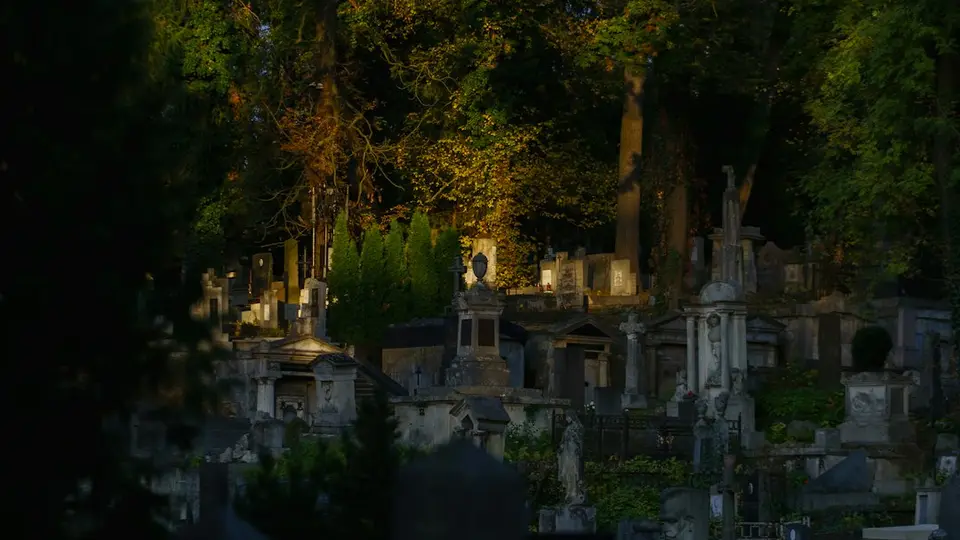
All Saints' Day is traditionally associated with visits to cemeteries and laying flowers on the graves of departed loved ones, even though the Day of the Dead is November 2[2].
Families gather there to clean and decorate the grave, with one emblematic flower: the chrysanthemum[3]. If you see very busy cemeteries on those days, that's normal: it's one of the rare moments when collective remembrance is visible in public.
Elsewhere in Europe: The Example of Luxembourg
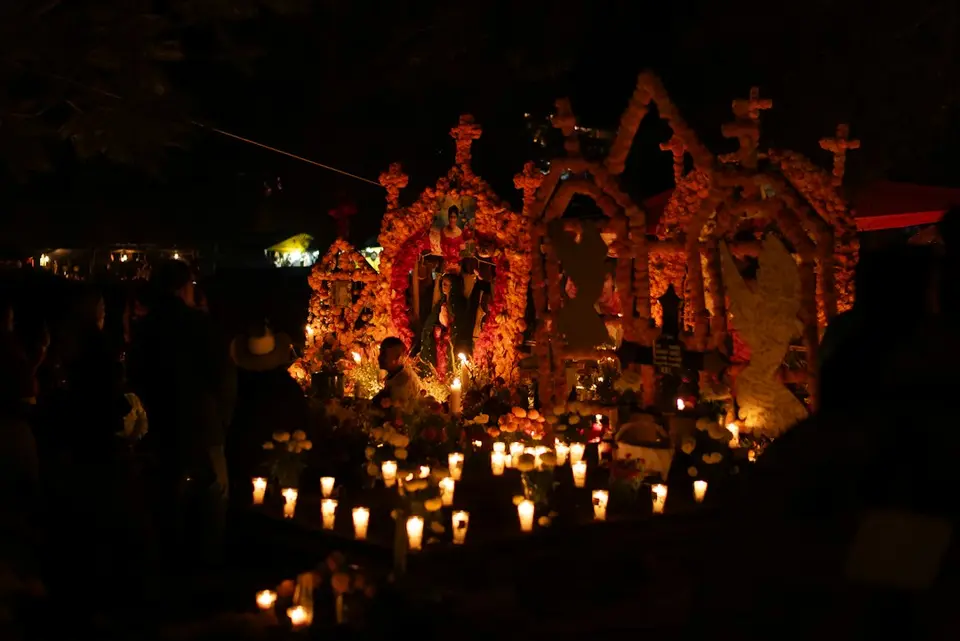
In Luxembourg, Allerhellegen (All Saints' Day) is an official public holiday[6]. Families gather at cemeteries to commemorate their departed loved ones and to place candles, flowers, and wreaths[6]. This practice is accompanied by a religious ceremony and a blessing of the graves[6].
November 2 is Allerséilen, the Day of the Dead[6].
In the north of the country, another tradition is experiencing a revival: the Trauliicht[6]. Villagers hollow out beets, decorate them with grimaces, and place a candle inside[6]. These Trauliichter are placed on village walls and in house windows to protect homes from the souls of the departed and from evil spirits[6]. If you pass through the Luxembourg Ardennes at this time of year, you will likely see them glowing in the evening.
Around the World: All Saints' Day Under Other Names
In Poland, on November 1 (Wszystkich Świętych), families visit cemeteries to light candles, lay flowers, and pray for their departed; candles are also lit on graves that no one visits anymore. At nightfall, thousands of lights illuminate the cemeteries[7]. On November 2, the Day of the Dead (Zaduszki), Catholics return to pray[7].
In Italy, November 1, All Saints' Day (Ognissanti), is one of the public holidays set by law; November 2, the Day of the Dead, is not on that list[8]. In Spain, Todos los Santos falls on a Sunday in 2026, so several autonomous communities give Monday, November 2 off as the “Día siguiente a Todos los Santos”[9].
In the Philippines, where these days are called Undas, November 1 (All Saints' Day) and November 2 (All Souls' Day) are in 2026 special non-working days, giving families time for their traditions[10].
In Colombia, Día de Todos los Santos is a public holiday, and when it falls on another day, including a Sunday, the rest day is moved to Monday: in 2026, that means Monday, November 2[11]. The day before, October 31, is mostly a children's festival of costumes, the “Día de los dulces de los niños”[12]. In Guatemala, Santiago Sacatepéquez and Sumpango display or fly giant kites during the All Saints' and All Souls' celebrations, to communicate with the ancestors[13].
Shops, Hours, and Daily Life
Shop opening hours may vary on Sunday, November 1, and Wednesday, November 11, 2026[2]. Some supermarkets, neighborhood shops, and shopping centers may open, sometimes with reduced hours, while others stay closed depending on their location and opening policy[2]. The safest option is to check the store's hours before you head out[2].
Public services and administrations may be closed on these days, while some essential services continue to operate[2]. This is the case for hospitals, which cannot interrupt their activity on public holidays[14].

Pitfalls and Things to Watch For
- Don't count on a day off: in France, a public holiday is not necessarily a non-working day, and apart from May 1 it may be worked depending on the applicable rules[2]. Pay and rest conditions depend on collective agreements, applicable conventions, and the employee's situation, so check what your employer provides[2].
- Don't assume everything is open or closed: shop hours vary around November 1 and November 11[2].
- If your transport is canceled or delayed within the EU, first submit your complaint to the company from which you bought the ticket[15]. If you get no reply within 1 month for a railway company, 2 months for an airline or shipping company, or 3 months for a bus or coach company, or if the reply isn't satisfactory, you can contact the competent national authority of the country where the problem occurred[15].
Traveler's Checklist
- Note the 2026 dates: All Saints' Day on Sunday, November 1, Day of the Dead on Monday, November 2, and Armistice Day on Wednesday, November 11.
- Check opening hours before you go out, and stock up on groceries in advance.
- If you work in France, ask your employer whether the public holiday is a day off in your case.
- Before booking a ticket, look up your passenger rights: they vary by mode of transport.
- Keep in mind that Halloween, All Saints' Day, Day of the Dead, and Día de Muertos are four different things.
This article gives you the essentials for understanding these celebrations and planning around them. To experience these festivities elsewhere in Europe or around the world, you'll need to go further, country by country.
Read also
- Day of the Dead Around the World: Traditions, Dates, and Where to Experience Them
- Día de Muertos in Mexico: Origins, Dates, Where to Experience It, and What to Expect
- Halloween Around the World: Where to Celebrate It and How to Enjoy It Far from Home
- Fèt Gede in Haiti: Understanding the Vodou Festival of the Dead, Its Rites and Meaning
- Día de las Ñatitas in La Paz: The Skull Festival, Step by Step
Sources
- 1.^ abcaminteresse.fr — How is the Day of the Dead celebrated in different cultures? - Caminteresse.fr: “Halloween takes place on October 31 and All Saints' Day on November 1. The Day of the Dead takes place every year on November 2.”; “The Day of the Dead should not be confused with Halloween (the festival of ghosts) or with All Saints' Day (the feast of the saints).” https://www.caminteresse.fr/culture/comment-celebre-t-on-la-fete-des-morts-dans-differentes-cultures-11197671/ (accessed October 28, 2026)
- 2.^ abcdefghijkllarepubliquedespyrenees.fr — What are the public holidays in November 2026? Here are the dates to remember - La République des Pyrénées.fr: “All Saints' Day is a Christian feast celebrated in honor of all the saints, while November 11 commemorates the armistice signed in 1918, which ended the fighting of World War I on the Western Front.”; “In 2026, All Saints' Day will be celebrated on Sunday, November 1.”; “November 2026 has two public holidays in France: All Saints' Day, on Sunday, November 1, and the Armistice of 1918, on Wednesday, November 11.” https://www.larepubliquedespyrenees.fr/societe/vie-quotidienne/quels-sont-les-jours-feries-en-novembre-2026-voici-les-dates-a-retenir-31261103.php (accessed October 28, 2026)
- 3.^ abcdefuniversalis.fr — ALL SOULS' DAY | Religions - Encyclopædia Universalis: “A celebration proper to the Catholic world, All Souls' Day commemorates, on November 2, all the faithful departed supposed to endure the torments of purgatory, their souls having remained guilty of minor sins at the hour of their death.”; “The establishment of a day dedicated to general intercession on November 2 is attributed to Odilo, fifth abbot of Cluny (died 1049).”; “The date of All Souls' Day, which became nearly universal before the end of the 13th century, was chosen because it immediately follows All Saints' Day.” https://www.universalis.fr/encyclopedie/jour-des-morts/ (accessed October 28, 2026)
Show 12 more sourcesShow less
- 4.^Mira Knowledge — France has 11 legal public holidays per year, including November 1 (All Saints' Day) and November 11 (Armistice Day 1918). Verified on 06/11/2026: official source service-public.fr. https://www.service-public.fr/particuliers/vosdroits/F24497 (accessed June 11, 2026)
- 5.^ abservice-public.gouv.fr — Public Holidays and Bridge Days in the Private Sector | Service Public: “Of the legal holidays, only May 1 is mandatorily a day off for all employees (across all companies and categories).”; “A public holiday that is observed may fall on a day that is normally not a working day (such as a Sunday). In that case, the employee cannot claim any additional day off.” https://www.service-public.gouv.fr/particuliers/vosdroits/F2405 (accessed October 28, 2026)
- 6.^ abcdefgluxembourg.public.lu — Allerhellegen and Trauliicht: Honoring the Dead and Chasing Away Evil Spirits - Luxembourg: “Allerhellegen (All Saints' Day) is an official public holiday in the Grand Duchy and is celebrated on November 1 in Christian countries.”; “On this occasion, families gather at cemeteries to commemorate their deceased loved ones and to place candles, flowers and wreaths in their memory.”; “This practice, observed throughout the country, is accompanied by a religious ceremony and a blessing of the graves.” https://luxembourg.public.lu/fr/societe-et-culture/fetes-et-traditions/allerhellegen-et-trauliicht.html (accessed October 28, 2026)
- 7.^ abBiałystok University of Technology (Polish Lab) — Feast of the Dead: “On November 1, we celebrate All Saints' Day in Poland.”; “Poles go to the cemetery with their whole family to light candles, leave bouquets of flowers and pray for their deceased loved ones”; “It is also customary to light candles on the graves of the forgotten”; “especially at dusk, when thousands of lights illuminate the evening”; “All Souls' Day is celebrated on November 2 [...] Catholics return to the cemetery, light candles and pray.” https://pb.edu.pl/sjo/polish-lab/czy-wiecie-ze/feast-of-the-dead/ (accessed October 28, 2026)
- 8.^Presidency of the Council of Ministers (Italy), protocol — Public holidays: “Public holidays are set by law”; list: “November 1 Ognissanti” (November 2 does not appear on it). https://presidenza.governo.it/ufficio_cerimoniale/cerimoniale/giornate.html (accessed October 28, 2026)
- 9.^BOE — Resolution of October 17, 2025 from the Directorate-General for Labour, publishing the list of labour holidays for 2026: “November 2 Day following All Saints' Day” (a non-working day in several autonomous communities). https://www.boe.es/diario_boe/txt.php?id=BOE-A-2025-21667 (accessed October 28, 2026)
- 10.^Proclamation No. 1006 (Philippines), 2026 public holidays: “Special (Non-Working) Days [...] All Saints' Day - November 1 (Sunday)”; “Additional Special (Non-Working) Days [...] All Souls' Day - November 2 (Monday)”; declared to give “more time for the traditional activities of All Saints' Day and All Souls' Day.” https://lawphil.net/executive/proc/proc2025/proc_1006_2025.html (accessed October 28, 2026)
- 11.^Law 51 of 1983 (Colombia): public holidays including “November 1”; these holidays, “when they do not fall on a Monday, will be moved to the following Monday”; “When these holidays fall on a Sunday, the paid rest is also moved to Monday.” https://www.funcionpublica.gov.co/eva/gestornormativo/norma.php?i=4954 (accessed October 28, 2026)
- 12.^Colombian National Police — Día dulce de los niños: “On October 31 [...] the eve of All Saints' Day, Halloween is celebrated.”; “children dress up for the occasion and go through the streets asking for candy from door to door”; “we wanted to call this date ‘Día de los dulces de los niños’”. https://www.policia.gov.co/index.php/noticia/dia-dulce-los-ninos (accessed October 28, 2026)
- 13.^ich.unesco.org — Technique of making the giant kites of Santiago Sacatepéquez and Sumpango, Guatemala: “The kites are made over several months and displayed during the All Saints' and All Souls' Day festivities, in order to communicate with the ancestors.” https://ich.unesco.org/en/RL/technique-of-making-the-giant-kites-of-santiago-sacatepequez-and-sumpango-guatemala-01991 (accessed October 28, 2026)
- 14.^service-public.gouv.fr — Public Holidays in the Civil Service | Service Public: “Certain public services cannot interrupt their activity on public holidays (hospitals, public gardens...), and these days are then included in the work calendar and worked.” https://www.service-public.gouv.fr/particuliers/vosdroits/F24496 (accessed October 28, 2026)
- 15.^ abcommission.europa.eu — Know your EU passenger rights before you travel - European Commission: “Contact the company from which you purchased your ticket, using the complaint form it provides.”; “If you do not receive a response within 1 month for a railway company, 2 months for an airline or shipping company, 3 months for a bus or coach company, or if the response does not satisfy you, you may file a complaint with the competent national authority in the country where the problem occurred.” https://commission.europa.eu/news-and-media/news/know-your-eu-passenger-rights-you-travel-2026-07-28-0_en (accessed October 28, 2026)