Día de Muertos (not "Día de la Muerte") is a festival of remembrance, not a "Mexican Halloween." This article helps you understand the tradition, choose where to experience it in Mexico City around November 1 and 2, behave with respect, and prepare for crowds, higher prices, and disruptions.
Which countries are concerned?
The festival is Mexican. As practiced by the country's Indigenous communities, it commemorates the temporary return to Earth of deceased parents and loved ones[1]. The tradition has been on UNESCO's Representative List of the Intangible Cultural Heritage of Humanity since 2008[1].
In Mexico, this festival has taken many popular forms, passed down from generation to generation, depending on the people, community, or group celebrating it, in the countryside as well as in cities[2].
Origin and meaning, in brief
Día de Muertos is a syncretic festival blending pre-Hispanic culture with Catholic religion[2]. Its origins lie in the meeting of Catholic rituals brought by the Spanish and the commemoration of the dead that Indigenous peoples had practiced since pre-Hispanic times[2].
The period coincides with the completion of the annual corn cycle, the country's main staple crop[1].
In Indigenous cosmovision, the souls of the dead return home, into the world of the living, to spend time with their loved ones and feed on the essence of the food offered on altars built in their honor[2]. Death here refers not to absence but to living presence[2].
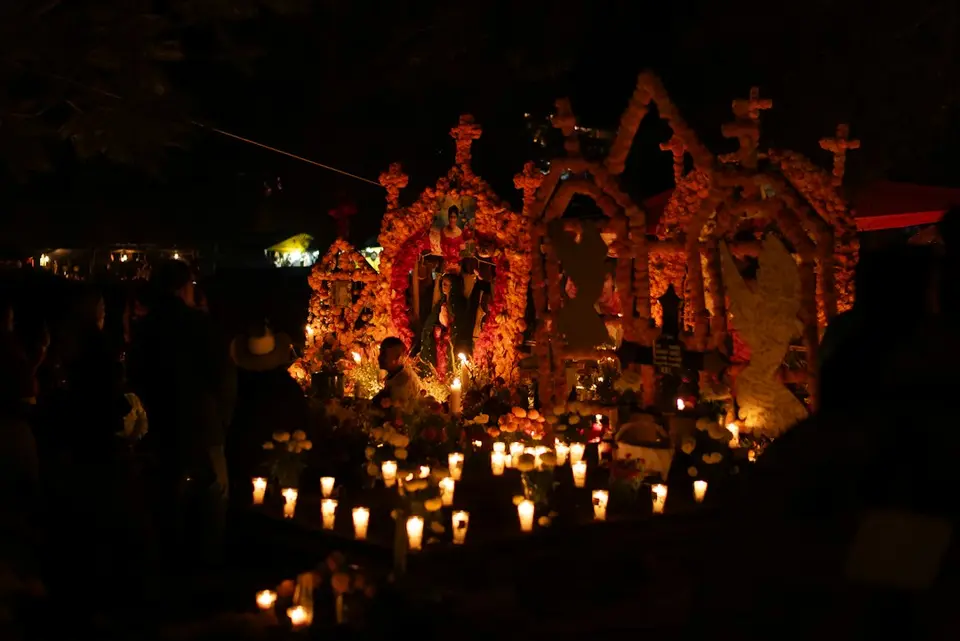
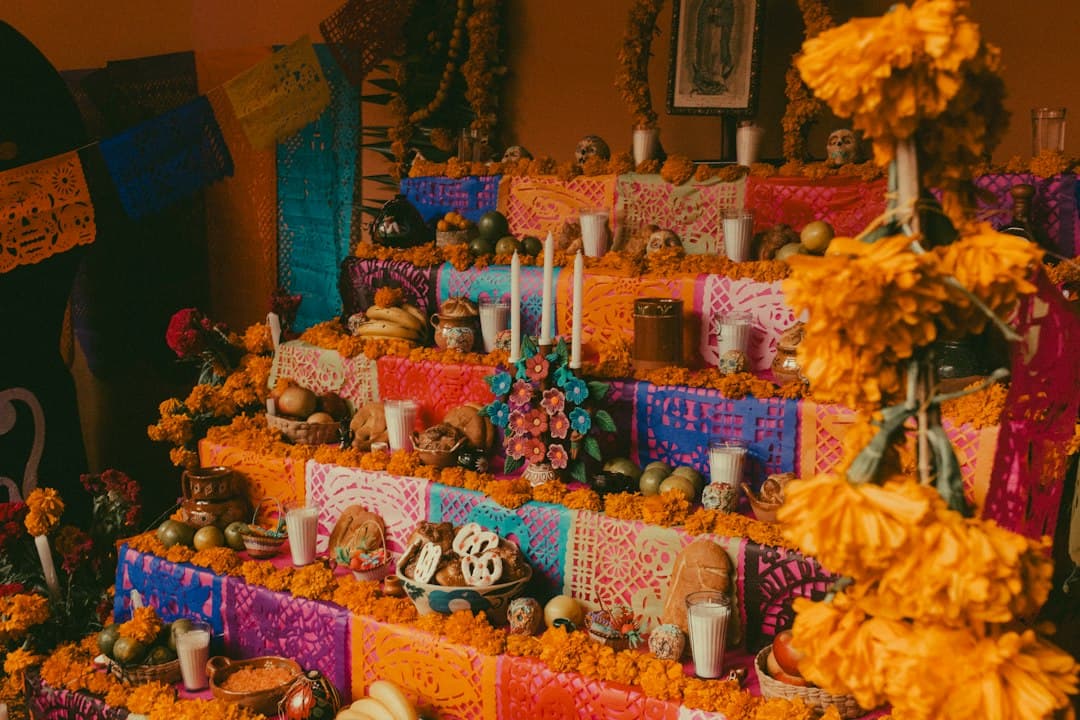
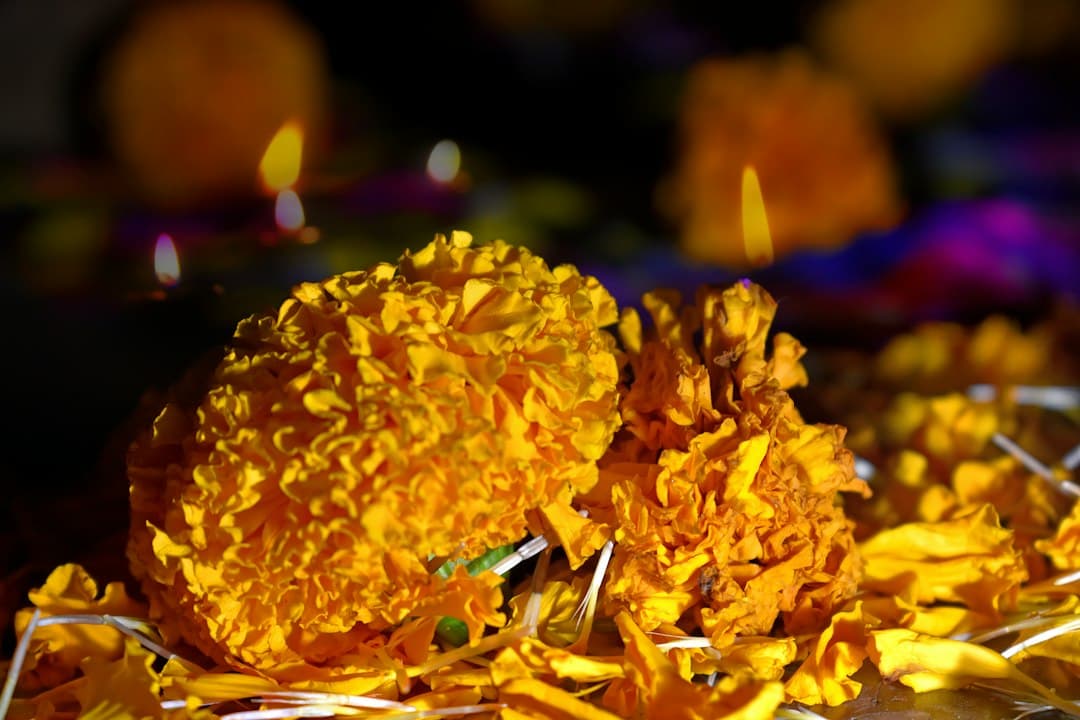
Families guide this return by laying flower petals, candles, and offerings along the path from the cemetery to the home[1]. The deceased's favorite dishes are prepared and placed around the family altar and the grave, with flowers and handcrafted items such as cut-paper decorations[1].
Preparations are taken seriously, because people believe the dead can bring prosperity or misfortune depending on how the rites are performed[1].
Dates and rhythm of the festival
The celebration takes place from late October to the first days of November, though it is mostly associated with November 1 and 2[2]. In the Catholic calendar, November 1, All Saints' Day, is dedicated to the "little dead," the children, and November 2, All Souls' Day, to the adults[2]. In some parts of the country, October 28 is reserved for people who died in accidents or in tragic circumstances[2].
In Mexico City, the rhythm extends beyond those two days: a special authorities' arrangement for cemeteries runs from Friday, October 30 to Monday, November 2, 2026[3], and the city parade is set for Saturday, October 31 starting at 2:00 pm[4].
Differences from Halloween and All Saints' Day
Día de Muertos and Halloween fall on nearby dates and both involve the dead, but their origins and meanings are distinct[4]. It is a family festival in which people build altars for named loved ones and visit their graves; it is affectionate rather than frightening[4].
The Catholic calendar explains the closeness to All Saints' Day: the Mexican festival transposed the veneration of the dead into the Christian calendar, with All Saints' Day on November 1 and All Souls' Day on November 2[2].
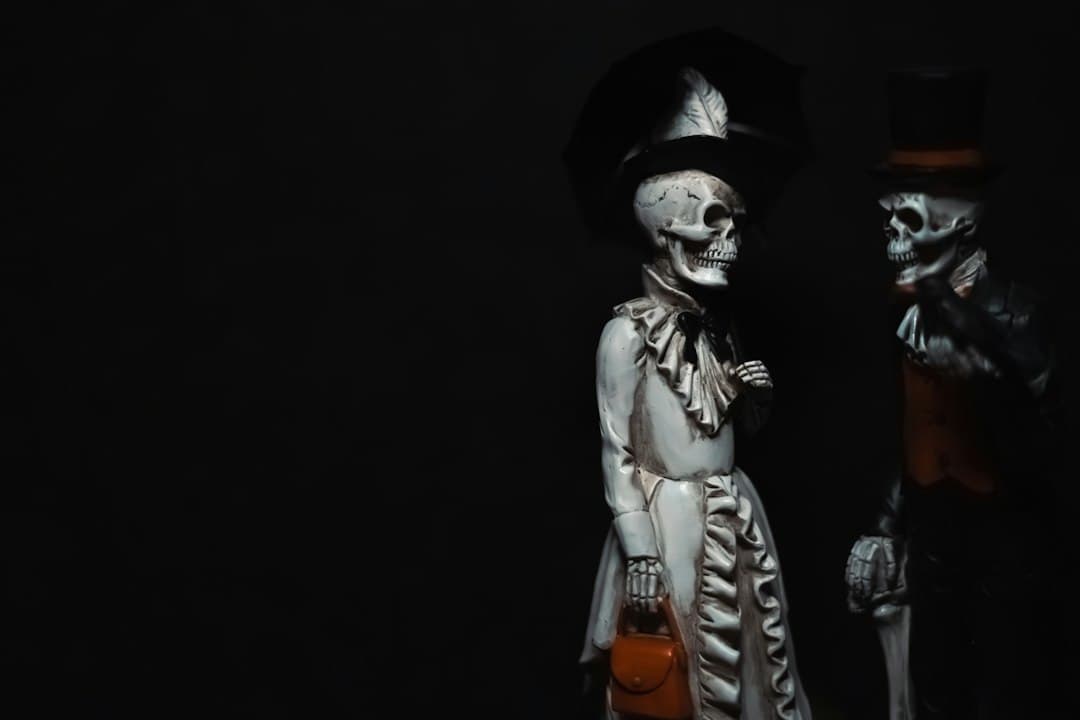
The skeletons visitors recognize are mostly Catrinas, born as political satire: death makes everyone equal[4].
What to see and do in Mexico City and nearby
The heart of the civic celebration takes place downtown: a monumental altar, which usually honors historical figures or regions of the country, accompanied by free concerts and cultural events[5]. The Zócalo hosts the largest public altar, while museum and university courtyards build more understated ones[4]. For the parade, Reforma Avenue offers the longest view along the route[4].
If you want a balance between festive atmosphere and community tradition, the historic centers of Coyoacán and Tlalpan come alive with traditional altars, local fairs, and a fully cultural atmosphere[5].
For cemetery vigils, San Andrés Mixquic, at the far southeast of the city, is the best known; Xochimilco is easier to reach[4]. The city announces the parade date in the fall, usually for a Saturday in the week before the holiday. It changes from year to year (in 2026, Saturday, October 31), so confirm it before you book[4].
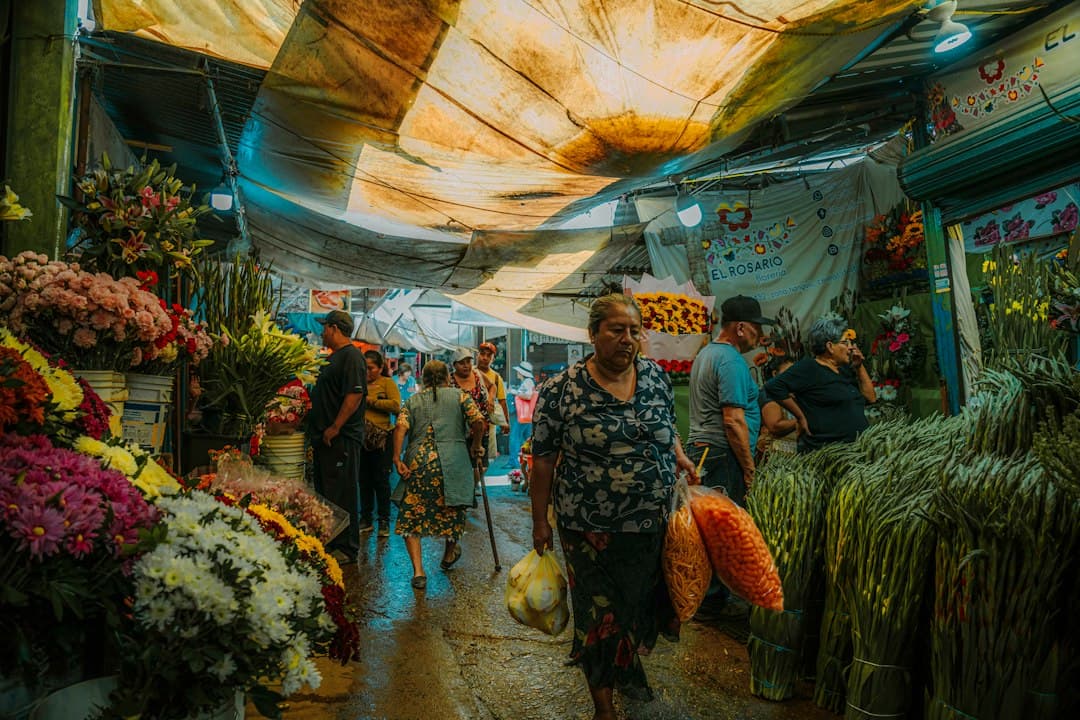
The Mercado de Jamaica, in the days leading up to the holiday, is also worth the trip: the city's flower market is almost entirely devoted to cempasúchil during this week, with trucks arriving from Puebla and stalls stacked up to the roof[4]. There are no tickets: this is where the ofrendas physically come from[4].
What is an ofrenda?
It is a multi-tiered altar, built at home and sometimes in a public square, for specific deceased people rather than for the dead in general[4]. It holds their photograph, the food and drinks they loved, water, salt, candles, pan de muerto, papel picado, and plenty of cempasúchil, whose scent is believed to guide them back[4].
Taking Part Respectfully
Cemetery vigils are private acts that take place in public spaces[4]. Public ofrendas and the parade can be photographed freely; a family sitting beside their dead, no, unless you ask and they agree[4].
Painted faces are very common, and no one will object[4].
Transportation, Hotels, and Disruptions to Plan For
In Mexico City, the Citizen Security Secretariat deploys a special operation from October 30 to November 2 across the capital's 120 cemeteries: surveillance, prevention, traffic management, and visitor assistance[3]. Authorities expect around 1,500,000 people in the city's cemeteries[3]. For those driving, the recommendation is to allow extra travel time, as traffic will be heavier in some areas[3].
The disruptions are not limited to the capital. In Chihuahua, public transport route diversions are announced from Friday, October 30 to Tuesday, November 3 for the Feria del Hueso and Día de Muertos[6].
As for accommodation, this is the most expensive and busiest week of the year in Mexico City, along with Christmas: hotels in Roma and Condesa fill up months in advance. Check the safety of the neighborhood before you book (see "Neighborhoods" below)[4]. The Mexico City Grand Prix takes place the same weekend as the parade, which adds pressure: book early[4].
Pitfalls, Scams, and Things to Watch For
Online bookings. Some sites ask for amounts at checkout that differ from the advertised prices, don't always disclose optional fees, and force you through constrained paths with pop-up windows[7].
Be wary of messages that push you to book quickly ("limited offer," countdown timers) or of mechanisms that make it hard to cancel an option[7]. For accommodation, advertised perks such as flexible cancellation may not be honored[7].
Mixquic. The village has no metro: it takes a long trip to the far southeast of the city, then a local connection, and after dark the last stretch is on foot through a village full of visitors[4]. Plan your return before you leave: thousands of people try to head home at the same time, and rideshares are unreliable at that hour of the night[4].
Neighborhoods. According to the French Ministry of Foreign Affairs' traveler advice, some areas of Mexico City are not safe: unless absolutely necessary, it is advised not to go to the colonias north and northeast of the Zócalo (Centro, Morelos, Tepito, Nicolas Bravo, Lagunilla, Popular rastro), although they are within walking distance of the city center[8].
Be careful when visiting the center and don't stray far from the Zócalo[8]. In general, don't linger in areas not served by the metro or Metrobús, where shops are scarce[8].
Taxis. Drivers may be in cahoots with criminals[8]. Check that the license plate matches the insurance displayed on the rear windows, compare the photo on the driver's license posted in the vehicle with the driver's face, and prefer taxis from official stands ("sitio")[8].
Extortion. Tourists have reported extortion by police officers, especially during roadside checks[8]. Never pay a fine to a lone officer who cannot issue a receipt; if this happens, call 911 immediately[8].
Pre-Departure Checklist
- Book your accommodation as early as possible, comparing sellers and checking the final price before you pay.
- Confirm the parade date with Mexico City before booking your tickets.
- Plan your round trip to Mixquic in advance, or choose Xochimilco.
- Arrive early at the cemeteries and the most popular sites, and allow extra travel time.
- Ask a family's permission before photographing them.
- Stay within areas served by the metro or Metrobús and choose taxis from official stands.
This article gives you the essentials to decide and prepare for your stay; it does not detail the day-by-day itinerary, the line-by-line budget, or the formalities specific to each traveler, which require going further.
Read also
- Day of the Dead Around the World: Traditions, Dates, and Where to Experience Them
- Halloween Around the World: Where to Celebrate It and How to Enjoy It Far from Home
- All Saints' Day and Day of the Dead: Traditions in France, Europe, and Around the World
- Fèt Gede in Haiti: Understanding the Vodou Festival of the Dead, Its Rites and Meaning
- Día de las Ñatitas in La Paz: The Skull Festival, Step by Step
Sources
- 1.^ abcdefich.unesco.org — Indigenous festivity dedicated to the dead - UNESCO Intangible Cultural Heritage: “As practiced by the Indigenous communities of Mexico, the Día de los Muertos festivity commemorates the temporary return to Earth of deceased parents and loved ones.”; “Inscribed in 2008 on the Representative List of the Intangible Cultural Heritage of Humanity (originally proclaimed in 2003).”; “This period also marks the completion of the annual maize cultivation cycle, the country's main staple crop.” https://ich.unesco.org/en/RL/indigenous-festivity-dedicated-to-the-dead-00054 (accessed October 28, 2026)
- 2.^ abcdefghiunesco.org — Día de Muertos: el regreso de lo querido | UNESCO: “This is a syncretic festivity blending pre-Hispanic culture and the Catholic religion which, given the country's multicultural and multiethnic character, has given rise to diverse popular expressions passed down from generation to generation.”; “Its origins lie in the syncretism between the Catholic religious rituals brought by the Spanish and the commemoration of the Day of the Dead that Indigenous peoples practiced since pre-Hispanic times.”; “In the Indigenous worldview, Día de Muertos involves the temporary return of the souls of the deceased, who come home to the world of the living to share with their loved ones and feed on the essence of the food offered on the altars built in their honor.” https://www.unesco.org/es/articles/dia-de-muertos-el-regreso-de-lo-querido (accessed October 28, 2026)
- 3.^ abcdrecord.com.mx — Día de Muertos 2026 en CDMX: así desplegarán a 11 mil policías en 120 panteones | RÉCORD: “To ensure safety, mobility, and welcome for people visiting the cemeteries, the Citizen Security Secretariat (SSC) announced a special deployment running from Friday, October 30 to Monday, November 2.”; “The deployment will cover the 120 cemeteries located in the capital's 16 boroughs, where surveillance, prevention, traffic regulation, and visitor assistance actions will be carried out.”; “According to authorities' forecasts, around 1.5 million people could visit Mexico City's cemeteries these days to leave flowers, clean graves, bring offerings, and remember their loved ones.” https://www.record.com.mx/historia/dia-de-muertos-2026-en-cdmx-asi-desplegaran-a-11-mil-policias-en-120-panteones-2026102800105866838 (accessed October 28, 2026)
Show 5 more sourcesShow less
- 4.^ abcdefghijklmnopqrswhen-to-wander.com — Día de Muertos 2026 (31 Oct–2 Nov): Why the parade is not the point: “The city government has set the 2026 parade for Saturday, October 31 starting at 2:00 pm, from the Diana Cazadora roundabout along Paseo de la Reforma to the Zócalo; the Mexico City Grand Prix takes place the same weekend, so book hotels early.”; “Is Día de Muertos the same as Halloween? No. The two fall on nearby dates and both deal with the dead, but their origins and meanings are distinct. It is a family holiday in which households build altars for named relatives and visit their graves, and it is affectionate rather than frightening.”; “The skeletons visitors recognize are mostly Catrina figures, born as a political satire on death that makes everyone equal.” https://www.when-to-wander.com/destinations/mexico-city/events/dia-de-muertos/ (accessed October 28, 2026)
- 5.^ abmexicocity.cdmx.gob.mx — Day of the Dead 2026 in Mexico City – Mexico City: “The heart of the civic celebration, with its characteristic monumental altar that usually honors historical figures or regions of the country, accompanied by a solid program of free concerts and cultural events.” ; “For travelers looking for a balance between festive atmosphere and community tradition, it is essential to visit the historic centers of Coyoacán and Tlalpan, which come alive with traditional altars, local fairs and a fully cultural atmosphere.” https://mexicocity.cdmx.gob.mx/e/dia-de-muertos-en-la-ciudad-de-mexico/?lang=en (accessed October 28, 2026)
- 6.^unotv.com — Cambios de ruta en el transporte público en Chihuahua por festejos del Día de Muertos 2026- UnoTV: “The Chihuahua State government has indicated that public transport route detours will begin on Friday, October 30 and continue through Tuesday, November 3.” https://www.unotv.com/estados/chihuahua/anuncian-cambios-en-rutas-de-transporte-en-chihuahua-por-festejos-del-dia-de-muertos-2026/ (accessed October 28, 2026)
- 7.^ abcbretagne.dreets.gouv.fr — Tourisme estival : comment éviter les pièges lors de vos réservations en ligne ? - Directions régionales de l'économie, de l'emploi, du travail et des solidarités (DREETS): “Some providers demand amounts at the end of the booking that differ from the advertised prices, provide unclear pre-contractual information (optional price supplements are not always disclosed) and impose a constrained path with interfaces designed to steer, mislead or manipulate consumers, for example through pop-up windows.” ; “Be wary of dark patterns, that is, messages pushing you to book quickly (limited offer, countdown timers, etc.) or mechanisms that complicate your path if you want to cancel an option.” ; “For accommodations, difficulties may involve listing advantages that are ultimately not honored (such as flexible cancellation).” https://bretagne.dreets.gouv.fr/Tourisme-estival-comment-eviter-les-pieges-lors-de-vos-reservations-en-ligne (accessed October 28, 2026)
- 8.^ abcdefgdiplomatie.gouv.fr — Mexique - Sécurité | France Diplomatie: “Some areas of Mexico City are not safe. Unless absolutely necessary, it is advised against going to the colonias north and northeast of the Zócalo, although they are easily reachable on foot from the city center: Centro, Morelos, Tepito, Nicolas Bravo, Lagunilla and Popular Rastro are among the most dangerous neighborhoods in the capital in terms of crime.” ; “Exercise caution when visiting the center and do not stray from the Zócalo.” ; “In general, do not linger in areas not served by the metro or Metrobús, where shops are scarce.” https://www.diplomatie.gouv.fr/fr/information-par-pays/mexique/conseils-aux-voyageurs-securite (accessed October 28, 2026)