If you are moving to or staying in a region of the United States exposed to wildfires, this guide helps you stay informed about the air you breathe, prepare an evacuation plan, and protect your home from smoke. It also tells you what to check with your insurance and how to avoid the scams that often follow a disaster. The goal is not to alarm you. It is to help you know what to do before the alert sounds.
A Recurring Risk, to Take Seriously Without Panicking
The figures in our risk database give you the scale: 3,115 wildfires recorded over 12 months in the United States, including 1,118 major ones[1]. The main national reference statistics are compiled by the National Interagency Coordination Center, based on reports submitted by federal agencies, states, local governments, and tribes[2].
Above all, keep in mind that the risk is not uniform. It depends on the exact place where you live. There is no single rule for the whole country, which is why it matters to get informed at the level of your town and your neighborhood.
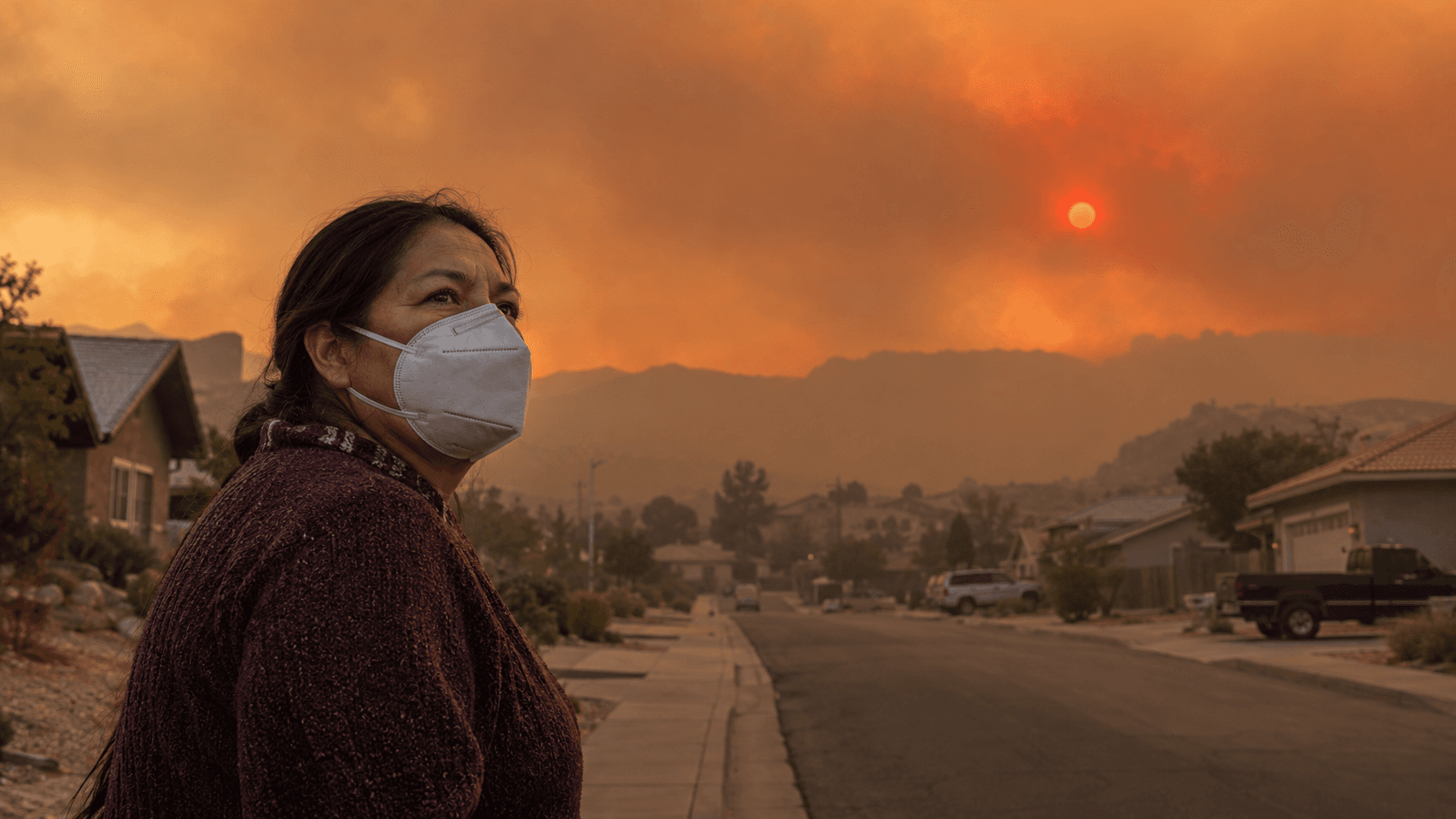
Smoke does not stop at the edge of the fire. AirNow, the official air quality portal, reminds us that it can travel a long distance from the fire, so you need to be ready to reduce your exposure[3]. Knowing how to stay informed matters as much as knowing where you live.
Checking Whether You Are in an Exposed Area (Wildland-Urban Interface)
Federal agencies use the term WUI (wildland urban interface), meaning the boundary between natural areas and inhabited areas. The U.S. Fire Administration points out that the problem is not limited to Western states: more than 60,000 US communities are exposed to fires in this interface[4].
Before choosing an address, look at what surrounds it. Nearby vegetation weighs heavily on the risk. For community protection plans, the USFA recommends relying on local foresters and choosing native plants while avoiding invasive non-native species, which are more flammable[5]. Check with your town or local fire department about the protection plan for your area.
Staying Informed: Air Quality, Smoke, and Local Alerts
Three habits help you stay informed.
- Check the Fire and Smoke map on AirNow, which shows the effects of smoke in your region[3].
- Enter your location on airnow.gov or in your phone's weather app to see outdoor air quality. The Air Quality Index (AQI) measures pollution levels in your community[6].
- Sign up for local emergency alerts on landline, mobile, and other devices so you can be warned when a fire is reported near you. Alerts are not guaranteed, so stay alert to local conditions as well[7].
And whatever happens, follow the instructions of local emergency management officials[6].
Planning Ahead for Evacuation
An evacuation is prepared before fire season, not on the day of the alert. Authorities recommend identifying a main route and a backup route out of your neighborhood[7].
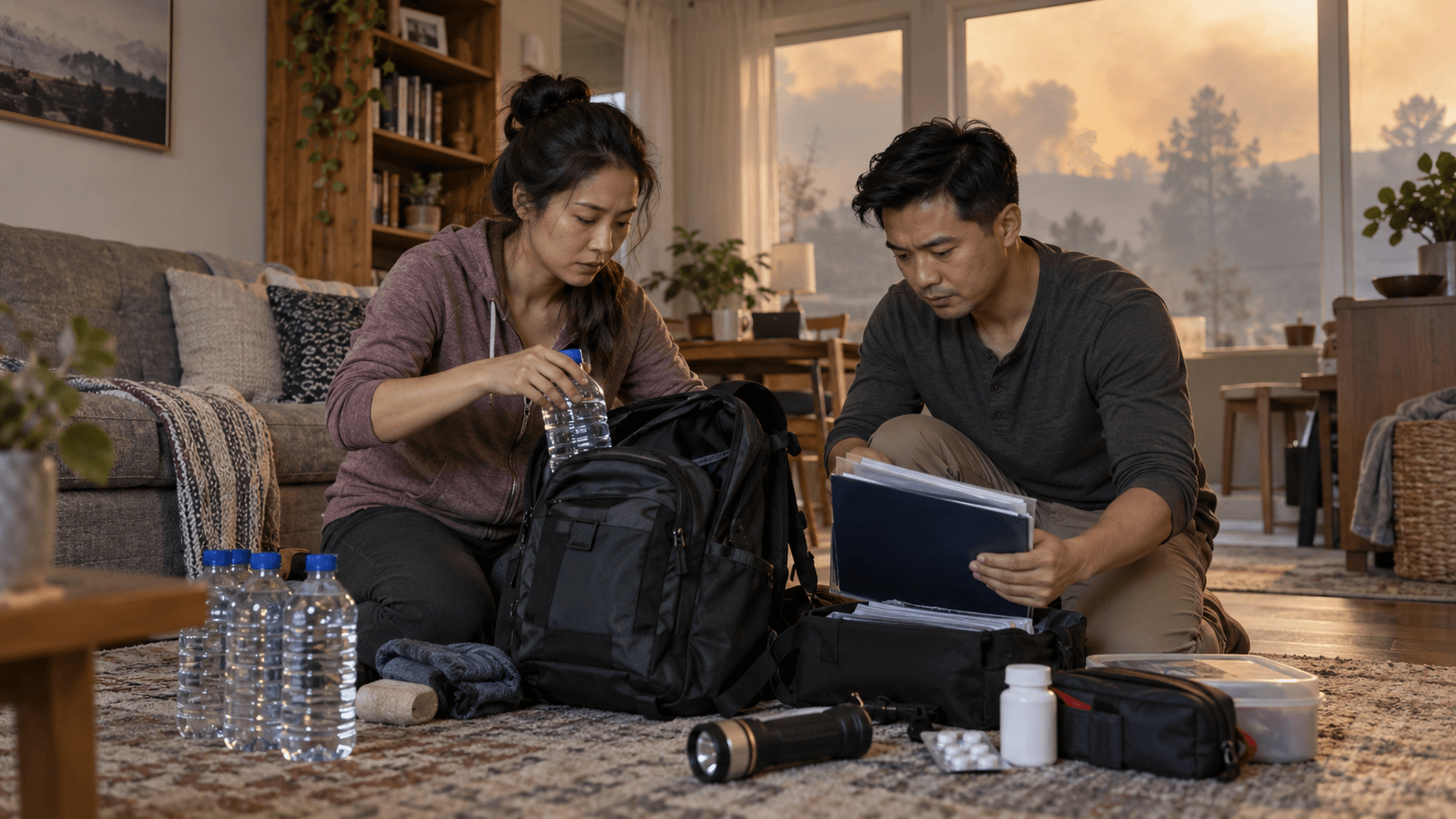
Also prepare a kit: medications, important papers, important phone numbers, cash (ATMs may stop working), bank cards, spare clothing, and food and water for every household member for 72 hours[7]. Keep your phone charged in case the power goes out[7].
- medications
- important papers
- important phone numbers
- cash (ATMs may stop working)
- bank cards
- spare clothing
- food and water for every household member for 72 hours[7]. Keep your phone charged in case the power goes out[7].
As for pets, some evacuation centers do not accept animals: plan a solution in advance[6]. The USFA also advises leaving early if you have young children, pets, or mobility difficulties, and rehearsing the evacuation, pets included, so that the plan really works[7].
Protecting Yourself from Smoke at Home and Day to Day
During a fire, smoke can get inside your home. Setting up a clean-air room helps reduce your exposure when you stay indoors[3]. A few guidelines:
- Choose a portable air purifier sized for the room: prices and effectiveness vary[3].
- If your central air conditioning system can accommodate it, use a high-efficiency filter rated MERV 13 or higher; if it has an outdoor air intake, switch to recirculation mode or close it[6].
- Keep spare filters on hand and change them more often than the manufacturer recommends during periods of heavy smoke[3].
- Avoid burning anything indoors: candles, gas, propane, incense, wood[6].
- If you must go outside, wear a NIOSH-approved respirator, meaning a mask that fits snugly on the face and filters smoke before you breathe it in[6].
Get this equipment now: once smoke is in the air, supplies can run out or arrive too late to be useful[3].
People Who Are More Vulnerable
Smoke can make anyone sick, but the risk is higher for children, people with chronic illnesses, and pregnant women[8]. For children, choose a respirator or mask they can wear properly: children aged 2 and older can wear respirators and masks, but NIOSH-approved respirators do not come in sizes suited to very young children[6]. If you have asthma, heart disease, or are pregnant, consult a doctor if you develop new or worsening symptoms[6].

Insurance and Housing: What to Check Before You Commit
On the health side, medical costs in the United States are extremely high, and Medicare/Medicaid does not apply abroad. Travel insurance covering medical evacuation is considered essential[9]. Before you leave, check that your policy actually includes this coverage. Our file does not detail products for digital nomads or the exclusions related to wildfires: for this point, ask your insurer for the exact policy wording.
On the housing side, ask your landlord or agency, in writing, what happens if an evacuation is ordered or a road is closed. Also check whether the home is in an evacuation zone and whether it depends on a single exit route: a home served by only one exit road offers no backup route[7].
As soon as you arrive, locate the clean-air room, check the type of filter in the air conditioning, and note the evacuation plan for the property.
Traps, Scams, and Points of Vigilance
- Smoke from a distant fire can degrade the air in your home: check the AQI even when there is no fire nearby[3]. That said, for a fire thousands of kilometers away, the amount of smoke arriving from so far is likely very low and can be overshadowed by local sources of particulates: keep monitoring local air quality on AirNow[10].
- A late evacuation makes everything harder: if you wait until the last moment, roads can become congested, and thick smoke, embers, and debris make driving difficult[7]. If you feel in danger, do not wait for the official order: leave immediately[7].
- There is no miracle solution indoors: when the fire is very close, evacuating may be the better option, since it is almost impossible to prevent dense smoke from building up in indoor air[10].
- After a disaster, beware of fake contractors: before paying, ask for ID, a license, and proof of insurance, and do not trust any promise that is not in writing[11]. Never pay by bank transfer, gift card, cryptocurrency, or cash, and do not pay the balance before the work is finished[11].
- Fake FEMA aid exists: FEMA does not charge any application fees, and anyone who asks you for money to help you get its assistance is scamming you[11].
- Medical care is expensive: hospitals often require proof of insurance or payment before treating you[9].
Checklist Before You Settle In
- Check the environment of the address and the local protection plan.
- Install the weather app or AirNow and open the Fire and Smoke map.
- Sign up for local emergency alerts.
- Map out two evacuation routes and prepare a 72-hour kit, including for your pets.
- Buy an air purifier, replacement filters, and NIOSH-approved respirators.
- Get the housing refund conditions in case of evacuation in writing.
- Confirm that your insurance covers medical evacuation.
Sources
- 1.^Mira Knowledge — The United States recorded 3,115 wildfires over 12 months, including 1,118 severe ones. Verified on 06/10/2026: official source gov.uk. https://www.gov.uk/foreign-travel-advice/usa/safety-and-security (accessed June 10, 2026)
- 2.^nifc.gov — Statistics | National Interagency Fire Center: “The National Interagency Coordination Center compiles wildland fire statistics each year for federal and state agencies. This information comes from incident situation reports used for decades and is submitted by federal, state, local, and tribal land management agencies.” https://www.nifc.gov/fire-information/statistics (accessed October 13, 2026)
- 3.^ abcdefgairnow.gov — Be Smoke Ready | AirNow.gov: “Smoke can travel a long distance from a fire. It is important to be ready to reduce your exposure to smoke.” ; “Wildfire smoke degrades air quality in many states. Use the Fire and Smoke map to check the effects of smoke in your area.” ; “During wildfires, smoke can get inside your home. Setting up a clean air room can help reduce your exposure to smoke when you stay indoors.” https://www.airnow.gov/wildfires/be-smoke-ready/ (accessed October 13, 2026)
Show 8 more sourcesShow less
- 4.^usfa.fema.gov — Wildfire and the Wildland Urban Interface (WUI): “You may think you don't have a WUI problem and that these fires only affect Western states, but more than 60,000 communities across the United States are exposed to wildland-urban interface fires.” https://www.usfa.fema.gov/wui/ (accessed October 13, 2026)
- 5.^usfa.fema.gov — Healthy Landscapes: “Encourage community leaders to work with local foresters and urban forest managers to develop your plan and choose native plants, avoiding invasive non-native species, which are more flammable.” https://www.usfa.fema.gov/wui/healthy-landscapes/ (accessed October 13, 2026)
- 6.^ abcdefghcdc.gov — Safety Guidelines: Wildfires and Wildfire Smoke | Wildfires | CDC: “Check your community's outdoor air quality by entering your location on airnow.gov or in your phone's weather app.” ; “The Air Quality Index (AQI) indicates pollution levels in your community.” ; “Always follow instructions from local emergency management officials.” https://www.cdc.gov/wildfires/safety/how-to-safely-stay-safe-during-a-wildfire.html (accessed October 13, 2026)
- 7.^ abcdefghijusfa.fema.gov — Wildfire Evacuation Outreach Materials: “Encourage residents to sign up for local emergency alerts and warnings on their devices.” ; “Help them plan primary and backup routes to exit their neighborhood and community.” ; “Enough food and water for every household member for up to 72 hours.” https://www.usfa.fema.gov/wui/outreach/wildfire-evacuation.html (accessed October 13, 2026)
- 8.^cdc.gov — Wildfires and Your Safety | Wildfires | CDC: “Wildfire smoke can make anyone sick, but some people are at higher risk, such as children, people with chronic conditions, and pregnant women.” https://www.cdc.gov/wildfires/about/index.html (accessed October 13, 2026)
- 9.^ abMira Knowledge — Medical costs in the United States are extremely high. Hospitals often require proof of insurance or payment before treating you. Medicare/Medicaid does not apply abroad, and travel insurance covering medical evacuation is essential. Verified on 06/10/2026: official source smartraveller.gov.au. https://www.smartraveller.gov.au/destinations/americas/united-states-america (accessed June 10, 2026)
- 10.^ abepa.gov — Wildfires and Indoor Air Quality (IAQ) | US EPA: “You may hear that smoke from a distant fire, even thousands of kilometers away, has reached your community. This can happen, but the amount of smoke arriving from so far away is likely very low and may be overshadowed by local particle pollution sources.” ; “It may be better to evacuate. Fires can spread quickly, and the smoke plume can reduce visibility during evacuation. Moreover, it can be nearly impossible to keep dense smoke from building up in indoor air.” https://www.epa.gov/emergencies-iaq/wildfires-and-indoor-air-quality-iaq (accessed October 13, 2026)
- 11.^ abcconsumer.ftc.gov — Picking Up the Pieces After the Maui Wildfires | Consumer Advice: “Verify contractors. Before you pay, ask for their ID, licenses, and proof of insurance. Don't trust any promise that isn't in writing.” “Never pay by wire transfer, gift card, cryptocurrency, or cash. Scammers ask for these payment methods because once the money is collected, it is nearly impossible to recover. And never make the final payment until the work is finished and you are satisfied.” “Know that FEMA does not charge any application fees. If someone asks you for money to help you get funds from FEMA, it's a scam.” https://consumer.ftc.gov/consumer-alerts/2023/08/picking-pieces-after-maui-wildfires (accessed October 13, 2026)