Medellín reveals itself through its neighborhoods, squares, murals, and hillsides. This article helps you choose what to see, spread your days between the historic center, Comuna 13, Metrocable, nature, and museums, and pick your home base neighborhood. It also gives useful precautions for visiting by day and by night.
Why Visit Medellín
UNESCO has recognized Medellín's efforts to achieve a renewal driven by culture, a social progress built on culture, education, and innovation, in order to overcome the period of instability that affected the country until the 1990s[1]. This is the best thread for a visit: the city reveals itself through its neighborhoods, its transit, and its murals.
Colombia Travel describes it as a mix of cultural, historical, and outdoor activities[2]. The city guide adds that its offering is at once cultural, natural, gastronomic, and nightlife-oriented[3].
As for duration, the city guide suggests planning at least 4 days to enjoy Medellín and its surroundings[3]. Le Routard recommends a minimum of three to four days for the main sites, plus one or two days for the surroundings, such as Guatapé[4].
Comuna 13 and Its Graffiti
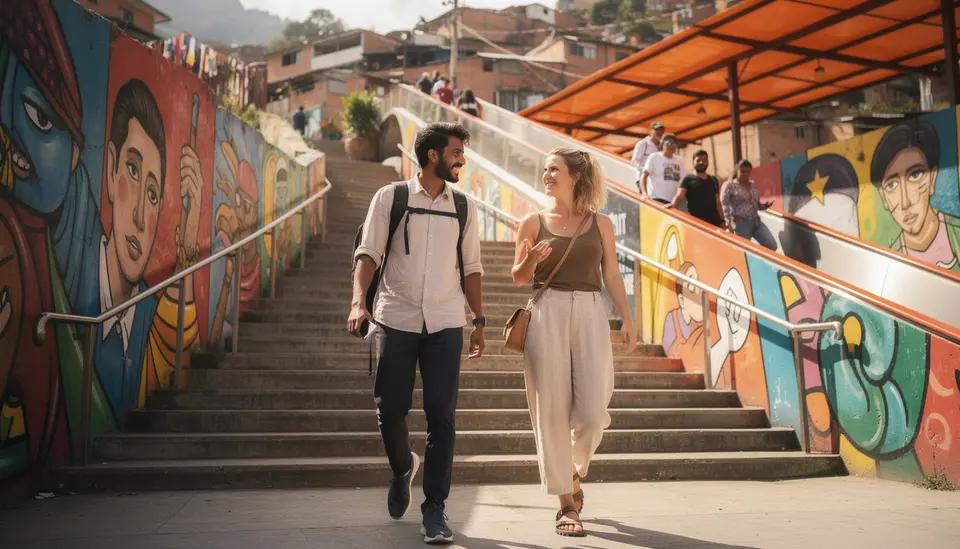
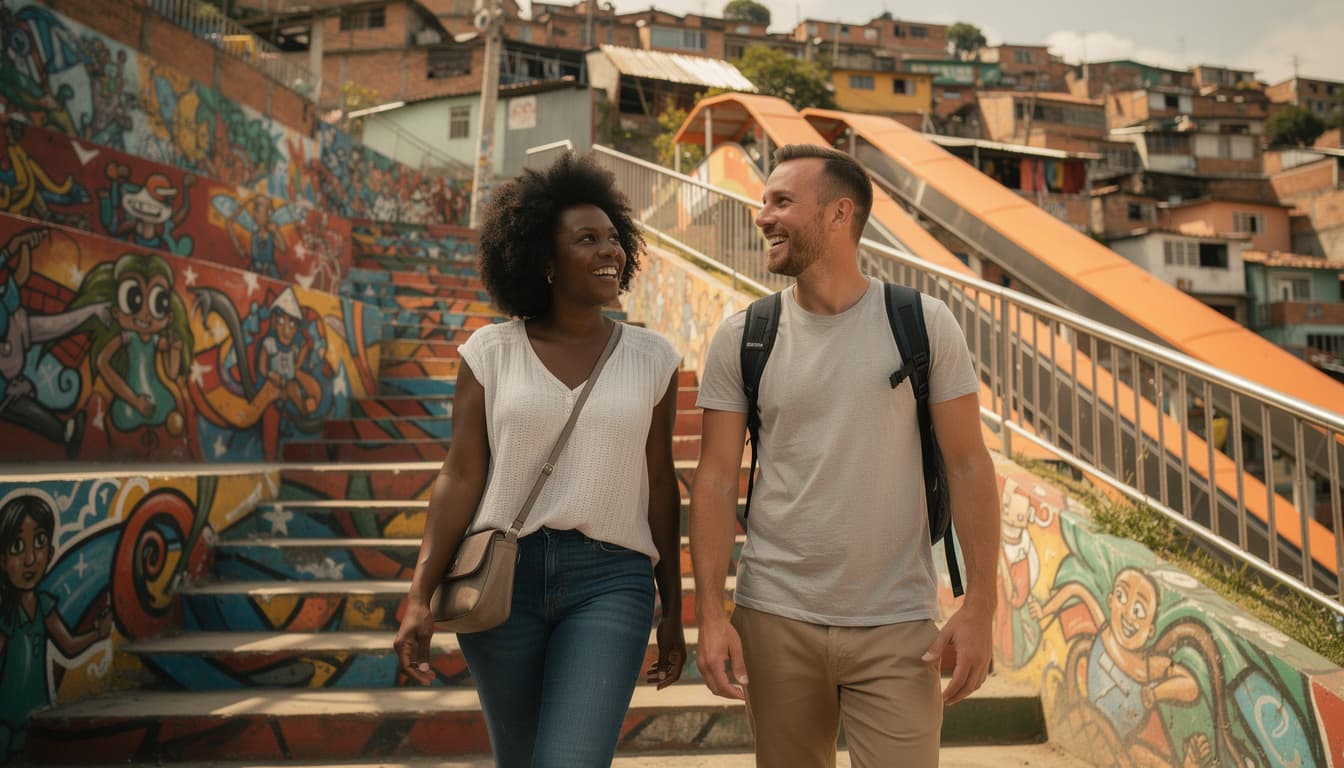
Colombia Travel invites visitors to explore Comuna 13 for its street art, its urban transformation, and its guided tours that tell its story[2]. Le Routard notes that once one of the most dangerous areas in the country, the neighborhood is today an example of social transformation through urban art: the murals and street performances tell its story and celebrate life[4].
Open-air escalators make it easier to reach its steep alleys and immerse visitors in a vibrant atmosphere[4].
For your visit, it is recommended to go with a licensed local guide, not to go after 5 pm, and to stay on the marked route[5].
Metro and Metrocable: Seeing the City from Above
The Metrocable is one of the symbols of the city's transformation: it connects the center with the neighborhoods on the surrounding hills. This cable car network offers a mobility solution and breathtaking views over the vastness of the metropolitan area[4]. Lines K and J let you fly over the neighborhoods and understand the city's urban planning; Line L extends the route to Parque Arví, with a spectacular panorama over the valley[4].
To use it, you need a Cívica card, sold at metro stations, which also works across the city's entire integrated transport system[2]. Medellín also has buses, trams, and taxis, though traffic can be somewhat chaotic at certain hours[3]. Metroplús, the integrated bus system, accessible with the Cívica card, also lets you move faster along the main routes[6].
Plaza Botero and the Historic Center
Plaza Botero hosts 23 monumental sculptures by the master, free to access, facing the Museo de Antioquia and the Palacio de la Cultura Rafael Uribe Uribe[7]. The museum houses a vast collection of his works, as well as contemporary and pre-Columbian art; for opening hours and prices, Le Routard recommends checking the official website[4].
The Parque de las Luces is a “forest” of 300 poles reaching up to 80 feet high, among water fountains and bamboo, illuminated at night[3]. Cerro Nutibara is home to the Pueblito Paisa, a replica of a typical Antioquia village, which offers 360° views over Medellín[3].
The center is best visited by day. The historic center is lively and interesting during the day, but becomes dangerous from 6:30 pm[5].
Nature: Jardín Botánico, Parque Arví, and Santa Elena
The Jardín Botánico de Medellín spans 32 acres and has more than 2,000 trees, making it one of the city's green lungs[8]. You'll also find a lake, a butterfly house, and the Orquideorama, an architectural structure dedicated to orchids. Entry is generally free, but access to certain areas, such as the butterfly house, may be paid[4].
Parque Arví is the ideal nature outing, very close to the city: you get there by metro and then the Metrocable[3]. Colombia Travel presents it as a place to hike, unwind in the greenery, or have a picnic[2]. For the trip, our advice is to pick a weekday: on weekends the park is very busy with local families, while on weekdays the experience is peaceful and free of crowds[6].
In Santa Elena, less than 30 minutes from the center, more than 15 families open their silleteras fincas to show how flowers are grown and how a silleta is composed[7]. Visits last two to four hours and are booked directly with the families[7].
The Silletero Tradition and the Year's Highlights
The Feria de las Flores, every August, is one of the city's most renowned events[2]. The other major highlight falls at year's end, with the Alumbrado de Navidad, the Christmas light display, one of the most famous in the world; both are considered must-sees on the cultural and tourism calendar[8].
These two periods are also when the city's occupancy rises the most, at mid-year and at year's end[8]. The Desfile de Silleteros will celebrate its 70th anniversary in August 2027, and the silleteros fincas can be visited in August, during the Feria, but also the rest of the year[7].
Museums, Parks and Evenings Out
Near the Universidad metro station, several sites are clustered together: Parque de los Deseos, the Jardín Botánico, Parque Explora and the Planetarium[8]. Parque Explora is an interactive science and technology museum, with one of the largest freshwater aquariums in South America: 580,000 liters, where you can see species such as the pirarucú[8]. The Planetarium offers immersive experiences under a digital dome[8].
Other places are worth the detour: Parque de los Pies Descalzos and the historic El Castillo museum[2], as well as the Museo de Arte Moderno de Medellín (MAMM) in El Poblado[7].
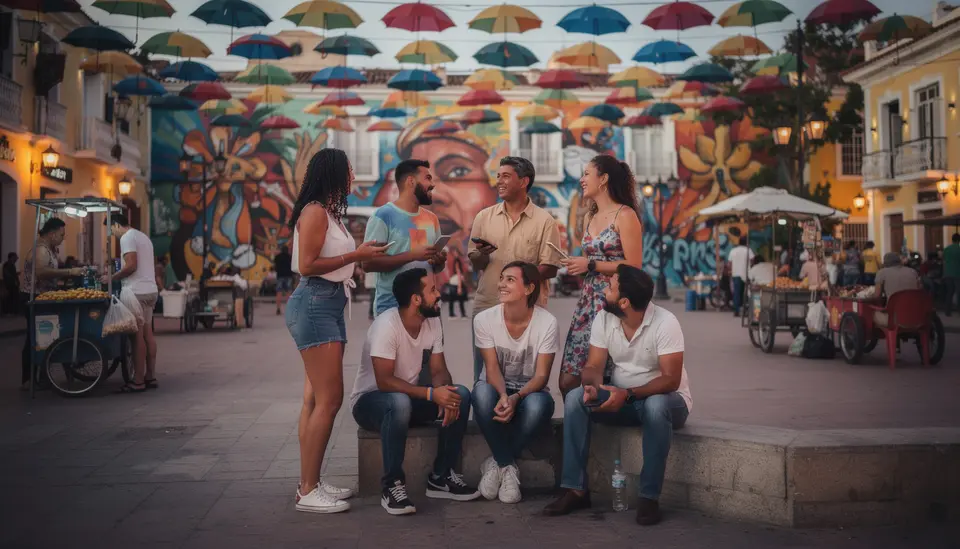
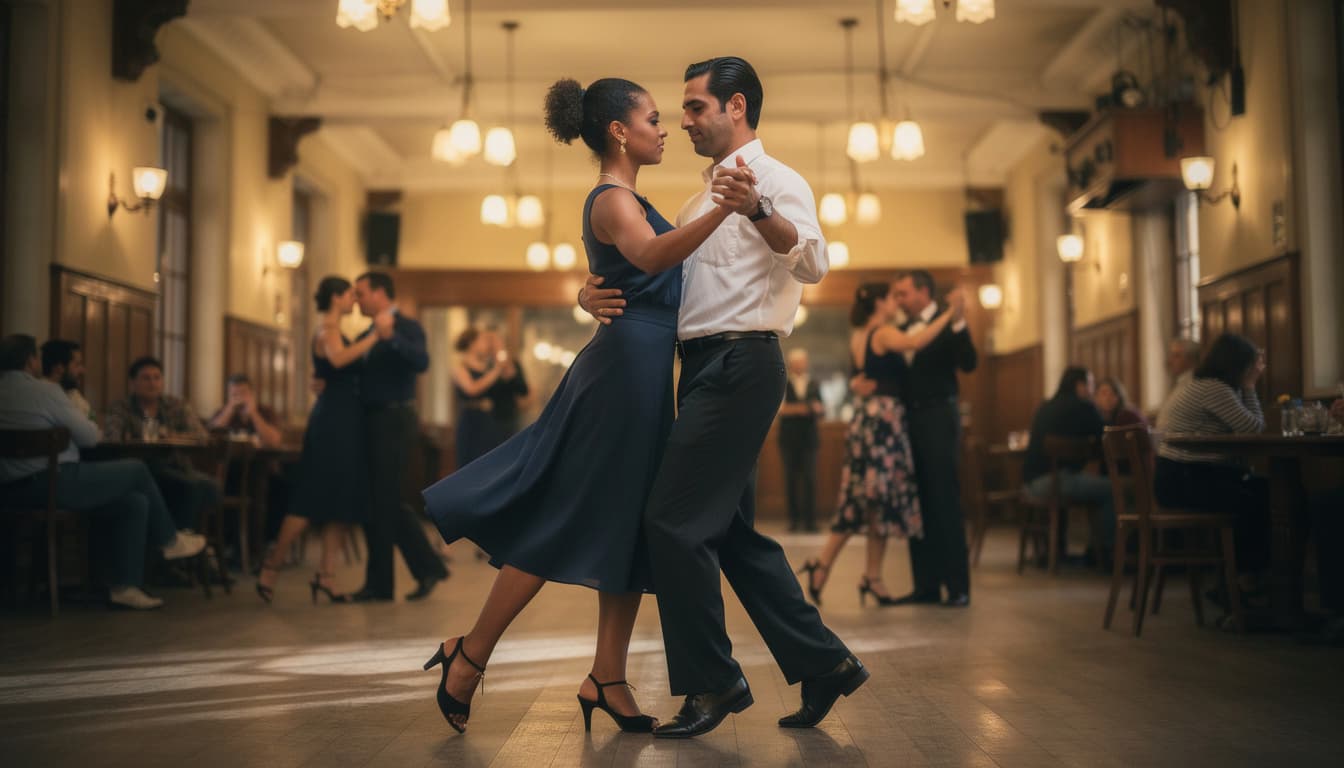
In the evening, Parque Lleras, in the El Poblado neighborhood, is the heart of Medellín's nightlife and social scene[2]. On the music front, the city hosts the Festival Medellín Vive la Música, the International Tango Festival and Altavoz, recognized by UNESCO as one of the most important Latin American projects for youth empowerment[1].
In Manrique, Carrera 45 can be walked in three or four hours, passing the Macromural Constelaciones (more than 500 facades painted by local artists and collectives), the Casa Gardeliana, where a milonga open to everyone takes place the last Friday of every month, and the Mirador El Encanto, one of the best viewpoints over the valley[7].
Planning Your Visit
Among international visitors, the most common stay lasts four to five nights[7]. To choose where to stay:
- El Poblado has the largest hotel offering in Medellín, with cafés, designer boutiques and restaurants by day, and terraces and Parque Lleras by night[7].
- Laureles is a flat, family-friendly residential neighborhood centered on Carrera 70 and its street of bars and restaurants, with a more local character[6].
- The Centro keeps the city's history within a few blocks, around Plaza Botero; the metro links it to El Poblado in under ten minutes[7].
Two day trips can be made from Medellín. Guatapé, a very colorful town, overlooks El Peñol, a rock with more than 740 steps you can climb for a view of the dam[3]. Santa Fe de Antioquia, about an hour and a half away, offers colonial houses, the Puente de Occidente, cobblestone streets and a warm climate[3].
To get here, the city has two airports: José María Córdova, international, 30 kilometers away, and Olaya Herrera, for regional and domestic flights[3]. From José María Córdova, a shared shuttle serves the city for about COP 14,000; official taxis have a fixed-rate counter (around COP 90,000 to El Poblado), and ride-hailing apps pick up passengers in the parking area, not at arrivals[6].
At the table, try the bandeja paisa, Antioquia's most traditional dish, along with arepas, sancocho, empanadas and Antioquia coffee[3].
Pitfalls, Scams and Things to Watch For
France Diplomatie has noted for several months a deterioration in security conditions in Medellín, with a sharp increase in scopolamine attacks, sometimes fatal[9]. The drug causes a “wake-up” several dozen hours later, with no memory of what happened; at too high a dose, it can be fatal[9].
- Never take your eyes off your drink, especially in party venues or at home after meeting someone through a dating app: attackers may wait several hours before drugging their victim to win their trust[9].
- Avoid walking after dark (7 pm) and in the neighborhoods on the hillsides of the city[5].
- Do not hail a taxi on the street, due to the risk of assault, theft, or express kidnapping; prefer taxis booked through an app, which are traceable (Uber, Cabify, Taxis Libres)[9].
- Assaults and thefts are frequent in urban centers, including during the day: do not display signs of wealth and leave your valuables in a secure place[9]. Cell phone thefts are extremely common, and using your phone on the street is strongly discouraged[9].
- Fake police officers have been reported, claiming to check identity papers and currency; if you are stopped on the street, ask to be escorted to the nearest police station or to a public place, such as your hotel[9].
- Avoid the city center at night, except near the Alliance française and Parque San Antonio[9]. At the Metrocables of Santo Domingo and San Javier, stay in the area around the station and the library[9].
Going Further
This article gives you the key points for planning a first trip. To go further, Guatapé and El Peñol, Santa Fe de Antioquia, or the coffee route each deserve a day or more, to be planned separately.
Going Further
- Colombia: The Essentials, From the Caribbean to the Amazon
- Guatapé and El Peñol: A Colorful Day Trip from Medellín
- Cocora Valley and Salento: Giant Palms and Fincas, at the Heart of Colombian Coffee
- Manizales and the Coffee Route: Fincas, Volcano, and Feria in the Heart of the Eje Cafetero
Sources
- 1.^ abunesco.org — Medellín - Creative Cities Network: “Medellín has been recognized for the immense efforts made to achieve a regeneration driven by culture, to foster social progress based on culture, education, and innovation in order to overcome the period of instability that affected the country until the 1990s.”; “Medellín hosts a large number of musical events, including the Medellín Vive la Música Festival, the International Tango Festival, and Altavoz, which UNESCO has recognized as one of the most important Latin American projects for youth empowerment.” https://www.unesco.org/fr/creative-cities/medellin (accessed November 9, 2026)
- 2.^ abcdefgcolombia.travel — Medellín: City of Eternal Spring | Colombia Travel: “Medellín offers a mix of cultural, historical, and outdoor activities that make it one of the most exciting destinations in Colombia.”; “Explore Comuna 13 and discover its street art, its urban transformation, and its guided tours that tell its story.”; “To use it, you need a Cívica card, which can be purchased at metro stations and also works across the city's integrated transport system.” https://colombia.travel/en/medellin (accessed November 9, 2026)
- 3.^ abcdefghijmedellin.travel — Recommendations for Visiting Medellín - Medellín.Travel | Official Guide - What to Do in Medellín: “The city has a great deal to offer culturally, naturally, gastronomically, and in terms of nightlife.”; “To make the most of everything Medellín and its surroundings have to offer, ideally spend at least 4 days there.”; “In addition to the metro, the city has buses, trams, Metrocables, and taxis, which offer many options for getting around, even though traffic can be somewhat chaotic at certain hours.” https://www.medellin.travel/recommendations-to-visit-medellin/?lang=en (accessed November 9, 2026)
Show 6 more sourcesShow less
- 4.^ abcdefgroutard.com — Visiting Medellín: Plan Your Stay and Trip to Medellín | Routard.com: “We recommend allowing at least three to four days to see the main sites of the city and soak up its atmosphere, and adding one or two days to explore the surroundings such as Guatapé.”; “Once one of the most dangerous areas in the country, this neighborhood is today an example of social transformation through urban art. Murals and street performances tell its story and celebrate life.”; “Open-air escalators make it easier to access its steep alleys, offering immersion in a vibrant atmosphere.” https://www.routard.com/fr/guide/ameriques/colombie/region-de-medellin/medellin (accessed November 9, 2026)
- 5.^ abcthingstodoinmedellin.com — Is Medellín Dangerous? Neighborhoods to Avoid (2026): “Always book your visit with a licensed local guide, and never go out after 5 pm or outside the marked circuit.” ; “La Candelaria (downtown) — The historic center comes alive and is interesting by day (Plaza Botero, Museo de Antioquia), but it becomes dangerous from 6:30 pm.” ; “It advises against walking once night falls (7:00 pm) and recommends avoiding the communes on the city's hillsides.” https://thingstodoinmedellin.com/fr/medellin-est-elle-dangereuse-guide-de-sec/ (accessed November 9, 2026)
- 6.^ abcdexplorinder.com — Medellín in 5 Days: Day-by-Day Itinerary from €155: “Use the integrated Metroplus bus system with your Cívica card to get around faster along the major avenues; it isn't just the train and the cable cars.” ; “Visit Parque Arví on a weekday. On weekends it is overrun with local families, whereas on weekdays the nature experience is peaceful and free of crowds.” ; “A relaxed, residential neighborhood with a strong local character, centered on the circular Carrera 70 and its famous street of bars and restaurants.” https://explorinder.com/fr/itineraries/5-days-in-medellin (accessed November 9, 2026)
- 7.^ abcdefghiexpreso.info — Medellín 2027: Experiences to Discover the City All Year Round | Expreso: “On Plaza Botero, 23 monumental sculptures by the master await, free of charge, facing the Museo de Antioquia and the Palacio de la Cultura Rafael Uribe Uribe.” ; “In Santa Elena, less than 30 minutes from downtown, more than 15 families open their fincas in veredas such as Barro Blanco, Piedra Gorda and Mazo to show how flowers are grown and a silleta is composed.” ; “Tours last two to four hours, and bookings are made directly with the families, in August for the Feria de las Flores, or the rest of the year.” https://www.expreso.info/noticias/internacional/115357_medellin_2027_experiencias_para_descubrir_la_ciudad_durante_todo_el (accessed November 9, 2026)
- 8.^ abcdefmedellin.travel — Vacation plans in Medellín - Medellín.Travel | Guía Oficial - Qué Hacer en Medellín: “The Medellín Botanical Garden stands out because, across its 13 hectares, there are more than 2,000 trees and unmatched biodiversity for an urban area, making it one of the city's green lungs.” ; “Medellín offers a large tourist lineup all year, but occupancy rises most during holiday periods: mid-year, with the traditional Feria de las Flores, and at year's end, when the city lights up its Alumbrado de Navidad, one of the most famous in the world; both events are considered essential on Medellín's cultural and tourism calendar.” ; “At the Universidad metro station, in the heart of the city's north zone, there are several tourist sites: Parque de los Deseos, the Botanical Garden, Parque Explora, the Medellín Planetarium, among others.” https://www.medellin.travel/vacation-plans-in-medellin/?lang=en (accessed November 9, 2026)
- 9.^ abcdefghidiplomatie.gouv.fr — Colombia - Safety | France Diplomatie: “For several months now, security conditions in Medellín have been deteriorating, with a sharp rise in scopolamine attacks, some of them fatal.” ; “Consciousness returns several dozen hours later, and the victim remembers nothing at all. If the dose is too high, the drug can be fatal.” ; “You should also never take your eyes off your drink, particularly at party venues or at home, especially after meeting someone through dating apps. People you meet may wait several hours before drugging their victim in order to build rapport and gain their trust.” https://www.diplomatie.gouv.fr/fr/information-par-pays/colombie/conseils-aux-voyageurs-securite (accessed November 9, 2026)