At the far south of Colombia, Leticia opens onto an immense forest, Indigenous communities, pink dolphins and a national park. This article helps you choose your route: what you can experience there, how to get there without a road, how many days to plan and what to prepare before you leave.
Leticia, gateway to the Colombian Amazon
Leticia is the capital of the Amazonas department, at the far south of Colombia, in the heart of the Amazon rainforest[1]. It is a unique border town: it meets Tabatinga, in Brazil, so closely that they form almost a single built-up area, and it lies very close to Santa Rosa, in Peru, across the river[1]. This is the famous "triple border" between Colombia, Brazil and Peru[1].
The climate is equatorial, hot and humid all year round[1]. Leticia serves as the base for the whole region: you will find Alfredo Vásquez Cobo International Airport (LET), hotels, guesthouses and lodges, restaurants, travel agencies, a hospital and ATMs[1]. Boat trips on the Amazon to Puerto Nariño, nature reserves, Indigenous communities and forest lodges all depart from Leticia[1].
Another effect of the triple border: the Colombian peso, the Brazilian real and the Peruvian sol all circulate, and it is easy to cross over to Tabatinga[1].
The jungle, the river and the communities
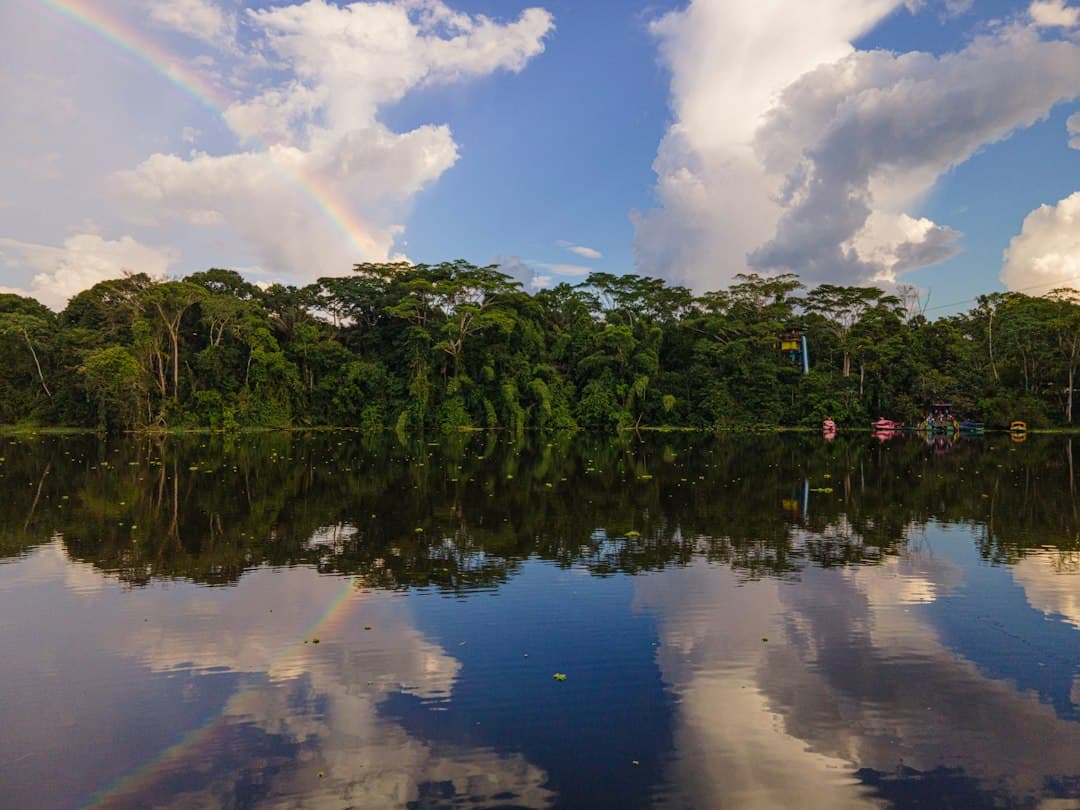
To begin, head to the Leticia tourist dock: this is where the imaginary line dividing the Amazon among three countries runs, and where boats depart for natural sites and several Indigenous communities[2].
Among the nearby villages, Puerto Nariño is still home to Indigenous ethnic groups[3]. Guided visits there showcase the green landscapes of the Amazon, the daily life of permanent residents and the village's architecture[3]. The Ministry of Commerce, Industry and Tourism has certified the village as Colombia's first sustainable destination, notably for its good management of water and energy and for the protection of wildlife and plant life[2].
In the evening, some itineraries include a night outing: after dinner, you pull on rubber boots, grab your headlamp and explore the jungle at night around Puerto Nariño[3].
Excursions also offer respectful visits to the Ticuna communities and others[1]. On site, ask permission before photographing anyone, and request prior authorization from the National Parks authority to fly a drone[4]. In Amacayacu park, a walk through the community of Mocagua lets you discover the village's history through the murals painted on the house facades[4].
Pink dolphins and the Tarapoto lakes
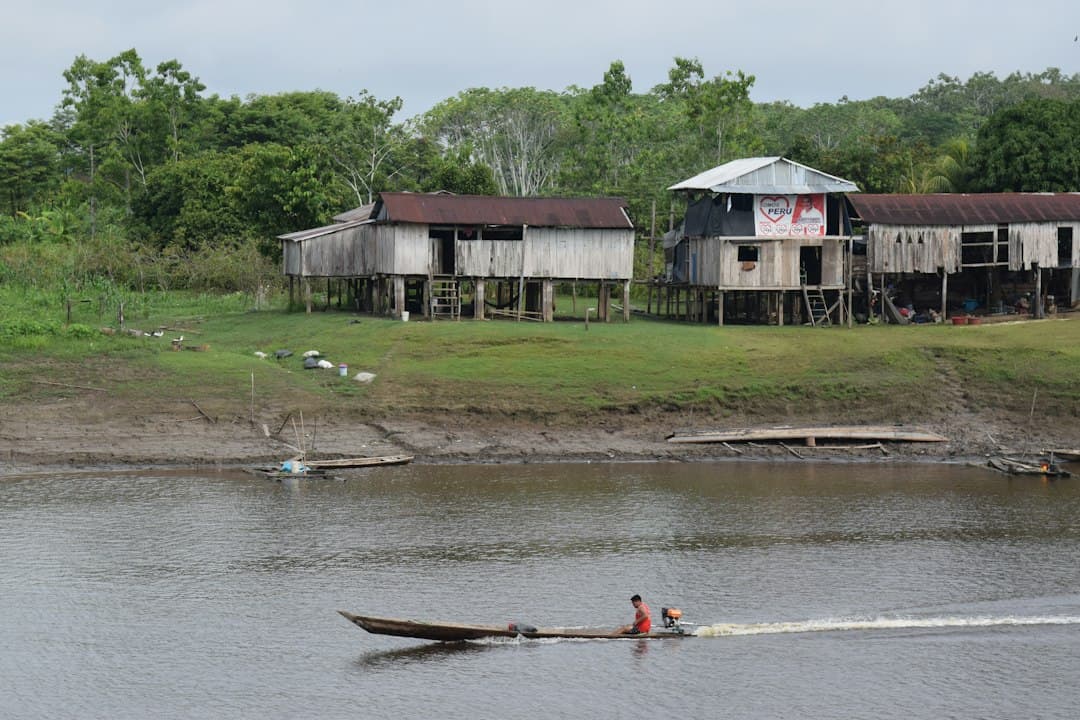
The pink river dolphin is one of the region's emblematic species[4]. The Tarapoto lakes, where you can spot the pink river dolphins, are one of the stops on a four- to six-day stay[1].
The region is considered one of the best in the world for marveling at wildlife and plant life[2]. Depending on the itinerary, the program may also include wildlife watching, forest walks or nights in a jungle lodge[1].
Amacayacu National Natural Park
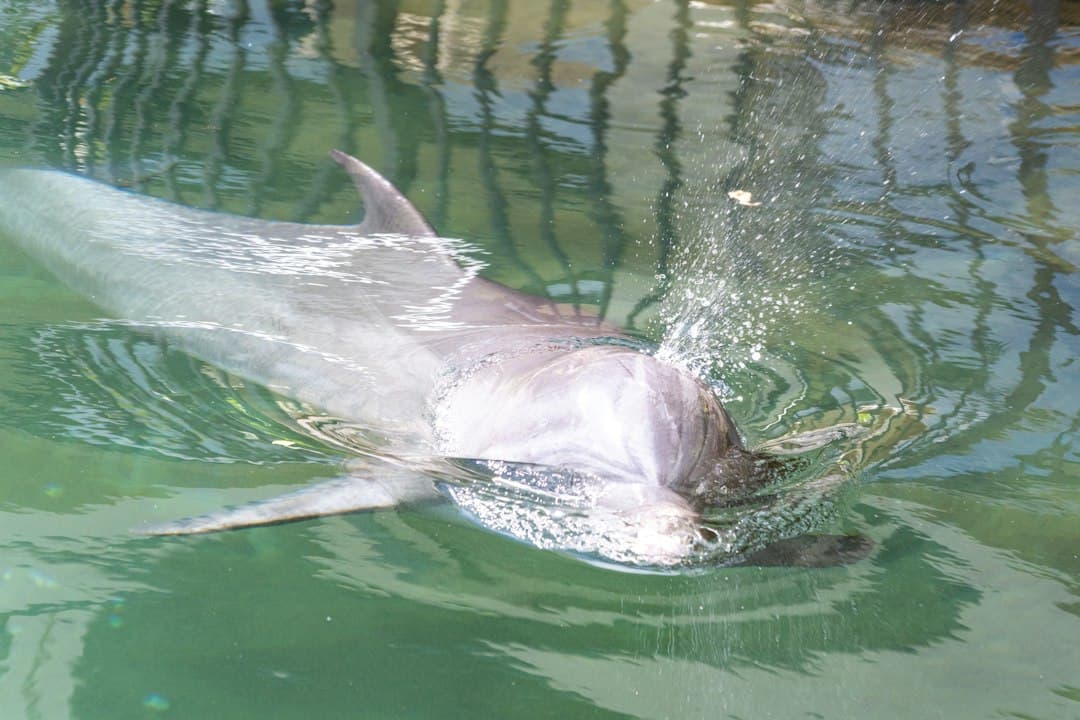
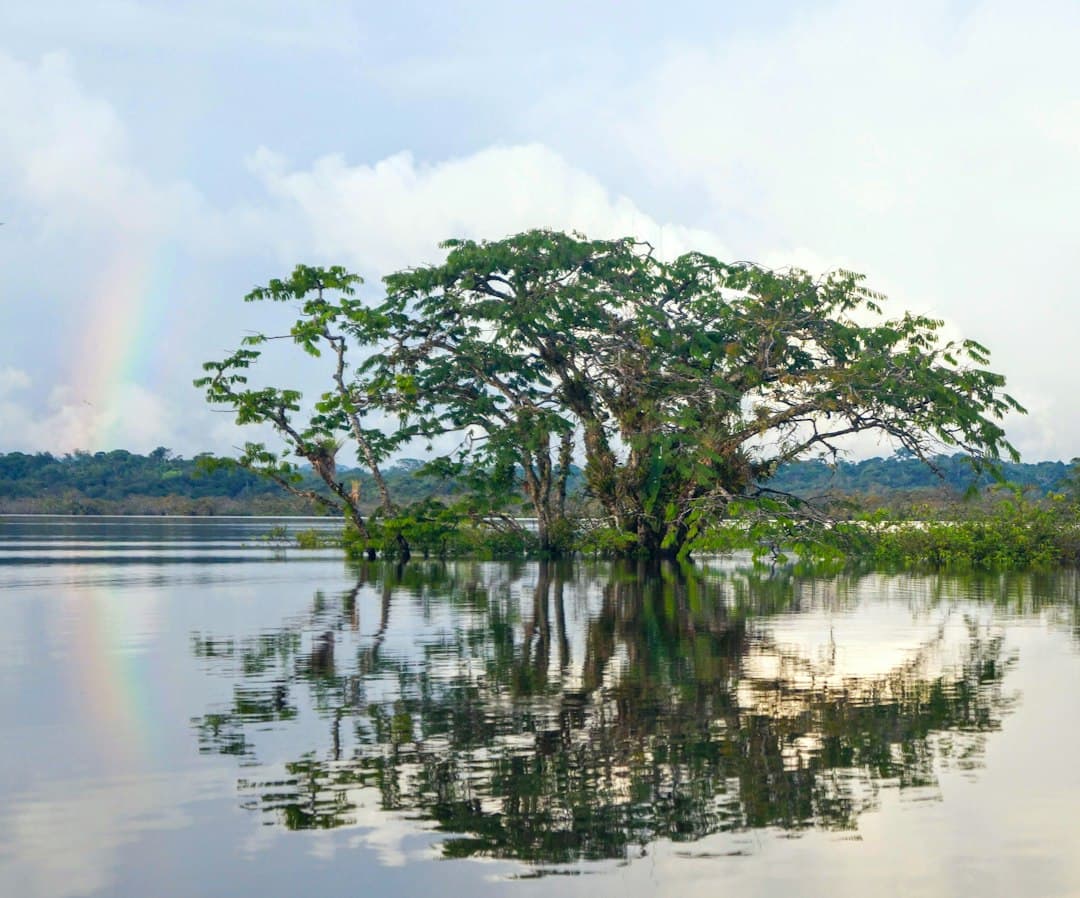
Created in 1975 and expanded in 1987 to 267,241 hectares, Amacayacu National Park protects the biodiversity of the Amazonian Trapeze[4]. This tropical rainforest is home to more than 5,000 plant species, 468 bird species and 150 mammal species, as well as the country's greatest diversity of primates and reptiles[4]. Among its flagship species: the pied tamarin (tití leoncito), the pink river dolphin and the giant water lily[4].
The park contains tropical rainforest, flooded forest, upland forest, swamps and river networks that are representative of the Amazon jungle[4]. It is also the only area in Colombia's park system that preserves the flooded forest of the Amazon River[5].
Activities include short hikes, interpretive trails, treks of more than 8 hours, forest camping, bird, primate and dolphin watching, night walks, canoeing or kayaking, artisanal fishing and swimming in the river[4]. Ecotourism services are provided by the communities of San Martín de Amacayacu and Mocagua[4].
How to get there
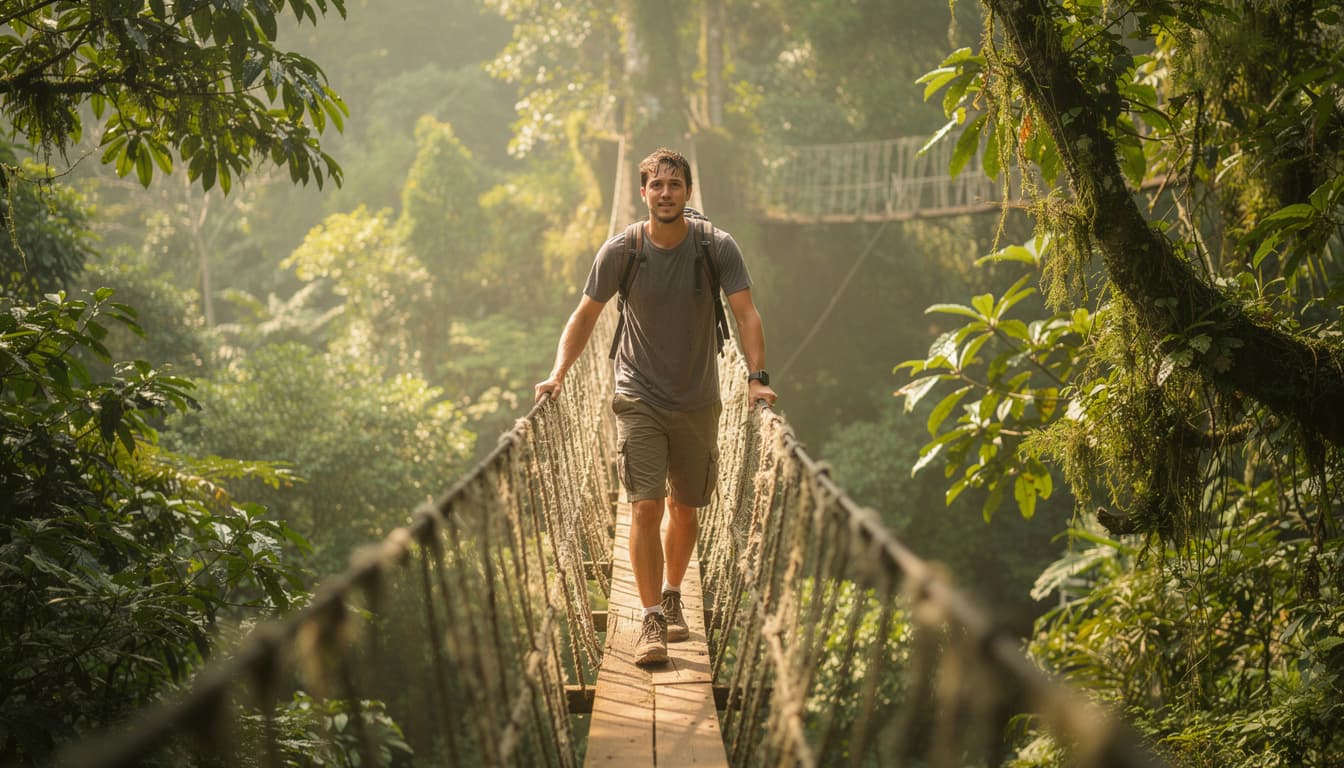
No road connects Leticia to the rest of Colombia: you practically arrive by plane or by river[1]. There are two routes:
- By plane from Bogotá: about a 2-hour flight with Avianca or Latam[4]. The entry tax in Leticia is paid at the city's airport[4].
- By river from Manaus (Brazil) or Iquitos (Peru): by fast boat (about 14 hours) or slow boat (about 3 days)[4].
From Leticia to the park, there are two fast-boat options on the Amazon: to Mocagua (57.5 km, about 1 hour 30 minutes) or to the mouth of the Amacayacu River (about 1 hour 40 minutes), followed by 30 minutes by private boat to the community of San Martín de Amacayacu[4]. Book or pay for your boat at the public river transport offices on Leticia's malecón: there are three departures per day[4].
When to go and how much time to plan
The average temperature hovers around 26.4 °C, and average annual relative humidity exceeds 90%[4]. Rainfall is lowest in July and August, rises in October, dips slightly in December and then increases markedly until April[4]. July has an average of 17 rainy days, compared with 22 in April, the rainiest month[4].
The river also shapes the landscape: the region has two very distinct seasons, high water and low water, which determine all natural and human activity[5]. In September, the banks are bare, and the water level can rise by as much as 10 meters around May[5]. To appreciate the scale of this ecosystem, you should visit at least twice, during both periods[5]. Travel time to Mocagua varies from July to November because of low water[4].
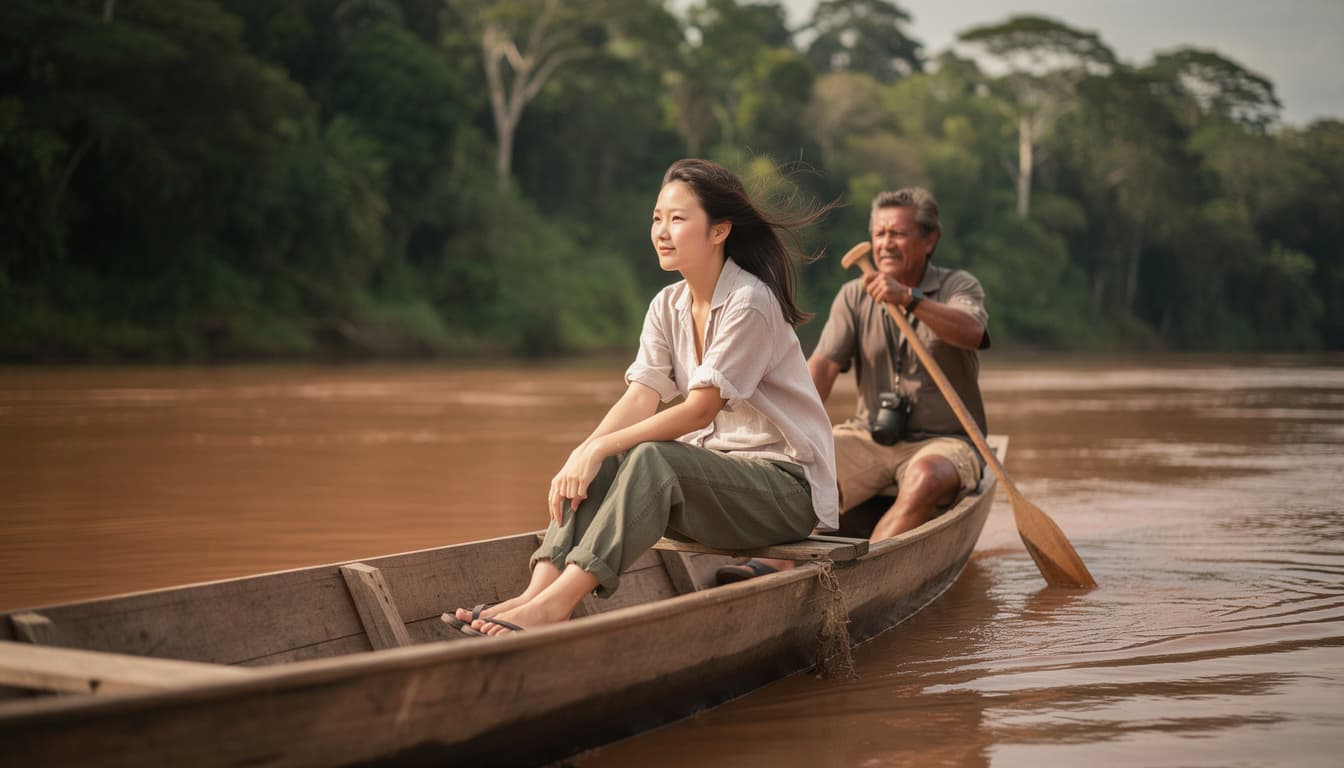
As for duration: three days cover the essentials, with Leticia (its Santander Park and the spectacle of thousands of parrots at dusk), a crossing to Tabatinga, and a first excursion into the forest or to an island in the river[1]. Four to six days allow you to add a trip up the Amazon to Puerto Nariño, the Tarapoto lakes, the Marasha or Tanimboca reserves, visits to communities and, for the more adventurous, nights in a lodge deep in the jungle[1].
If you book an organized tour, be aware that locations, accommodations and the order of activities are indicative and may change depending on river levels or weather[3]. For a 4-day tour booked with Nomades, these changes do not entitle you to a partial refund[3].
Before you go: entry, health and money
With a French passport, you can enter Colombia without a visa for a stay of up to 90 days[6]. The passport must be in good condition, valid for the entire stay, and have at least two blank pages[7]. Proof of exit from the country within 90 days is mandatory: a return ticket to France or a ticket to a third country[7]. The immigration officer may grant a shorter period, for example 30 or 60 days[7].
Travelers arriving by air or sea must complete the Check-Mig immigration form before entering or leaving the country[6].
On the health side, Colombia's National Parks warn that you should get vaccinated against yellow fever[5]. Official Colombian tourism specifies that the vaccine must be received at least 15 days before your trip[2].
For the park, the National Parks also recommend taking out accident insurance, directly through their partner agencies and insurers[4].
Traveling Responsibly
- Avoid single-use plastics, batteries, and disposable items, and bring recyclable waste to Leticia so it can be properly processed[4].
- Book through the ecotourism services of the communities of San Martín de Amacayacu and Mocagua[4].
- For handicrafts, you'll find bracelets, necklaces, bags, baskets, pottery, and wood carvings made within the communities[4]. An essential oils and body care initiative built on Ticuna ethnobotanical knowledge is also worth seeking out[4].
Things to Watch Out For
France Diplomatie states that Leticia is only accessible by air[8], while other sources also mention access by river: check transport conditions with your agency or carrier. Before you leave, review the travel advice for your country.
- Don't hail taxis on the street: French authorities report a risk of assault, theft, or kidnapping, including express kidnappings, where fake drivers force passengers to withdraw cash from several ATMs[8]. Prefer taxis booked through an app or through your accommodation[8].
- Numerous cases of scopolamine attacks, a drug administered without the victim's knowledge, have been reported to the French Embassy in Colombia[9]. It is advisable to travel by day and by night using secure transportation[9].
Pre-Departure Checklist
- Passport in good condition, with two blank pages, and an exit ticket.
- Check-Mig form completed before entry or exit.
- Yellow fever vaccine, received at least 15 days before departure.
- Accident insurance for the park, purchased through an agency or partner insurer.
- Allow some flexibility if your itinerary depends on river levels, and plan for three to six days in total depending on what you want to see.
This article covers the essentials for choosing and preparing an Amazon getaway. To truly plan your trip, the next step is to dig into the details of itineraries, accommodations, and a line-by-line budget.
Keep Reading
- Colombia: The Highlights, from the Caribbean to the Amazon
- Caño Cristales: When to Go, How to Get There, and How to Visit
- Nuquí, Colombia's Pacific Coast: Whales, Jungle, and Wild Beaches
- The Colombian Llanos: Plains, Wildlife, and Llanera Culture
Sources
- 1.^ abcdefghijklmviajacongus.com — Things to Do in Leticia, Colombia: Sights & How to Get There: "Leticia is the capital of the department of Amazonas, at the very south of Colombia, in the heart of the Amazon rainforest." "It is Colombia's gateway to the Amazon and a unique border city: it touches Tabatinga (Brazil), to the point of forming almost a single built-up area, and lies very close to Santa Rosa (Peru), on the other side of the Amazon River." "It is the famous triple border between Colombia, Brazil, and Peru." https://viajacongus.com/en/colombia/leticia/ (accessed November 9, 2026)
- 2.^ abcdcolombia.travel — Leticia, a wealth of nature and culture | Colombia Travel: "To begin, you can head to Leticia's tourist dock, where the imaginary line dividing the Amazon among three countries (Colombia, Brazil, and Peru) passes, and where you'll find boats that will take you to various places to enjoy nature and have contact with diverse Indigenous communities." "One of the neighboring municipalities, Puerto Nariño, was certified by the country's Ministry of Commerce, Industry and Tourism as Colombia's first sustainable destination, thanks in particular to the responsible use of water and energy resources and the protection of fauna and flora." "It's no coincidence that this region is considered one of the best in the world for marveling at animal and plant species." https://colombia.travel/en/leticia (accessed November 9, 2026)
- 3.^ abcdenomades.com — Amazonia in Leticia (4 days): Tours, Prices & Schedules - Nomades: “You will reach Puerto Nariño, a place still inhabited by indigenous ethnic groups, where you will have guided visits to various tourist attractions, to see the green landscapes of the Amazon, the life of its permanent inhabitants and the architecture of the place.” ; “After dinner at the lodging, you will put on your rubber boots and take your headlamp to explore the nighttime jungle of Puerto Nariño.” ; “Important: the places, lodgings and order of activities shown in the itinerary are indicative only and may change depending on operational conditions, such as the river level, the weather or other circumstances.” https://www.nomades.com/en/leticia/amazon-id1328 (accessed November 9, 2026)
Show 6 more sourcesShow less
- 4.^ abcdefghijklmnopqrstuvwparquesnacionales.gov.co — Parque Nacional Natural Amacayacu • Parques Nacionales Naturales de Colombia: “Be careful and ask permission from community members before taking a photo. To use a drone, you must request prior authorization from the Parques Nacionales Naturales.” ; “In Mocagua, you discover the community’s history through murals on the facades of the houses.” ; “Flagship species include the pied tamarin, the pink river dolphin and the giant water lily.” https://www.parquesnacionales.gov.co/nuestros-parques/pnn-amacayacu/ (accessed November 9, 2026)
- 5.^ abcdeold.parquesnacionales.gov.co — Amacayacu National Natural Park | Parques Nacionales Naturales de Colombia: “Located in what is known as the Amazon trapeze, Amacayacu National Natural Park is the first protected area created in the Colombian Amazon region and the only one in the park system that preserves the flooded forest of the Amazon River.” ; “The Amazon region has two very distinct seasons, high water and low water, which shape all natural and human activity.” ; “In September (dry season), the riverbanks are bare, and as the rain increases, the river rises by as much as 10 meters (in May).” https://old.parquesnacionales.gov.co/portal/en/ecotourism/amazon-region/amacayacu-national-natural-park-2/ (accessed November 9, 2026)
- 6.^ abdiplomatie.gouv.fr — Colombia - Entry / Stay | France Diplomatie: “Holders of a French passport may enter Colombia without a visa and stay for a maximum of 90 days, upon presentation of a round-trip ticket.” ; “International travelers arriving in Colombia by air or sea must complete the Check-Mig immigration form before entering or leaving the country.” https://www.diplomatie.gouv.fr/fr/information-par-pays/colombie/conseils-aux-voyageurs-entree-sejour (accessed November 9, 2026)
- 7.^ abcco.diplomatie.gouv.fr — Conditions for entry and stay in Colombia | France in Colombia: “a) Present a passport in good condition, valid for the entire stay. The passport must have at least two blank pages.” ; “b) Present proof of exit from the country within 90 days (a return ticket to France or a ticket to a third country is mandatory).” ; “However, the immigration officer at the border entry point may grant a shorter stay (30 or 60 days, for example).” https://co.diplomatie.gouv.fr/fr/vivre-venir/conditions-dentree-et-de-sejour-en-colombie (accessed November 9, 2026)
- 8.^ abcdiplomatie.gouv.fr — Colombia - Security | France Diplomatie: “The city of Leticia, in the Colombian Amazon, is accessible only by air.” ; “It is also advised not to hail taxis on the street due to the risk of assault, theft or kidnapping, particularly express kidnapping, in which attackers (including a fake taxi driver) force passengers to withdraw money from several ATMs.” ; “Therefore, prefer taxis ordered through apps, which are traceable (Uber, Cabify, Taxis Libres, etc.).” https://www.diplomatie.gouv.fr/fr/information-par-pays/colombie/conseils-aux-voyageurs-securite? (accessed November 9, 2026)
- 9.^ abdiplomatie.gouv.fr — Colombia - Travel advice - Latest updates and alerts - Page 1 of 1 - France Diplomatie | France Diplomatie: “Many cases of scopolamine attacks (the “zombie drug” or “rapist’s drug”) have been reported to the French Embassy in Colombia.” ; “It is advised to travel by day and by night using a secure means of transport.” https://www.diplomatie.gouv.fr/fr/information-par-pays/colombie/dernieres-minutes-et-alertes (accessed November 9, 2026)