In the United States, there is no national speed limit or single rule about cameras or radar detectors—everything depends on the state where you're driving. This article shows you what varies, the pitfalls waiting for a foreign driver (especially in a rental car), and where to check the rules before a trip.
No National Rule: Each State Sets Its Own
The United States has no national speed limit[1]. Each state sets its own, so the legal maximum changes as soon as you cross a state border[1]. The same interstate highway can be limited to 65 mph in one state and 80 mph in the next, with only the sign to tell you[1]. All signs are in miles per hour[1].
In cities and residential areas, limits are set locally and generally fall between 25 and 35 mph[1]. School zones go lower during the hours shown on signs, and enforcement is strict[1]. There is no national default value to fall back on—the sign is what counts[1].
Speed limits, tolerances, fine schedules, and even the definition of reckless driving change from state to state[1]. Driving across the country takes you through a dozen different enforcement regimes, and the only consistent reference is the last sign you passed[1]. Depending on the state, police presence is dense, with marked or unmarked cars, or handled by county sheriffs, with long stretches with no enforcement at all[1]. What you observed in one state doesn't carry over to the next[1].
Speed Cameras: Allowed Here, Banned There
Many states have passed laws that allow, restrict, or ban speed cameras or red-light cameras, at the state or local level[2]. The GHSA lists 19 states and the District of Columbia whose laws permit speed cameras[2]. Some localities operate speed or red-light cameras even when the state neither permits nor explicitly bans them[2]. According to the GHSA, the IIHS maintains a list of all municipalities operating these devices[2].
Usage conditions vary widely. The IIHS table shows, for example, states where cameras are not allowed on state roads, or not within 600 feet of a posted speed limit change, except near a school crossing[3]. Elsewhere, a police officer must be present and issue the ticket at the time of the violation; in highway construction zones, photos of speeding vehicles are sent to an officer stationed further ahead, who then issues a ticket or warning[3].
Penalties are generally lighter than a traditional traffic stop[2]. The GHSA gives examples: the fine may be lower, points may not be deducted, or the ticket may not go on the driver's record[2]. In one of the states listed by the IIHS, the fine is treated as a civil penalty, not reported to the driver's record or used by insurance[3].
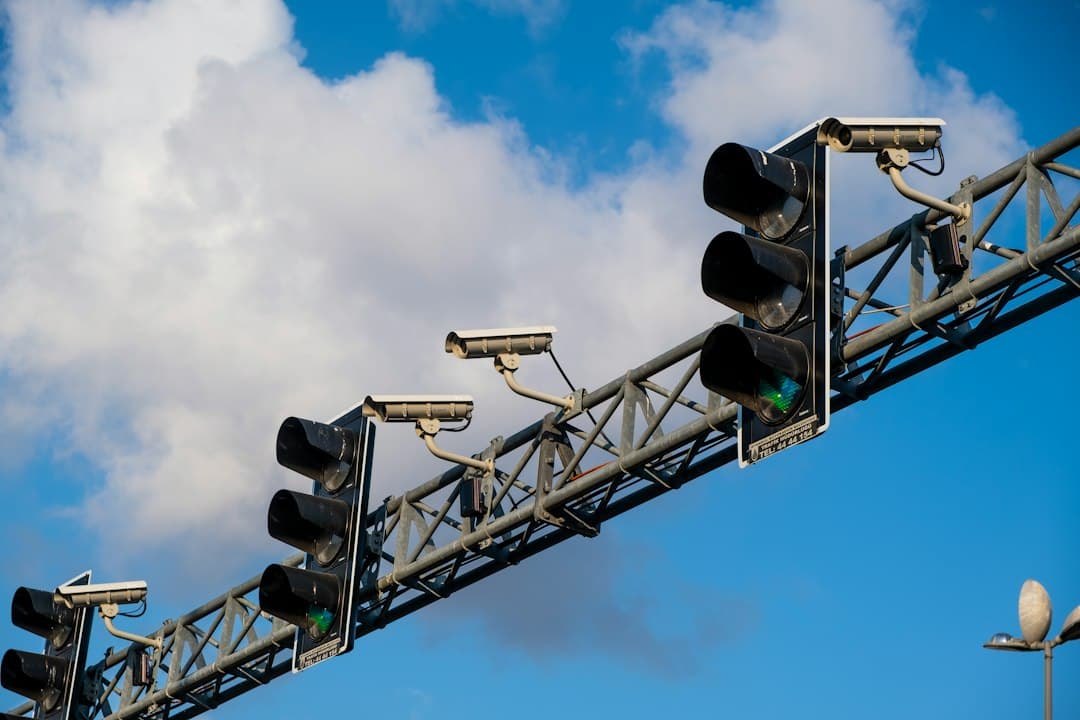
Radar Detectors: What's Allowed and What's Banned
Radar detectors are legal in private vehicles in most states[1]. Virginia and the District of Columbia ban them[4], and they are banned in commercial vehicles everywhere in the United States[1].
Virginia law goes further: it is illegal to operate a vehicle equipped with a device, passive or active, designed to detect radar or laser speed enforcement, or to interfere with its measurement[5]. It is also illegal to use such a device on the road, and to sell one in the state[5].
A rental car does not come with a detector[1]. If you own one, don't bring it into a state where it's banned.

Recent Updates: Long Beach (California) and Florida
We couldn't confirm the exact content of these two texts, so we're not detailing them here. Before driving in Long Beach or Florida, check the state law or your state's DMV page to see what applies to your vehicle.
Pitfalls, Scams, and Things to Watch Out For
A Fine Can Follow You After Your Trip
Most states share conviction data through interstate agreements: a ticket you get during a road trip can show up on your home record and affect your insurance premium[1]. For a foreign visitor, the rental company acts as the collection channel: the fine, plus handling fees, is charged to the card you left as a deposit[1].
Don't Generalize From One State to Another
Cameras are common in some jurisdictions and frankly banned in others[1]. What works in one state may not work in its neighbor: don't think "like in Europe" and don't draw conclusions from one state to another[1].
States also don't handle camera fines from elsewhere the same way. In one of the states in the IIHS table, the law prohibits the public safety department and vehicle services from providing other states with information that would allow them to impose or collect a civil fine from a camera-detected violation[3]. This is an example of how diverse the rules are, not a way to avoid paying: your rental company will bill you anyway.
Construction Zones, School Zones, and Reckless Driving
Construction zones and school zones commonly double the fine[1]. The definition of reckless driving varies by state: significant speeding can, depending on the case, be penalized more heavily than a simple ticket; check the specific state[1]. In some states, construction site cameras only ticket when workers are present[3].
Foreign License and International Driving Permit
Requirements vary by state: most accept a valid foreign license for a short stay, and several also require an international driving permit[1]. Check the states on your route rather than the country in general[1].
Where to Check: Official Sources to Consult
- The state traffic code, plus the DMV, Highway Patrol, or State Police page: they set the local rules.
- The IIHS table on camera laws, with notes by state[3], and its list of municipalities using cameras, updated regularly[2].
- The state highway safety office (State Highway Safety Office): GHSA directs you there for any additional information[2].
- For a trip crossing multiple states, the rules for each one before you leave: for licenses, it's the state of each segment that matters[1].
- Your rental agreement: ask how it handles fines and what management fees it adds[1].
Sources
- 1.^ abcdefghijklmnopqrstuvwxtyremap.com — US Interstate Speed Limits 2026: No National Number | TyreMap: "The United States has no national speed limit." "Speed limits, tolerances, fine schedules, the legality of radar detectors, and even the definition of reckless driving all change at state borders." "Each state sets its own, so the legal maximum on the road you're driving changes as soon as you cross a state line." https://tyremap.com/answers/speed-limit-united-states-motorway/ (accessed October 9, 2026)
- 2.^ abcdefghghsa.org — Speed & Red Light Cameras | Governors Highway Safety Association: "Many states have adopted legislation that authorizes, limits, or prohibits the use of speed or red light cameras, at the state or local level." "19 states and the District of Columbia have adopted laws that allow the use of speed cameras." "Some localities operate speed or red light cameras even though the state neither explicitly authorizes nor prohibits them." https://www.ghsa.org/state-laws-issues/speed-red-light-cameras (accessed October 9, 2026)
- 3.^ abcdefiihs.org — Safety Camera Laws: "not permitted on state roads; not within 600 feet of a posted speed limit change, except near a school crossing." "A police officer must be present and issue a citation at the time of the violation; on highway construction sites, photos of speeding vehicles are sent to an officer stationed downstream, who then issues a citation or warning." "Fine ($75 to $500) depending on speed excess; fines double in work zones; considered a civil penalty, not reported to the driver's record or used for insurance. https://www.iihs.org/research-areas/red-light-running/safety-camera-laws (accessed October 9, 2026)
Show 2 more sourcesShow less
- 4.^mit.edu — State Traffic and Speed Laws: "Radar detectors are illegal in vehicles in Virginia and the District of Columbia." https://www.mit.edu/~jfc/laws.html (accessed October 9, 2026)
- 5.^ abrecordinglaw.com — Are Radar Detectors Legal? State Laws Explained (2026) | Recording Law: "It is illegal to operate a vehicle on the roads of the Commonwealth equipped with a device or mechanism, passive or active, designed to detect, or intentionally interfere with or diminish, the measuring capabilities of any radar, laser, or other device used by law enforcement to measure vehicle speed." "It is illegal to use such a device on such a vehicle on the roads. It is illegal to sell such a device in the Commonwealth." https://www.recordinglaw.com/es/us-laws/radar-detector-laws/ (accessed October 9, 2026)