Dalarna, in the heart of Sweden, brings together in one region what the country has that is most recognizable: lakes, forests, folk craftsmanship, and artists' homes. This article helps you choose what to see, from the Falun mine to Lake Siljan, and where to taste Dalecarlian culture. You'll also learn how to get there and how to get around.
Dalarna, Sweden in Miniature
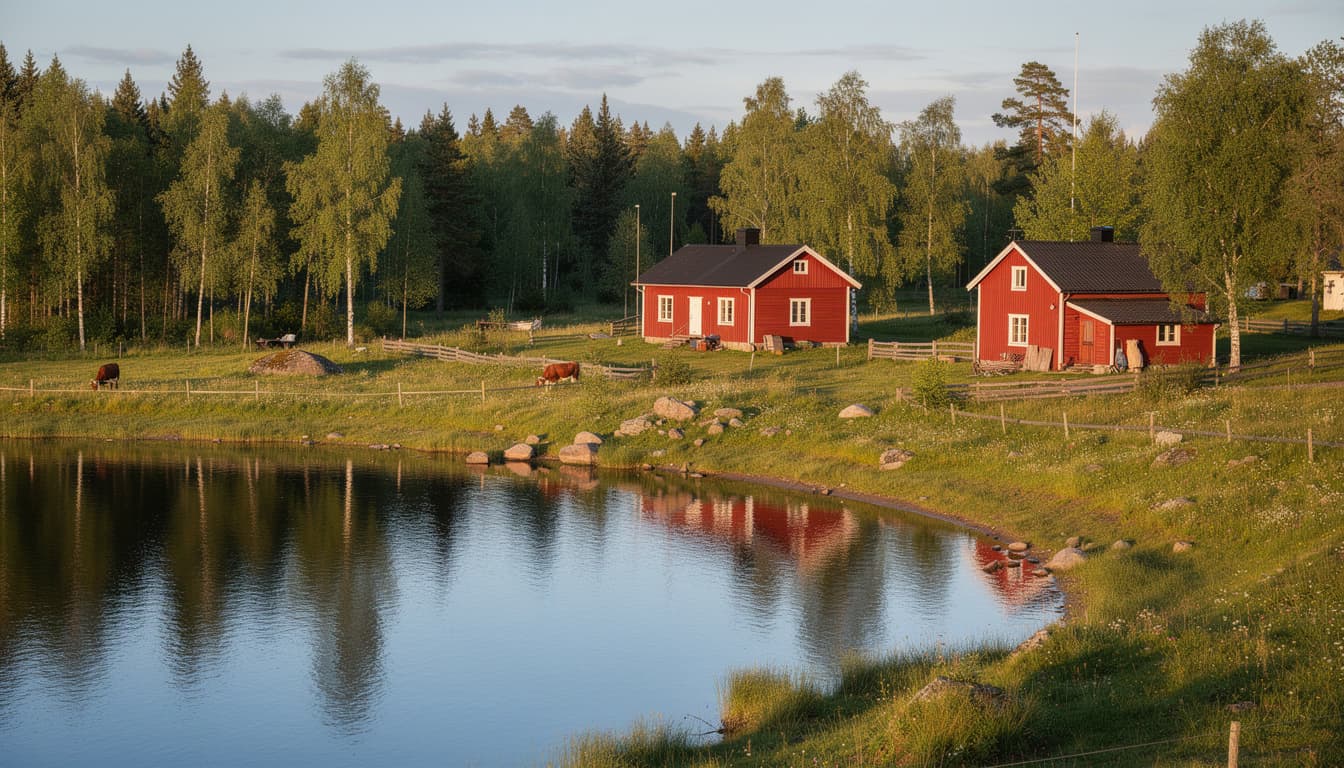
Dalarna sits in the heart of Sweden[1]. You'll find forests perfect for walking, large lakes, mountains, and flower-filled meadows; in winter, the landscape turns into terrain for skiing and skating[1]. This variety is why the region has been described as "Sweden in miniature"[1].
Two Swedish symbols come from here: the richly decorated dalahäst (Dala horse) and "Falu red" (Falu Rödfärg), the deep red hue that colors houses across the country[1].
Falun and Its Copper Mine: History and World Heritage
The Falun mine, listed by UNESCO, made the town a kind of superpower in the 17th century[1]. For a long time it was the world's largest copper producer and supplied the material for the famous red Swedish houses[2]. A guided tour takes you underground, through the history of the mining and its impressive shafts[2].
Among the stories told during the visit is that of Fet-Mats, a naturally mummified miner found in 1719, intact 42 years after his disappearance[1].
The site can be reached on foot from the city center through Elsborg, a historic neighborhood of wooden houses[1]. These houses were homes for miners and are painted in Falun red, made with the pigment from the mine[1]. King Gustav Vasa remains closely associated with Falun[1].
Falun also preserves a trace of social history: in 1850, the Falu Utminuteringsbolag company was founded there to oversee the sale of alcohol and channel the profits toward public welfare, an initiative that paved the way for what became Systembolaget[3].
For a first introduction to regional culture, the Dalarnas museum in Falun brings together the cultural heritage of the entire region[4]. It is recommended as a starting point for a stay in Dalarna[4].
Lake Siljan and Its Villages
Lake Siljan, Sweden's seventh-largest lake, is the most spectacular element of Dalecarlian nature[1]. It's ideal for swimming, fishing, and kayaking[1]. The Siljansleden trail goes all the way around it: it is very popular for hiking and, in some places, for mountain biking[1].
In Rättvik, the 628-meter-long Långbryggan footbridge is worth a visit in every season[3].
Craftsmanship and Culture: Dala Horse, Kurbits, and Artists' Homes
The Dalahäst and Kurbits
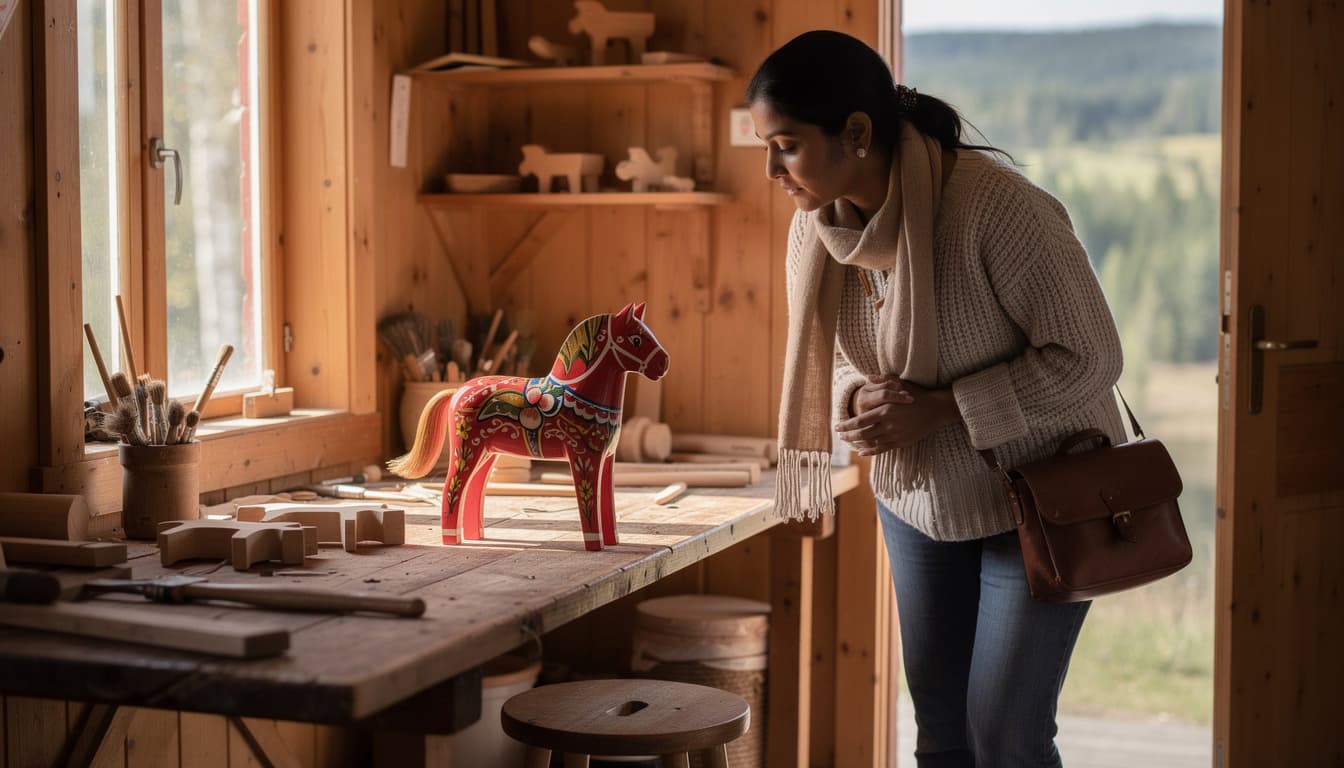
The Dala horse is the Swedish souvenir most often bought[1]. This stylized wooden horse, most often red, carries a typical folk decoration called kurbits[1]. It has been made in Dalarna since the 17th century and is still produced today mainly in Nusnäs, a village near Mora[1].
Kurbits is a folk art tied to Dalarna: an ornamental painting style, often floral, applied to wooden furniture in the 18th and 19th centuries[1]. In Nusnäs, the Nils Olsson Hemslöjd workshop, open since the 1920s, is renowned as one of the original producers of these pieces[1]. During the visit, you can watch the artisans at work, and you can even paint your own horse[1].
Carl Larsson in Sundborn
Carl and Karin Larsson are among Sweden's most iconic artists[1]. Their family home, Carl Larsson-gården in Sundborn, brings together art, interior design, and Swedish cultural heritage[1]. Beyond Carl Larsson's paintings, you'll discover the bold textiles and rustic wooden furniture designed by Karin[1].
A guided tour is offered, also in English[5]. It can be extended to the Hyttstugan restaurant a few steps away, which serves fika and dishes made with local produce[1].
Anders Zorn in Mora
Anders Zorn, born in 1860, is the other great artist of the region[1]. The Zorn Museum in Mora holds the largest collection of his works in the world, including his famous portraits and watercolors of rustic life in Dalarna[1]. His nearby house, Zorngården, is preserved in its historical state and can be visited[1].
Nature and Wide-Open Spaces
Fulufjället National Park is home to Njupeskär Falls, 93 meters high, whose water drops freely over 70 meters, making it one of the tallest waterfalls in Sweden[5]. The park also offers many hiking trails of varying difficulty[2].
For a more unusual experience, the mine sauna at the Idkerberget adventure mine, southwest of Falun, sits 80 meters underground[1]. The mine sauna ritual includes a guided tour through dark tunnels and the chance to swim in the clear water surrounding the illuminated sauna[1].
Nature is open to everyone, but the right of public access also comes with responsibility[6]. Before you go, check the weather, look for any fire bans, and find out the opening hours and accessibility of the site[6].
To See and Do: Festivals, Skiing and Unusual Experiences
In winter, the Vasaloppet is the oldest cross-country ski race in the world[5]. It takes place in Dalarna, from Sälen to Mora, over 90 kilometers[5]. In Mora, a museum is dedicated to it[2].
In summer, the cultural calendar revolves around Midsummer, which you can celebrate in Dalarna[2].
- Railtrolley (draisine): at Sågen station, about a half-hour drive from Säfsen, you pedal along the former Inlandsbanan railway on a bright blue trolley; the route is roughly 16 kilometers long, with several spots for a picnic[2].
- Orsa Predator Park: one of the largest predator parks in Europe, where you can see bears, lynx and wolves up close[2].
At the Table: Flavors of Dalarna
Falukorv is a regional specialty now enjoyed all over Sweden[5]. This thick, U-shaped sausage made of pork and beef has a mild flavor and is often pan-fried in slices[5]. It is now protected as a brand, and its creators were German miners working in Falun: the meat turned into sausage could be preserved and sold in Stockholm[5].
To taste local produce, the Hyttstugan restaurant in Sundborn serves fika and dishes made with local ingredients[1].
Practical Info: Getting There and Getting Around
To get here, Flixbus and Masexpressen buses serve the region[6]. By air, Dalaflyget offers flights to Borlänge and Mora, and Scandinavian Mountains Airport is in Sälen[6]. Once there, Dalatrafik runs buses throughout Dalarna[6]. SJ trains also serve the region's main hubs[1].
To discover the region with all your senses, explore it on foot or by bike[6]. At certain times of the year, Dalarna gets especially busy; visiting outside the main summer holidays and peak season can completely change the experience[6].
Some admission prices to plan for: at the Dalarnas Museum, an adult ticket costs 125 SEK; the reduced rate is 75 SEK for people 65 and over and for students with a Mecenat card[4]. Entry is free for those under 18, and an annual pass is offered for 225 SEK[4].
This article gives you the essentials to choose your stops. Planning a trip in detail, such as a day-by-day itinerary, accommodation or budget, calls for going further.
Keep exploring
- Sweden: The Highlights, Region by Region
- Öland et Kalmar : château, steppe calcaire et phare, que voir et que faire
- The High Coast in Sweden: What to See and Do on the Highest Coastline in the World
- Gotland and Visby: Hanseatic Town, Rauks and Beaches to Discover
Sources
- 1.^ abcdefghijklmnopqrstuvwxyz272829visitsweden.com — Visit Dalarna – centrally located in the middle of Sweden | Visit Sweden: “The county of Dalarna, nestled in the heart of Sweden, leaves almost nothing to be desired.”; “It is brimming with natural beauty: forests ideal for hiking, large lakes, mountains and flowering meadows, which winter transforms into ideal terrain for skiing and skating.”; “With its varied landscapes, it's easy to see why Dalarna has been described as Sweden in miniature.” https://visitsweden.com/where-to-go/middle-sweden/dalarna/ (accessed November 9, 2026)
- 2.^ abcdefgreisroutes.fr — 20 Must-See Activities in Dalarna: Sights and Tips: “The copper mine was once the largest copper producer in the world and supplied the material for the famous Swedish red houses.” ; “On a guided tour underground, you will discover the fascinating history of mining and can explore the impressive mine shafts.” ; “The park also offers many hiking trails of varying difficulty, letting you explore this untouched wilderness.” https://www.reisroutes.fr/blog/suede/attractions-dalarna-sueden/ (accessed November 9, 2026)
- 3.^ abmynewsdesk.com — Visit Dalarna AB | Destination Management Organization | Mynewsdesk: “Långbryggan in Rättvik, 628 meters long, is worth a visit in any season.” ; “In 1850, Falun took action: Falu Utminuteringsbolag was founded to regulate alcohol sales and return the profits for public welfare. This pioneering initiative paved the way for what we know today as Systembolaget.” https://www.mynewsdesk.com/visit-dalarna-ab/ (accessed November 9, 2026)
Show 3 more sourcesShow less
- 4.^ abcdvisitdalarna.se — Dalarnas Museum | Visit Dalarna: “The Dalarnas Museum is a county museum that brings together all the treasures of Dalarna’s cultural heritage. A visit is highly recommended as an introduction to your stay, as it gives you a foundation for exploring the region’s cultural history and traditions.” ; “An adult ticket costs 125 SEK, while seniors aged 65 and over, as well as students with a Mecenat card, pay a reduced rate of 75 SEK. Admission is free for children and young people under 18. An annual pass, valid for one year from the date of purchase, is available for 225 SEK.” https://www.visitdalarna.se/en/do/attractions/dalarnas-museum (accessed November 9, 2026)
- 5.^ abcdefgvisitsweden.de — Dalarna in Central Sweden | Visit Sweden: “The Vasaloppet is the oldest cross-country ski race in the world. It takes place in Dalarna and runs from Sälen to Mora: no less than 90 kilometers!” ; “After the guided tour (also available in English), you can grab a bite at the Hyttstugan restaurant, which serves coffee, treats and dishes made with regional ingredients.” ; “The Njupeskär Waterfall is located in Fulufjället National Park in Dalarna. It measures 93 meters, and the water falls freely for 70 meters, making it one of the tallest waterfalls in Sweden.” https://visitsweden.de/regionen/mittelschweden/dalarna/ (accessed November 9, 2026)
- 6.^ abcdefgvisitdalarna.se — Travel to Dalarna | Visit Dalarna: “By bus: check Flixbus and Masexpressen to get here. Within Dalarna, you can travel with Dalatrafik.” ; “By plane: if you prefer to fly, Dalaflyget serves Borlänge and Mora. Scandinavian Mountains Airport is located in Sälen.” ; “To experience Dalarna with all your senses, explore it on foot or by bike.” https://www.visitdalarna.se/en/visitorservice/travel-to-dalarna (accessed November 9, 2026)