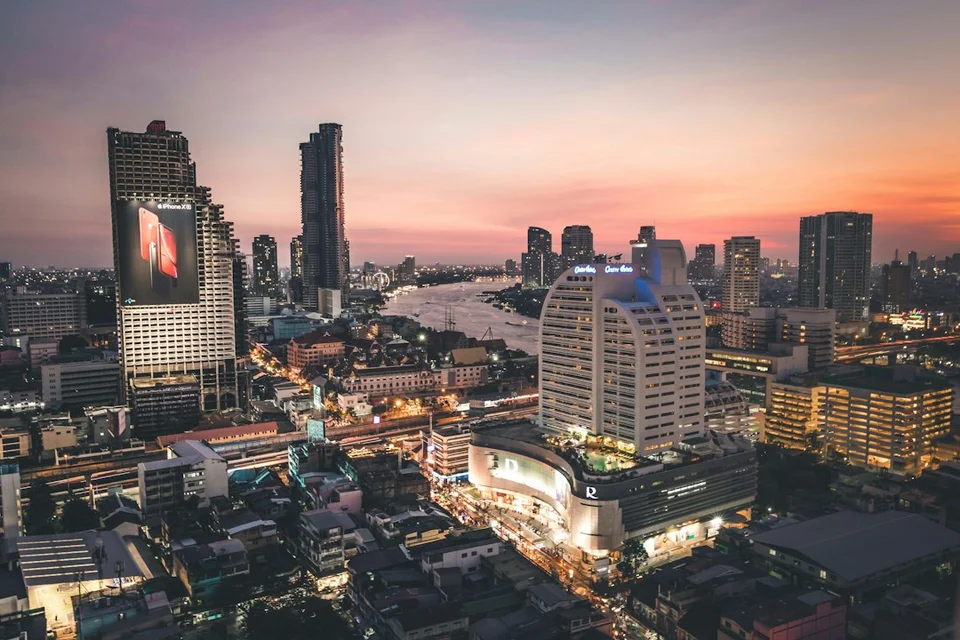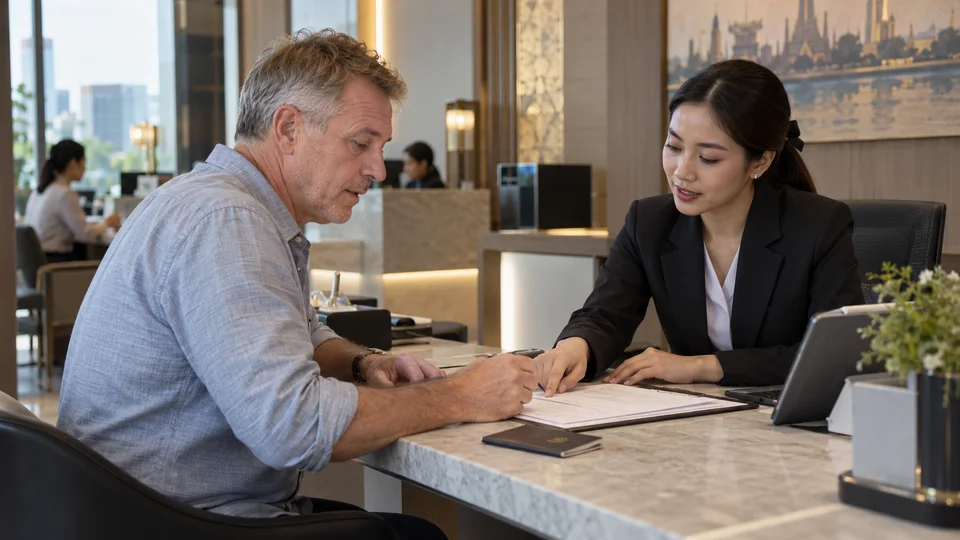
Thinking about setting up your laptop in Bangkok? This article helps you tell apart the visa designed for remote work from the one that covers local employment, understand your obligations once you arrive, get connected from day one, and spot the scams and risks that are reported most often. It does not cover neighborhoods, rents, or budgets: those choices call for further research.
Visa: DTV, Non-Immigrant B, and the Right to Work
For a digital nomad, the Destination Thailand Visa (DTV) includes a "Workcation" category, aimed at digital nomads, remote workers, foreign talent, and freelancers[1]. To apply, you must prove your status: an employment contract or a certificate of employment from your country, or a professional portfolio showing that you are a digital nomad, remote worker, foreign talent, or freelancer[1].
You also need to prove you have sufficient funds. Bank statements for the last three months must show a closing balance of at least 500,000 THB (about $16,000 USD) for each month, bearing your name and the date[1]. If you present a relative's statement, you must attach proof of the family relationship, such as a birth or marriage certificate[1].
As for length of stay, a DTV stay can be extended by 180 days with the Thai Immigration Bureau[2]. After the maximum of 180 + 180 days, holders must leave Thailand and re-enter within the visa's validity period[2].
If you are coming with your family, the spouse and children of a DTV holder can also apply, subject to age and family-relationship conditions to be verified with the embassy. They must in particular provide the DTV holder's personal details (identification document, passport identity page, and DTV approval)[1]. Other required documents vary: check with the embassy handling your application.
Some embassies additionally require an accommodation booking of at least 7 days for the first visit[2]. The list of documents varies from one embassy to another: consult the one handling your file.
The Non-Immigrant B, the Visa for Local Employment
The Non-Immigrant B visa is for people who want to work in Thailand. It allows a 90-day stay and grants only a single entry: any exit from the country cancels the visa and requires applying for a new one to return[3]. Once in the country, its holder must apply for a work permit with the Department of Employment[3].
Procedures and Obligations Once You Arrive
The Thai immigration website publishes information on applying for a stay extension[4], on the foreigner residence notification[5], and on notifying a stay of more than 90 days in the Kingdom[6]. If you plan to stay for a long time, this is where you should check the formalities to complete.
Working locally requires an appropriate visa: foreigners who wish to stay longer or who come to work in Thailand must obtain non-immigrant visas, including for all family members, before entering the Kingdom[7]. A Non-B holder may stay and work for 90 days at most, and must go through the BOI, immigration, and the Department of Employment before starting work[8].
In Bangkok, some services are grouped together. For files that fall under the BOI, a single center for visas and work permits is located at Chamchuri Square Building, 18th floor[8]. Immigration Division 1, at the Government Complex on Chaengwattana Road, handles in particular stay extensions and 90-day address notifications[8].
Internet and Mobile Connection
The three main GSM networks cover the entire country[3], and 3G and 4G networks are accessible to more than 90% of the population[3].
The simplest option is a local SIM card: you can get one with your passport, including at most convenience stores, with many purchase options[3]. Thai networks can be accessed with a plan from a French provider, depending on the options you subscribe to, but billing remains very high[3].
If you plan side trips, note that rural areas of the Northeast (Isan) and remote islands may have limited mobile and fixed coverage. Phuket, Koh Samui, and Koh Phi Phi are well covered, while Koh Lipe and Koh Tao outside inhabited areas may offer a slow connection[9].
Pitfalls, Scams, and Points of Vigilance
Fake Job Offers
Job offers for "online telemarketing" with a location in Thailand are regularly posted on social media[10]. These fraudulent offers actually recruit labor for online scam centers located in border areas, in Myanmar or Cambodia[10]. Employees are taken there, often by force, deprived of their freedom, and their passports are confiscated[10]. Do not respond to these offers.
Theft and Fake Compatriots
- The most reported thefts take place on the overnight bus line between Surat Thani and Bangkok, in both directions; they target checked luggage as well as the belongings of sleeping passengers[10].
- Bag snatchings by a motorcycle driver and his rear passenger occur regularly, particularly in Bangkok[10].
- Make copies of your identity documents and keep the originals in a secure place[10].
- Foreigners who claim to be in serious financial difficulty sometimes ask tourists for help and give a fake embassy phone number, which is answered by an accomplice; contact your country's embassy to verify such claims[10].
Overpriced Jewelry
Some French-speaking guides offer "great deals" on jewelry. The items are genuine but sold for two to three times their market price, and the scam cannot lead to legal action, as Thai law considers the price to have been freely accepted by the buyer[10].
Two-Wheelers and Driving
- In tourist areas, many agencies rent motorbikes or scooters without offering insurance; never leave your passport with the rental company[11].
- The road accident rate is one of the highest in the world, and 90% of fatal accidents involve two-wheelers[10].
- Foreign visitors who wish to drive must have an International Driving Permit; residents must have a Thai driver's license, otherwise insurance will refuse to cover accident costs[10].
Cannabis
Cannabis is only permitted for medical use. Even with a prescription, smoking cannabis in a public place is illegal and punishable by a fine of 25,000 baht (about €700) and three months in prison[11]. Its export is strictly prohibited[11].
Rainy Season
During the rainy season, from April to November, some railway lines are regularly interrupted for several days[11].
Key Points to Know Before You Leave
- Choose your visa based on your situation: the DTV "Workcation" if you work remotely, or a Non-Immigrant B followed by a work permit if you're aiming for a local job.
- Prepare proof of activity and three months of bank statements showing the required balance.
- Check the Thai immigration website for residence notifications and stays longer than 90 days.
- Get a local SIM card on site, with your passport.
- Keep copies of your documents and leave the originals in a safe place.
- If you drive, make sure your license and insurance match your status.
- This article covers the essentials on visas, procedures, and connectivity; choosing a neighborhood, housing, and budgeting require additional research before you settle in.
Sources
- 1.^ abcdewashingtondc.thaiembassy.org — Destination Thailand Visa (DTV) - Royal Thai Embassy, Washington, D.C.: “Employment contract or proof of employment in their home country, or a professional portfolio attesting to digital nomad, remote worker, foreign talent, or freelance status.”; “Recent savings or checking account statements for the past three months, with an ending balance of at least 500,000 THB (16,000 USD) for each month, showing the applicant's name and date.”; “For a family bank statement, proof of kinship (birth certificate, marriage certificate) must be provided.” https://washingtondc.thaiembassy.org/en/page/dtv-visa (accessed October 26, 2026)
- 2.^ abchelsinki.thaiembassy.org — Destination Thailand Visa (DTV) - Royal Thai Embassy, Helsinki, Finland: “Stay extension: an additional 180-day extension is possible with the Thai Immigration Bureau.”; “After the maximum stay of 180 + 180 days, DTV holders must leave Thailand and re-enter within the visa's validity period.”; “Proof of accommodation booking (minimum 7 days) for the first visit with the DTV visa.” https://helsinki.thaiembassy.org/en/publicservice/destination-thailand-visa-dtv?menu=5d80876d15e39c3354007bb1&page=5f49f4a199a85e260f4278de (accessed October 26, 2026)
- 3.^ abcdefdiplomatie.gouv.fr — Thailand - Business Travel | France Diplomatie: “The Non-immigrant B visa is intended for people wishing to work in Thailand. It allows a stay of 90 days.”; “This visa only allows a single entry into Thai territory. Any exit from the territory cancels the visa and requires a new application to re-enter Thailand.”; “Once you have entered Thailand with this visa, you must apply for a work permit from the Department of Employment.” https://www.diplomatie.gouv.fr/fr/information-par-pays/thailande/conseils-aux-voyageurs-voyages-d-affaires (accessed October 26, 2026)
Show 8 more sourcesShow less
- 4.^Mira Knowledge — Information on applying for a stay extension is available on the Thai immigration website. Verified: official source immigration.go.th. https://www.immigration.go.th/
- 5.^Mira Knowledge — Information on residence notification for foreigners is available on the Thai immigration website. Verified: official source immigration.go.th. https://www.immigration.go.th/
- 6.^Mira Knowledge — Information on notifying a stay of more than 90 days in the Kingdom is available on the Thai immigration website. Verified: official source immigration.go.th. https://www.immigration.go.th/
- 7.^osos.boi.go.th — One Start One Stop Investment Center (OSOS): “Foreigners who wish to stay for an extended period, or who come to work in Thailand, must obtain non-immigrant visas for all family members before entering the Kingdom.” https://osos.boi.go.th/en/how-to/218/Getting-Visa--Work-Permit/ (accessed October 26, 2026)
- 8.^ abcosos.boi.go.th — One Start One Stop Investment Center (OSOS): “The holder of a Non-B visa may stay and work in Thailand for a maximum of 90 days. Before working, they must contact the BOI, immigration and the Department of Employment following these steps.”; “Contact: one-stop service center for visas and work permits, Chamchuri Square Building, 18th floor.”; “Non-B visas can be applied for at Immigration Division 1, located at the Government Complex, Chaengwattana Road, Bangkok.” https://osos.boi.go.th/One-Stop/faq-group/7/Work-Permit-for-Foreign-Expat/ (accessed October 26, 2026)
- 9.^Mira Knowledge — Rural areas of the Northeast (Isan) and remote islands may have limited mobile and fixed coverage; Phuket, Koh Samui and Koh Phi Phi are well covered, while Koh Lipe and Koh Tao outside inhabited areas may have a slow connection. Verified on 06/11/2026: official source nbtc.go.th. https://www.nbtc.go.th (accessed June 11, 2026)
- 10.^ abcdefghijdiplomatie.gouv.fr — Thailand - Security | France Diplomatie: “Job offers in online telemarketing are regularly posted on social media with a location in Thailand.”; “These fraudulent offers are in fact intended to recruit labor for online scam centers, located in border areas in Myanmar or Cambodia.”; “Employees are taken, often by force, to these centers, then deprived of their liberty and their passport is confiscated.” https://www.diplomatie.gouv.fr/fr/information-par-pays/thailande/conseils-aux-voyageurs-securite (accessed October 26, 2026)
- 11.^ abcddiplomatie.gouv.fr — Thailand - Useful Information | France Diplomatie: “In tourist areas, many agencies rent motorbikes or jet skis without ever offering insurance.”; “It is strongly recommended that you do not use their services and never leave your passport with the renter.”; “Even with a medical prescription, smoking cannabis and hemp in public places is illegal and punishable by a fine of 25,000 baht (about €700) and three months in prison.” https://www.diplomatie.gouv.fr/fr/information-par-pays/thailande/conseils-aux-voyageurs-informations-utiles (accessed October 26, 2026)