Settling in Thailand to work remotely means telling apart four things many people confuse: the right to stay, the right to work, tax residency and health coverage. This article gives you the essentials to choose your visa, understand what it allows, prepare your arrival steps and pick a city. It does not detail every form or every budget line: it tells you where to look more closely before you commit.
The essentials at a glance
- The DTV (Destination Thailand Visa) is valid for 5 years, with multiple entries, and allows 180 days per entry[1].
- It allows remote work for employers or clients based outside Thailand[2].
- It does not allow invoicing clients based in Thailand[3].
- Once you spend 180 days or more in Thailand in a calendar year, you become a Thai tax resident[4].
- Thailand's universal healthcare system is reserved for citizens: foreigners pay for their care[5].
- The Thailand Digital Arrival Card (TDAC) has replaced the paper TM6 form since May 1, 2025[6].
- Don't sign a lease blindly: start with a short stay before committing to a one-year lease[7].
- Chiang Mai is the most accessible city to start in, while Bangkok suits more experienced profiles[2].
Visa and right to stay: DTV, LTR and other options
The DTV is the visa best suited to a stay of several months for a remote worker. It is valid for 5 years with multiple entries[1]. Each entry allows a stay of 180 days, and this stay can be extended once by 180 days for 1,900 THB[1]. To start a new 180-day period, you must leave the country and then re-enter it.
To get it, you must be at least 20 years old and show proof of liquid funds of at least 500,000 THB (about €13,500), held in a bank account for at least three months[8]. Employees provide a contract or an employer letter, freelancers a portfolio or current service contracts[8].
Other options
The DTV is not the only option. The three main routes for a long stay are the Long-Term Resident (LTR) visa for stability, the DTV for flexibility, and Thailand Privilege (Elite) for comfort and perks[9]. The LTR "Work from Thailand" lasts 10 years, but requires a personal income of at least $80,000 per year over the last two years, a threshold lowered to $40,000 with a Master's degree or higher[9]. It therefore targets a minority of profiles. The SMART Visa S, aimed at startups, offers 2 years without a separate work permit[1].
If you travel with your family, your spouse and children can accompany you, with proof of the family relationship. The exact conditions (amounts, documents, deadlines) should be checked on the official Thai government pages before you file an application.
Work status: what a visa allows (and forbids)
The DTV explicitly allows remote work for employers or clients based outside Thailand[2]. However, it does not allow invoicing clients based in Thailand[3]. As soon as you bill a Thai company or individual, you step outside the scope of the visa[3]. Building a lasting business geared toward the local market in practice requires setting up a suitable structure, with a Non-Immigrant B visa and a work permit[3].
A tourist visa is not designed for remote work[1]. Working without a permit exposes you to a fine of 5,000 to 50,000 THB (about €130 to €1,300), followed by deportation to your country of origin and a ban on obtaining a work permit for two years[1]. Even with a permit, some jobs remain closed to foreigners: tour guide, hairdressing and beauty, Thai massage, street vending[1].
Taxes and tax residency: repatriated income
If you stay in Thailand 180 days or more within the same calendar year, you are considered a Thai tax resident. This rule is cumulative: the total number of days counts, not the length of a single stay[4]. Your visa does not determine this residency: the day count applies regardless of the visa.
Since January 1, 2024, any foreign income brought into Thailand in the same calendar year it was earned is potentially taxable[4]. Another guide specifies that foreign income is taxable only when it is repatriated, which makes the timing of transfers an important factor, to be verified with a professional[3]. One of the guides consulted notes that savings built up before January 1, 2024 must be documented to be treated differently[1].
For French citizens, the question of double taxation still needs to be checked with the tax authorities, because the two guides consulted do not agree: one guide mentions a tax treaty between France and Thailand[1], while another claims there is none[10]. Taxation is not a settled matter: a tax specialist or a chartered accountant specialized in international mobility is the right person to consult before transferring income to a Thai bank account[2][10].
Health and Insurance
Thailand's universal health coverage (the "30 baht scheme") is reserved for citizens: as a foreigner, you pay the full cost of your care[5]. The public system is closed to foreigners, and private hospitals often require an upfront deposit before treating you[11]. Expats therefore almost exclusively use private hospitals, which offer international standards and no waiting times, at prices that are comparable to those in Europe[5].
Major private hospitals often require a payment guarantee from your insurer, or a credit card deposit of several thousand euros, before admission[11]. When you take out your policy, check that it provides direct billing with the facilities in your area[11].
On the question of insurance for the DTV, the sources disagree: one states that no insurance is required for this visa[5], while others recommend taking out international coverage that pays the actual costs at private hospitals[8]. In any case, check the clauses concerning two-wheeled vehicles, as scooter accidents are often excluded from standard policies[8]. In a medical emergency, the national emergency number is 1669[11].
If you are enrolled in the French Social Security system, it does not cover your care in Thailand for a long-term stay, and you must deregister when you leave[11].
Arrival Procedures: TDAC, TM30, TM47, Bank, Phone
Since May 1, 2025, the Thailand Digital Arrival Card (TDAC) has permanently replaced the paper TM6 form[6]. Keep your confirmation: it may be requested for the 90-day report and certain visa extensions[6].
The TM30 is a residence notification that your landlord or property manager must file with the Immigration Bureau within 24 hours of your moving in[6]. You will systematically be asked for the receipt for your visa extensions and 90-day reports[6]. Any foreigner staying more than 90 consecutive days must also notify their address using form TM47, an obligation that repeats every 90 days[6].
If you are French and settling in for more than 6 months, the French Embassy in Bangkok strongly recommends that you register with the consular registry[6].
On the banking front, things have become stricter: since the 2025 banking rules targeting money mule accounts, major Thai banks most often refuse to open accounts for holders of a tourist visa or a DTV[12]. Plan on an international card with no foreign transaction fees (Wise, Revolut) for your entire stay[12]. At ATMs, expect a fixed fee of 220 THB per withdrawal for foreigners, in addition to your own bank's commission[7]. For your phone, an eSIM will connect you as soon as you land, while you choose a local SIM (AIS or True) for under 300 THB for 30 GB[7].
Housing
The golden rule: never sign a one-year lease blindly[7]. Book a first week on Airbnb or in a hotel, visit in person, then negotiate a monthly contract[7]. Most condos are rented furnished, with a pool and gym, for a deposit of two months' rent[7].
Before you commit, test the speed: internet quality in condos varies greatly depending on the building and the state of its wiring[13]. Ask the landlord for the connection speed before booking[14].
Cost of Living by City
Budget figures vary widely from one source to another, depending on lifestyle and city. Here are a few rough orders of magnitude, to be taken as ranges rather than firm numbers.
- One guide cites 30,000 to 50,000 THB per month (about $820 to $1,370) to live very comfortably in most cities[9].
- Another suggests €560 to €1,120 per month depending on lifestyle, with housing at €200-350 in Chiang Mai and €300-500 in Bangkok for a one-bedroom apartment[8].
- A third gives roughly €1,050 per month all-inclusive in Chiang Mai, Airbnb accommodation included[15].
- In Pratumnak (Pattaya), one resident says they spend 1,500 to 2,000 € per month[16].
Chiang Mai is no longer automatically the cheap city: excluding rent, its cost of living is now higher than Ho Chi Minh City's according to Numbeo data; only rent remains clearly lower[12]. On the islands, daily life is more expensive, Wi-Fi is less reliable, and rents for expat-standard apartments are equal to or higher than in Chiang Mai[16]. Flights, visa and insurance are costs to add: one guide notes that flights and visa fees come on top of the advertised monthly budget[15].
Internet, Coworking and Connectivity
Home fiber tops out at 1 Gbps for around 600 THB per month, and 5G covers cities as well as beaches[7]. More than 500 coworking spaces are spread across the country[7]. Quality still varies by location: in small, remote places, the connection can be unreliable[17].
For professional use (video calls, large uploads, cloud environments), don't rely on café free Wi-Fi: during peak hours, shared bandwidth collapses[18]. Plan a backup mobile line (phone hotspot or 4G router) and test the speed on site before signing a long lease[18]. On public networks, a reliable VPN helps protect your data[9].
Cities and Regions: Where to Settle
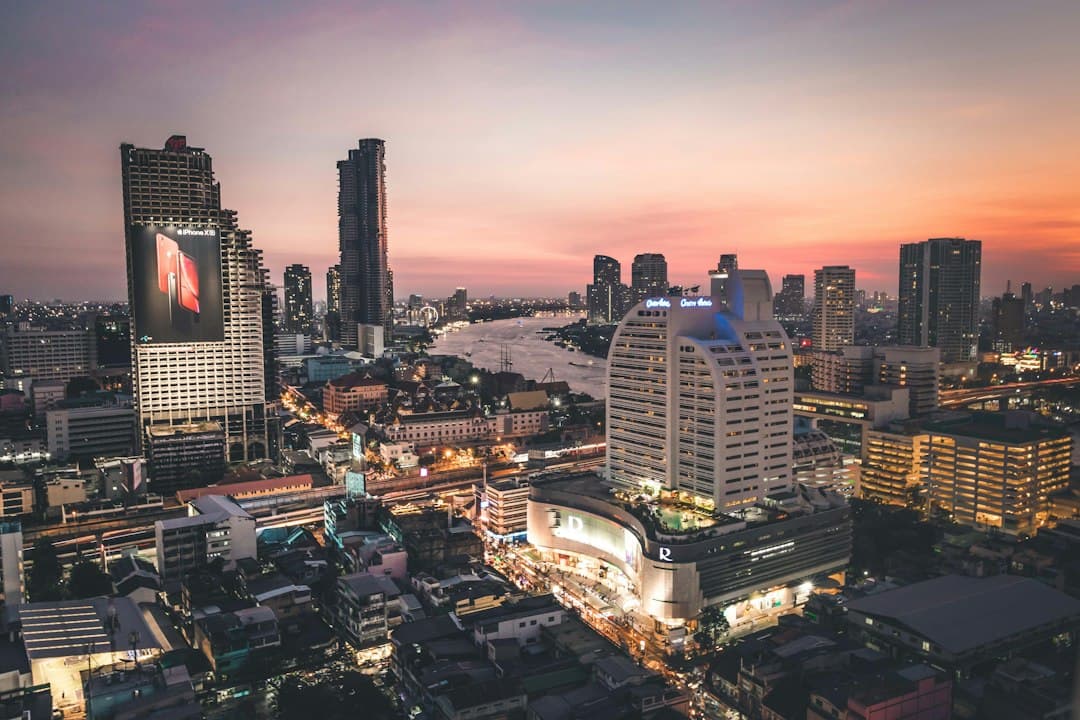
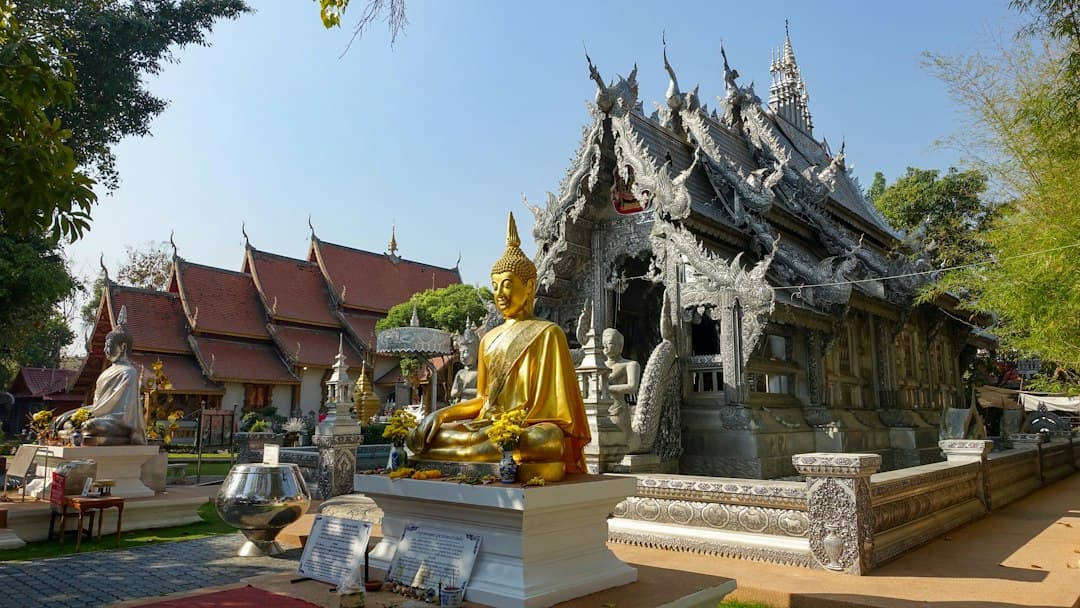
Chiang Mai is the country's top destination for digital nomads and ranks among the best cities in the world for this type of professional[17]. Its community is very large, supportive, and welcoming[19]. It suits beginners: a massive nomad community and excellent coworking infrastructure[2], although its cost of living is no longer as low as it once was (see the Cost of Living section). Smoke season hits the north at the start of the year, with air quality dropping due to burning[13].
Bangkok suits experienced nomads looking for networking, urban life, and business opportunities[2], although it is also a natural gateway for a first visit to Thailand[17]. In Phuket, the neighborhoods of Rawai and Chalong are popular with nomads, quieter and cheaper than Patong, with fiber widely available[2]. On the islands, check connection quality before committing[17].
The advice that keeps coming up: start with 1 to 3 months in Chiang Mai, then explore Bangkok, as many nomads alternate between them by season[2].
Transportation
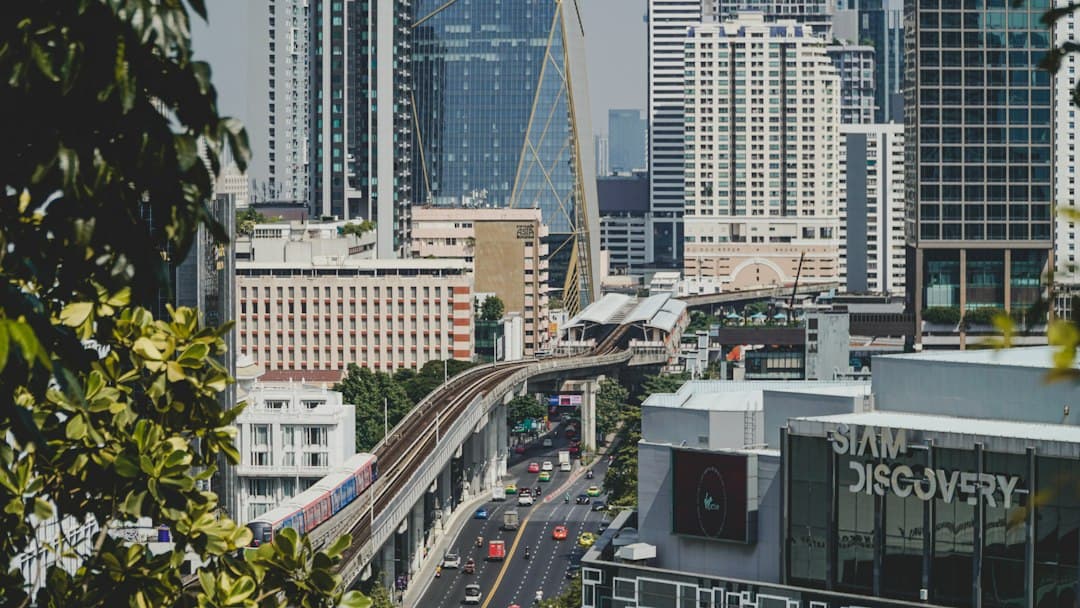
In Bangkok, the BTS and MRT cover most needs, clean and air-conditioned[20]. In Phuket, it's the weak spot: no real public transport, and taxis are expensive[20]. On Koh Phangan, a scooter is nearly essential, but broken roads and treacherous slopes make the island the champion of rental-scooter accidents[20].
To drive, foreign visitors must hold an International Driving Permit; residents must have a Thai driver's license, otherwise the insurance company will refuse to cover the costs of an accident[21]. Police are also stepping up checks on drivers without a license[14].
Language, Integration and Community
English is widely used in tourist areas, with infrastructure geared toward foreign visitors[17]. Nomad communities are very active in Chiang Mai[19], and expat Facebook groups and local agents help you find accommodation that is often cheaper than on international platforms[7].
Scams, Fraud and Points of Caution
Fraudulent Job Offers
Job offers for "online telemarketing" with a location in Thailand are regularly posted on social media[21]. These offers are in fact aimed at recruiting labor for online scam centers located in border zones of Myanmar or Cambodia[21]. Employees are taken there, often by force, deprived of their freedom, and their passports are confiscated; ransoms are frequently demanded from families[21].
Working Without a Permit and Visa Runs
Many digital nomads work on a tourist visa, but that is a risk: immigration checks intensified in 2025, with about 2,900 entry refusals for abuse of the visa exemption[1]. Officers also note repeated entries on a tourist visa, and an entry refusal can happen without warning[10]. Working for Thai clients or without a permit exposes you to the penalties described above[1].
Money and bank accounts
ATMs charge foreigners a 220 THB fixed fee per withdrawal[7], and opening a local account is most often refused to holders of a tourist visa or a DTV[12].
Scams and theft
- Jewelry: guides, sometimes French-speaking, offer “great deals”; the jewelry is genuine but sold for two to three times its market price, with no possibility of recourse[21].
- Fake embassy agent: people claiming to be in trouble give a number presented as the duty officer at the French Embassy; an accomplice answers the call. Contact the embassy to confirm[21].
- Night buses: the most reported thefts happen on the Surat Thani – Bangkok route, targeting checked luggage as well as the belongings of sleeping passengers[21].
- Bag snatching: a motorcycle driver and his rear passenger regularly snatch bags, especially in Bangkok[21].
- Drinks and meals: some may contain sleeping pills or drugs in certain neighborhoods, particularly in budget hotels[21].
Areas and roads
Travel to the Burmese border is strongly advised against, except for Mae Sot, and the border areas with Cambodia, within 50 km, are very strongly advised against[21]. In the far south, travel is strongly advised against in the provinces of Narathiwat, Pattani, Yala and Songkhla[21]. The road accident rate is one of the highest in the world, with more than 17,000 deaths on average per year, and two-wheelers are especially dangerous: 90% of fatal accidents involve two-wheelers[21].
Steps, in order
- Choose your visa and assemble your file: 500,000 THB in funds held for three months, proof of remote work activity[8].
- Take out international health insurance and prepare your departure formalities, including deregistering from French Social Security if you depend on it[11].
- Complete the TDAC before arrival and book short-term accommodation[6][7].
- On arrival: have your host file the TM30, activate a SIM or eSIM, and test the connection[6][7].
- Visit, compare, then sign a monthly or tailored lease, and track your address notification every 90 days[6][7].
- Keep track of your days of presence and your income transfers; if you are French, register with the consular registry[4][6].
Frequently asked questions
Is insurance required with the DTV?
Sources disagree on the requirement: one says insurance is not mandatory[5], others recommend it[8]. Check the rule in force on the official pages; the Health section details the risks.
Can you work on a tourist visa?
The tourist visa is not designed for remote work[1]. The DTV was created precisely to cover this situation[1].
How long can you stay with a DTV?
180 days per entry, extendable once by 180 days, valid for 5 years[1].
Can you open a bank account with a DTV?
Usually not at the major banks; see the Arrival procedures section[12].
When do you start paying tax in Thailand?
After 180 days of presence in a calendar year, you become a tax resident; see the Taxation section[4].
What this article does not cover in detail
This article gives you the essentials to make a decision. To actually settle in, you will need to go further into step-by-step procedures, a line-by-line budget, choosing a neighborhood, and your personal tax situation.
Sources
- 1.^ abcdefghijklmncarnetthai.com — Working in Thailand 2026 — Visa and Legality: “The DTV is valid for 5 years with multiple entries.”; “Each entry allows a stay of 180 days, extendable once by 180 days (1,900 THB).”; “Working without a work permit today exposes you to a fine of 5,000 to 50,000 THB (about €130 to €1,300), followed by deportation to your country of origin and a two-year ban on obtaining a work permit.” https://carnetthai.com/travailler-thailande (accessed October 18, 2026)
- 2.^ abcdefghexpatexpress.fr — Living as a Digital Nomad in Thailand: Cities, Coworking and Budget 2026 – Expat Express: “The DTV visa explicitly allows remote work for employers or clients based outside Thailand.”; “Chiang Mai is ideal for beginners: very low cost of living, a massive and welcoming nomad community, a relaxed pace of life, and excellent coworking infrastructure. Bangkok suits experienced nomads better, especially those looking for networking, urban life and business opportunities.”; “Our advice: start with Chiang Mai for 1 to 3 months, then explore Bangkok. Many nomads alternate between the two depending on the season.” https://expatexpress.fr/digital-nomad-en-thailande-visa-dtv-coworking-et-destinations/ (accessed October 18, 2026)
- 3.^ abcdebenoit-partners.com — Digital Nomad in Bangkok – Visa, Taxation and Legal Framework: “The DTV does not allow invoicing clients based in Thailand.”; “As soon as they invoice a Thai company or individual, they step outside the framework of their visa.”; “They generally need to set up a limited liability company or obtain a BOI promotion. This route opens access to the domestic market, but in turn requires a Non-Immigrant B visa and a work permit.” https://benoit-partners.com/fr/digital-nomad-bangkok/ (accessed October 18, 2026)
Show 18 more sourcesShow less
- 4.^ abcdethaiguide.fr — Digital Nomad in Thailand: Tax Residency 2026: “The rule is simple: if you stay in Thailand for 180 days or more within the same calendar year, you are considered a Thai tax resident.”; “This rule is cumulative over the year: it doesn't matter whether you made round trips. It's the total number of days in Thailand that counts, not the length of a single stay.”; “Since the Revenue Department guidance applicable as of January 1, 2024: any foreign income brought into Thailand in the same calendar year as it was received is potentially taxable.” https://thaiguide.fr/digital-nomad/nomade-digital-impots-residence-fiscale-thailande/ (accessed October 18, 2026)
- 5.^ abcdeassurances-expat.fr — Expat Health Insurance in Thailand: Guide & Prices: “Thailand's universal coverage scheme (30 baht scheme) is reserved for citizens.”; “As a foreigner, you pay for all your care; in practice, expats receive almost all their treatment in private hospitals.”; “International standard (JCI), English-speaking doctors, zero waiting. It is the default choice for expats, at prices comparable to Europe.” https://assurances-expat.fr/destinations/thailande/ (accessed October 18, 2026)
- 6.^ abcdefghijkdelocaliz.fr — Settling in Thailand: Essential Administrative Procedures in 2026 - : “Since May 1, 2025, the Thailand Digital Arrival Card (TDAC) has permanently replaced the old paper TM6 form.”; “Keep your TDAC confirmation for the entire duration of your stay. It will be requested for the 90-day report and certain visa extensions.”; “The TM30 is a residence notification that your landlord (or property manager) must file with the Immigration Bureau within 24 hours of your move-in.” https://delocaliz.fr/expatriation/thailande/demarches/ (accessed October 18, 2026)
- 7.^ abcdefghijklmvivreenthailand.fr — Digital Nomad in Thailand 2026: Visas, Cities and Budget: “Thai ATMs charge foreigners a flat fee of 220 THB per withdrawal, on top of your French bank's commission.”; “The golden rule: never sign a one-year lease blindly. Book a first week on Airbnb or in a hotel, visit in person, then negotiate a monthly contract. Most condos are rented furnished, with a pool and gym, for a two-month deposit.”; “Home fiber tops out at 1 Gbps for about 600 THB per month, and 5G covers cities as well as beaches. An eSIM such as Airalo will connect you as soon as you land, while you choose a local AIS or True SIM for under 300 THB for 30 GB.” https://vivreenthailand.fr/travailler/digital-nomad (accessed October 18, 2026)
- 8.^ abcdefgvivre-en-thailande.com — Best Cities to Settle in as a Digital Nomad - Living in Thailand: “You must present proof of liquid funds of at least 500,000 THB (about 13,500 EUR) held in a bank account for at least three months.”; “To qualify for the Destination Thailand Visa (DTV), you must be at least 20 years old and demonstrate solid financial stability.”; “As a remote worker, you must provide an employment contract or an employer letter confirming your remote-work status for a company based outside Thailand. Freelancers must present a professional portfolio or current service contracts.” https://vivre-en-thailande.com/meilleures-villes-digital-nomad-thailande-2026/681743/ (accessed October 18, 2026)
- 9.^ abcdportail-asie.com — Digital Nomad in Thailand 2026: DTV Visa, Budget, Cities: “In 2026, the three main options for a long stay are the Long-Term Resident (LTR) visa for stability, the Destination Thailand Visa (DTV) for flexibility, and the Thailand Privilege (Elite) Visa program for those seeking maximum comfort and benefits.”; “For the Work-From-Thailand category, the applicant must demonstrate a personal income of at least $80,000 per year over the last two years. This threshold is lowered to $40,000 for holders of a Master's degree or higher.”; “A monthly budget of between 30,000 and 50,000 THB (roughly $820 to $1,370) allows you to live very comfortably in most cities.” https://portail-asie.com/digital-nomad-en-thailande/ (accessed October 18, 2026)
- 10.^ abcassuranceinternationale.fr — Complete Guide to Expatriating to Thailand for French Citizens (2024) | AssuranceInternationale.fr: “Thai immigration officers note repeated entries on tourist visas. An unofficial limit exists, and an entry refusal can occur without warning.” https://assuranceinternationale.fr/guide/partir-en-expat-en-thailande/ (accessed October 18, 2026)
- 11.^ abcdefvivreenthailand.fr — Health Insurance in Thailand 2026: The Expat Guide: “Contrary to popular belief, care is not free for foreigners: the public system is closed to them, and the private sector, which is excellent, often requires an upfront payment before treating you.”; “French Social Security does not cover your care in Thailand for a long-term stay, and you must deregister when you leave.”; “Large private hospitals often require a payment guarantee from your insurer, or a credit card deposit of several thousand euros, before even admitting you.” https://vivreenthailand.fr/sante (accessed October 18, 2026)
- 12.^ abcdethailande-pratique.fr — Digital Nomad in Thailand 2026: Chiang Mai or Bangkok, Coworking and Real Budget - Thaïlande Pratique: “Since the tightening of banking rules in 2025 against money mule accounts, major Thai banks most often refuse to open accounts for holders of a tourist visa or a DTV (Bangkok Bank since May 2025, according to the Danish-Thai Chamber of Commerce).”; “Plan to operate with a fee-free international card (Wise, Revolut) for your entire stay.”; “Numbeo data tells a different story: excluding rent, the cost of living in Chiang Mai is now higher than in Ho Chi Minh City.” https://thailande-pratique.fr/blog/digital-nomad-chiang-mai-bangkok-coworking-budget-2026/ (accessed October 18, 2026)
- 13.^ abnomadinternet.netlify.app — Thailand Internet Guide for Digital Nomads | Nomad Internet: “Internet quality in condos varies greatly depending on the building and the state of the wiring.”; “Air quality drops in the north due to crop burning.” https://nomadinternet.netlify.app/fr/thailand/ (accessed October 18, 2026)
- 14.^ abthailandstarterkit.com — How to Become a Digital Nomad in Chiang Mai: “I always ask the landlord or hotel for their connection speed before booking accommodation, because it can vary enormously depending on the setup.”; “Police are increasing checks against unlicensed drivers across the country.” https://www.thailandstarterkit.com/fr/emploi/nomade-numerique-chiang-mai/ (accessed October 18, 2026)
- 15.^ abledigitalnomad.com — Digital Nomad: The Complete Guide to Living and Working While Traveling: “Chiang Mai remains the simplest gateway: about €1,050 per month all-inclusive, Airbnb accommodation included.”; “On top of this budget you need to add flights and visa costs, and plan for a margin.” https://ledigitalnomad.com/s-expatrier/ (accessed October 18, 2026)
- 16.^ abthaiguide.fr — Digital Nomad Budget in Thailand 2026: By City: “I spend between €1,500 and €2,000 per month in Pratumnak, and I live well.”; “On the islands (Koh Lanta, Koh Phangan), daily life is more expensive, wifi less reliable, and rents for expat-quality apartments are equal to or higher than in Chiang Mai.” https://thaiguide.fr/digital-nomad/budget-nomade-digital-thailande-ville-2026/ (accessed October 18, 2026)
- 17.^ abcdeexpat.com — Becoming a Digital Nomad in Thailand - Thailand Guide - Expat.com: “The fifth-largest city in Thailand, also called the Rose of the North, is the country's top destination for nomads and ranks among the best cities in the world for this category of professionals.”; “Bangkok is a natural choice for people visiting Thailand for the first time.”; “The kingdom has all the infrastructure and services suited to tourists: widespread use of English, transport within and between its cities, villages and islands, to name just a few.” https://www.expat.com/fr/guide/asie/thailande/16346-devenir-nomade-digital-en-thailande.html (accessed October 18, 2026)
- 18.^ abexpanomad.com — Digital Nomad in Thailand for the French: DTV Visa, Budget, Taxes, Insurance & Connectivity | ExpaNomad: “For professional use (video calls, heavy uploads, cloud environments), don't rely solely on free cafe wifi: during peak hours, shared bandwidth collapses.”; “At a minimum, plan a backup mobile line (phone hotspot or 4G router) and, if you stay several months, test the speed on site before signing a long lease or a fiber subscription.” https://expanomad.com/fr/guides/digital-nomad/thailand (accessed October 18, 2026)
- 19.^ abambroisedebret.com — The Best Destinations for Digital Nomads 2026 [+ Guides] • Ambroise Debret: “The digital nomad community in Chiang Mai is very large, very supportive and welcoming.” https://ambroisedebret.com/destinations-digital-nomads/ (accessed October 18, 2026)
- 20.^ abcledigitalnomad.com — Traveling in Thailand: The Complete 2026 Guide: “In Bangkok: the BTS and MRT cover the essentials, clean and air-conditioned.”; “In Phuket: this is the weak point: no real public transport, taxis are expensive and cartel-like.”; “On Koh Phangan: a scooter is almost essential, but roads are rough and slopes are treacherous: the island is the champion of rental accidents.” https://ledigitalnomad.com/voyages/thailande/transports/ (accessed October 18, 2026)
- 21.^ abcdefghijkldiplomatie.gouv.fr — Thailand - Safety | France Diplomatie: “Job offers in telemarketing are regularly posted on social networks indicating a location in Thailand.”; “These fraudulent offers are in fact intended to recruit labor for online scam centers, or scams centers, located in border areas of Myanmar or Cambodia.”; “Employees are taken, often by force, to these centers, then deprived of their freedom and their passport is confiscated.” https://www.diplomatie.gouv.fr/fr/information-par-pays/thailande/conseils-aux-voyageurs-securite (accessed October 18, 2026)