In Spain, the train connects the major cities without traffic jams or airport terminals, but it doesn't work quite the way it does in France. This article helps you read a ticket beyond its price, avoid unpleasant surprises with luggage and stations, check what a pass covers, and know where to follow network updates. You'll also learn what to plan for when a journey is disrupted.
Why the train is a good ally for the digital nomad in Spain
When you settle in Spain, you often assume that long trips go by car or by plane. Your first train journey, the one that takes you to another major city without traffic jams or airport terminals, changes your mind: the Spanish rail network is considered one of the most practical in Europe, and it transforms the way you experience the country day to day[1].
Traveling by train in Spain doesn't work quite the way it does in France, and it's these small differences that deserve your attention before your first trip[1]. The train is best suited to trips with reasonable luggage; it is far less suitable for moving an entire household from one country to another[1]. For a move, another solution will be more appropriate.
Booking: reading the ticket beyond the displayed price
A very cheap ticket is often the least flexible[1]. The price shown on the first search screen doesn't tell the whole story: taking a closer look is how you avoid regrets[1].
Before you confirm your purchase, make a habit of checking five points:
- the total amount once luggage is added;
- the options for changing your booking;
- the cancellation conditions;
- the departure station;
- the arrival station.
The full fare grids for the different options can be consulted directly on the Renfe website, which remains the reference for comparing the options for a given route[1].
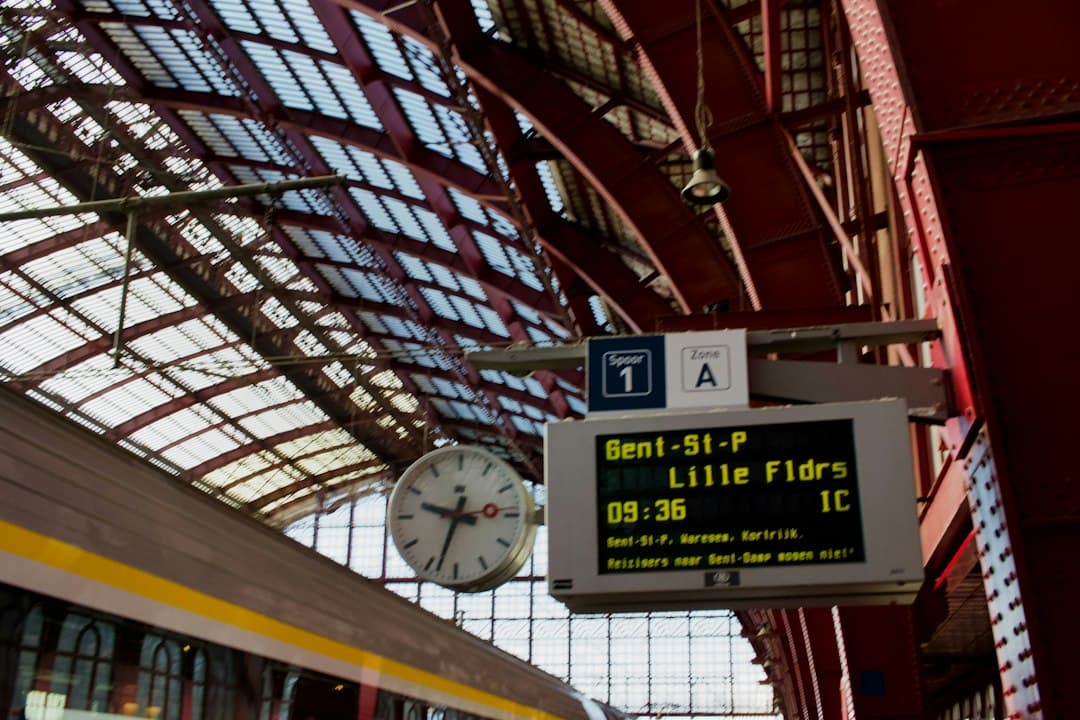
Stations deserve a separate check. In Madrid, trains can leave from two major stations, Madrid-Atocha-Almudena Grandes and Madrid-Chamartín-Clara Campoamor, depending on the route and the operator[1]. In Barcelona, Barcelona Sants serves as a reference point for many long-distance trains, but it's better to verify than to assume[1]. With a low-cost operator, this check becomes essential: not all trains from the same city necessarily depart from the same point[1].
Luggage, documents and belongings to keep on you
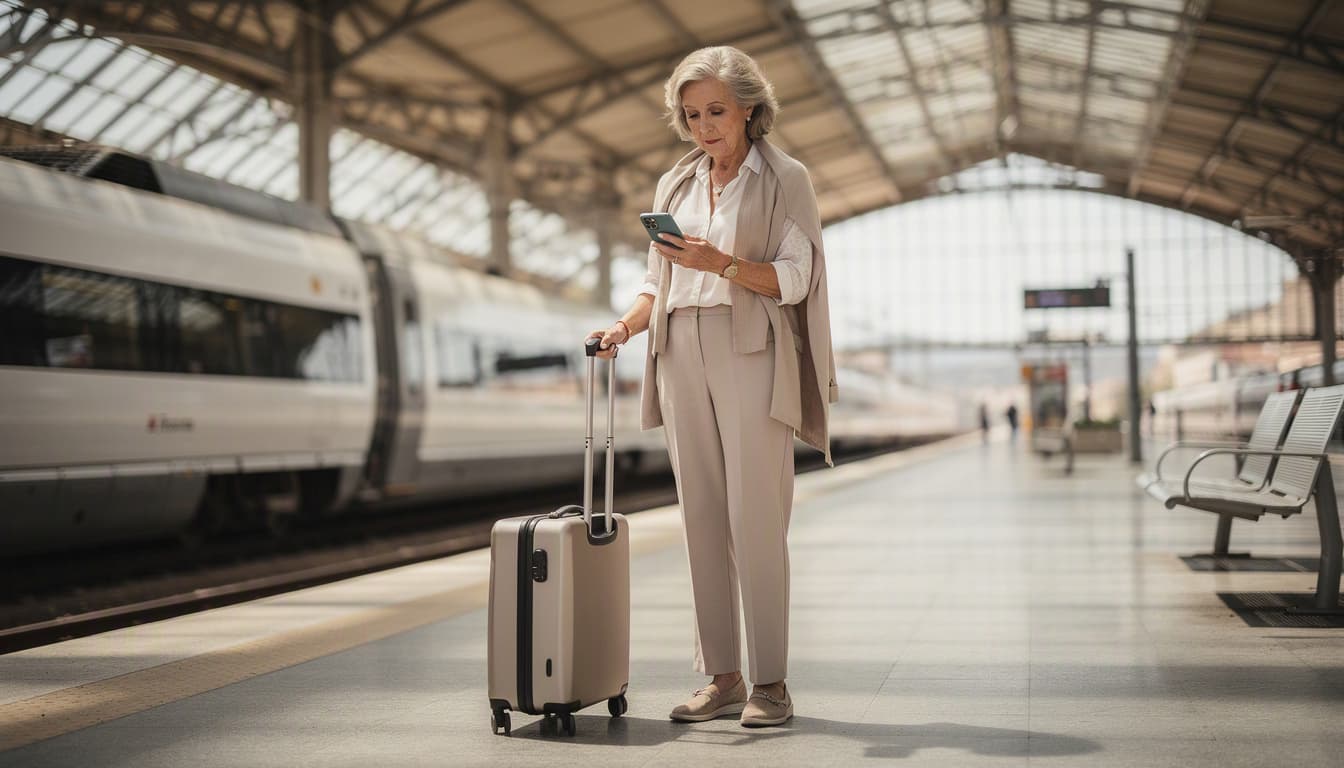
Measure your suitcase before you leave. It may seem excessive for a simple trip, but the permitted dimensions differ from one company to another, and a bag refused on the platform can ruin the start of a journey[1].
Also keep a piece of identification within reach. Local authorities may ask for identification at any time, and you must carry a valid one with you, such as your passport[2].
In Spain, foreign nationals present their passport when checking in at a hotel[2], and paying by card at a restaurant, hotel or shop may also lead to a request for a passport or another official photo ID[2].
Comparing train, car and plane from door to door
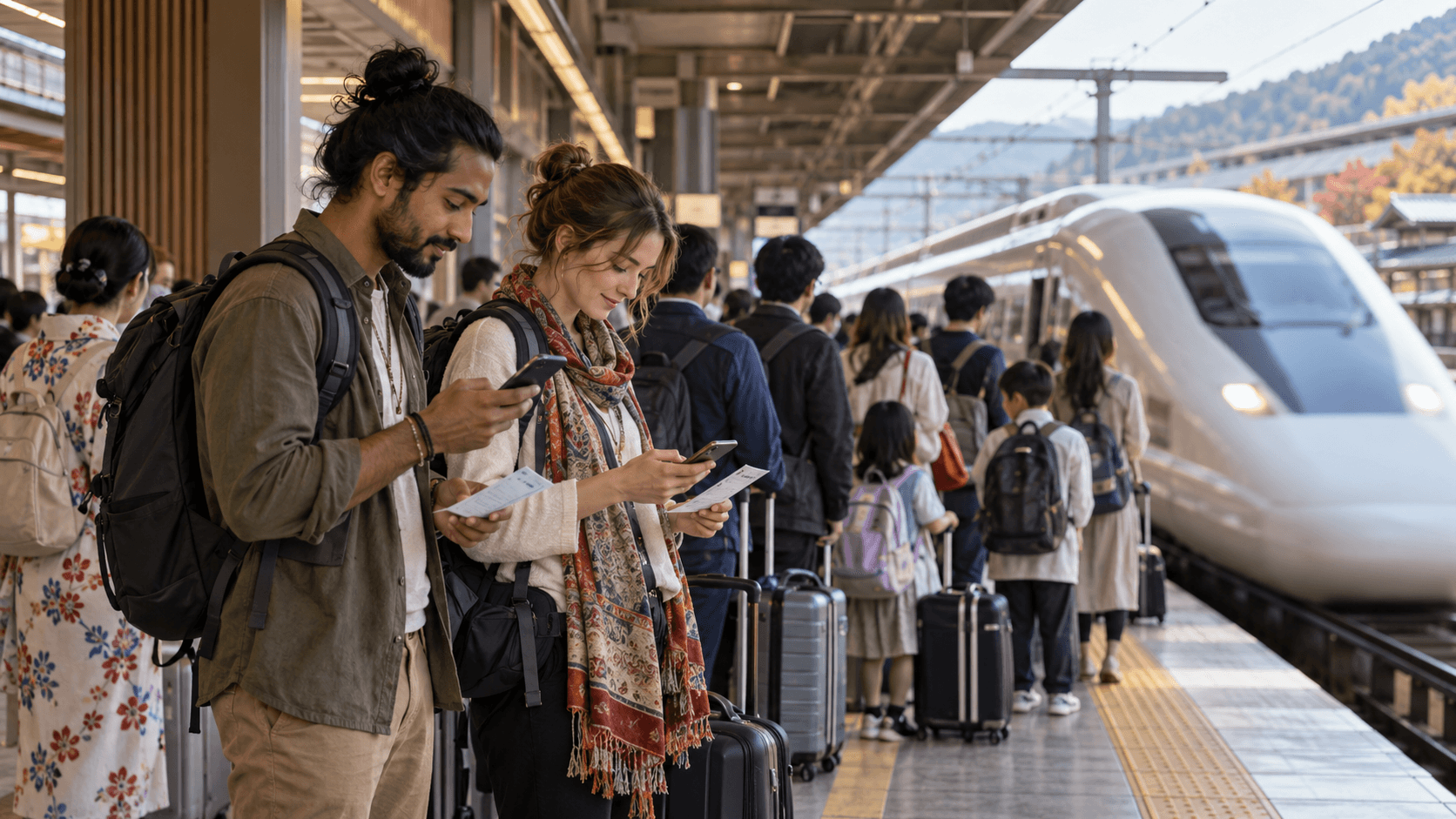
Comparing the car, the plane and the train based solely on the duration shown on a ticket or a map doesn't make much sense[1]. To find out whether the train is really worth it, add up the entire journey:
- the time to get to the station;
- the wait before departure;
- the duration of the trip;
- the way from the arrival station to your final destination.
Do the same calculation for the plane and the car, then compare the totals[1].
Passes and subscriptions: checking what they cover
A Spanish transport pass isn't automatically valid on all trains from all operators, and you shouldn't confuse a local commuter pass with a high-speed pass[1]. Check precisely which services are covered before you subscribe: the pass is only useful if it covers the lines you actually use[1].
Check the network status before and during your trip
Before you leave, check the traffic status with Renfe, the operator, and Adif, the infrastructure manager. Government travel advisories also report ongoing service disruptions. For example, France Diplomatie's page on Spain relayed the suspension of traffic on the Madrid–Andalusia high-speed line after an accident, with all trains on the line stopped at stations along the route[3].
After the Urda accident, Renfe and Iryo set up support phone lines for victims and their families[3]. Adif, for its part, opened assistance points in several major stations, including Madrid-Puerta de Atocha, Seville-Santa Justa, Córdoba and Málaga[3].
Weather matters too. Extreme weather events are becoming more frequent in Spain and can affect your travel plans: follow local media to stay up to date[2].
In autumn, authorities warn of a risk of heavy rain that can disrupt road and rail traffic; they may also impose traffic restrictions or precautionary evacuations, and you should follow their recommendations[3]. Demonstrations, even peaceful ones, can also cause major transport disruptions, including on the rail network[2].
Pitfalls, Scams, and Things to Watch For
- The cheapest ticket is often the least flexible: check change and cancellation terms before you pay[1].
- The price on the first search screen doesn't tell the whole story: baggage and conditions change the real cost[1].
- Allowed baggage dimensions vary by company: a bag can be refused on the platform[1].
- A subscription or pass may not cover every company or every high-speed train[1].
- People posing as plainclothes police officers may ask to see your passport, ID documents, or wallet: politely ask to see their official identification badge to verify that the request is legitimate[2].
If your trip is disrupted: plan a backup
When traffic is suspended on a line, travelers who were planning to use it are advised to take another route or another mode of transport until Spanish authorities issue new instructions[3]. Depending on how a weather event develops, road and rail disruptions as well as flight delays or cancellations are possible[3]: it's best to keep an alternative in mind before you leave, rather than looking for one at the station.
For example, after the Urda accident, Renfe and Iryo's support lines and Adif's assistance points were opened for the people affected[3]. For your rights in case of delay, read our article "Traveling in Spain: High-Speed Trains, Passenger Rights, and E-Scooters" (voyager-espagne-train-grande-vitesse-trottinette).
Travel Insurance: What to Check
Get travel insurance that covers hospital costs abroad and medical evacuation[2]. Then review your policy's coverage to see what applies to a train journey before you leave.
Key Points to Remember Before You Leave
- Measure your suitcase and compare it to the dimensions allowed by the company.
- Compare fares on Renfe's website, factoring in baggage, changes, and cancellations.
- Check the departure and arrival stations on your ticket.
- Time the full trip, from your departure gate to your final destination.
- Make sure your subscription covers the lines and companies you'll use.
- Bring your passport or a valid ID.
- Check the network status and the weather the day before and the morning of departure, and keep a backup route.
- Review the coverage in your travel insurance.
This article covers the essentials for getting organized. For exact fares, each company's baggage rules, and refund conditions, check directly with the operator when you book.
Sources
- 1.^ abcdefghijklmnopqrfrancaisenespagne.com — Traveling by Train in Spain in 2026: The Essential Guide: “The Spanish rail network is today one of the most convenient in Europe, and it really changes the way you live in the country day to day.” ; “Traveling by train in Spain doesn’t work quite like it does in France, and it’s precisely these small differences that are worth a closer look before your first trip.” ; “It shines for trips with reasonable luggage, much less for moving an entire household from one country to another.” https://www.francaisenespagne.com/voyager-en-train-en-espagne/ (accessed November 3, 2026)
- 2.^ abcdefgvoyage.gc.ca — Travel Advice for Spain: “Local authorities may ask you to show identification at any time. You must carry valid identification, such as your passport, and present it to a police officer on request, failing which you could be detained until you can prove your identity.” ; “In Spain, foreigners must present their passport when checking into a hotel.” ; “When paying by credit card at restaurants, hotels, shops and other establishments, you may also be asked for your passport or another official photo ID, such as a driver’s license.” https://voyage.gc.ca/destinations/espagne (accessed November 3, 2026)
- 3.^ abcdefgdiplomatie.gouv.fr — Spain - Travel Advice - Latest Updates and Alerts - Page 1 of 1 - France Diplomatie | France Diplomatie: “Following the collision in Urda (Toledo) between two trains operating the Madrid–Seville route, traffic is suspended on the Madrid–Andalusia high-speed line. All trains on this line are stopped at the stations along the route.” ; “The companies Renfe and Iryo have set up telephone assistance numbers for victims and their families.” ; “The Administrador de Infraestructuras Ferroviarias (Adif) has set up reception points for those affected by the accident at the stations of Madrid-Puerta de Atocha Almudena Grandes, Seville-Santa Justa, Cordoba-Julio Anguita and Malaga-María Zambrano.” https://www.diplomatie.gouv.fr/fr/information-par-pays/espagne/dernieres-minutes-et-alertes (accessed November 3, 2026)