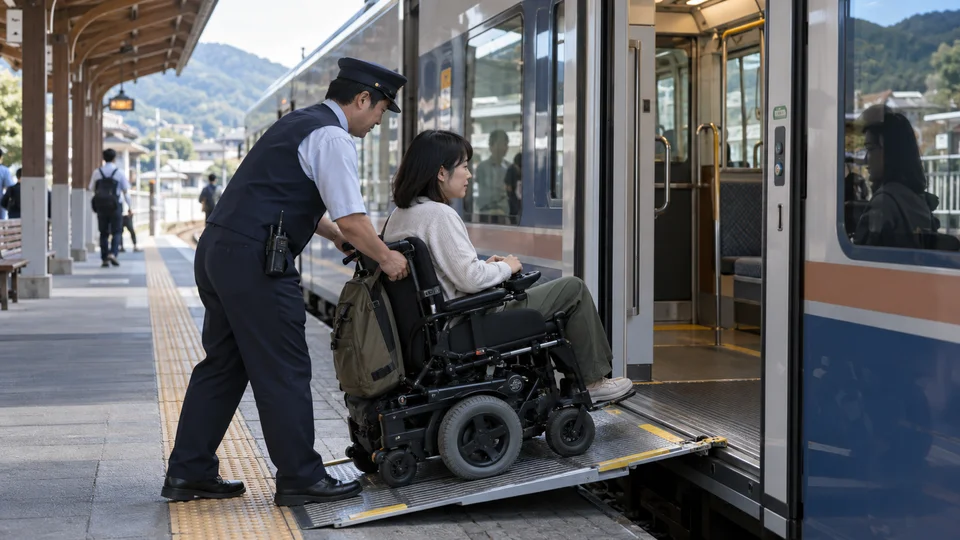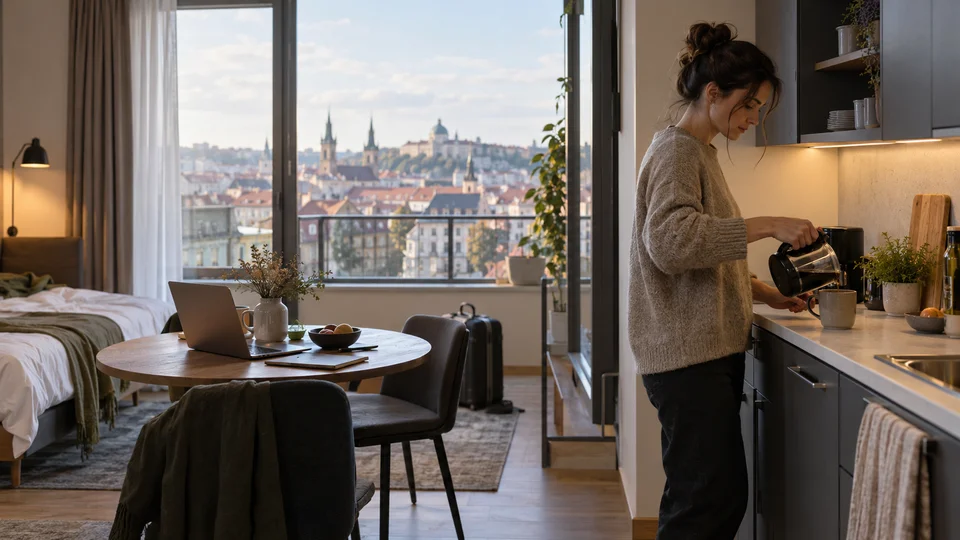
Settling in France also means learning to live with others. This article helps you spot the social customs that make a difference in daily life, know when French becomes essential and which public programs exist to learn it, and understand your children's rights at school.
Understanding Social Customs to Meet People
The first custom to remember comes down to one word: “bonjour.” French politeness calls for saying it every time, “bonjour madame” or “bonjour monsieur,” when you enter a shop or an office, or when you approach someone. Forgetting it is seen as a clear lack of manners[1]. This simple habit changes the welcome you receive at the bakery as well as at the prefecture.
Among friends and family, people greet each other with “bises” (cheek kisses): generally two in Paris and the north, up to four in Provence and the south[1]. In professional life, the norm is a handshake[1]. If you hesitate, let the other person initiate the gesture and follow their lead.
Other useful customs: lines are strictly respected, and cutting in line is frowned upon[1]. Appearance matters: according to the source, a “dress code” is common in public venues[2], although it varies by establishment. As for timing, punctuality is valued in the workplace (arriving on time or five minutes early), while a bit of flexibility is accepted for social appointments[2].

Where and How to Make Friends: Locals and Other Expats
The easiest way is through everyday places. Open-air markets remain very popular, with more than 12,000 weekly markets across the country[3]: returning every week to the same vendors is a way to be recognized in your neighborhood.
When it comes to language, 56% of French people say they speak English according to the 2024 Eurobarometer, but this level varies greatly by age and region: it is generally better among those under 35 and in urban areas[4]. English can therefore ease a first contact in the city with a younger person. To build ties with your neighbors, however, speaking French helps directly: authorities cite it among what it makes possible, alongside administrative procedures, job searching, and medical consultations[5].
A few basic phrases are better than silence: “Bonjour,” “S'il vous plaît” (please), “Merci” (thank you), “Excusez-moi” (excuse me), “Parlez-vous anglais ?” (Do you speak English?), and “Je ne comprends pas” (I don't understand)[4]. Politely asking “Parlez-vous anglais ?” after saying hello goes over much better than jumping straight into English.

Progressing in French: Local English Levels, Courses, and Integration Pathways
Staying in an English-speaking bubble works for a while, especially in big cities. But since the English level of the people you talk to varies greatly by age and region[4], you will eventually run into situations where French is essential. Learning to speak and write it is presented by state services as key to a successful integration: administrative procedures, job searching, following your children's schooling, exchanges with the doctor, and relations with neighbors[5].
For non-EU nationals settling long-term, there is a structured pathway. The Republican Integration Contract (CIR) is signed by newly arrived foreigners who wish to settle permanently in France, during their welcome at the French Office for Immigration and Integration (OFII)[6]. This welcome includes a personalized interview with an advisor, who assesses your personal, family, social, and professional situation and directs you to available local services[6]. CIR signatories are also referred to the public employment service, where they can benefit from an in-depth professional orientation interview and tailored support toward employment[6].
Your French level also affects your right to stay: the law of January 26, 2024 links French at level A2 to eligibility for multi-year residence permits[7]. That same law introduced a civic exam for a first multi-year residence permit application by non-European nationals; it falls under the CIR and covers the values, institutions, rights, and responsibilities in France[7]. A dedicated civic training website has been launched to help candidates prepare[7].
This scheme targets non-European newcomers who settle long term. If you are a citizen of the European Union or staying short term as a digital nomad, this pathway is in principle not designed for you: learning French is still useful for living on site. If you plan to stay a long time and apply for a multi-year permit, check with the OFII or the prefecture whether the French level requirement applies to you.
How long does it take to speak fluent French?
The timeline depends on too many factors (starting point, time you dedicate, immersion) for us to honestly give it in months or years. What is established is an administrative benchmark: level A2 is the one the law of January 26, 2024 links to multi-year residence permits[7]. It is an elementary level of French, not fluency, and it is reached earlier than being at ease in conversation.
If you fall under the CIR, the personalized interview at the OFII is the right moment to review your situation and be directed to the local services available[6].
School and expat children
On rights, the principle is clear: all children, even foreign ones, are entitled to the same aid and care and to the same free education until age 18[5].
State services stress the relationship between school and families, which they consider essential for monitoring children. If you run into difficulties, education professionals and social services can help you[5]. Your French matters here too: speaking and writing the language makes it easier to follow your children's schooling[5].
Locally, public authorities must guarantee foreigners access to local services, including school enrollment for children, in the same way as for all other citizens[6]. So contact your town hall or your local school to learn the practical steps.

Key Facts: Immigration in France
You won't be alone in your situation. In 2025, immigrants made up 11.6% of the total population[8], and foreigners 9.1%[8]. Among them, 5.3 million immigrants of foreign nationality live in France[9].
These figures cover people who have been settled for a long time and do not measure expats in the strict sense: they give an order of magnitude, not a picture of your situation. To track the integration of newcomers, INSEE runs a longitudinal survey on the integration of recent arrivals[10].
Pitfalls and Points to Watch
- The forgotten "bonjour": not saying it when entering a shop or office is seen as a marked lack of manners[1].
- Obligations tied to your stay: if you fall under the CIR, your French level and the civic exam may be conditions for a first multi-year residence permit application[7]. Level A2 has been the threshold tied to eligibility for multi-year permits since the law of January 26, 2024[7].
- Dress and punctuality: "correct dress required" is common in public places[2], and punctuality is valued at work, while social appointments allow for slight flexibility[2].
Checklist for a Good Start
- Learn basic phrases and say hello when entering places.
- Choose a neighborhood market or café and return to it regularly.
- If you are a non-European national settling long term, book your CIR appointment at the OFII and prepare for the civic exam.
- Aim for at least level A2 French if you want a multi-year residence permit.
- Contact the town hall or your local school to enroll your children.
Sources
- 1.^ abcdeMira Knowledge — French politeness calls for always saying "bonjour" ("bonjour madame/monsieur") when entering a shop or an office, or when approaching someone. Forgetting the "bonjour" is seen as a marked lack of manners. Checked on 06/11/2026: reference source france.fr. https://www.france.fr/en/ (accessed June 11, 2026)
- 2.^ abcdMira Knowledge — The French place great importance on appearance and dress: a "tenue correcte exigée" ("proper dress required") sign is common in public places. Checked on 06/11/2026: official source service-public.fr. https://www.service-public.fr/particuliers/vosdroits/F1944 (accessed June 11, 2026)
- 3.^Mira Knowledge — Open-air markets remain very popular, with more than 12,000 weekly markets across the country. Checked on 06/11/2026: official source insee.fr. https://www.insee.fr/fr/statistiques (accessed June 11, 2026)
Show 7 more sourcesShow less
- 4.^ abcMira Knowledge — English proficiency in France is average (56% of French people say they speak English, according to the 2024 Eurobarometer), but it varies widely by age and region. People under 35 and those in urban areas generally have a higher level. Checked on 06/11/2026: official source ec.europa.eu. https://ec.europa.eu/commfrontoffice/publicopinion/index.cfm/ResultDoc/download/DocumentKy/95946 (accessed June 11, 2026)
- 5.^ abcdehaute-saone.gouv.fr — Living in France: Integrating into a New Country - I have a residence permit, I am joining the integration pathway - Foreign Residence in France - Procedures - State services in Haute-Saône: "Learning the French language is essential to succeed in integrating into France. Speaking and writing French will allow you to complete your administrative procedures, look for and find work, follow your children's schooling more closely, make yourself understood by your doctor, or get to know your neighbors." ; "All children, including foreign children, are entitled to the same care and assistance and to free education until the age of 18." ; "The relationship between school and families is essential for monitoring your children. If you have difficulties, you can be helped by education professionals and social services." https://www.haute-saone.gouv.fr/Demarches/Sejour-des-etrangers-en-France/J-ai-un-titre-de-sejour-je-m-engage-dans-le-parcours-d-integration/Ma-vie-en-France-s-integrer-dans-un-nouveau-pays (accessed October 18, 2026)
- 6.^ abcdehome-affairs.ec.europa.eu — Migrant integration in France - Migration and Home Affairs: "The CIR is signed by all newly arrived foreign nationals who wish to settle permanently in France, when they are received at the French Office for Immigration and Integration (OFII)." ; "The reception includes a personalized interview with an advisor, who assesses the newcomer's personal, family, social and professional situation and directs them to the available local services." ; "Signatories of the CIR are referred by the French Office for Immigration and Integration (OFII) to the public employment service. They can benefit there from an in-depth professional guidance interview and tailored support toward employment." https://home-affairs.ec.europa.eu/policies/migration-and-asylum/migrant-integration/migrant-integration-hub/eu-countries-updates-and-facts/migrant-integration-france_en (accessed October 18, 2026)
- 7.^ abcdefhome-affairs.ec.europa.eu — Supporting newcomers in France: employment, civic exams and residence policy - Migration and Home Affairs: "The strengthened language requirements set out in the law of January 26, 2024 to control immigration and improve integration (CIAI) link French proficiency at level A2 to eligibility for multi-year residence permits, which supports newcomers' integration into employment and addresses labor shortages." ; "The immigration law of January 26, 2024 introduced a civic exam for first applications for multi-year residence permits by non-European nationals. Integrated into the Republican Integration Contract (CIR) managed by the OFII, the exam covers values, institutions, rights and responsibilities in France. The Ministry of the Interior has launched a dedicated civic training website to help candidates prepare." https://home-affairs.ec.europa.eu/news/supporting-newcomers-france-employment-civic-exams-and-residence-policy-2026-01-22_en (accessed October 18, 2026)
- 8.^ abinsee.fr — Immigrant and foreign population in France | Insee: "Reading: in 2025, immigrants account for 11.6% of the total population." ; "Reading: in 2025, foreign nationals account for 9.1% of the total population." https://www.insee.fr/fr/statistiques/2381757 (accessed October 18, 2026)
- 9.^insee.fr — The essentials on... immigrants and foreign nationals | Insee: "Reading: in 2025, 5.3 million immigrants of foreign nationality live in France." https://www.insee.fr/fr/statistiques/3633212 (accessed October 18, 2026)
- 10.^insee.fr — Immigration, integration and discrimination − 2027: public statistics serving the debates | Insee: "The essentials of the longitudinal survey on the integration of newly arrived immigrants" https://insee.fr/fr/statistiques/9080526?sommaire=8996963 (accessed October 18, 2026)