
Want to work remotely from France for a foreign employer or clients? This guide helps you find the right residence category, complete procedures on time, and understand what determines your tax residency. It also flags the costliest pitfalls and points you should confirm with an official source.
No Digital Nomad Visa in France: What Are Your Options?
France has no dedicated visa for digital nomads, unlike Spain or Portugal. A stay involving remote work paid from abroad must fit into an existing category[1].
Two paths come up often, but neither is designed for remote work serving a foreign employer. Visitor status prohibits work, and the Talent Passport focuses on activity conducted in France[1]. This title is only for entrepreneurs with a project or employees with a French job offer[2].
If you're an EU citizen or French national, you benefit from freedom of movement and don't need a long-stay visa[1]. The rest of this article mainly concerns nationals of other countries.
Visitor Status and Remote Work: What's Prohibited and What Needs Verification
With the VLS-TS "visitor" visa, you commit to engaging in no professional activity in France, and this visa authorizes none[2]. According to our research, this prohibition also covers remote work paid by a foreign employer or clients; authorities interpret the condition of "not working in France" broadly and require a signed declaration[3].
Some prefectures occasionally tolerate isolated cases, with no guarantee[3]. Before submitting an application, check the visitor status fact sheet on service-public.fr and the immigration.interieur.gouv.fr website: verify the most recent official position on this point.
Administrative Procedures: Visa, Validation, Residence Permit
To enter and stay longer than 3 months in France, a foreigner must have a long-stay type D visa[4]. This visa allows you to stay in France for more than 3 months to 1 year and travel within the Schengen area without another visa, provided you don't exceed 90 days during its validity[4]. If you're an adult, you must apply even if your nationality exempts you from a short-stay visa[4].
Before Departure
- Submit your application on France-Visas: online form, then visit VFS or the consulate[5].
- Check the France-Visas portal for the list of documents required in your situation[4].
- Verify your passport: it must remain valid for at least 3 months after the visa expires, have at least 2 blank pages, and have been issued less than 10 years ago[4].
After Arrival
The VLS-TS serves as your residence permit for 4 to 12 months and saves you from requesting a permit at the prefecture upon arrival[4]. Within 3 months of your arrival, you must validate it and pay a tax, which is added to visa fees[4].
To stay after your visa expires, you must apply for a residence card[4]. Apply through ANEF or at the prefecture 2 to 4 months before expiration; for first-time permits, OFII handles medical exams, civic training, and certain validations[5].
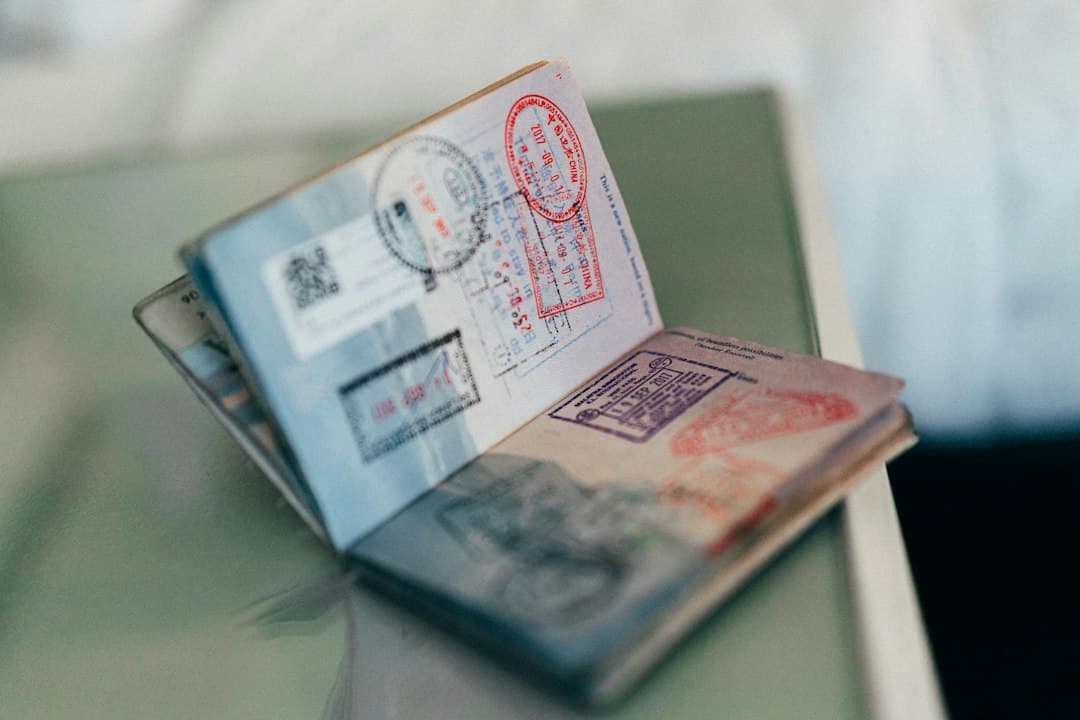
Taxation: Tax Residency and Taxes
Your tax situation depends on your tax residency, and the tax authorities determine it[6]. If your tax residency is in France, you're taxable there on all your income; if it's outside France, you're usually taxable only on your French-source income[6].
According to an unofficial source, Article 4 B of the French Tax Code sets three alternative criteria: your household or, failing that, your main place of residence; your main professional activity; the center of your economic interests. Meeting one criterion is enough, unless a tax treaty considers you a resident of another country[2]. Have your tax authority confirm these criteria.
To find out what a tax treaty provides in your case, contact the non-resident individual tax service[6]. Also check your obligations with the tax administration of your country of residence[6]. These guidelines do not replace personalized advice.
Housing and Documentation to Prepare
At border controls, visitors must generally be able to present proof of means of subsistence for the entire stay[7], as well as proof of accommodation[8]. Check the required documentation on france-visas.gouv.fr.
For a Schengen short-stay visa (and not for a long-stay visa, whose document list depends on your situation), you must prove sufficient means for the stay and return, for example with bank statements, contracts or a letter of support, and medical insurance covering at least €30,000 in medical expenses, repatriation, and hospitalization[9].
Once settled, keep your proof of address, bank statements, and a day-by-day record of your stays: boarding passes, hotel invoices, lease dates[2]. This guide contains no official sources on leases, security deposits, or housing scams: consult service-public.fr before signing a lease.

Pitfalls, Scams, and Points to Watch
- Remote work under visitor status: according to an unofficial site, a category error exposes you to visa violation, expulsion, and future entry ban to the Schengen area[2]. According to our database, the risk of refusal or regularization issues is real[3].
- Forgetting to validate the VLS-TS: without declaring your entry date and address within 3 months, the visa is not valid beyond three months[2].
- Settling for a different purpose than your visa allows: the prefect can then revoke your VLS-TS[4].
- Believing the 183-day threshold alone determines tax residency: it does not[2].
- Foreign accounts: according to an unofficial site, tax residents declare foreign accounts each year using form 3916-3916 bis, and the standard penalty is €1,500 per undeclared account[2]. Verify this amount on impots.gouv.fr.
- Exceeding the 90-day-in-180-day rule: the EES automatically calculates this duration based on recorded entries and exits, making overages detectable throughout the Schengen area[10]. It has been fully operational since April 10, 2026[11]. Check the ETIAS launch date on travel-europe.europa.eu.
- Evolving rules: civic exam in 2026, procedures moved to ANEF, indexed thresholds[1].
Official Sources to Consult
- france-visas.gouv.fr: visa application and Visa Wizard assistant[1].
- service-public.fr: long-stay visa, visitor status, income tax.
- ANEF (administration-etrangers-en-france.interieur.gouv.fr): visa validation and residence permits.
- impots.gouv.fr and your local tax office: tax residency, foreign accounts.
- travel-europe.europa.eu: EES and ETIAS.
Private guides can serve as reference points, but they do not replace these official sites.
Sources
- 1.^ abcdeMira Knowledge — France has no digital nomad visa; visitor status prohibits work and the Talent Passport is focused on France. Verified 06/08/2026: official source france-visas.gouv.fr. (accessed June 8, 2026)
- 2.^ abcdefghsettli.io — VLS-TS: the digital nomad checklist for France: "or a Talent Passport, for entrepreneurs with a project or employees with a French job offer. (settli.io)" ; "the VLS-TS visitor status, whose holder must commit to not engaging in any professional activity in France and which authorizes none (settli.io)" ; "An error exposes you to visa violation, expulsion, and future entry ban to the Schengen area, and a VLS-TS is not valid beyond three months unless you declare your entry date and address via the online service within three months of entry. (settli.io)" https://settli.io/en/guides/france/digital-nomad-relocation-overview (accessed October 1, 2026)
- 3.^ abcMira Knowledge — Visitor status prohibits paid remote work, even for a foreign employer, and a signed declaration is required. Verified 06/08/2026: official source service-public.fr. https://www.service-public.fr/particuliers/vosdroits/F2231 (accessed June 8, 2026)
Show 8 more sourcesShow less
- 4.^ abcdefghiservice-public.gouv.fr — Long stay visa (stay of more than 3 months to 1 year) | Service Public: "To enter and stay in France for more than 3 months, a foreigner must have a long-stay visa (type D). (service-public.gouv.fr)" ; "Type D visa allows you to stay in France for more than 3 months to 1 year and to travel without another visa in the Schengen area, without exceeding 90 days during its validity. (service-public.gouv.fr)" ; "If you are an adult, you must apply for a long-stay visa even if your nationality exempts you from a short-stay visa. (service-public.gouv.fr)" https://www.service-public.gouv.fr/particuliers/vosdroits/F16162?lang=en (accessed October 1, 2026)
- 5.^ abMira Knowledge — Visa applications are submitted through France-Visas, with VFS or consulate appointments. Verified on June 8, 2026: 2 concordant sources (france-visas.gouv.fr, service-public.fr). https://france-visas.gouv.fr (accessed June 8, 2026)
- 6.^ abcdservice-public.fr — Income tax for a French citizen moving or working abroad | Service Public: "It depends on your tax residence. Tax authorities determine this based on your situation. (service-public.fr)" ; "If your tax residence is outside France, you are most often taxable only on your income from French sources. If your tax residence remains in France, you are taxable there on all your income. (service-public.fr)" ; "To learn about provisions that could result from a tax treaty, contact the tax service for non-resident individuals. (service-public.fr)" https://www.service-public.fr/particuliers/vosdroits/F31442?lang=fr (accessed October 1, 2026)
- 7.^Mira Knowledge — At border controls, you must be able to prove your means of subsistence for the duration of your stay. Verified: official source ambacongo-us.org.
- 8.^Mira Knowledge — At border controls, you must be able to prove your accommodation. Verified: official source ambacongo-us.org.
- 9.^Mira Knowledge — A short-stay visa requires sufficient funds and medical insurance of at least €30,000. Verified on June 8, 2026: official source france-visas.gouv.fr. https://france-visas.gouv.fr (accessed June 8, 2026)
- 10.^Mira Knowledge — The EES automatically calculates the 90-day rule over 180 days and makes overstays detectable throughout the Schengen area. Verified on August 20, 2026: official source travel-europe.europa.eu. https://travel-europe.europa.eu/ees_en (accessed August 20, 2026)
- 11.^Mira Knowledge — The EES has been fully operational since April 10, 2026. Verified on August 20, 2026: official source travel-europe.europa.eu. https://travel-europe.europa.eu/ees_en (accessed August 20, 2026)