Kiruna and Abisko, 93 km apart, make a complementary pair: a mining town in the middle of a major transformation and a national park known for its often clear skies. This article helps you choose what you want to see (the mine, Sámi culture, the Icehotel, the northern lights, hiking trails), pick the right season, and plan the journey between the two. It closes with the precautions to know before traveling in winter.
Kiruna and Abisko: Swedish Lapland in two stops
Arctic Sweden, or Swedish Lapland, covers nearly a quarter of the country[1]. The region is home to three UNESCO World Heritage Sites: the Laponia cultural and natural landscape, Gammelstad Church Town in Luleå, and the Struve Geodetic Arc[2].
Kiruna, Sweden's northernmost town, serves as the gateway to the Icehotel, Kebnekaise, the country's highest peak, and Abisko National Park[2]. The municipality covers an area larger than that of more than 50 countries, spanning forests, marshes, lakes, rivers and mountains[1].
The entire region is part of Sápmi, the traditional homeland of the Sámi, an Indigenous people whose land stretches across northern Sweden, Norway, Finland and Russia[2]. Here you can enjoy two atmospheres: a town being rebuilt and a mountain landscape.
Kiruna: a mining town in the middle of a transformation
Founded in 1900 as a mining town, Kiruna is building a new center about three kilometers east of the old one, so that mining operations can continue[1]. Several historic buildings are being moved whole[1]. The new center opened in 2022, and its completion is planned for 2035[1].
At the LKAB mine, the largest underground iron mine in the world, guided tours go down to 540 meters below ground[1]. A guided city tour traces the story from its geological origins 400 million years ago to today's Kiruna, covering both the old and new centers[1].
Kiruna has also been named European Capital of Culture 2029[1].
Sámi culture and reindeer: meeting the people of Sápmi
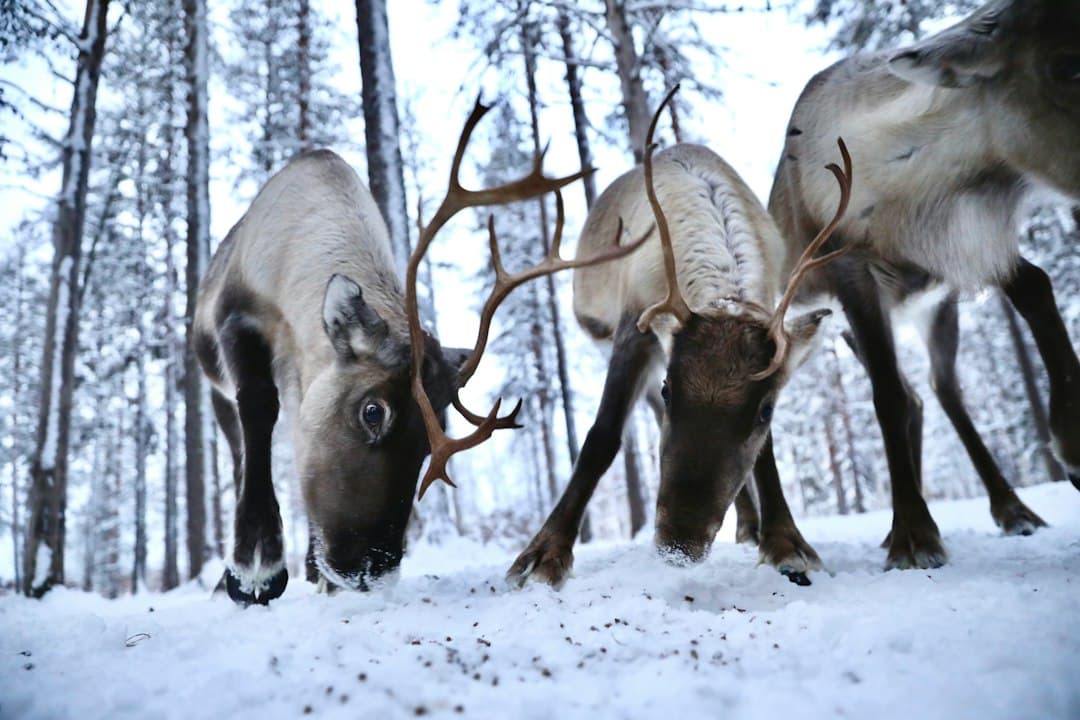
Around 20,000 Sámi live in Sweden, with their cultural heritage, language, flag and parliament[1]. The Sámi have lived here for thousands of years, and reindeer herding remains a central part of their culture[1].
To discover this culture through Sámi hosts, companies such as Nutti Sámi Siida, Giron Reindeer and Scandinavian Sami Photoadventures offer guided experiences on reindeer herding and Sámi traditions, with activities that vary by season[1].
To buy an authentic item, look for the Sámi Duodji and Sámi Made labels: they confirm Sámi craftsmanship or production by Sámi makers[2]. To go further, the Ájtte museum in Jokkmokk is Sweden's main museum dedicated to Sámi culture[2].
If you come across reindeer in the wild, keep a respectful distance and do not disturb them[1].
Icehotel and Jukkasjärvi: sleeping in ice
In Jukkasjärvi you'll find the Icehotel, the world's first ice hotel, a year-round destination where art rooms and suites are carved from ice harvested from the Torne River[2].
Also in Jukkasjärvi, Nutti Sámi Siida, a family business, offers cultural and nature experiences rooted in Sámi traditions, along with unique accommodation close to the reindeer[2].
Abisko: national park, canyon and Kungsleden
Abisko National Park was founded in 1909, one of Sweden's first[3]. It covers 77 km² in Swedish Lapland[4]. A permanent exhibition there presents its geology, flora, fauna, climate and cultural history[3].
You can easily adapt your hike to the time you have: from a half-hour walk to a multi-day adventure on the Kungsleden[3]. The Abisko canyon is easy to reach and can be visited while you stay on site[3].
The Kungsleden, the King's Trail, begins in the park[5]. The section between Abisko and Nikkaluokta crosses the national park and offers views of Kebnekaise[1]. For hikers, Swedish Lapland offers about 2,250 kilometers of marked trails[2].
Northern Lights, Polar Night, and Midnight Sun
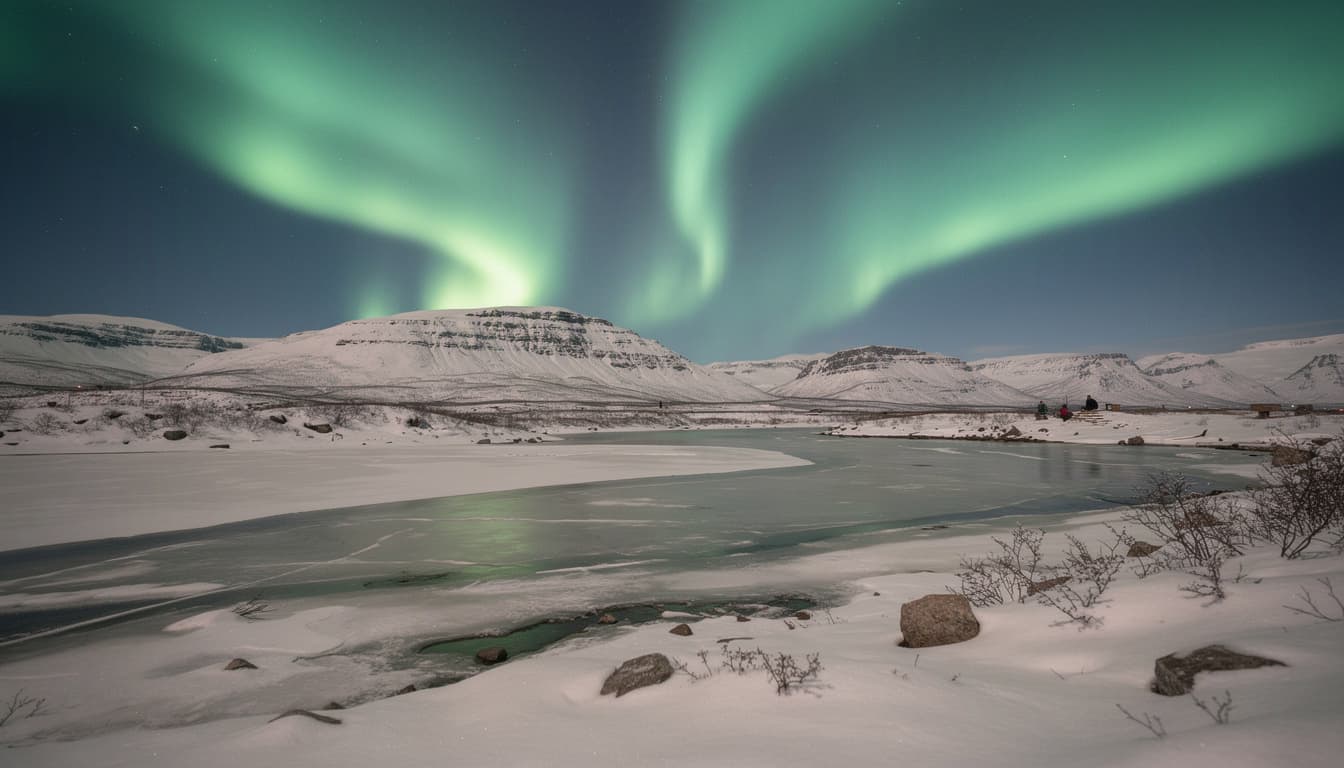
Abisko is considered one of the best places in the world to see the Northern Lights: the area is sheltered from the humid Atlantic air masses and often enjoys clear skies[3].
The Aurora Sky Station sits on Mount Njullá and is reached by chairlift; it can be visited in summer, autumn, and winter[3]. In Abisko, you can also have dinner under the aurora, by reservation[4].
A clear sky is not guaranteed, though[6]. So plan for several evenings rather than just one.
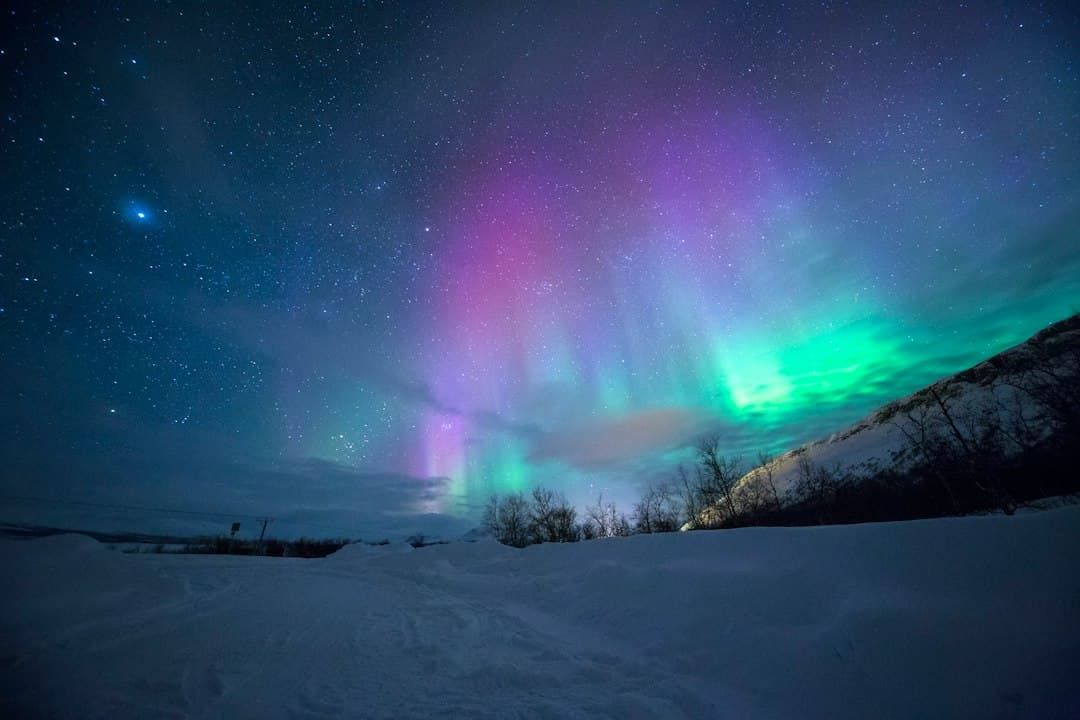
As for light, in May the aurora gives way to the midnight sun: 24 hours of daylight north of the Arctic Circle until mid-July[2].
Winter and Summer Activities
In winter, the offer centers on snow activities. The family resort of Björkliden and the one at Riksgränsen open the ski season, which generally runs from February to early or late May depending on conditions[1]. In Abisko, you can also go cross-country skiing, snowshoeing, dog sledding, and ice fishing[4].
In summer, fishing is a major classic: Arctic char, pike, grayling, and salmon[1]. Swedish Lapland has thousands of rivers and lakes, and the Torne River is one of the most productive salmon rivers in the world[2]. Hiking under the midnight sun completes the program[4].
At the Table: Arctic Flavors
Sámi culinary traditions have strongly influenced the cuisine of Swedish Lapland. Reindeer is a staple there, often prepared as souvas, a lightly smoked meat traditionally preserved over a wood fire[2].
In Abisko, the Kungsleden restaurant at the tourist station offers a view of Lake Torneträsk on one side and the Abisko Mountains on the other[3]. The Abisko Mountain Lodge is home to the Brasseriet restaurant, which serves slow food cuisine[3].
Practical Info: Season, Access, and Length of Stay
- Northern Lights: in Abisko, the season runs from late August to April, with the best chances from mid-November to mid-March[7].
- Midnight sun: from May to mid-July[2].
- Kiruna-Abisko: 93 km via the E10, a little over an hour by car, with daily trains and buses year-round[5].
- Bus: about 1 h 15 min between the Kiruna bus station and Abisko Turist[5].
- In Kiruna: a local bus network, and regional buses (Länstrafiken Norrbotten) linking the town to Abisko, Jukkasjärvi, and Riksgränsen[1].
In the source's comparison, winter activities (hiking, snowshoeing, ice fishing, ice climbing, snowmobiling) are only offered in Abisko, not in Kiruna[7]. So plan on spending a night on site, or, from Kiruna, take a guided day excursion, which is a separate offer.
Pitfalls and Points of Caution
- Road: traffic and visibility conditions, as well as the presence of wild animals, especially moose, create higher risks from October 1 to April 30; the E10 road, which passes through Kiruna and Abisko, can be very dangerous in some stretches[8]. Check the weather before any departure[8].
- Winter hiking: accidents are regularly reported in the mountains in winter; bring gear suited to extreme temperatures[8].
- Avalanches: the risk is frequent, especially at the beginning and end of winter, and off-piste skiing is not recommended[8].
- Ice: on any frozen surface (lakes, sea), there is a risk of falling through; follow local recommendations on ice thickness, do not venture out alone, and let your loved ones know your plans[8].
- Weather and excursions: one participant saw an ice fishing outing replaced by a snowmobile trip in February 2026; ask the organizer what is planned if conditions are poor[7].
Checklist Before You Go
- Choose your priority (Northern Lights, skiing, midnight sun, Sámi culture) to set your season.
- Plan at least one night in Abisko if you want to do activities on site.
- Book Sámi host experiences and the Icehotel well in advance.
- Pack gear suited to extreme cold.
- Plan several evenings for the Northern Lights.
- Our article does not detail the opening hours and prices of the sites, nor day-by-day itineraries: check these directly with the operators to organize your stay.
Keep exploring
- Sweden: The Highlights, Region by Region
- Åre and Jämtland: What to See and Do in Sweden, From the Mountains to Östersund
- The High Coast in Sweden: What to See and Do on the Highest Coastline in the World
- Dalarna: What to See and Do in Sweden in Miniature
Sources
- 1.^ abcdefghijklmnopvisitsweden.com — Kiruna: Northern Lights and Arctic adventures | Visit Sweden: “Kiruna is part of Arctic Sweden, a vast region that covers almost a quarter of the country.” “The municipality of Kiruna is larger than more than 50 countries and encompasses forests, marshes, lakes, rivers and mountain landscapes.” “Founded as a mining community in 1900, it is now developing a new city center about three kilometers east of its original location so that mining can continue.” https://visitsweden.com/where-to-go/northern-sweden/norrbotten/kiruna/ (accessed November 9, 2026)
- 2.^ abcdefghijklvisitsweden.com — Arctic Sweden (Swedish Lapland): Northern Lights & Sámi culture | Visit Sweden: “Arctic Sweden is home to three UNESCO World Heritage Sites: the Laponia cultural and natural landscape, Gammelstad Church Town in Luleå, and the Struve Geodetic Arc.” “Kiruna: the northernmost town in Sweden and a gateway to sites such as the Icehotel, Sweden's highest mountain, Kebnekaise, and Abisko National Park, one of the best places to see the Northern Lights.” “The northernmost parts of Sweden, Norway, Finland and Russia are collectively called Sápmi, the traditional homeland of the Sámi indigenous people.” https://visitsweden.com/where-to-go/northern-sweden/arctic-sweden/ (accessed November 9, 2026)
- 3.^ abcdefghkirunalapland.se — Abisko - Kiruna Lappland: “Abisko National Park was founded in 1909, one of Sweden's first.” “A permanent exhibition presents Abisko National Park, its geology, flora, fauna, climate and cultural history.” “You can easily adapt your hike to the time you have and the level of effort you want. There is something for everyone, from a half-hour excursion to a multi-day adventure along the King's Trail.” https://kirunalapland.se/en/destinations/abisko/abisko/ (accessed November 9, 2026)
Show 5 more sourcesShow less
- 4.^ abcdvisitsweden.fr — Le parc national d'Abisko en Laponie suédoise | Visit Sweden: “Abisko is a 77 km² national park in Swedish Lapland, known for its natural beauty and Nordic wildlife.” “Fancy a typically Nordic dinner under the Northern Lights? It's possible. All you have to do is book.” “In Abisko, you can go skiing of every kind: alpine, off-piste or cross-country, but also Telemark skiing. Strap on your snowshoes or settle into a dog sled to go ice fishing.” https://visitsweden.fr/destinations/nord-de-la-suede/suede-arctique/le-parc-national-dabisko/ (accessed November 9, 2026)
- 5.^ abclapland-unpacked.com — Abisko: the park, the trails and an unmeasured sky: “The Kungsleden begins in the park.” “Abisko is 93 km from Kiruna via the E10, a little over an hour by car, with daily trains and buses year-round; the bus from Kiruna bus station to Abisko Turist takes about 1 hour 15 minutes.” https://www.lapland-unpacked.com/fr/destinations/abisko-parc-national-suede/ (accessed November 9, 2026)
- 6.^abiskotourism.com — Abisko Tourism · Excursions and guide to Abisko, Lapland: “A clear sky is not guaranteed, however.” https://www.abiskotourism.com/fr/ (accessed November 9, 2026)
- 7.^ abckirunatourism.com — Abisko National Park in winter · From Kiruna: “STF places the best chances between mid-November and mid-March, in a season running from late August to April.” “No. Hiking, snowshoeing, ice fishing, ice climbing and the snowmobile trip in this comparison are offered only in Abisko.” “In February 2026, a participant saw ice fishing replaced by a snowmobile outing: so ask what is planned if conditions are poor.” https://www.kirunatourism.com/fr/parc-national-abisko/ (accessed November 9, 2026)
- 8.^ abcdediplomatie.gouv.fr — Sweden - Safety | France Diplomatie: “Traffic and visibility conditions, as well as the presence of wild animals (especially moose), create higher risks from October 1 to April 30.” “Be very vigilant throughout the country, and in particular on the E10 European route (Överkalix–Gällivare–Kiruna–Abisko–Riksgränsen), which can be very dangerous in certain sections.” “It is strongly advised to check the weather forecast before any departure.” https://www.diplomatie.gouv.fr/fr/information-par-pays/suede/conseils-aux-voyageurs-securite (accessed November 9, 2026)