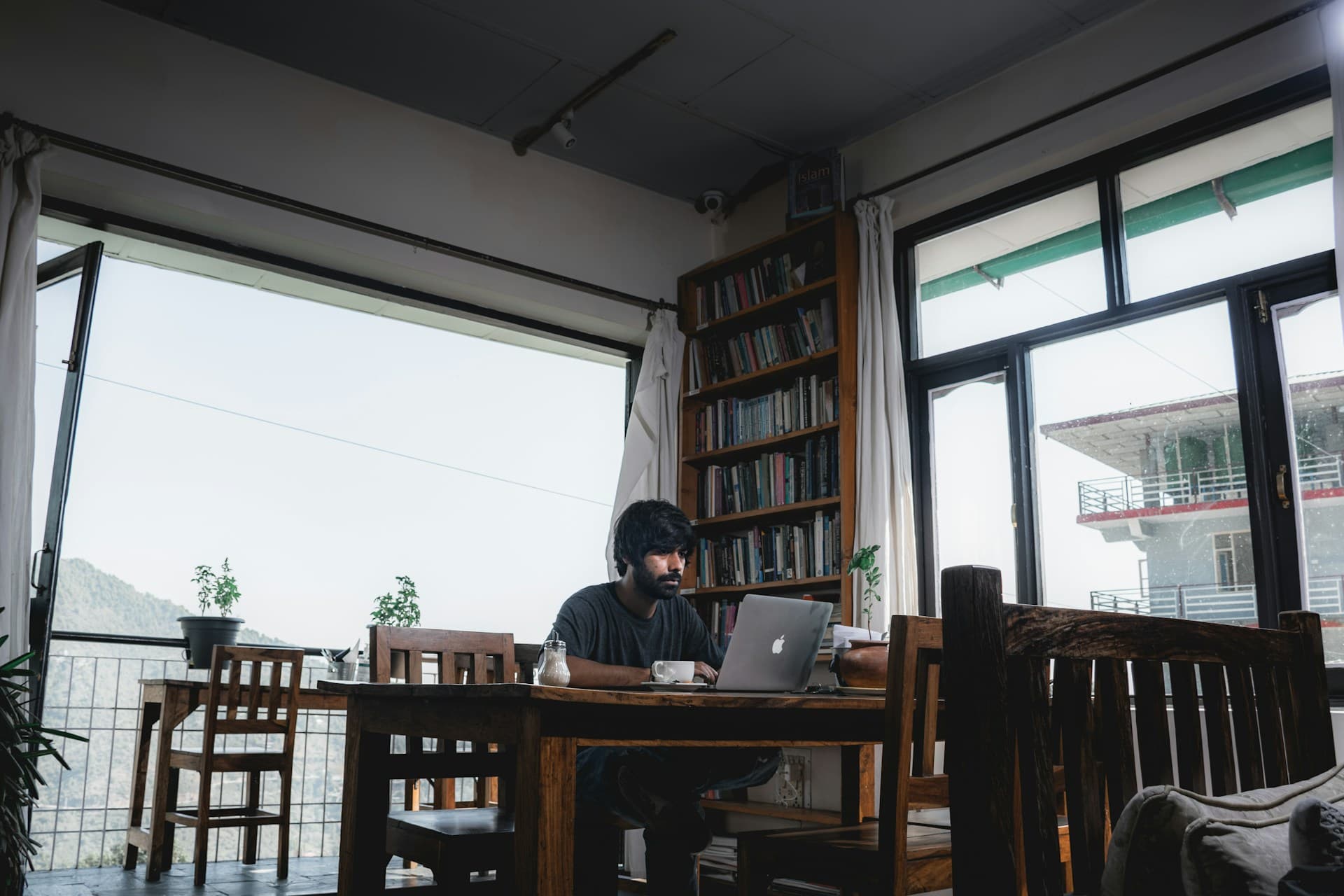
New to the world of remote work and location-independent living? Or maybe you keep seeing words like "slomad," "Schengen," or "cost-of-living arbitrage" and nodding along without really knowing what they mean. No shame in that. This glossary covers the terms that come up constantly in nomad circles, explained plainly. No jargon to explain the jargon. Terms are grouped by topic so you can go straight to what you need.
Jump to a section: The Basics · Work and Income · Housing and Living · Visas, Admin, and Tax · Travel Style and Community · Cities, Impact, and Ethics · Barcelona
The Basics
The foundational words. If you are new to all of this, start here.
Digital Nomad Someone who works remotely using internet-connected tools and has no fixed home base, choosing instead to live and work from different locations around the world. The work is digital; the lifestyle is mobile.
Remote Work Work done outside a traditional office, using a computer and internet connection. Remote work does not automatically mean nomadic; many remote workers stay in their home city. But it is the prerequisite that makes nomadic living possible.
Location-Independent Income Money earned in a way that does not require you to be in a specific physical place. This includes remote employment, freelance work, running an online business, or earning passive income through investments or digital products. It is the financial foundation of the nomad lifestyle.
Lifestyle (in nomadic context) In the nomad world, "lifestyle" refers to the whole package of how you structure your day, where you choose to live, how much you work, and how you balance freedom with stability. It is not just about travel; it is about deliberately designing a life that does not default to the standard office-apartment-weekends routine. When nomads talk about "building a lifestyle," they mean making intentional choices about time, location, and income rather than defaulting to convention.
Workation A mix of the words "work" and "vacation." A workation is when someone travels to a new destination while continuing to work remotely, typically for a shorter period than a full nomadic stint, anywhere from a week to a few months. It is often the first taste of location-independent living for people who are still employed full-time.
Global Connectivity Access to reliable internet, international banking, communication tools, and logistics networks that make it possible to work and live anywhere in the world. It is the infrastructure that makes the nomad lifestyle possible. When a location has poor global connectivity (slow internet, no international ATMs, restricted apps), it is a practical barrier for most nomads.
Work and Income
How nomads earn money, structure their work, and stay productive across time zones.
Freelance Nomad A self-employed remote worker who takes on projects or contracts for multiple clients rather than having one employer. The freelance model is one of the most common paths to location independence because it does not require employer approval to work from abroad.
Digital Agency A company that provides online services such as web design, social media management, content creation, SEO, or digital advertising, operating entirely online with remote teams. Many nomads either work for digital agencies or run their own as a way to earn location-independent income.
Cost-of-Living Arbitrage Earning a salary or income in a strong currency (like US dollars or euros) while living in a country where daily expenses are much cheaper. For example, a developer earning $80,000 a year in US dollars who moves to Colombia, where rent might be $400 a month instead of $2,000, is practicing cost-of-living arbitrage. It is one of the main financial reasons people choose the nomad lifestyle.
Time Zone Management The practice of organizing your work schedule around the time zones of your clients, teammates, or employer when you are living in a different part of the world. A freelancer based in Bali working with clients in New York, for example, needs to plan their day around an 11 to 13 hour time difference. This can mean early mornings, late evenings, or asynchronous communication to make collaboration work without being online at 3am.
Cyclical Productivity The idea that your most productive hours and days follow a natural rhythm, and that you can design your schedule around those peaks rather than forcing yourself into a fixed 9-to-5. Many nomads discover their best deep work happens in the early morning or late at night, and the flexibility of remote work lets them actually act on that.
House Hacking Reducing or eliminating your housing costs by renting out part of your property or using your home to generate income while you are away. Some nomads rent out their home while traveling to cover their living costs abroad.
Airbnb Arbitrage Renting a property long-term and subletting it short-term on platforms like Airbnb to cover the cost or turn a profit. Some nomads use this to fund their travels. It sits in a legal grey area in many cities, so it is worth checking local rules before trying it.
Housing and Living
Where nomads stay, how they find it, and what the different setups actually mean.
Co-living A housing arrangement where people rent private rooms but share common spaces like kitchens, living rooms, and often coworking areas. Think student accommodation, but designed for working adults. Most co-living spaces are set up specifically for remote workers and nomads, with fast wifi, community events, and short-term leases. It is a middle ground between a hotel (too isolating) and a shared apartment with strangers from Craigslist (too unpredictable).
Co-living Communities A step beyond a physical co-living space. These are groups of remote workers who either live together in one location or travel together from place to place, sharing accommodation, costs, and daily life. Some are loosely organized online communities; others are structured programs with curated members, scheduled trips, and regular events.
Co-working Space A shared office that anyone can rent by the day, week, or month. You get a desk, fast wifi, meeting rooms, and usually good coffee. Unlike a traditional office, you are working alongside people from completely different companies and industries. Co-working spaces have become the default workplace for nomads in most major cities.
Nomad Hub A city or neighborhood that has become a well-known gathering point for digital nomads, usually because of a combination of affordable living, good infrastructure, a warm climate, and an existing community. Examples include Chiang Mai in Thailand, Medellín in Colombia, Lisbon in Portugal, and Bali in Indonesia. Hubs tend to attract co-working spaces, co-living options, and regular community events.
Location Strategy The deliberate process of choosing where to live based on practical factors like visa availability, cost of living, tax treaties, time zone alignment with clients, internet quality, safety, and personal preferences. Nomads who think strategically about location do not just go where looks nice; they map out which combination of places makes their life and work most sustainable.
Campervan Nomad Someone who lives and works from a campervan or motorhome, moving between locations on the road rather than flying between cities. Popular in Europe, the US, Australia, and New Zealand. Lower daily costs than city living, but requires reliable mobile internet and a tolerance for small spaces.
Base Country The country a nomad considers their primary residence, even if they spend significant time elsewhere. Important for tax and banking purposes. Not always where you were born or hold a passport.
Visas, Admin, and Tax
The legal and financial side of living across borders. Not glamorous, but essential.
Visa Requirements The rules a country sets for who can enter, how long they can stay, and what they are allowed to do while there. Requirements vary enormously by nationality and purpose of visit. As a nomad, understanding visa requirements for each country you want to visit is non-negotiable. Getting it wrong can mean deportation, fines, or being banned from re-entry.
Schengen Area / Schengen Visa The Schengen Area is a zone of 29 European countries that have agreed to allow free movement across their shared borders. If you enter one Schengen country, you can travel between all of them without passport checks. A Schengen Visa gives non-EU citizens permission to enter and move freely within this zone. The standard tourist rule is a maximum of 90 days within any 180-day period. This is a critical constraint for non-EU nomads who want to spend extended time in Europe: after 90 days, you must leave the Schengen Area until your 180-day window resets, unless you hold a specific long-stay visa like a digital nomad visa.
Weak Passport A passport that provides limited visa-free or visa-on-arrival access to other countries, meaning the holder must apply in advance for visas to most destinations. Citizens of countries like Afghanistan, Iraq, or Pakistan hold some of the world's weakest passports and face significantly more barriers to the nomad lifestyle than citizens of countries like Germany, Japan, or the US. Passport strength is a major but often overlooked factor in who can realistically become a digital nomad.
Visa Sponsorship When a company or organization formally supports your visa application, vouching for your employment or purpose of stay. For digital nomads, this is most relevant when applying for certain long-stay visas that require proof of remote employment with a recognized company. Some digital nomad visa programs accept self-sponsorship (you vouch for your own income); others require a formal employer letter.
Visa Stacking The practice of combining multiple visa types or visa-free periods across different countries to stay in a region longer than any single visa would allow. For example, spending 90 days in the Schengen Area, then 90 days in non-Schengen countries like Georgia or Albania before returning. It requires careful planning and awareness of each country's rules.
Border Run When someone leaves a country specifically to reset their visa or entry period, then comes straight back in. Common in places like Thailand where tourist visas have strict limits. It is risky, though: border officers can refuse entry, and several countries now crack down on people doing it repeatedly.
Tax Residency The country where you are legally considered a resident for tax purposes. This is often, but not always, where you spend the most time. Different countries have different rules for establishing tax residency, and some will try to claim you as a resident even after you have left if you do not formally deregister. Understanding where you are (and are not) a tax resident is essential for any long-term nomad.
Cross-Border Tax Exposure The risk of owing taxes in more than one country at the same time. When you live in multiple countries throughout a year, different governments may each consider you a tax resident and expect you to pay. Without proper planning, you could end up with tax bills in two or three places simultaneously. This is one of the most important practical issues nomads need to understand before leaving their home country.
Perpetual Traveler (PT) Someone who moves continuously between countries, never staying long enough in any single place to become a legal tax resident. The strategy is sometimes used to legally minimize tax obligations, though it requires careful planning and is becoming harder to maintain as tax laws evolve.
Travel Style and Community
How nomads move, connect, and build a life on the road.
Slomadism / Slow Travel Spending more time in fewer places rather than rushing through as many destinations as possible. A slomad (slow nomad) might stay in one city for one to three months, get to know the neighborhood, build a routine, and develop real connections before moving on. It is a reaction to the exhaustion of constant movement and the shallowness of location-hopping. Most experienced nomads eventually shift toward slow travel.
Solo Travel Traveling alone, without a companion, partner, or organized group. Solo travelers plan their own itinerary, make their own decisions, and manage their own logistics. It can be deeply rewarding and is increasingly common, particularly among women. The growth of co-living spaces and nomad communities has made solo travel less isolating than it used to be.
Hub-Hopping Moving between established nomad hubs rather than exploring off-the-beaten-path locations. Efficient and practical, but sometimes criticized for creating an insular nomad bubble disconnected from local life.
Nomad Meetup An informal or organized gathering of digital nomads in a particular city, usually for networking, socializing, or sharing local tips. Some are spontaneous (a post in a Facebook group); others are recurring events hosted by co-working spaces or community organizers.
Cultural Exchange The process of learning from, sharing with, and being genuinely influenced by a culture different from your own. In travel, it means going beyond tourist attractions to understand how local people actually live, work, and think. True cultural exchange goes both ways: you share something of yourself too, rather than just observing.
Community-Based Travel A way of traveling that prioritizes meaningful connection with local people and communities, rather than just passing through as a tourist. This might mean staying with locals, hiring local guides, attending neighborhood events, or choosing locally owned accommodation over hotel chains. The goal is for travel to benefit the place you are visiting, not just your Instagram feed.
Cities, Impact, and Ethics
The bigger picture of what happens when large numbers of high-earning foreigners move into local communities.
Global South A term used to describe countries in Africa, Latin America, South Asia, Southeast Asia, and parts of the Middle East and Pacific, broadly corresponding to lower-income or developing economies. Many nomad hubs such as Medellín, Bali, and Chiang Mai are in the Global South. The term matters in nomad discussions because of the economic dynamics between high-earning visitors and local populations, including rising rents and gentrification.
Extractive Tourism Tourism that takes value out of a destination without giving back. This includes staying in international hotel chains (money leaves the local economy), hiring foreign-owned tour operators, and treating local culture as entertainment rather than engaging with it respectfully. The opposite of community-based travel. Many nomad hubs are starting to push back against this model as housing costs rise and local communities feel the pressure.
Overtourism The situation where a destination receives more visitors than its infrastructure, housing, and local community can comfortably absorb. Barcelona is one of the most cited examples in Europe, with over 15 million tourists per year in a city of 1.6 million residents. The effects include housing shortages, noise, environmental pressure, and cultural erosion. For nomads, overtourism is relevant both as an ethical consideration and a practical one: it drives up prices and makes popular neighborhoods harder to live in.
Gentrification Tension When an influx of higher-earning residents, including nomads, pushes up rents and displaces the people who have lived in a neighborhood for years. This has happened in cities like Lisbon, Mexico City, and Barcelona. Nomads are often part of this dynamic whether they intend to be or not. Being aware of it, choosing locally owned businesses, and opting for mid-term leases over tourist apartments are practical ways to reduce your impact.
Barcelona: Key Terms
Barcelona is one of the most popular nomad destinations in Europe and one of the most complex. It has its own regulations, social tensions, and local dynamics that come up constantly in nomad conversations. If you are planning a stay there, these terms will save you from being caught off guard.
Barcelona Digital Nomad Visa Spain's digital nomad visa, formally part of the 2022 Startup Law (Ley de Startups), allows non-EU remote workers to live legally in Spain, including Barcelona, for up to one year, renewable for up to five years total. The income requirement is approximately €2,850 to €2,900 per month. Barcelona is the most popular Spanish city for applicants due to its infrastructure, climate, and international community. The application is submitted through the Spanish consulate in your home country before arrival.
Spain Startup Law (Ley de Startups) The 2022 Spanish legislation that introduced the digital nomad visa, simplified certain tax regimes for entrepreneurs and remote workers, and created new incentives to attract international talent to Spain. It is the legal foundation for most nomad-friendly policies in Barcelona and across Spain. Understanding the basics of this law is useful context for anyone navigating visa or tax questions related to a Barcelona stay.
Beckham Law (Ley Beckham) A Spanish tax regime officially called the Special Expats' Tax Regime, nicknamed after the footballer David Beckham who was one of its early beneficiaries. It allows eligible foreign workers who move to Spain to pay a flat income tax rate of 24% on Spanish-sourced income for up to six years, instead of the standard progressive rates that can reach 47%. To qualify, you must not have been a Spanish tax resident in the previous five years and must have moved to Spain for work reasons. It is one of the most significant financial incentives for high-earning nomads choosing Barcelona as a base.
Schengen 90-Day Rule (in Barcelona context) Non-EU citizens visiting Barcelona as tourists are subject to the standard Schengen limit: 90 days within any 180-day period across the entire Schengen Area. This means your days in Barcelona count toward the same 90-day clock as days spent in Paris, Amsterdam, or Berlin. Once you hit 90 days, you must leave the Schengen Area entirely until the window resets. The Spain Digital Nomad Visa is the legal solution for staying beyond this limit.
NIE (Número de Identificación de Extranjero) A tax identification number assigned to foreign nationals in Spain. You need an NIE to open a Spanish bank account, sign a lease, pay taxes, register a company, and carry out most official transactions. If you are staying in Barcelona for more than a short visit and plan to work legally, getting your NIE is one of the first administrative steps. It is obtained through the Spanish police (Policía Nacional) or a Spanish consulate abroad.
Empadronamiento The process of registering your address with the local municipality in Spain. Once registered, you appear on the municipal census (padrón) and gain access to public services like healthcare, libraries, and certain administrative processes. For nomads on a digital nomad visa or long-stay permit, empadronamiento is often a required step after arrival. It requires proof of address, which means you need a proper lease agreement, not just an Airbnb booking.
Barrio (Neighbourhood) The Spanish word for neighborhood. Barcelona is made up of distinct barrios, each with its own character, price level, and feel. Nomads tend to cluster in areas like Eixample (central, grid-layout, great cafes), Gràcia (village feel, local atmosphere), Poblenou (tech scene, co-working hubs, formerly industrial), and Sant Pere (quieter, central, less touristy). Choosing the right barrio matters as much as choosing the city.
Eixample Barcelona's central grid-pattern district, built in the 19th century and one of the most sought-after areas for longer stays. It is walkable, well-connected by metro, full of cafes and co-working spaces, and has a higher concentration of mid-term rental apartments than more tourist-heavy neighborhoods. Rents are higher than outlying areas but lower than short-term tourist lets.
Poblenou A former industrial neighborhood in Barcelona that has transformed into the city's main tech and startup hub, sometimes called the "22@ District" after the urban regeneration project that redeveloped it. It has a higher concentration of co-working spaces, tech companies, and digital nomads than most other areas of the city, combined with lower rents than central Eixample and a less touristy atmosphere. A practical and increasingly popular choice for longer stays.
Mid-Term Rental A rental agreement typically lasting one to six months, sitting between a short-term holiday let and a standard long-term lease. In Barcelona, mid-term rentals have grown significantly as a category because they are less regulated than tourist apartments but more flexible than annual contracts. They are currently the most practical housing option for nomads in the city. Platforms like Spotahome, Flatio, and Housinganywhere specialize in this type of rental.
Airbnb License Moratorium Barcelona announced it will not renew any of its existing short-term rental licenses when they expire in 2028, effectively phasing out Airbnb-style tourist apartments in the city entirely. This is a direct response to the housing crisis. For nomads, it means short-term furnished rentals will become scarcer and more expensive over the next few years. Mid-term rental platforms and co-living spaces are expected to fill the gap.
Touristic Apartment (Apartamento Turístico) A residential property legally licensed for short-term tourist rental, similar to an Airbnb. Barcelona has placed a hard cap on new licenses since 2014 and announced the full phase-out of existing licenses by 2028. This has already reduced the supply of short-stay options and is steadily pushing nomads toward mid-term rentals and co-living spaces. If someone offers you accommodation listed as a touristic apartment, check that the license is current and valid.
Anti-Tourism Movement A growing wave of local resistance to the negative effects of mass tourism in Barcelona. Residents, particularly in neighborhoods like the Gothic Quarter, Barceloneta, and Gràcia, have organized protests, put up signs, and pushed for political action against the displacement of locals caused by short-term rentals, overcrowding, and rising rents. As a nomad choosing to spend weeks or months in the city rather than a weekend, you are in a different category from a tourist, but being aware of this tension is part of being a respectful long-term visitor.
A Note on Language
Many of these terms were coined by English-speaking nomads from wealthy countries and carry assumptions that do not apply universally. The experience of a German software developer nomading through Southeast Asia is structurally very different from that of a Filipino freelancer trying to get a visa to work from Europe. As the community grows and diversifies, the language around it is evolving too.
Something missing from this list, or a term that has changed meaning recently? The nomad world moves fast, and so does its vocabulary.
Join Hello Mira
Discover how to travel better, longer, with a positive impact on local communities.
Join Our Community