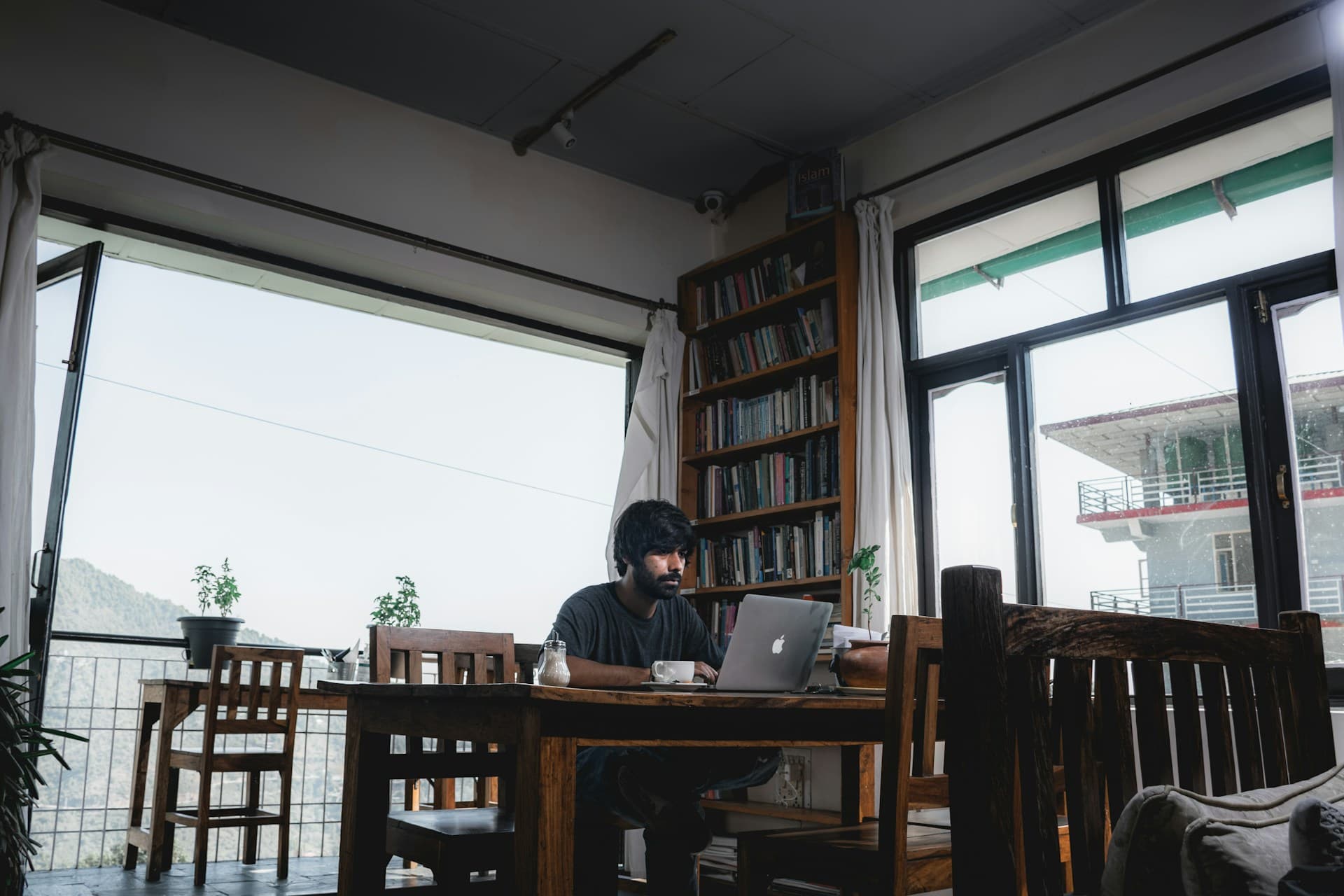
A digital nomad is someone who works remotely over the internet while moving between places, instead of living and working in one fixed location.[1] In 2026, the term covers much more than a laptop on a beach: millions of salaried employees, freelancers and founders combine remote work with travel, under visa, tax and insurance rules that barely existed ten years ago.
This guide explains what the word really means, where it comes from, how a digital nomad differs from a remote worker, an expat or a tourist, how many there are, and what the lifestyle requires in practice — with sources for every figure.
What does "digital nomad" mean?
Dictionaries agree on two ingredients: remote work and mobility. Cambridge defines a digital nomad as "someone who does not have a permanent office or home and works from different countries, towns, or buildings using the internet".[1] Merriam-Webster puts it as "someone who performs their occupation entirely over the Internet while traveling".[2]
Researchers add a third ingredient: duration. In a widely cited review of the literature, Hannonen describes digital nomads as "a rapidly emerging class of highly mobile professionals, whose work is location independent", who "work while traveling on (semi)permanent basis and vice versa".[3] A two-week holiday with a laptop does not make someone a digital nomad; a way of life built around working while moving does.
- Remote work: the job is done online, for employers or clients who are usually not in the country where you stay.
- Mobility: you change place regularly, from a few weeks to several months at a time.
- No single fixed base: travel is part of how you live, not a break from it.
Where does the term come from?
The expression was popularised by Tsugio Makimoto and David Manners in their book Digital Nomad, published by John Wiley & Sons in October 1997.[4] As BBC Travel recalls, the authors predicted "a future workforce of globe-trotting travellers logging in from abroad", made possible by technological progress.[5]
Laptops, Wi-Fi and smartphones later turned that prediction into an everyday reality. Growth has been especially strong in recent years: in the United States, the number of digital nomads has risen by 153% since 2019.[6]
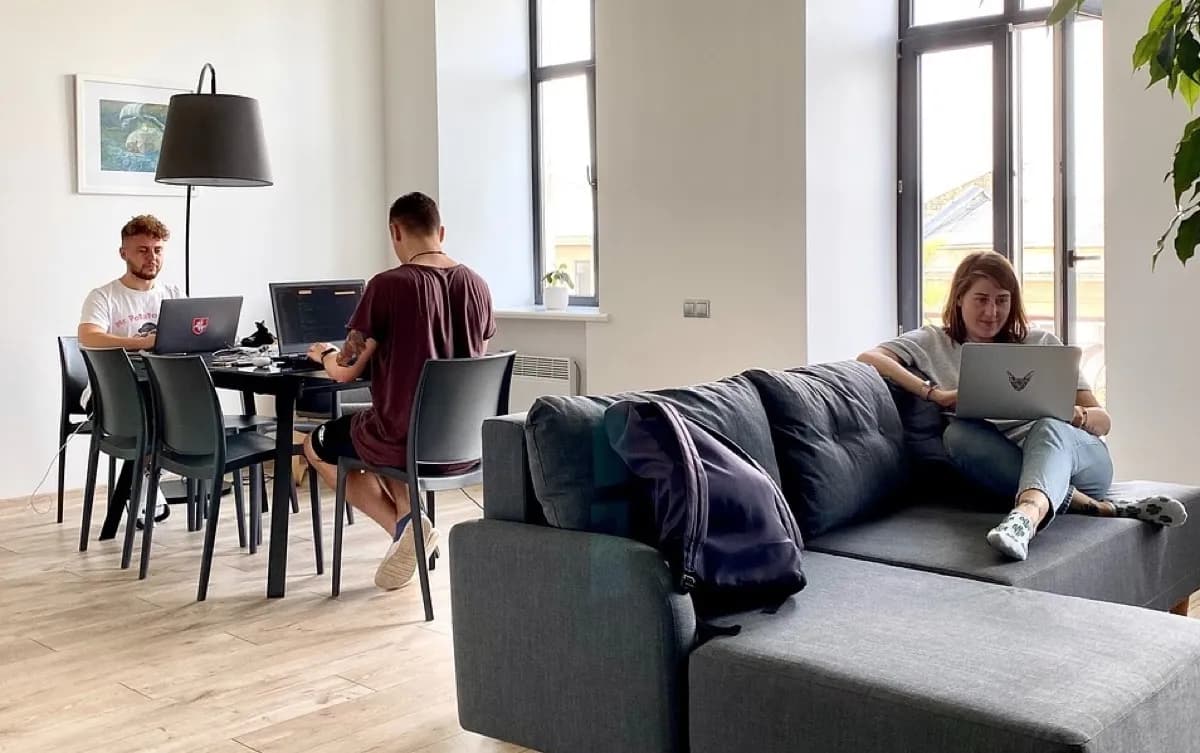
Digital nomad vs remote worker vs expat vs tourist
Digital nomads share traits with several other groups, which is why the word is often misused. The difference comes down to three questions: do you work, do you move regularly, and do you settle in one place?
Digital nomad vs remote worker
A remote worker works away from the employer's office, usually from home. A digital nomad is a remote worker who also moves regularly from place to place. Every digital nomad works remotely, but most remote workers are not nomads.
Digital nomad vs expatriate
An expatriate moves to one country and settles there, often with a local job or an assignment from their employer. A digital nomad keeps working for employers or clients based elsewhere, and usually moves on after a few weeks or months.
Digital nomad vs tourist
A tourist travels for leisure. A digital nomad works during the stay — which is exactly why immigration rules matter: in many countries, a tourist or visitor status is not designed for working, even remotely (see below).
Slowmads and "location independent" workers
"Slowmads" stay several months in one place instead of changing city every week, a rhythm that is easier on budgets, visas and well-being. "Location independent" describes a job that can be done from anywhere; "digital nomad" describes actually doing it on the move. Our digital nomad glossary explains the rest of the vocabulary.
How many digital nomads are there?
There is no global census of digital nomads. The most cited figures come from the United States: according to MBO Partners' 2025 State of Independence study, 18.5 million American workers are currently digital nomads, a 2.2% increase over the previous year.[6] That is approximately 12% of the US workforce.[6]
Figures for other countries or for the whole world are estimates. Treat any worldwide number with caution unless its method is published.
Who are digital nomads today?
The image of the young freelancer with a backpack is outdated. MBO Partners finds that digital nomads with traditional jobs increased to 11.2 million in 2025, up from 10.2 million in 2024, while independent digital nomads declined to 7.3 million.[6] Salaried employees now clearly outnumber freelancers.
Remote employees
Full-time employees who work remotely for a company and travel with its agreement. MBO Partners notes that a growing number of companies are implementing digital nomad policies, which set the rules for working from abroad.[6]
Freelancers and independent professionals
Developers, designers, translators, writers, marketers and consultants who sell their services to clients in several countries. See our list of the best digital nomad jobs.
Online entrepreneurs
Founders who run their own business online. Some visas explicitly cover them: Estonia's Digital Nomad Visa is open to people who work for an employer registered abroad, run their own company registered abroad, or freelance for clients mostly outside Estonia.[7]
Slowmads and long-stayers
Nomads who stay several months or a year in one destination, often on a dedicated permit, and build a local routine, community and network.
Most nomads move less often than the cliché suggests. On Nomads.com, a community platform, members' trips last 62 days on average in a city (the median is 7 days, pulled down by many short stops) and 172 days on average in a country — about six months.[8]
What do digital nomads do for work?
Almost any job that can be done online. On Nomads.com, the most common occupations among members are software development, startup founder, web development, marketing, creative work and SaaS.[8] Among the members who share their employment type, 37% work full time for an employer, 19% are freelancers and 19% are startup founders; the rest are contractors, agency owners or part-timers.[8]
These figures describe the members of one platform, where tech profiles are over-represented: for example, 83% of its active members are men,[8] against 56% of digital nomads in MBO Partners' US study.[6] They show typical jobs, not the whole population. For more ideas, see the best digital nomad jobs.
How much do digital nomads earn?
Incomes vary widely, and the best data comes from surveys with known limits. Among 5,940 Nomads.com members who report their income, 7% earn less than US$25,000 a year, 15% between $25,000 and $50,000, 33% between $50,000 and $100,000, 35% between $100,000 and $250,000, and 11% more than $250,000; the median is $85,000 a year.[8] Because the sample leans towards tech workers, read this as an upper estimate rather than an average for all nomads.
Money is not always the main driver: about four out of five digital nomads (81%) say they are very satisfied or satisfied with their income, according to MBO Partners.[6] To live legally in many countries, your income also has to clear the visa thresholds described below.
Is being a digital nomad legal?
Working remotely from another country is legal when your immigration status allows it. What is allowed depends on the country, your nationality and the length of your stay — and it changes often.
Digital nomad visas
Many countries now offer a specific permit. Condé Nast Traveller counted 67 countries offering a digital nomad visa in 2025;[9] counts vary from one source to another because countries define these permits differently. Typical conditions include a minimum income earned from outside the country, health insurance, a clean criminal record and a ban on working for local employers.
A few examples, with the figures published by official sources:
- Spain: 200% of the Spanish minimum wage, i.e. €2,442 per month for a single applicant in 2026, plus €916 per month for the first accompanying family member; up to 20% of your professional activity may be for companies in Spain.[10]
- Croatia: at least €3,622.50 per month, for a stay of up to 18 months; you must work for a company that is not registered in Croatia and must not provide services to employers in Croatia.[11]
- Estonia: a stay of up to one year; the e-Residency site gives a threshold of €4,500 net per month,[7] while the foreign ministry's D-visa table lists €132 per day (€3,960 per month) for teleworking[12] — confirm the figure with the embassy before applying.
- Portugal: average monthly income over the last three months of at least four times the Portuguese minimum wage,[13] i.e. €3,680 per month in 2026, with the minimum wage at €920.[14]
- Malta: a minimum gross yearly income of €42,000 for applications submitted since 1 April 2024, plus health insurance.[15]
- Costa Rica: at least US$3,000 per month earned outside the country, or US$4,000 per month if your dependants apply with you.[16]
Thresholds are updated regularly, often every year. Find more destinations in our guide to digital nomad visas, and the difference with a classic permit in Digital nomad visa vs work permit.
Countries without a dedicated status
Where no dedicated permit exists, remote work on a visitor status is often a legal grey area. Guyana's official sources reference no remote work or digital nomad visa;[17] South Africa generally tolerates remote work for a foreign employer during a short visitor stay but has no dedicated remote work visa fully in place.[18] Other places create their own route: Dubai offers a residence permit for virtual work to foreigners employed by an organisation outside the country.[19] Always check the official immigration website before you travel.
Taxes: the part most people underestimate
Moving around does not switch off tax obligations. Countries usually decide whether you are tax resident by combining the days you spend there with your personal and economic ties, and 183 days is a common threshold. In Latvia, for example, individuals present for 183 days or more during any 12-month period are tax resident.[20]
Rules on foreign income also differ. In Thailand, residents are taxed on foreign income earned from 1 January 2024 onwards when it is brought into the country.[21] Some nomad permits come with their own tax rules, as in Malta.[22]
Not having a fixed home does not mean you are not tax resident anywhere. Before leaving, check with a tax adviser where you will be taxed, and what happens in your home country.
Health insurance and healthcare
Your national health cover may not follow you abroad, and travel insurance attached to a bank card is usually limited in time. Many nomad permits require health insurance: Malta, for instance, requires it from every applicant.[15] Check the exact requirement on the official page of each country, and read our article From backpacker to digital nomad: visa, insurance and pitfalls.
Pros and cons of the digital nomad lifestyle
Pros
- Freedom to choose where you live and work.
- Time to discover other cultures and languages, especially with slow travel.
- A potentially lower cost of living, depending on the destination — see the real cost of living in Medellín.
- More flexibility for employees, as companies adopt digital nomad policies.[6]
Cons
- Visa, tax and insurance paperwork that never really stops.
- Time zones that can clash with clients and colleagues.
- Isolation and blurred boundaries between work and leisure: research finds that digital nomadism "is not always experienced as autonomous and free but is a way of living that requires high levels of discipline and self-discipline".[23]
- Irregular income for freelancers and entrepreneurs.
Loneliness deserves a closer look. A study based on 30 in-depth interviews describes the lifestyle as "a continuum that may, but does not have to, lead to feelings of loneliness", and points to the "lack of social support, often related to the capacity to stay in a place long enough to build a network".[24] Slower travel, coworking spaces, coliving and online communities are the usual answers — the same study identifies platforms such as Facebook groups, Slack and MeetUp as key ways nomads meet people.[24]
Pitfalls and points to watch
- Working on a tourist status where it is not allowed: in many countries, a visitor status is not a work permit, even for a foreign employer.
- Becoming tax resident without realising it, for instance by staying 183 days or more in the same country.[20]
- Working for local clients when your permit forbids it: Croatia's permit excludes services to employers in Croatia,[11] and Malta's excludes services to Maltese businesses.[15]
- Health insurance that does not meet the visa requirement, which can block or delay your application.
- Treating nomadism as a permanent holiday: without routines and boundaries, the freedom trap described by researchers is real.[23]
How to become a digital nomad
In short: secure a location-independent income, choose your destinations according to visas and budget, sort out taxes and insurance before leaving, and plan for community from day one. Our step-by-step guide explains each stage: How to become a digital nomad in 2026.
Frequently asked questions
What is a digital nomad, in simple terms?
Someone who works online and travels at the same time, living in different places instead of one fixed home and office.[1]
Is a digital nomad the same as a remote worker?
No. A remote worker can work from home every day; a digital nomad is a remote worker who also moves regularly from place to place.
Is it legal to work remotely on a tourist visa?
It depends on the country. Some create dedicated permits, others tolerate short stays, and many leave it in a grey area.[18] Check the official immigration website of your destination.
Do digital nomads pay taxes?
Yes. You can become tax resident in a country after a certain time there — often 183 days[20] — and your home country may still tax you. Ask a tax adviser before leaving.
How much do you need to earn to get a digital nomad visa?
It depends on the country: in 2026, about €2,442 per month for a single applicant in Spain,[10] €3,622.50 per month in Croatia,[11] €3,680 per month in Portugal,[13][14] €42,000 gross per year in Malta[15] and US$3,000 per month in Costa Rica.[16]
How much do digital nomads earn?
Surveys show a wide range. Among Nomads.com members who report their income, the median is US$85,000 a year, with a sample that leans towards tech jobs.[8] In the US, 81% of digital nomads say they are satisfied with their income.[6]
Which country is best for digital nomads?
There is no single answer: it depends on your passport, income, budget and time zone. Start with the countries that offer a legal status for remote workers — see our guide to digital nomad visas — and with cities that have a strong community, like Barcelona.
How many digital nomads are there?
No worldwide census exists. In the United States, MBO Partners counts 18.5 million workers who are digital nomads in 2025.[6]
Key takeaways
- A digital nomad combines remote work with regular travel, without a single fixed base.
- The term was popularised in 1997 by Makimoto and Manners' book Digital Nomad.
- In the United States, 18.5 million workers are digital nomads, and salaried employees now outnumber freelancers.
- Visas, taxes and insurance are part of the lifestyle, not details.
- It works best as a planned way of life, not a permanent holiday.

Join the Hello Mira Community
Already living this lifestyle, or preparing for it? Hello Mira helps digital nomads find their community, their destinations and the right information. Join us and help shape how nomadic life works in 2026 and beyond.
Join Our CommunitySources
- 1.^ abcCambridge Dictionary, digital nomad https://dictionary.cambridge.org/dictionary/english/digital-nomad (accessed October 3, 2026)
- 2.^Merriam-Webster, digital nomad https://www.merriam-webster.com/dictionary/digital%20nomad (accessed October 3, 2026)
- 3.^Hannonen O. (2020), In search of a digital nomad: defining the phenomenon, Information Technology & Tourism, 22, 335–353. doi:10.1007/s40558-020-00177-z https://link.springer.com/article/10.1007/s40558-020-00177-z (accessed October 3, 2026)
Show 21 more sourcesShow less
- 4.^Makimoto T. & Manners D., Digital Nomad, John Wiley & Sons, October 1997 https://www.wiley-vch.de/en?isbn=9780471974994&option=com_eshop&view=product (accessed October 3, 2026)
- 5.^BBC Travel (2024), The evolution of the digital nomad https://www.bbc.com/travel/article/20240925-the-evolution-of-the-digital-nomad (accessed October 3, 2026)
- 6.^ abcdefghijMBO Partners, Digital Nomads (2025 State of Independence study) https://www.mbopartners.com/state-of-independence/digital-nomads (accessed October 3, 2026)
- 7.^ abe-Residency of Estonia, Digital Nomad Visa https://www.e-resident.gov.ee/nomadvisa/ (accessed October 3, 2026)
- 8.^ abcdefNomads.com (formerly Nomad List), The 2026 State of Digital Nomads — live statistics from member profiles and trips https://nomads.com/digital-nomad-statistics (accessed October 3, 2026)
- 9.^Condé Nast Traveller, 67 countries that offer a digital nomad visa in 2025 https://www.cntraveller.com/gallery/countries-that-offer-a-digital-nomad-visa (accessed October 3, 2026)
- 10.^ abConsulate General of Spain in Washington, Telework visa (requirements for 2026) https://www.exteriores.gob.es/Consulados/washington/en/ServiciosConsulares/Paginas/Consular/Telework-visa.aspx (accessed October 3, 2026)
- 11.^ abcCroatian Ministry of the Interior, Temporary stay of digital nomads https://mup.gov.hr/aliens-281621/stay-and-work/temporary-stay-of-digital-nomads/286833 (accessed October 3, 2026)
- 12.^Estonian Ministry of Foreign Affairs, Application for a long-stay (D) visa https://vm.ee/en/consular-visa-and-travel-information/visa-information/application-long-stay-d-visa (accessed October 3, 2026)
- 13.^ abPortuguese Ministry of Foreign Affairs, Vistos nacionais: residência (remote work / digital nomad residence visa) https://vistos.mne.gov.pt/pt/vistos-nacionais/documentacao-instrutoria/residencia (accessed October 3, 2026)
- 14.^ abDecreto-Lei n.º 139/2025, Diário da República (minimum wage of €920 from 1 January 2026) https://diariodarepublica.pt/dr/detalhe/decreto-lei/139-2025-992879809 (accessed October 3, 2026)
- 15.^ abcdResidency Malta Agency, Nomad Residence Permit: eligibility https://nomad.residencymalta.gov.mt/nomad-eligibility/ (accessed October 3, 2026)
- 16.^ abVisit Costa Rica (Costa Rican Tourism Board), Digital nomads: requirements https://www.visitcostarica.com/digital-nomads/requirements (accessed October 3, 2026)
- 17.^Ministry of Foreign Affairs of Guyana, Visa information https://www.minfor.gov.gy/visa-information (accessed October 3, 2026)
- 18.^ abDepartment of Home Affairs, South Africa https://www.dha.gov.za/ (accessed October 3, 2026)
- 19.^General Directorate of Residency and Foreigners Affairs Dubai, Residence permit for virtual work https://gdrfad.gov.ae/en/services/f52024e3-b812-11ed-5210-4cd98f768936 (accessed October 3, 2026)
- 20.^ abcPwC Worldwide Tax Summaries, Latvia: individual residence https://taxsummaries.pwc.com/latvia/individual/residence (accessed October 3, 2026)
- 21.^PwC Worldwide Tax Summaries, Thailand: taxes on personal income https://taxsummaries.pwc.com/thailand/individual/taxes-on-personal-income (accessed October 3, 2026)
- 22.^Commissioner for Revenue, Malta https://cfr.gov.mt/ (accessed October 3, 2026)
- 23.^ abCook D. (2020), The freedom trap: digital nomads and the use of disciplining practices to manage work/leisure boundaries, Information Technology & Tourism. doi:10.1007/s40558-020-00172-4 https://link.springer.com/article/10.1007/s40558-020-00172-4 (accessed October 3, 2026)
- 24.^ abMiguel C., Lutz C. et al. (2025), 'Alone on the road': loneliness among digital nomads and the use of social media to foster personal relationships, Media, Culture & Society, 47(3), 546–566. doi:10.1177/01634437241290087 https://centaur.reading.ac.uk/119033/ (accessed October 3, 2026)