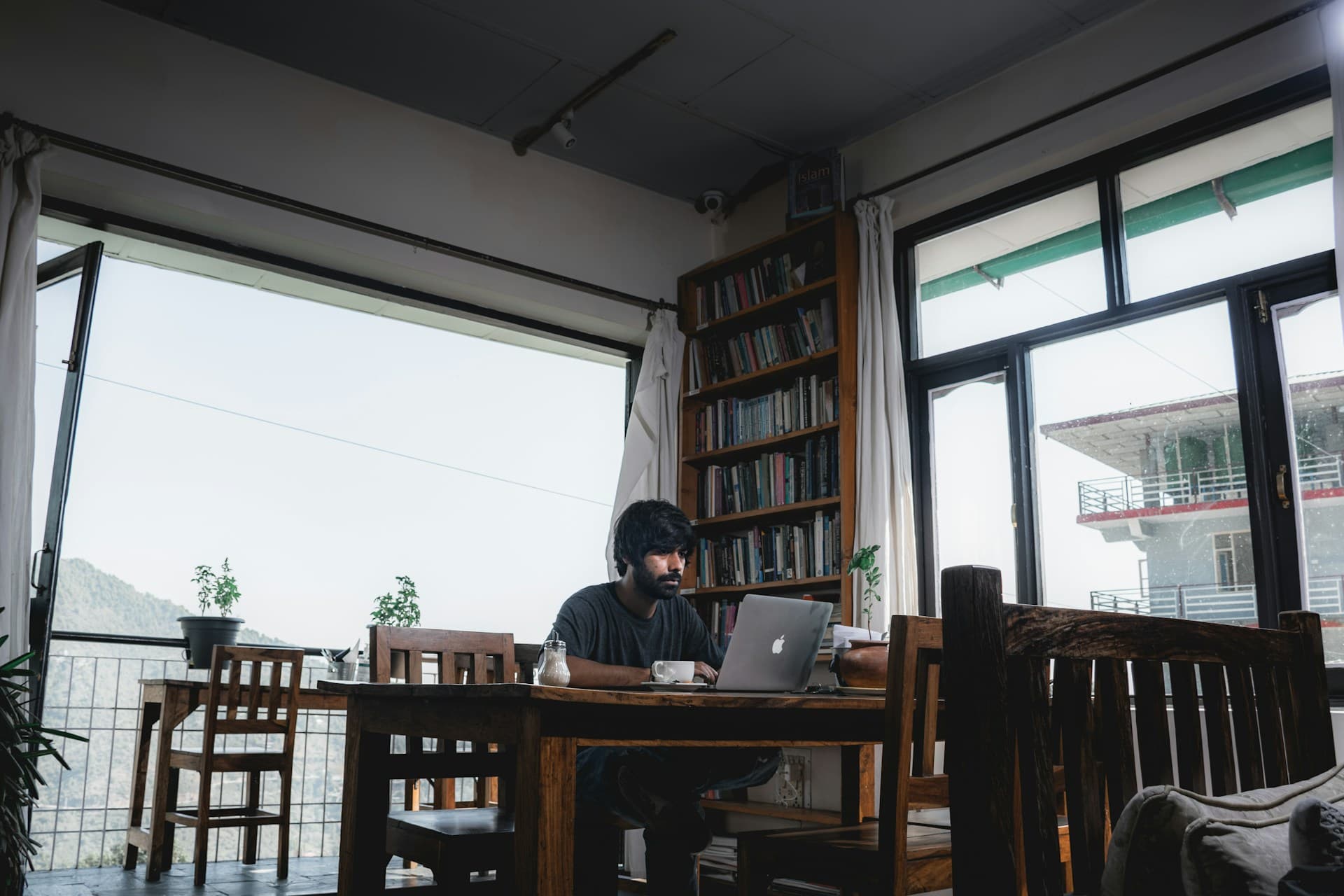
You want to live abroad and work remotely. You look up the visa options for the country you have in mind and find two things listed: a Digital Nomad Visa and a Remote Work Permit. They sound like the same thing. They are not. Picking the wrong one can mean unexpected tax bills, trouble opening a bank account, or realizing too late that the time you spent in a country does not count toward residency. This article explains both options clearly, so you can choose the right one before you book anything.
The Simple Version
Think of it this way.
A Digital Nomad Visa is built for people who move. You earn your money from clients or employers in other countries, you live somewhere for a while, you spend money locally, and eventually you move on. The country welcomes you without pulling you into its tax and benefits system.
A Remote Work Permit is built for people who want to stay. It connects you more deeply to the country you are living in. You pay local taxes, you get access to public healthcare, and the time you spend there can count toward permanent residency one day.
One is a door. The other is a foundation.
What Each One Actually Is
Digital Nomad Visa
A Digital Nomad Visa is a specific visa category that <a href="/en/blog/countries-digital-nomad-visas-2026">many countries have created</a> in the last few years, designed specifically for remote workers. To get one, your income generally needs to come from outside the country you are moving to. You are not taking a job from a local. You are just living there while working for people elsewhere.
The paperwork is usually straightforward: proof that you earn remotely, proof of income above a certain threshold, and health insurance. No employer in the new country needs to sponsor you.
The downside is that the visa keeps you on the outside of local life, in a legal sense. No public healthcare. No pension contributions. And in most countries, it does not count toward permanent residency.
Remote Work Permit
A Remote Work Permit is less of a single thing and more of a category. In many countries, it is not even a dedicated visa, it is an existing residency category that has been adapted to include remote workers.
What makes it different is depth of integration. Once you have one, you are treated more like a resident than a visitor. You pay into local taxes and social systems from day one. You get access to public healthcare. And in several countries, the time you spend there counts toward permanent residency.
The trade-off is more paperwork, more costs, and less flexibility to pick up and move.
The Differences That Actually Matter
Taxes
This is the big one, and it catches a lot of people off guard.
With a Digital Nomad Visa, you may be able to avoid becoming a local taxpayer if you stay fewer than 183 days, although tax residency also depends on other criteria and varies by country. Some countries also offer specific tax advantages. Spain, for example, has a rule called the Beckham Law that offers a special tax regime for people who meet strict eligibility conditions, with potentially lower rates for a limited period (check the current rules with a tax adviser). That is a significant difference for anyone earning a good salary.
With a Remote Work Permit, you are usually a local taxpayer from the moment you arrive. You pay into social security, pension systems, and healthcare. That is not necessarily bad, you get something in return, but it is a cost you need to factor in from the start.
There is also a risk that some people do not think about: if your home country considers you a tax resident based on things like a family home, bank accounts, or registered address there, you could end up owing taxes in two places at once. Getting proper tax advice before you move is not optional, it is essential.

Getting Permanent Residency
If you are thinking long-term and want the option to stay in a country permanently one day, this distinction matters a lot.
Most Digital Nomad Visas are explicitly designed as temporary. The time you spend on them usually does not count toward permanent residency, with a few exceptions such as Spain (see below). You are a welcome guest, not a future resident.
Remote Work Permits are different. In some countries, the time you spend on one counts toward permanent residency. Check the fine print, though: Estonia's digital nomad visa, for example, is a visa rather than a residence permit, so it does not count toward the five years of residence required for long-term residency.
Spain is a notable exception on the DNV side: time spent on its Digital Nomad Visa counts toward long-term residency after five years[1] and toward citizenship later on (usually after ten years, or two for nationals of Ibero-American countries, Portugal, Andorra, the Philippines and Equatorial Guinea), provided the residence remains continuous. That makes it more valuable than many short-stay visas.
Healthcare
On a Digital Nomad Visa, you need your own private health insurance. The country's public health system is not available to you. This is a standard requirement across most countries that offer DNVs, and the minimum coverage required varies by country, so check the exact amount with the consulate of the country concerned..
On a Remote Work Permit, you may be enrolled in the local public health system, depending on the country and the permit (check the conditions with the authorities of the country concerned). In Spain, for example, there may be an option to access public healthcare for a monthly fee, depending on your region, your registration and your residency status (check the current conditions and your own eligibility with the Spanish authorities). If you have children or dependents, this access can make a significant practical difference.
How Much Work It Takes to Apply
Digital Nomad Visa applications are generally straightforward. You handle everything yourself, no employer needs to be involved, and the processing time is usually manageable.
Remote Work Permit applications are more complex. Some countries require employer verification letters, official translations of documents, and certified copies of paperwork. If you change jobs after getting the permit, you may need to reapply or go through an administrative process again.
Banking and Day-to-Day Life
This is something people rarely think about until they are standing in a bank being told they cannot open an account.
Without a formal residency document, nomads on Digital Nomad Visas often struggle to open local bank accounts, sign proper leases, or complete administrative tasks that require proof of residency. In Spain especially, many processes require a local bank account, which requires an official ID number, which requires proof of address, a loop that is much easier to break when you have the right permit in hand.
Remote Work Permit holders, who typically receive a formal residency document, have a much easier time with all of this.

Freedom to Move
A Digital Nomad Visa fits people who want flexibility. You can stay for a year, explore, and decide later whether to commit more deeply to a country. If you want to leave after six months, nothing is holding you back administratively.
A Remote Work Permit is a bigger commitment. It takes more effort to set up, and switching to a different country means starting the process again. It suits people who have already decided where they want to be for the next few years.
How This Plays Out in Spain and Colombia
Spain
Spain's Digital Nomad Visa was introduced in 2023 and is one of the most popular in Europe. It is designed for remote workers earning from employers or clients outside Spain, and it comes with access to the Beckham Law tax advantage for people who qualify. Barcelona is the most common destination for applicants, and it is a practical starting point for anyone testing whether Spain works for them long-term. The DNV is the right first step. If you decide after a year or two that you want to stay permanently, Spain does allow you to transition toward a deeper residency status, though it is not automatic.
One thing to know regardless of which visa you hold: you will need to register your address with the local municipality (called Empadronamiento) and get an official foreign identification number (called an NIE) after you arrive. Both are required for most administrative tasks.
Colombia
Colombia's digital nomad visa requires proof of monthly income equal to at least three Colombian minimum wages over the previous three months. Under the 2026 minimum wage, that is COP 5,252,715 per month. The visa may be granted for up to two years. Check the current threshold and your nationality's eligibility before applying, via the visa conditions and the 2026 minimum-wage decree. Medellín in particular has built one of the most active remote worker communities in Latin America over the past decade, and the accessible income threshold makes it a realistic option for a wide range of remote workers, not just high earners.
Colombia does not yet have a developed Remote Work Permit equivalent at the same level as Spain or Portugal. For most people choosing Medellín, the digital nomad visa is the main option available, and it works well for that purpose.
Which One Should You Choose?
Here is a simple way to think about it:
- Choose the Digital Nomad Visa if:
- You freelance or work for multiple clients in different countries
- You want to try a country for one to two years without committing
- Keeping your tax situation simple and optimized matters to you
- You are in an exploratory phase and not ready to put down roots
- Choose the Remote Work Permit if:
- You have one stable remote employer and want legal certainty
- You are aiming for permanent residency or citizenship eventually
- You have children who need to be enrolled in local schools
- You want access to public healthcare without relying on private insurance
- You have already decided this is where you want to live for the long term
A strategy that works well for many people: start on a Digital Nomad Visa, get to know the country, and only commit to a deeper permit once you are sure you want to stay. Several countries, including Spain and Portugal, allow this kind of transition, but it is not always automatic, and the requirements sometimes reset when you switch.
Key Takeaways
- A Digital Nomad Visa is built for flexibility and mobility. A Remote Work Permit is built for integration and stability.
- Tax treatment is the most important practical difference. DNVs can offer tax advantages; RWPs typically mean paying local taxes from day one.
- If you want permanent residency eventually, the Remote Work Permit path is more reliable in most countries.
- If you have a family, healthcare and school access through a Remote Work Permit can make a significant practical difference.
- Always check your home country's tax rules before you leave. In some countries, your tax obligations at home do not disappear just because you have moved.
Join Hello Mira
Want to understand more about how remote life actually works in practice? Join our mailing list for more insider tips.
Join Our CommunitySources
- 1.^Ley Orgánica 4/2000, art. 32 (residencia de larga duración : cinco años de residencia temporal continuada), BOE https://www.boe.es/buscar/act.php?id=BOE-A-2000-544 (accessed October 6, 2026)
- 2.europe-visa.eu — Schengen Travel Insurance 2026: Requirements, Costs and What's Covered https://europe-visa.eu/blog/schengen-travel-insurance-2026-guide/ (accessed September 27, 2026)