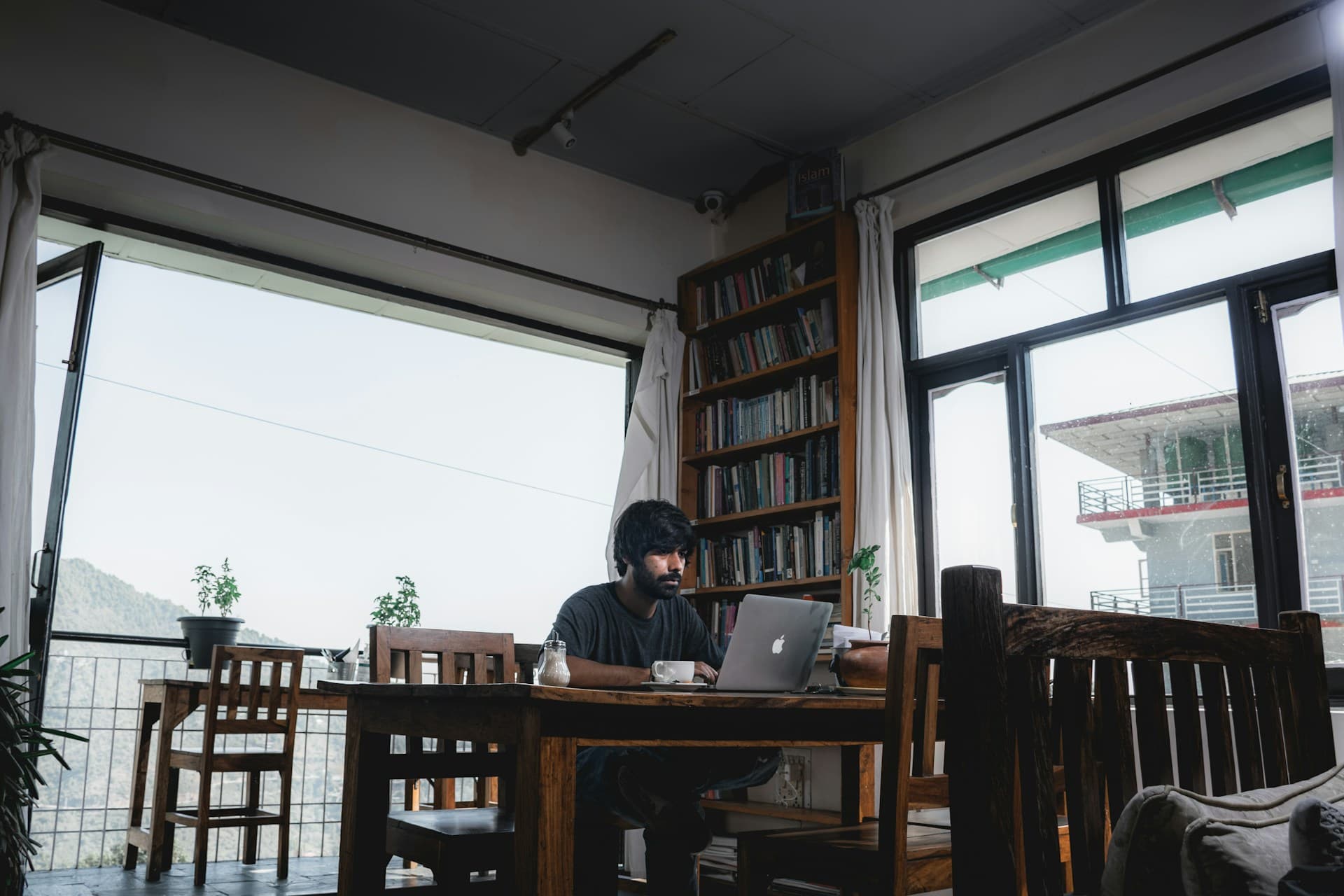
Most people who want to become a digital nomad get stuck at the same point: not knowing what to do first. The idea sounds freeing — work from anywhere, set your own schedule, explore the world. But the gap between wanting it and doing it is where most aspirations quietly die. The problem is rarely motivation. It is almost always a lack of sequence. Knowing what becoming a digital nomad actually requires, step by step, makes the difference between a fantasy and a functioning lifestyle.
Digital nomadism has moved from fringe experiment to mainstream mobility strategy.¹ What began in the late 1990s as a laptop-enabled niche was propelled into the global spotlight by the pandemic, when remote work became a default rather than a perk.¹ Since 2020, dozens of governments have launched purpose-built visas and residency routes to attract this mobile, high-spending population.¹ The infrastructure exists now. But infrastructure alone does not solve the real friction points: visa regimes that vary wildly by nationality, tax obligations that follow you across borders, and administrative complexity that no packing list or productivity hack can fix.
Step 1: Clarify Your Why and Lock Down Your Income
The first and most common mistake is romanticizing the lifestyle before stabilizing the income. Before booking a flight, you need a clear answer to two questions: why do you want this, and how will you fund it.
Digital nomads engage in various work modalities, including remote employment, entrepreneurship, freelancing, and having more than one professional activity.² The specific path matters less than the reliability of the income stream. If you are currently employed, the simplest route is negotiating a remote arrangement with your existing employer. If you are freelancing or building a business, you need at least three to six months of consistent earnings before you leave.³
A practical starting point is to clarify your income floor. Most digital nomad visa programs require proof of income earned outside the host country, with minimum monthly income levels ranging from around $750 to over $5,000 depending on the destination.⁴ That number is not just a visa threshold. It is your personal stability line, and it shifts significantly depending on your nationality. A French freelancer faces different social contribution obligations than an American dealing with worldwide taxation and FBAR reporting, and both face different constraints than a German navigating Anmeldung requirements. Your income floor needs to account for where you come from, not just where you are going.
Step 2: Build the Right Remote Skills
Having a remote-capable job is not the same as being effective at remote work. The skills that make someone successful in an office do not automatically transfer to a cafe in Lisbon or a coworking space in Chiang Mai.
Communication, time management, self-motivation, adaptability, and technical proficiency are critical skills for success.⁵ Remote workers need to work collaboratively using digital collaboration tools such as video conferencing, project management software, and cloud storage.⁵ The absence of office social pressure means remote workers need to be self-motivated and disciplined to stay on task.⁵
One skill that rarely makes these lists but matters enormously: the ability to navigate unfamiliar systems in a language that is not your own. If your professional life has existed entirely in English, working from a country where contracts, leases, and tax correspondence arrive in Spanish, Portuguese, or French introduces a layer of friction that pure productivity advice does not address. Building basic language competence in your target destinations is as practical as learning a new project management tool.
If your current skill set is office-dependent, invest time in courses and certifications before you leave.⁶ Building a portfolio that demonstrates remote competence matters more than a resume in the nomad economy.⁶
Step 3: Test Your Setup Before You Leave
One of the most overlooked steps is running a trial at home. Before buying a one-way ticket, run a home-field pilot week where you live as if you were already a digital nomad: work from cafes or coworking spaces, rely on mobile internet, and manage your tasks asynchronously.⁷ This practical approach helps identify gaps in gear, workflows, or habits while you still have a safety net.⁷
Connectivity is critically important for a digital nomad, important enough to warrant its own planning phase.³ This includes researching the availability of internet in your target areas with sufficient bandwidth for your work requirements.³ Test your tech stack under imperfect conditions. If your workflow breaks down when the Wi-Fi drops, you will know before it costs you a client.
The pilot week should also test something less tangible: your tolerance for working alone. Most nomad programs push group travel as the default, but the reality is that most of your working hours will be solo. Testing whether you can sustain focus and motivation without an office or a cohort around you is more predictive of success than any gear checklist.
Step 4: Get Your Finances in Order
Financial planning for the nomad lifestyle is different from a standard budgeting exercise. You are not just managing expenses. You are managing expenses across currencies, tax jurisdictions, and unpredictable income cycles.
Your budget does not need to be a spreadsheet monster. It only needs to exist.⁸ Think beyond rent and basic expenses: analyze your income and outflows to set realistic financial goals for your travels.⁸ A common rule of thumb: set aside 25% to 30% of every payment you receive for taxes, then adjust it to your own tax situation.⁸ Nomads who skip this step routinely face unpleasant surprises at tax time.
The tax dimension deserves particular attention because it varies dramatically by passport. Americans owe tax on worldwide income regardless of where they live, and must file FBAR and FATCA disclosures if they hold foreign accounts above certain thresholds. French nationals working abroad still face potential URSSAF and CFE contributions depending on their residency status. Spaniards must still file the Modelo 720 declaration of foreign assets, even though its heaviest penalties were struck down by the EU Court of Justice in 2022. These are not edge cases. They are the baseline reality for millions of nomads, and getting them wrong is expensive. Set up automatic transfers to savings and tax accounts, schedule bill payments, and use expense trackers that categorize for you.⁸ A savings buffer gives you peace of mind when income fluctuates.⁶
Step 5: Sort Out Visas, Insurance, and Legal Logistics
This is the step most people underestimate in both complexity and importance. At least 6 OECD countries and 22 non-OECD countries currently offer specific visas or permits to digital nomads, and the number continues to rise.⁹ Each program has different requirements, durations, and tax implications.
Typical requirements include a passport valid for at least one year with at least two blank pages, proof of remote work capabilities (such as a work contract confirming the ability to work from abroad), housing documentation in the host country, and various eligibility documents.⁴ Passports issued more than 10 years ago are generally not accepted.⁴
What most "how to become a digital nomad" guides understate is how much these requirements interact with your country of origin. Spain's digital nomad visa under the Startup Law requires approximately 2,762 euros per month in income and comes with the Beckham tax regime offering a 24% flat rate for six years, but the bureaucracy is notoriously slow.¹ Portugal's D8 visa has an income requirement that applicants should check before applying. For nationality applications filed since 19 May 2026, the standard residence period is seven years for EU and Portuguese-speaking-country nationals and ten years for other nationals; applications filed earlier remain under the previous rules. The former NHR tax regime is closed to most new applicants, while IFICI has separate eligibility criteria.¹ Estonia's fully online nomad visa requires 4,500 euros gross monthly income but is nonrenewable after one year.¹ These are not interchangeable options. The right visa depends on your income level, your nationality, your tax situation, and how long you plan to stay.
Preparation timelines matter. Adopting a digital nomad lifestyle requires organizing at-home, travel, and on-the-ground remote arrangements at least three to six months prior to when you intend to travel.³ Travel health insurance is non-negotiable; standard domestic policies rarely cover you abroad, and a medical emergency without coverage can be financially devastating.⁶
Step 6: Pack Light and Build Your Mobile Office
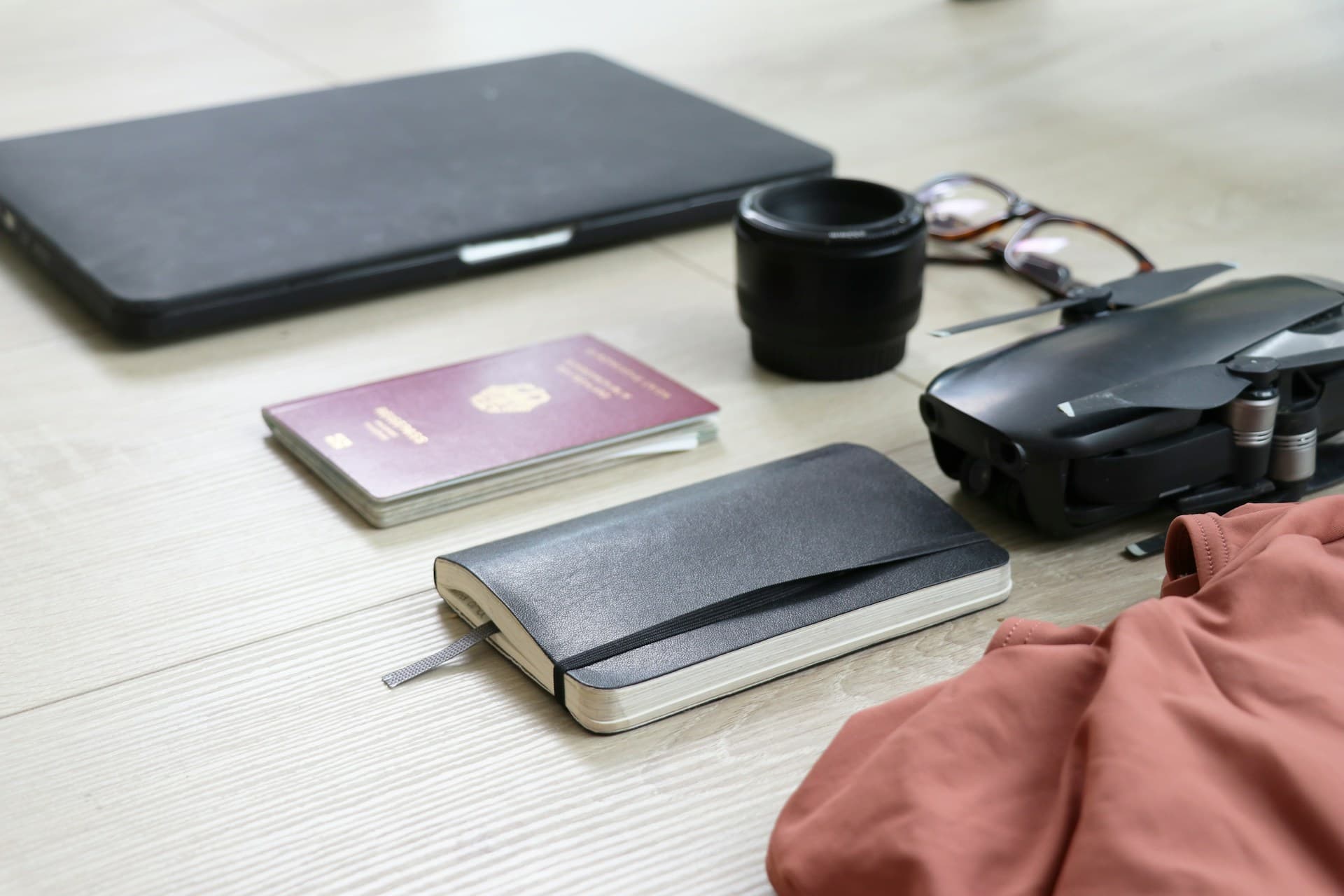
Your digital office needs to fit in a backpack yet remain fully functional.¹⁰ A lightweight laptop remains the cornerstone of any digital nomad setup, and the rest of your kit should prioritize versatility over volume.¹⁰
Essential gear includes a multi-port charger that eliminates the need for multiple adapters, a universal power adapter that works across countries with different voltage and plug types, a portable power bank, and moisture-resistant bags to protect your technology.¹⁰ The principle is redundancy for critical items (connectivity, power) and minimalism for everything else.
Embracing minimalism is a practical skill, not a lifestyle aesthetic.⁶ Every item you pack is something you carry, store, and potentially lose. Experienced nomads converge on roughly the same packing philosophy: bring less, but bring the right things.
Step 7: Choose Your First Destination and Make a Plan
Destination selection is where personal preference meets practical constraint. Consider places with stable internet connections and established digital nomad communities.⁶ Cost of living and internet quality are the top factors for over half of digital nomads when choosing a location, with safety coming second, followed by access to outdoors and nature.¹¹
The 2025 Global Digital Nomad Report analyzed 64 countries across six dimensions, including procedure, citizenship and mobility, tax optimization, economics, quality of life, and tech and innovation.¹ This kind of data-driven comparison is worth consulting before you commit to a destination. Do not just pick a place because it looks good on social media.
But data only tells part of the story. The nomad hubs that dominate recommendation lists (Lisbon, Barcelona, Bali, Mexico City) are also the ones where gentrification tensions are highest. Lisbon saw some of the steepest housing increases in the EU in recent years. Barcelona is phasing out short-term rental licenses by 2028. Mexico City rents have surged over 30%.¹ Choosing a destination responsibly means understanding the local context you are entering, not just the cost of a coworking pass.
Cultural sensitivity plays a significant role in long-term success. Research the local culture before traveling to a new country to understand the cultural context and avoid unintentional misunderstandings.¹² Making an effort to learn a few basic phrases in the local language goes a long way in showing respect and building rapport with locals.¹² Observe how locals behave and adapt your behavior accordingly.¹²
Responsible travel also matters. By creating economic incentives for conservation, travelers can directly contribute to protecting fragile ecosystems and maintaining cultural heritage.¹³ The goal is to become an active participant rather than a passive observer: engaging with local community projects, supporting local economic initiatives, and practicing genuine cultural respect.¹³ The nomads who build the most sustainable lives abroad are the ones who channel their spending into local economies rather than international booking platforms, who stay longer rather than churning through destinations, and who build genuine relationships with the people who actually live there.

Where Digital Nomadism Is Heading
The transition from "can I do this?" to "how do I do this well?" is now the central question. Governments are competing for nomad talent, remote work infrastructure is improving globally, and the community of people living this way continues to grow. But the biggest unsolved friction remains structural: admin and tax complexity that changes with every passport, and destination choices that carry real consequences for local communities. The people building the most durable version of this lifestyle are the ones who take those dimensions as seriously as they take their Wi-Fi speed. If you are working through these questions yourself, the most useful next step is usually a conversation with someone who has already navigated the specific combination of nationality, destination, and work setup you are considering.
Sources: 1. Global Citizen Solutions, "Global Digital Nomad Report 2025: Full Report," 2025 2. Dreher, N. & Triandafyllidou, A., "Understanding Digital Nomadism: A Three-Level Framework for Migration Studies," Journal of Ethnic and Migration Studies, 2025 3. ICT Pulse, "7 Key Steps to Becoming a Digital Nomad in 2025," 2024 4. Centuroglobal, "Digital Nomad Visa Requirements for 2026 Explained," 2026 5. TheFabryk, "Essential Remote Skills: Learn, Work, and Travel as a Nomad," 2025 6. Go Overseas, "How to Become a Digital Nomad in 2026," 2025 7. Digidiamo, "The Ultimate Guide to Becoming a Successful Digital Nomad in 2026," 2025 8. Wise Business Plans, "Financial Planning for Digital Nomads and Remote Entrepreneurs," 2025 9. OECD, "Should OECD Countries Develop New Digital Nomad Visas?," 2022 10. Digital Nomad Index, "Complete Digital Nomad Packing List: 35 Essential Items for 2025," 2025 11. DemandSage, "49 Digital Nomads Statistics 2026," 2026 12. RemoteTeamer, "Cultural Sensitivity in Digital Nomad Travel," 2025 13. The Cenote Guy, "Understanding Responsible Tourism Practices for Travelers," 2025
Join Hello Mira
Discover how to travel better, longer, with a positive impact on local communities.
Join Our Community