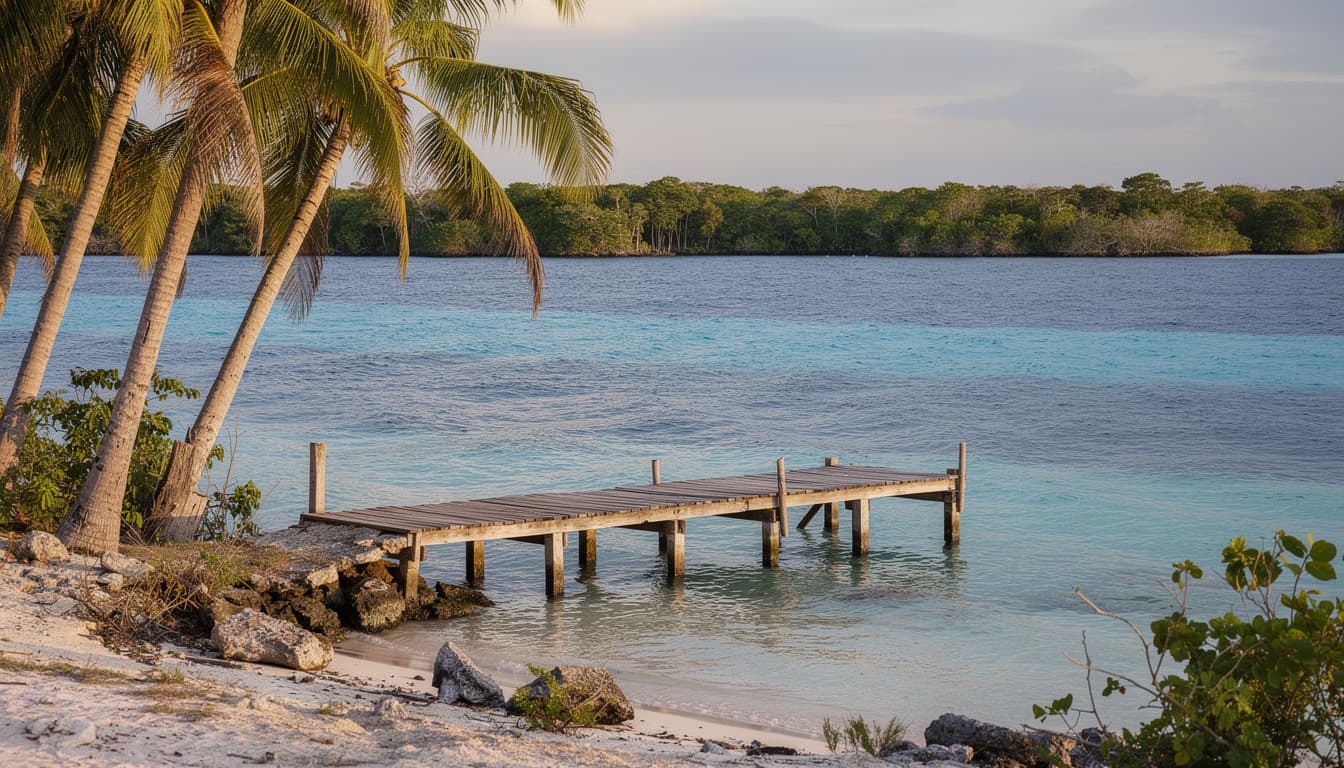
Bacalar is a small town in Quintana Roo, set on the edge of a freshwater lagoon, far from the bustle of the coast. This article helps you plan your days: where to swim, which cenotes to visit, what to see in town, what to taste and which excursions to add. You'll also learn when to come, how to get there and how many days to plan.
The Lagoon of Seven Colors at a glance
Bacalar was named a Pueblo Mágico on February 27, 2007[1]. The town borders the Laguna de los Siete Colores, named for its shades of blue[1]. These tones come from the varying depths of the water and its white limestone sand bottom[2].
The colors aren't always equally intense: they stand out best on a clear day, when you observe them directly from the water[3]. Plan at least one outing on the water rather than relying on the view from the shore.
The lagoon is fed by a vast network of underground rivers and is a unique, fragile ecosystem[2]. The place remains relatively spared from the mass tourism found elsewhere in the region[2]. Visitors come here to relax: enjoying the lagoon, eating, drinking and taking a boat tour[4].
On the water: swimming, sailing, kayaking and paddleboarding
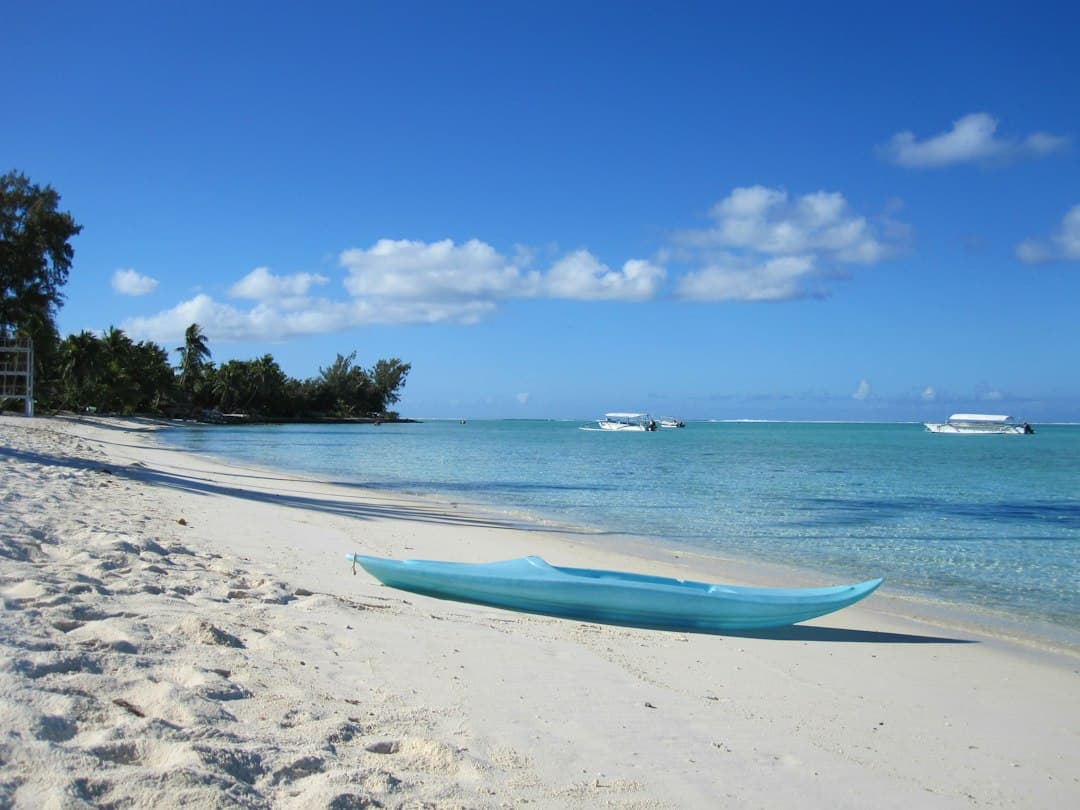
The lagoon is ideal for swimming, snorkeling, kayaking, paddleboarding and boat tours[1]. Much of the shoreline is privately owned and only a few access points are public: one at the end of Calle 18, and another at the Balneario Municipal, two streets further south, with its grassy area, bar-restaurant and long dock where boat tours depart[5].
For sailing, a sailboat outing is one of the most respectful ways to explore the lagoon: with no engine noise, you enjoy the calm while reaching the cenotes and the Pirate's Channel[2]. Some trips last about four hours, departing in the morning or afternoon, and pass by Isla de los Pájaros and several cenotes[6].
If you prefer to go at your own pace, rent a kayak or paddleboard, preferably at sunrise or sunset[5]. Sunrise is when the colors are exceptional[2].
For a day of lounging, the beach clubs sell day passes: one offers a trampoline and giant games, another offers kayaks, and most have a restaurant and bar[6]. Near Calle 32, Balneario Ecológico is a more low-key option: a trail through the mangroves leads to a small beach[5].
Cenotes, the Pirate's Channel and Los Rápidos
- Cenote Azul: a cenote 90 m deep, right beside the main road[6]. It's the most accessible standalone cenote: you can get there from downtown by car, taxi or Uber, without an organized excursion[3].
- Cenote Cocalitos: nicknamed the "stromatolite sanctuary," it harbors living rock formations among the oldest on the planet, which must never be touched[2]. You can swim in the shallow waters of the lagoon, with lawn, palapas, swings and hammocks over the water[3].
- Cenote Negro (or de la Bruja): a sinkhole that creates a striking contrast between the clear lagoon waters and the dark blue of the abyss[2].
- Pirate's Channel: a passage of very translucent waters, once a hideout for buccaneers, today a swimming spot[2]. This is where the "Mayan bath" is practiced: you coat yourself with white mud from the lagoon bottom, let it dry, then dive back in to rinse off[7]. To cross to the calmer Mariscal lagoon, kayak or paddleboard is the safest option[3].
- Los Rápidos: about 8 km south of Bacalar, toward Chetumal, the lagoon narrows into a channel where the current carries you along; you let yourself drift while looking for stromatolites[7].
- Isla de los Pájaros: a protected area, not accessible on foot, home to migratory and resident birds that are observed from a boat[2].
History and culture: from the Maya to the pirates
Bakhalal, the original name, means “place of the reeds”[1]. The town was founded by the Maya, then colonized by the Spanish in the 16th century[4]. For centuries, the population was attacked by English, French, and Dutch pirates[4].
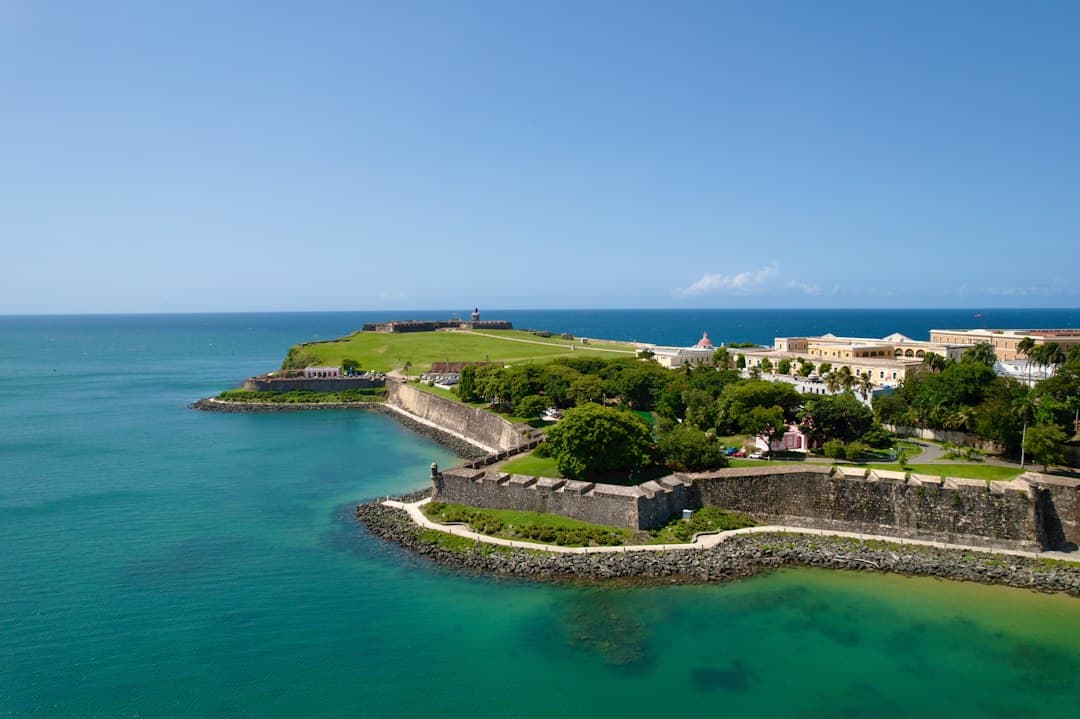
Fort San Felipe dates from 1733 and was built on the orders of the captain general of Yucatán[1] to protect the town from pirate attacks[3]. It overlooks the lagoon, and its main building houses a single-room museum that traces local and regional history from the pre-Columbian era onward[5]. Among the artifacts on display are old swords, muskets, and compasses[1]. It is open Tuesday through Sunday, from 9:00 am to 7:00 pm[1].
The historic center is worth a stroll: the San Joaquín parish is one of the places to explore[1], and the fort is a few minutes’ walk from the main square[8]. The San Joaquín festivities, honoring the town’s patron saint, take place in July and August[1].
At the table: a cuisine that blends Yucatán, the Caribbean, and Belize
Quintana Roo is a young state, populated by many migrants from other regions of Mexico, which gives its cuisine a mixed character[4]. Its proximity to Belize also plays a part: the food is shaped by both Yucatecan and Belizean influences[1].
You’ll find pollo pibil and dishes wrapped in banana leaves and slow-cooked in a pit with charcoal or hot stones[4]. Caribbean influence shows in the shrimp, the ceviche, and the fish[4]. Aguachiles, which did not originate here, are reinvented with habanero chili in place of serrano[4].
Around Bacalar: Maya sites and beaches
For a restaurant owner who has been based in Bacalar since 2009, the surroundings of the town are the most interesting[4]. Chacchoben is about 45 minutes away by car[6], where you can see the well-restored Temple 24, then a large pyramid[5]. Dzibanché and Kinich-Ná, two neighboring sites, are less than 90 minutes away[6]. Oxtankah and Ichkabal, recently opened to the public, are also within reach[4].
For the beach, Mahahual is about an hour away[4]. From Chetumal, you can also reach the Guerrero lagoon, home to a manatee living in the wild[4]. These trips involve driving on roads that are in less than ideal condition, and local public transport is limited, so a rental car is more practical[4].
When to go, how to get there, how long to stay
The best season runs from November to March, when the water is around 27 °C. From April on, temperatures climb to 36–38 °C with a lot of humidity; summer brings rain, humidity, mosquitoes, and intense heat[4].
As for length of stay, plan three to four days to explore the lagoon at a relaxed pace and visit one or two nearby sites[2]. That leaves time to enjoy a beach club, a boat trip, and landmarks like the fort[6].
To get here, Chetumal airport is the closest, 40–45 minutes away by car[8]. Most travelers arrive in Cancún and take the ADO bus south: the trip takes 4 h 30 to 5 h 30, for roughly 450 to 700 pesos[8]. The Tren Maya, inaugurated in December 2024, serves Bacalar with its own station[6].
Once there, the center is compact and easy to explore on foot[8]. For swimming spots, the cenotes and Los Rápidos, located south along the Costera, are best reached by bike, taxi, or car[8].
Things to watch out for and checklist
- Taxis don’t have meters: agree on the price before you get in[8].
- Use a biodegradable sunscreen, and don’t walk on the stromatolites, which are very fragile[7].
- For the Pirates’ Canal, ask for it when booking if your excursion doesn’t include it[7].
- Choose a sailboat trip where possible to protect the lagoon[4].
This article gives you the essentials for planning your stay. To truly settle in Bacalar, you’ll need to go further on housing, a line-by-line budget, and residency procedures.
Keep exploring
- Mexico: The Must-Sees, Region by Region, to Help You Choose Where to Go
- Tulum: What to See and Do Between Mayan Ruins, Beaches and Cenotes
- Holbox: What to See and Do on the Car-Free Island of Quintana Roo
- Chichén Itzá: What to See and Do at the Great Maya-Toltec City
Sources
- 1.^ abcdefghijsiturq.gob.mx — BACALAR: “Bacalar earned the prestigious title of Pueblo Mágico on February 27, 2007, which highlights its uniqueness and charm.” ; “It sits beside the Laguna de los Siete Colores, named for its many shades of blue, and offers the ideal space to swim, dive, snorkel, kayak, paddle, or take boat trips and admire all of these beautiful natural colors.” ; “Bakhalal, as it was originally called, means place of the reeds.” https://siturq.gob.mx/pueblo-magico/d8ba4238-a509-11ee-a22f-00224821d409 (accessed November 9, 2026)
- 2.^ abcdefghijroutard.com — Visit Laguna de Bacalar: plan your stay and trip to Laguna de Bacalar | Routard.com: “These shades result from the varying depths of the water and its white limestone sandy bottom.” ; “Fed by a vast network of underground rivers, the lagoon is a unique and fragile ecosystem.” ; “Today, Bacalar is a destination that combines the tranquility of its natural landscapes with a tangible historical heritage, while remaining relatively protected from the mass tourism found in other places in the region.” https://www.routard.com/fr/guide/ameriques/mexique/yucatan/bacalar/lagune-de-bacalar (accessed November 9, 2026)
- 3.^ abcdecestee.fr — 9 Best Places to See and Visit in Bacalar (with map): “You won’t always see these colors with the same intensity: they stand out best on clear days, when viewed directly from the water.” ; “There’s no need to book an organized excursion: you can get there from downtown by car, taxi, or Uber.” ; “This is precisely its main advantage over Cenote Azul: you can bathe in the shallow, turquoise waters of the lagoon, in the middle of a lawn, several palapas, swings, and hammocks suspended over the water.” https://www.cestee.fr/destination/mexique/bacalar/visiter (accessed November 9, 2026)
Show 5 more sourcesShow less
- 4.^ abcdefghijklmnmx.diplomatie.gouv.fr — Good Deals in Bacalar | France in Mexico: “Bacalar is indeed a destination for relaxation: people come to enjoy the lagoon, eat, drink, and take a boat ride (preferably a sailboat, to be as respectful of the lagoon as possible).” ; “In the 16th century, the Spanish colonized the area and built Fort San Felipe. It also has a historical connection to piracy, as for centuries the population was attacked by English, French, and Dutch pirates.” ; “Southern Mexico is a platform of influence for other places. Quintana Roo is a new, recent state, made up largely of immigrants from other regions of Mexico.” https://mx.diplomatie.gouv.fr/fr/bons-plans-bacalar (accessed November 9, 2026)
- 5.^ abcderoutard.com — Visit Bacalar: plan your stay and trip to Bacalar | Routard.com: “At calle 32, the discreet Balneario Ecológico is very pleasant: a simple path quickly winds through the mangrove to a small beach appreciated by Bacalar’s newer residents.” ; “A large part of the shoreline is privately owned, and only a few access points are public. You’ll find one at the end of calle 18, as well as at the Balneario Municipal, two streets south, with its vast grassy area, quiet bar-restaurant, and long pier from which lake boat trips depart.” ; “We also recommend a paddle or kayak trip on the lake, especially at sunrise or sunset.” https://www.routard.com/fr/guide/ameriques/mexique/yucatan/bacalar (accessed November 9, 2026)
- 6.^ abcdefglonelyplanet.com — A First-Time Guide to Bacalar, Mexico - Lonely Planet: “Their four-hour excursions, departing in the morning or afternoon, take you to some of the lagoon’s main sites, including Isla de los Pájaros (Bird Island) and several cenotes.” ; “Buy a day pass for one of Bacalar’s beach clubs – Blu for families, Maya Playa or Bacalar Beach Club for singles or couples – and spend hours enjoying the views and facilities. Blu offers, for example, a trampoline and giant chess and Jenga games, while Maya Playa has kayaks. Most clubs have a restaurant and bar on site.” ; “Bacalar has several cenotes to visit, including Cenote Azul, 90 m deep, located right next to the main road.” https://www.lonelyplanet.com/articles/first-time-guide-bacalar (accessed November 9, 2026)
- 7.^ abcdvoyageursgourmands.com — Things to Do in Bacalar, Mexico: the Lagoon of 7 Colours: “The current is gentle, the water an almost unreal turquoise, and this is where the famous Mayan bath takes place. You smear yourself with white mud from the lagoon floor, let it dry a little… then dive back in to rinse off!” ; “About 8 km south of Bacalar, toward Chetumal, the lagoon narrows into a channel where the current carries you along on its own… You let yourself drift, look for stromatolites, and end up at a restaurant with your feet in the water.” ; “Use biodegradable sunscreen and do not step on the stromatolites, which are very fragile.” https://voyageursgourmands.com/en/things-to-do-in-bacalar-mexico/ (accessed November 9, 2026)
- 8.^ abcdefrutasmexico.com.mx — Bacalar, Quintana Roo: Travel Guide and How to Get There 2026 | RutasMéxico: “Bacalar’s center is compact and easy to explore on foot: it’s only a few minutes from the main square to the fort and Cenote Zací.” ; “The nearest airport to Bacalar is Chetumal (CTM), about 40–45 minutes by car, with domestic flights from Mexico City.” ; “Most travelers, however, land in Cancún (CUN) and take the ADO bus south: the Cancún–Bacalar trip takes 4 h 30 to 5 h 30 and costs about 450 to 700 MXN.” https://rutasmexico.com.mx/en/destinos/bacalar (accessed November 9, 2026)