Uppsala is best explored on foot or by bike, in a single day from Stockholm or over two days if you want to take your time. This article guides you from the cathedral to the Viking mounds of Gamla Uppsala, passing through Linnaeus's gardens, nearby nature and a treat-filled break. You'll also learn how to get there, when to visit and what habits to adopt on site.
Why Uppsala: a university town 35 minutes from Stockholm
Uppsala is nicknamed the “Cambridge of Sweden”: a lively university town, just 35 minutes by train from Stockholm[1]. It is the country's fourth-largest city[1]. Its university, founded in 1477, is the oldest in the Nordic countries[1]. Around 20% of its residents are students[1], and they give the city its young and international feel[1].
The city remains human-scaled, with monuments several centuries old in the center and its surroundings[1]. Its past goes back to the Iron Age and the Viking era, visible in ancient burial grounds as well as in its architecture[1]. Uppsala is also a research hub, especially in the life sciences[1]. That is why many Swedes live here and commute to Stockholm[1].
The historic heart: cathedral, castle, Gustavianum and Carolina Rediviva
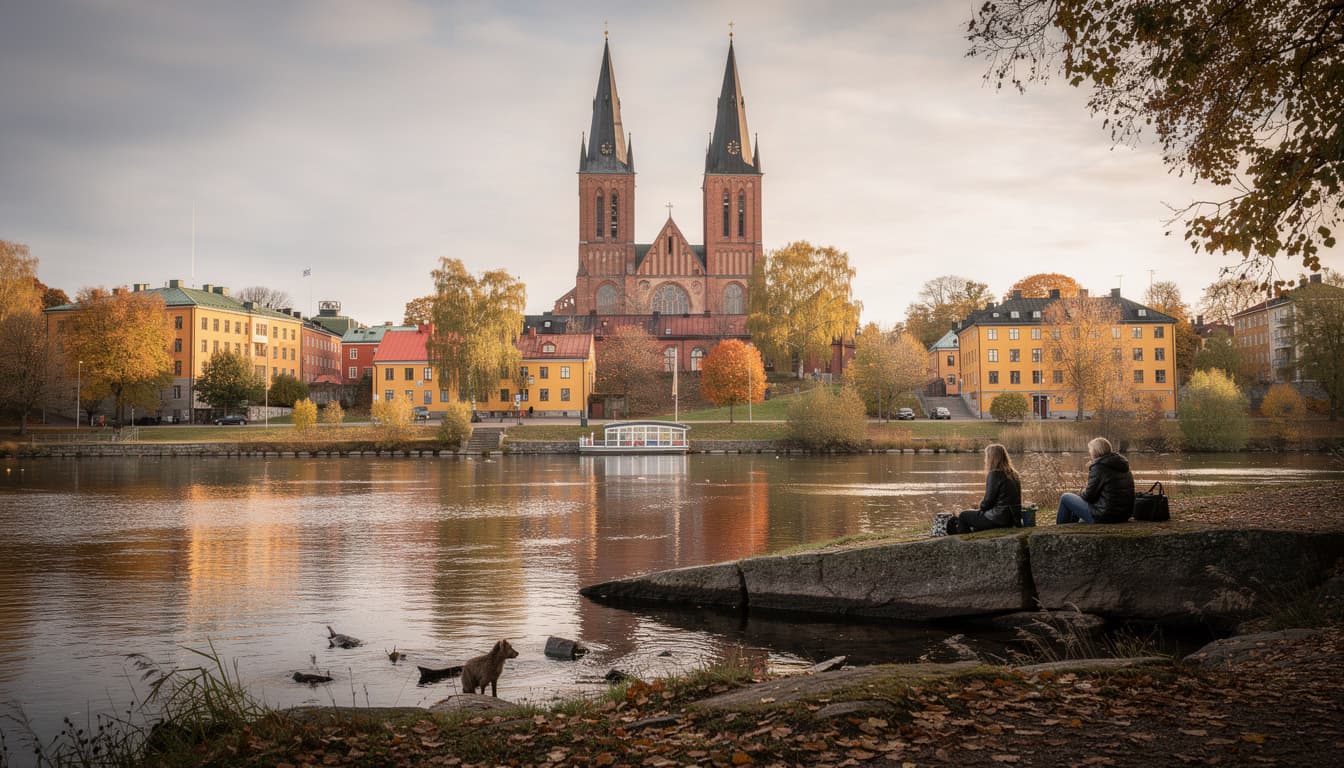
The center is best discovered on foot, following the streets along the Fyris River[2]. Start with the cathedral, the largest and tallest in Scandinavia[1]. It is in French Gothic style; construction began around 1270 and it was consecrated in 1435[1]. Its two spires rise to nearly 119 meters[2], and the interior can hold up to 2,000 people[3]. Several Swedish kings were crowned here, and Gustav Vasa and Carl Linnaeus are buried here[1].
Uppsala Castle overlooks the city from the Kasåsen hill[2]. It was built in the mid-16th century under King Gustav Vasa[1]. It houses the Uppsala Art Museum and the Vasaborgen museum, which traces the history of the castle[2].
On the university side, the Gustavianum is a museum that preserves the university's heritage[1]. The Carolina Rediviva library holds the Codex Argenteus, the 6th-century “Silver Bible”[1]. Only one original page is on display: the book shown is a facsimile, for security reasons after a theft in 1995[3]. The other items in the exhibition, old maps, letters or music scores, are authentic[3].
In Linnaeus's footsteps: gardens and museum
Carl von Linné, father of modern species classification[2], left his mark throughout the city: gardens, historic buildings and excursion trails[1]. Linnaeus's garden is Sweden's first botanical garden, founded in 1655[1]. It holds more than one thousand plant species organized according to his classification system[2]. His former home now houses the Linnaeus Museum, open from May to September[1].
The university botanical garden, near the castle, completes the visit[2]. To go further, Linnaeus' Hammarby, less than 15 kilometers from the center, holds the most extensive collection of his plants in the world[1].
Linnaeus took his students out to observe plants in their natural habitat: today there are eight Linnaeus trails starting from Uppsala, dotted with information boards[4].
Gamla Uppsala: royal burial mounds and the Viking world
A few kilometers north of the center[2], Gamla Uppsala (“old Uppsala”) is one of Scandinavia's most important archaeological sites; it was a political and religious center in the Iron Age and the Viking era[2]. Impressive royal burial mounds can be seen here[2].
The Gamla Uppsala museum sits among the burial mounds, in an Iron Age landscape[4]. A virtual reality experience there lets you discover life in a 7th-century Viking village[4].
A pagan temple once stood here too: mentioned in the 11th century by Adam of Bremen, it is said to have stood on the site of the present-day church of Gamla Uppsala[1].
Nature, cycling and the outdoors
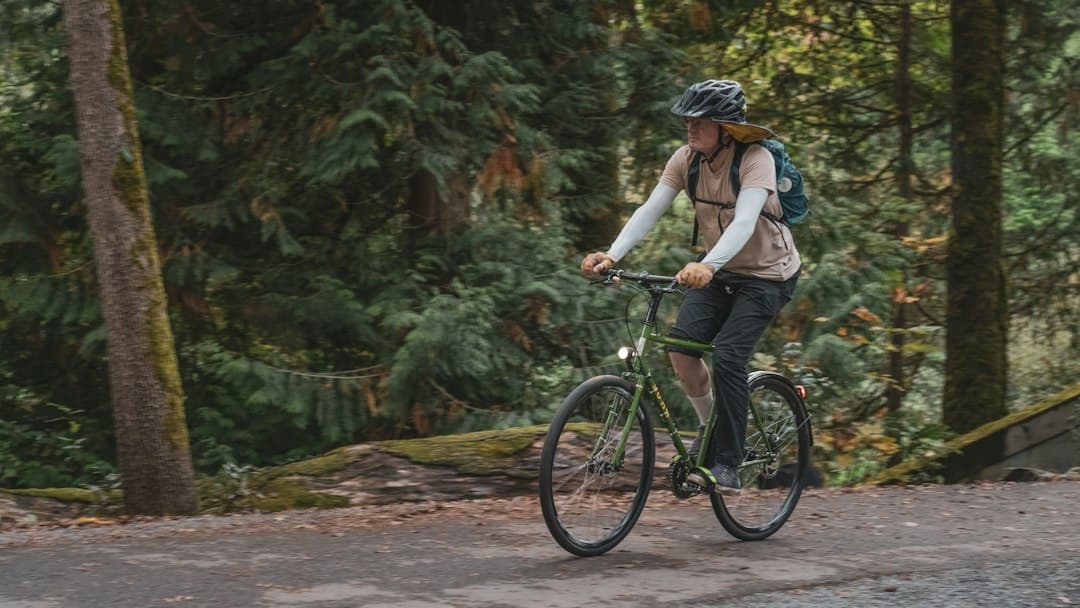
Uppsala is renowned as one of the most bike-friendly cities in Sweden, with many city and surrounding trails[2]. The path linking the center to Gamla Uppsala is a pleasant walk through fields and forests[2].
To walk further, the Upplandsleden trail crosses varied landscapes[2]. To the west, about 16 kilometers away, the ancient Fiby Urskog forest offers trails across 87 hectares of preserved nature[4]. The Fjällnora recreation area offers canoeing, swimming, paddling and, in winter, skating[5].
Eat and Explore Culture: Linnébulle, Cafés and Museums
Try a "Linnébulle," a huge cinnamon bun perfect for sharing: it's a specialty of Café Linné, and you'll also find it in several other cafés around town[1].
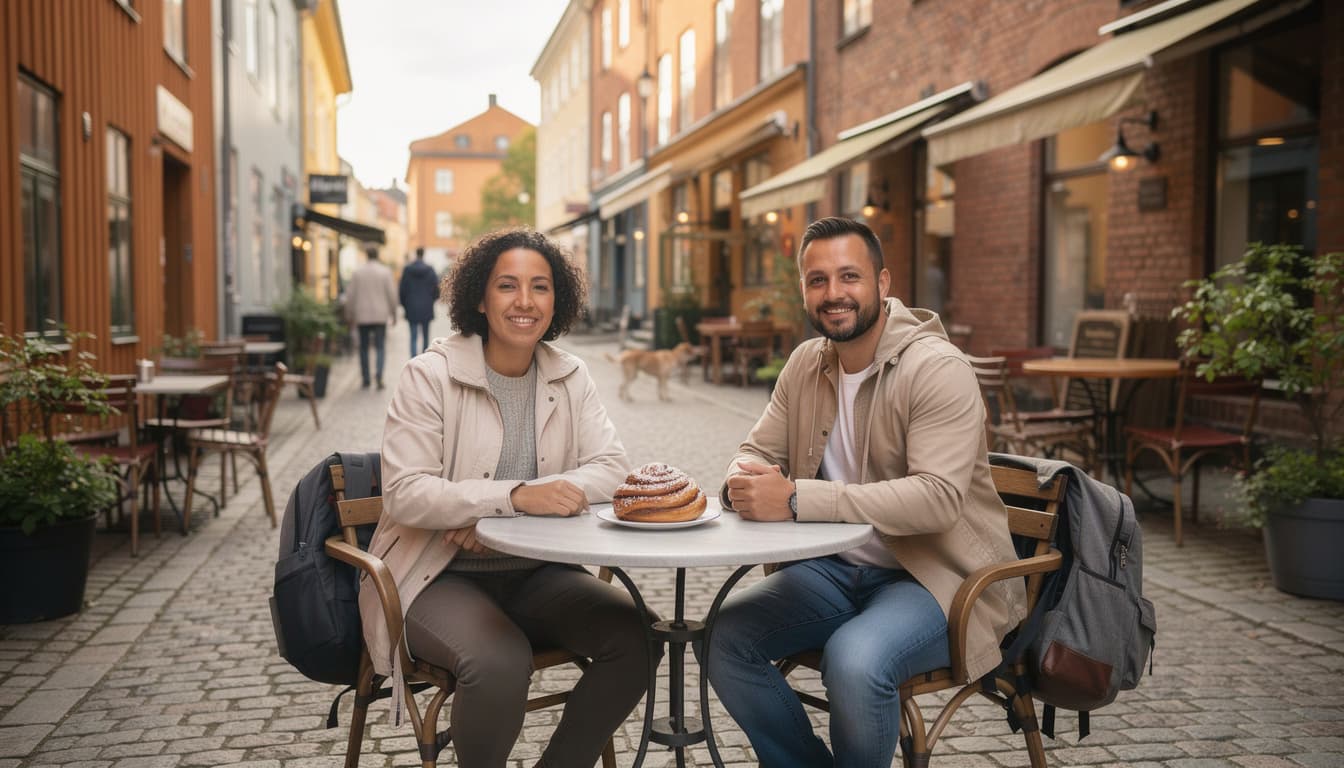
As for museums, the Evolutionsmuseet houses the largest collection of dinosaur bones in the Nordic countries[4]. Bror Hjorths Hus occupies the former studio of sculptor and painter Bror Hjort[4]. Note that admission to the castle's art museum is free[2].
Practical Info: Getting There, Getting Around, How Much Time to Plan
Uppsala is a 35-minute train ride from Stockholm[1] and less than 75 kilometers from the capital[2]. The center is easy to explore on foot[2]. An online tourist office and InfoPoints spread across the city can help you with maps and brochures[6].
One day is enough to see the highlights: "day-trippers will be content with a single day on site," notes Routard[3]. Two days let you add Gamla Uppsala, a Linnaeus garden, or a bike ride. Keep the season in mind: the Linnaeus Museum is only open from May to September[1], and the atmosphere dips in June and July, when students leave for vacation[3].
Pitfalls and Things to Watch For
- In crowds, especially at the Valborg festival, Christmas markets or sporting events, don't keep your wallet in a back pocket, and keep your bag in front of you[7].
- If you're looking for accommodation, be wary of listings that seem "too good to be true" on platforms like Blocket: some are deposit scams. Never send money before you've visited the place and signed a proper contract[7].
Key Takeaways
- Take the train from Stockholm: allow 35 minutes.
- In the center, walk between the cathedral, the castle, the Gustavianum and the Carolina Rediviva.
- Come between May and September to visit the Linnaeus Museum.
- Set aside half a day for Gamla Uppsala, by bike or on foot.
- Finish with a Linnébulle.
This article does not detail the opening hours and prices of each site, nor more distant surroundings: to plan a longer stay, check the Uppsala tourist office and, to extend your trip, "Sweden: The Essentials, Region by Region."
Keep exploring
- Sweden: The Highlights, Region by Region
- The Stockholm Archipelago: Which Islands to Choose and How to Get There
- Göteborg: What to See and Do, from Haga to the Archipelago
- Stockholm: What to See and Do, Island by Island, from Gamla Stan to the Archipelago
Sources
- 1.^ abcdefghijklmnopqrstuvwvisitsweden.com — Uppsala in Sweden - a vibrant university town | Visit Sweden: "Uppsala, the Cambridge of Sweden, is a dynamic university town located 35 minutes by train from Stockholm." ; "Uppsala, Sweden's fourth-largest city, blends history and innovation." ; "Founded in 1477, Uppsala University is the oldest university in the Nordic countries." https://visitsweden.com/where-to-go/middle-sweden/uppland/uppsala/ (accessed November 9, 2026)
- 2.^ abcdefghijklmnoproutard.com — Visiter Uppsala et le centre : préparez votre séjour et voyage Uppsala et le centre | Routard.com: "Uppsala, Sweden's fourth-largest city, is a destination rich in history and dynamism. Located less than 75 kilometers north of Stockholm, it is easily accessible and is a major hub in central Sweden." ; "The heart of Uppsala is easy to discover on foot, along the streets that line the Fyris River." ; "This Gothic building, whose two spires rise nearly 119 meters high, houses the tombs of Swedish historical figures such as King Gustav I Vasa and the famous naturalist Carl von Linné." https://www.routard.com/fr/guide/europe/suede/uppsala-et-le-centre (accessed November 9, 2026)
- 3.^ abcderoutard.com — Visit Uppsala: plan your stay and trip to Uppsala | Routard.com: “Domkyrka: inaugurated in 1435, it is the largest church in Scandinavia: its towers rise to nearly 119 m and the interior can hold up to 2,000 people.” ; “Only one original page is on display, the book itself being just a facsimile. This security measure followed a mysterious theft in 1995, when the Codex was stolen… before being found, without explanation, a few months later in a locker at Stockholm Central Station. That said, the other documents are authentic, and simply stunning.” ; “Birds of passage will be content with a single day on site.” https://www.routard.com/fr/guide/europe/suede/uppsala-et-le-centre/uppsala (accessed November 9, 2026)
Show 4 more sourcesShow less
- 4.^ abcdefvisitsweden.fr — Uppland, Central Sweden | Visit Sweden: “To discover the lush nature of Uppland, you can walk the eight Linnaeus trails that start in Uppsala and wind through the surrounding countryside. Named herbations and lined with information boards, these trails were laid out by the botanist himself.” ; “Tracing the region's history centuries before Linnaeus's time, the Old Uppsala Museum sits among royal burial mounds, in an Iron Age landscape. Travel back in time and discover the life of a 7th-century Viking village through a fascinating virtual reality experience.” ; “About 16 kilometers west of Uppsala, you'll find Fiby Urskog, an ancient forest with hiking trails winding through 87 hectares of preserved, richly diverse nature.” https://visitsweden.fr/destinations/centre-de-la-suede/uppland/ (accessed November 9, 2026)
- 5.^visitsweden.de — Uppland in Central Sweden | Visit Sweden: “At the Fjällnora recreation area, you can go canoeing, swim, paddle, and also go ice skating.” https://visitsweden.de/regionen/mittelschweden/uppland/ (accessed November 9, 2026)
- 6.^destinationuppsala.se — InfoPoints - Destination Uppsala: “Our InfoPoints are spread throughout the city: you'll find help wherever you are. An InfoPoint offers simplified tourist information, where you can get answers to common questions and pick up maps and brochures.” https://destinationuppsala.se/en/tourist-information/infopoints/ (accessed November 9, 2026)
- 7.^ abopenshores.co — Safety in Uppsala: what expats need to know in 2026: “That said, during big gatherings — Valborg celebrations, Christmas markets, sporting events — basic vigilance is still advisable: don't keep your wallet in a back pocket, and keep your bag in front of you in the crowd.” ; “Fraudulent listings on platforms like Blocket do exist, and apartments that look too good to be true are sometimes deposit traps. Never send money before you have physically visited a property and signed a proper contract.” https://www.openshores.co/blog/suede/uppsala/securite-a-uppsala (accessed November 9, 2026)