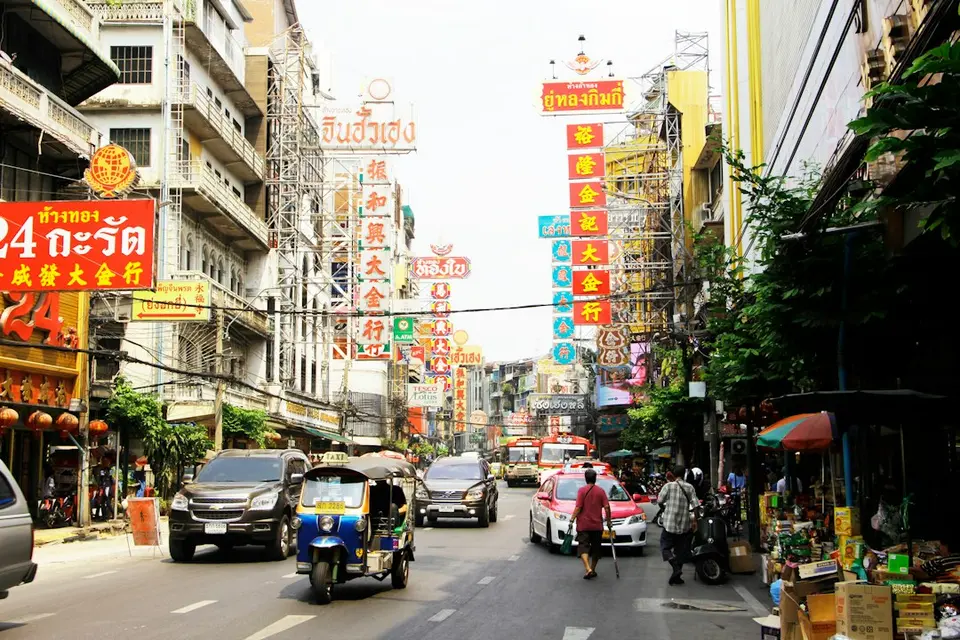
In Thailand, two health risks come back every year: dengue during the rainy season and PM2.5 fine particles during the cool season. This article helps you spot the signs that call for a doctor's visit, reduce your exposure day to day, track air quality and check your health insurance. It is informational and does not replace medical advice: for your personal situation, see your doctor or an international vaccination center.
Dengue and Pollution: Two Risks to Watch in Thailand
Every rainy season, Thailand sees a surge in dengue, and the authorities address both Thai residents and foreign tourists[1]. As a dated example, Thai health authorities recorded 15,399 confirmed dengue cases between the start of 2023 and week 19, 5.4 times more than in the same period of 2022, with 13 deaths[2].
The other risk is the air. As a past example, during a pollution episode in Bangkok, the Bangkok Metropolitan Administration (BMA) announced an expected rise in PM2.5 levels across several areas of the capital and neighboring provinces on November 19 and 20. It attributed this to a cold air mass and poor atmospheric ventilation, which trap fine particles near the ground[3].
Both risks follow the calendar: dengue accompanies the rains[2], pollution the cool season[3].
Dengue: What You Need to Know
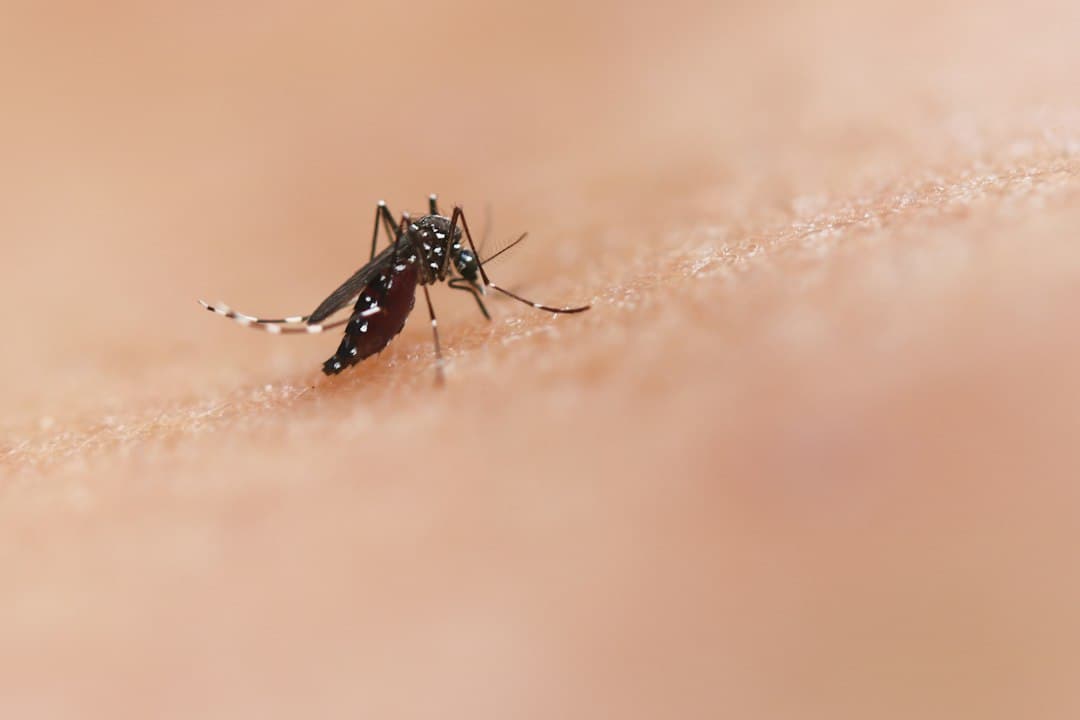
Dengue is caused by a virus that exists in four strains and is transmitted by mosquitoes[1]. Rain multiplies the places where they breed[2].
Symptoms unfold in three phases, which should be closely monitored[1]:
- Initial phase: high fever lasting about 5 to 7 days, muscle pain, rash or red spots on the body, arms and legs, loss of appetite, nausea or vomiting[1].
- Critical phase: the most dangerous. Fatigue and weakness, less frequent urination, abdominal pain, abnormal bleeding (bloody or black stools, vomiting blood). The fever starts to drop, hands and feet become cold, blood pressure falls and shock may occur[1].
- Recovery phase: blood pressure stabilizes, urination returns, appetite comes back and energy rises[1].
The illness lasts about 7 to 10 days in total[1]. There is no curative treatment: medical care relies solely on treating the symptoms[4].
Protecting Yourself from Mosquitoes Every Day
Individual prevention relies mainly on protection against mosquito bites[4]. In practice:
- Always cover containers where water is stored, and change the water in vases or pots every 7 days, to eliminate places where mosquitoes breed[1].
- Wear covering clothing and sleep in a room with a mosquito net or screened windows[1].
- Apply repellent to exposed skin. The U.S. CDC indicates that a product containing at least 20% DEET provides protection for several hours[5].
- Cover exposed skin with long-sleeved shirts, long pants and a hat[5].
These habits also help against other mosquito-borne diseases, such as chikungunya[4].
When to See a Doctor, and What to Avoid
A sudden high fever, headaches, body aches, small red spots on the arms and legs, nausea, vomiting, abdominal pain and loss of appetite can be signs of dengue. If a high fever lasts more than two days despite efforts to bring it down, dengue may be the cause[2].
- Avoid aspirin, ibuprofen and diclofenac, and see a doctor or the nearest health service urgently[2]. France Diplomatie also stresses: you must absolutely avoid taking anti-inflammatory drugs[4].
- Do not wait for the fever to drop: that is precisely when the critical phase, the most dangerous one, begins[1].
- The Thai authorities provide the Department of Disease Control hotline, 1422, for any questions[2].
Vaccination: what the official sources say
The official Thai portal recommends the dengue vaccine for people who have already had dengue, to prevent a recurrence[1]. France Diplomatie indicates that vaccination of travelers may be advisable in some cases and advises you to speak with your general practitioner or an international vaccination center before departure[4].
The vaccines recommended in France are just as essential abroad, because the diseases they prevent circulate all over the world. If you are departing from France, make sure you are up to date with the French vaccination schedule, in particular diphtheria, tetanus, polio, whooping cough and measles[4]. For a long stay, the CDC indicates that chikungunya vaccination can be considered (for example for 6 months or more), the risk being high in Thailand[5].

Air quality: follow the alerts, understand the seasons
Thailand entered its cool season on November 9, during the episode mentioned above (in this case on November 9, during the episode mentioned above), a period when weather conditions can limit the dispersion of pollutants from traffic, open burning, industry and road dust[3]. In Bangkok, the Bangkok Air Quality Information Center monitors levels in real time[3].
More broadly, the Ministry of Public Health has warned of 40 high-risk provinces, with Chiang Rai, Chiang Mai and Bangkok as the most critical areas, and smog episodes expected until the end of May[6].
To track the air day by day, real-time measurement apps and the Pollution Control Department websites let you check PM2.5 concentrations[7]. The government has also launched the Safe Zone app, which helps you find nearby verified clean-air rooms, and a telemedicine platform to consult a doctor from home and have your medication delivered, which limits your exposure outdoors[6].
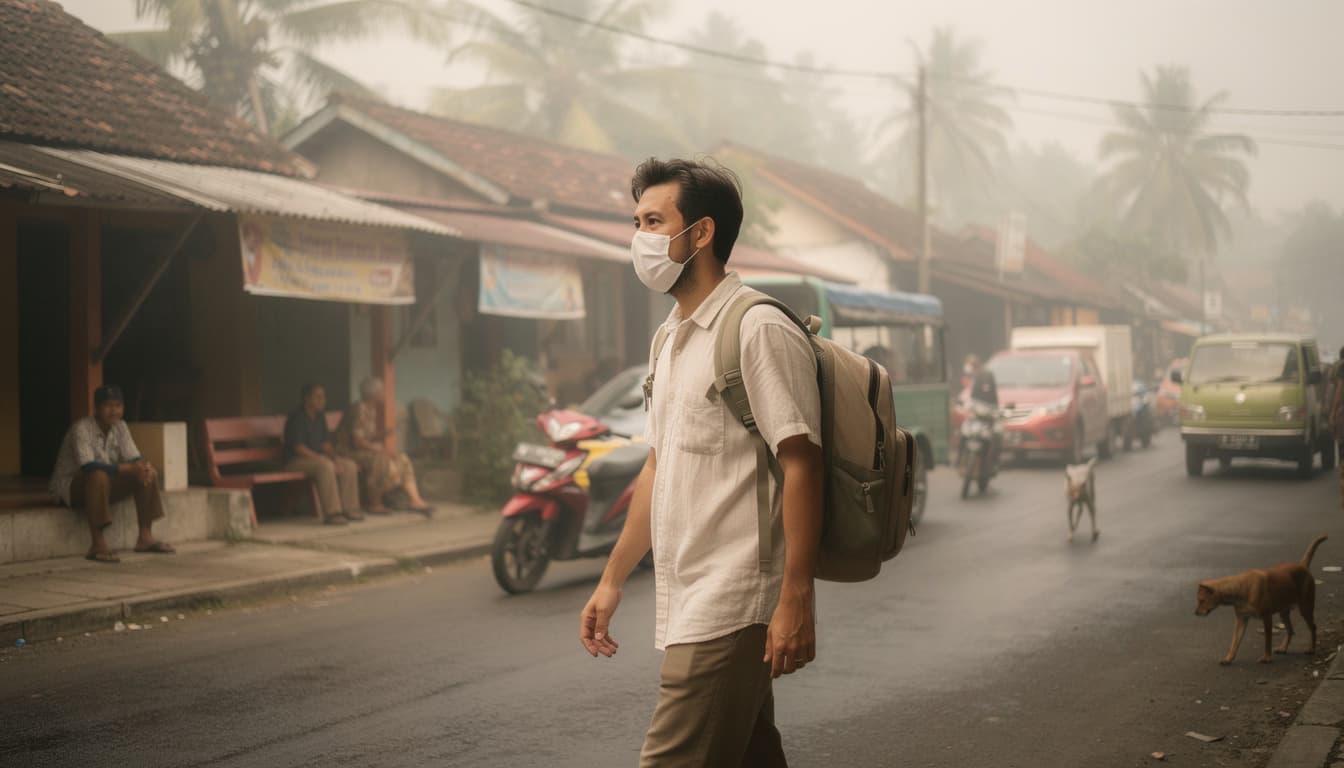
Bangkok authorities advise checking air quality before going out and wearing a mask that protects against PM2.5 outdoors[3]. Young children, older adults, pregnant women and people with respiratory or heart conditions should limit outdoor activities during peaks[3]. Persistent coughing, difficulty breathing or chest tightness warrant immediate medical consultation[3].
Health and insurance: what to check
Hospital and healthcare costs can be very high abroad. Hospital and healthcare costs can be very high abroad: check that your assistance or insurance contract covers medical expenses, hospitalization and medical repatriation, as these costs remain your responsibility. The French embassy will in no case cover these costs[4].
As for medication, import rules in Thailand can vary depending on the type and quantity: check with the Thai authorities or your doctor before departure. If you are on treatment, make sure your medications are permitted, carry a prescription in English, and declare them on arrival if necessary. Penalties range from confiscation to criminal prosecution[4]. Carry them in their original packaging, with the original labels and a prescription showing their international nonproprietary name, and never buy medication from the street, due to the risk of counterfeits[4].
Checklist before and during your stay
- Note the emergency numbers before departure: 1669 for ambulance, 199 for fire, 191 for police[5].
- Keep the Department of Disease Control hotline handy: 1422[2].
- Consult your doctor or an international vaccination center well in advance of departure to decide whether vaccination is appropriate.
- Build simple habits: cover standing water or change it every week, use repellent and wear covering clothing.
- Check air quality before going out during the cool season, and keep a mask that protects against PM2.5 within reach.
- Review your health insurance contract: medical expenses, hospitalization and medical repatriation.
- This guide provides the essential benchmarks; for your personal situation (ongoing treatment, pregnancy, children, chronic illness), a doctor remains the person you should consult.
Sources
- 1.^ abcdefghijktestweb.thailand.go.th — Tips for Protecting Yourself from Dengue Fever - THAILAND.GO.TH: “Whether you are Thai or a tourist, one thing to keep in mind: every rainy season, Thailand faces a surge in dengue fever.” ; “Dengue is caused by the dengue virus, which has four strains, with mosquitoes acting as vectors.” ; “Initial phase: the patient has a high fever for about 5 to 7 days. Symptoms may include muscle aches, rashes or red spots on the body, arms and legs, loss of appetite, nausea or vomiting.” https://testweb.thailand.go.th/guide-book-detail/001_02_345-2-2 (accessed November 23, 2026)
- 2.^ abcdefgqa.thailand.go.th — MOPH warns citizens and tourists to take precautions against dengue fever during the rainy season - THAILAND.GO.TH: “According to data from the Department of Disease Control, 15,399 confirmed dengue cases were recorded from the start of the year through week 19. This represents a 5.4-fold increase over the same period in 2022. In addition, 13 people have died from the disease.” ; “Rain multiplies mosquito breeding sites.” ; “If someone has a sudden high fever, headache, body aches, small red spots on the arms and legs, nausea, vomiting, abdominal pain and loss of appetite, these may be signs of dengue. If the high fever persists for more than 2 days despite efforts to bring it down, dengue may be the cause.” https://qa.thailand.go.th/useful-information-detail/001_02_344 (accessed November 23, 2026)
- 3.^ abcdefgpattayamail.com — Bangkok braces for rising PM2.5 pollution on November 19–20 - Pattaya Mail: “The Bangkok Metropolitan Administration (BMA) has warned that PM2.5 pollution levels are expected to rise in several areas of Bangkok and neighboring provinces on November 19 and 20. A strong mass of cold air, combined with poor atmospheric ventilation, could trap fine particles near the ground and degrade air quality across the entire metropolitan region.” https://www.pattayamail.com/thailandnews/bangkok-braces-for-rising-pm2-5-pollution-on-november-19-20-572339 (accessed November 23, 2026)
Show 4 more sourcesShow less
- 4.^ abcdefghidiplomatie.gouv.fr — Thailand - Health | France Diplomatie: “There is no curative treatment. Medical care relies solely on treating the symptoms.” ; “Individual prevention relies mainly on means of protection against mosquito bites.” ; “Chikungunya is a viral disease transmitted by infected mosquitoes.” https://www.diplomatie.gouv.fr/fr/information-par-pays/thailande/conseils-aux-voyageurs-sante (accessed November 23, 2026)
- 5.^ abcdwwwnc.cdc.gov — Thailand - Traveler view | Travelers' Health | CDC: “To protect yourself from ticks and mosquitoes: use a repellent containing 20% or more DEET for protection that can last several hours.” ; “Cover exposed skin by wearing long-sleeved shirts, long pants and hats.” ; “The risk of chikungunya is high in Thailand. Chikungunya vaccination may be considered for people traveling to or moving to this country if they plan to stay for a long time (for example, 6 months or more).” https://wwwnc.cdc.gov/travel/destinations/traveler/none/thailand (accessed November 23, 2026)
- 6.^ abthaigernews.com — Super El Niño May Worsen Thailand PM2.5 Pollution: “The alert covers 40 high-risk provinces across the country, with Chiang Rai, Chiang Mai and Bangkok designated as the most critical areas, facing a sharp deterioration in air quality.” ; “Thailand's Ministry of Public Health has warned that a powerful El Niño phenomenon could significantly worsen the country's PM2.5 air pollution, with severe smog expected through the end of May.” ; “The government has launched a new Safe Zone app to help locate nearby verified clean-air, dust-free rooms.” https://thaigernews.com/super-el-nino-pm25-warning-thailand/ (accessed November 23, 2026)
- 7.^healthdeliver.asia — Air Pollution Thailand Health Effects | HealthDeliver: “Community health workers use real-time air quality measurement apps and Pollution Control Department websites to monitor local air quality, checking PM2.5 concentrations.” https://healthdeliver.asia/air-pollution-thailand-health-effects/ (accessed November 23, 2026)