Moving from a few weeks to several months in Thailand changes your relationship with the country: you no longer just look at the beaches, you live with the traffic, the seasons and local customs. This article helps you greet people properly, recognize scams and risks that target foreigners who have settled in, know which areas to avoid, and plan your travel around the rains.
Greeting and understanding each other: the wai
In Thailand, the traditional greeting is the "wai": the palms are pressed together in a prayer position, then touched somewhere between the chest and the top of the head, with a slight bow of the head[1]. The higher the hands are raised, the greater the respect shown[1].
When a child gives you a wai, a simple nod of the head and a smile are enough in return[1]. In everyday life, this spares you from overdoing the gesture: return it with moderation, depending on the person in front of you.
Pitfalls, scams and points of caution
A few situations come up regularly among foreigners who have settled in or are just passing through. Knowing about them means you won't have to discover them on the spot.
Fake job offers
Job offers in "online marketing" are regularly posted on social media with a location in Thailand[2]. These fraudulent offers actually serve to recruit labor for online scam centers, known as "scam centers," located in the border areas of Myanmar or Cambodia[2].
Employees are taken there, often by force, and then held against their will, their passports confiscated[2]. Ransoms are very often demanded from families to secure the victim's release before the end of the contract[2]. Be wary of any remote work or online sales offer that draws you toward a border town.
Jewelry and fake "embassy agents"
Some French-speaking guides offer to help you make "good deals" by buying jewelry. The pieces are genuine, but they are sold at two to three times the market price[2]. According to France Diplomatie, this scam cannot lead to prosecution, because Thai law considers that the selling price was freely accepted by the buyer[2].
Foreigners claiming to be in serious financial trouble sometimes ask tourists for help[2]. They give a mobile number, claiming it belongs to the embassy's duty officer, but an accomplice answers the call[2]. These scams are reported mainly in Pattaya and Phuket[2]. If you are approached this way, contact your country's embassy directly to verify[2].
Theft, drugged drinks and belongings left on beaches
The most frequently reported thefts occur on the overnight bus route between Surat Thani and Bangkok, in both directions[2]. They target luggage stored in the hold as well as passengers' belongings while they sleep, notably passports and cash[2]. In Bangkok, bag snatchings by a motorbike driver and his rear passenger happen regularly[2].
- Do not leave your personal belongings unattended on the beaches[2].
- Make copies of your identity documents and keep the originals in a secure place[2].
- Be watchful of drinks and meals served in some neighborhoods, especially in budget hotels: they may contain sleeping pills or drugs[2].
On the road
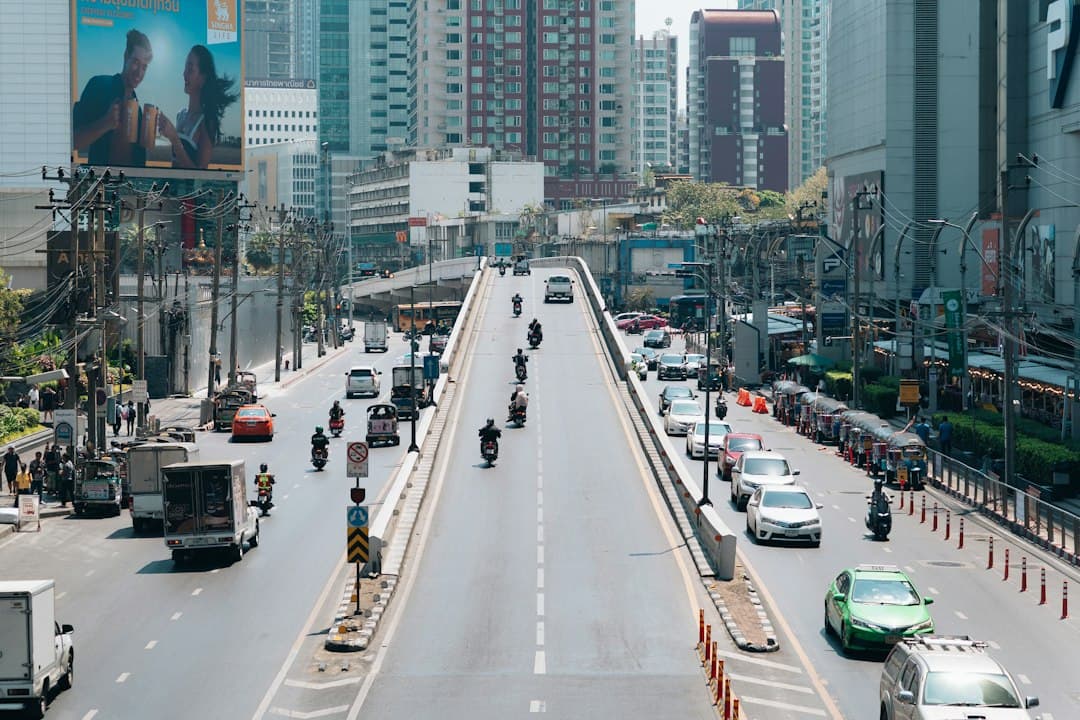
Thailand's road accident rate is one of the highest in the world, with more than 17,000 deaths on average per year[2]. Two-wheelers are particularly dangerous: 90% of fatal accidents involve two-wheelers, and helmets rarely meet safety standards[2]. The greatest caution is advised, especially at night[2].
To drive, the rule depends on your status. A foreigner passing through must hold an International Driving Permit[2]. A foreign resident must hold a Thai driver's license: otherwise, the insurance company refuses to cover the costs of an accident[2]. Insurance also refuses any coverage if traces of cannabis are detected during the laboratory tests routinely performed after an accident[2].
Areas to Avoid
- In the Deep South, travel is strongly advised against in the provinces of Narathiwat, Pattani, Yala, and Songkhla, where armed separatist movements are active[2].
- The provinces of Satun and Phatthalung are advised against unless absolutely necessary, due to possible attacks by armed separatist movements[2].
- The entire border with Myanmar is strongly advised against, with the sole exception of the town of Mae Sot; this includes the crossing points open to foreigners, due to cross-border banditry and numerous forms of trafficking[2].
- Travel in the border areas of Cambodia, within 50 km of the border, is very strongly advised against due to recent armed clashes[2].
Crossing the border outside authorized checkpoints is illegal and can lead to serious consequences[2]. The border areas with Myanmar and Cambodia also host online scam centers, which you should be especially careful to avoid[2].
Climate and Seasons: How the Weather Changes Daily Life
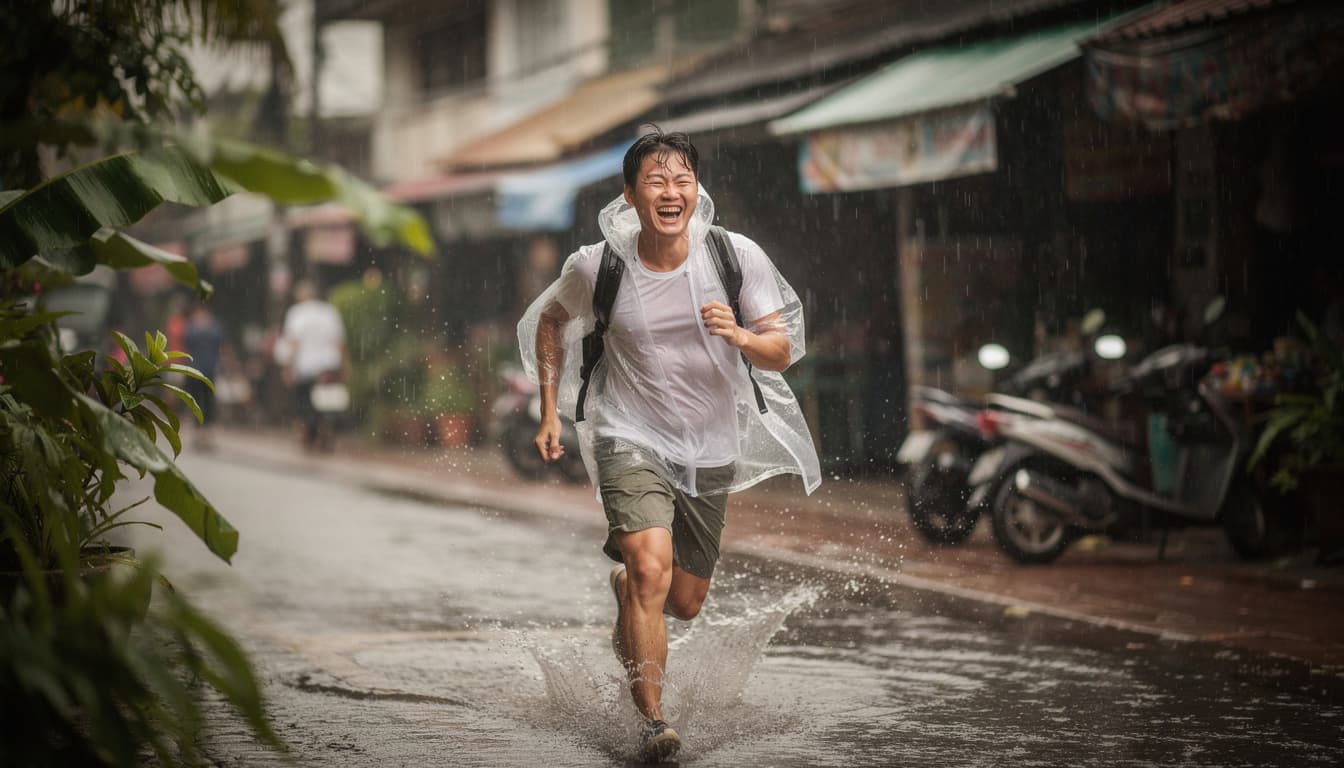
In most of the country, heavy rain is observed from April to November[2]. On Koh Samui and the east coast, it traditionally falls from November to March[2]. If you settle on a coast, this difference matters when choosing your travel months.
Before hitting the road, check the weather conditions and road status in the regions you plan to cross, so you can avoid flooded areas[2]. The Thai Meteorological Department publishes official updates and warnings on its website as events unfold[2]. If you practice caving, it is not recommended during the rainy season, even with guides[2].
Key Points to Keep in Mind Before You Settle In
- Offer a wai with moderation, and when greeting a child, respond with a nod of the head and a smile.
- Turn down any online recruitment offer that sends you to a border area.
- Keep copies of your documents, store the originals somewhere safe, and keep your belongings close to you at night on buses and at the beach.
- Check with your embassy before responding to any request for help that comes from a mobile number presented as belonging to them.
- If you live in Thailand, get a Thai driving license before riding a two-wheeler.
- Check the Thai Meteorological Department's forecasts before every trip during the rainy season.
This article is limited to safety, greeting customs, and seasons. To truly settle in, you will still need to work out your budget line by line, choose your city or neighborhood, and review the public holiday calendar for the year you are targeting.
Sources
- 1.^ abcMira Knowledge — In Thailand, the traditional greeting is the “wai”: the hands are placed together in a prayer position and then touched somewhere between the chest and the top of the head, accompanied by a slight tilt of the head. Verified on 06/11/2026: reference source guide.culturecrossing.net. https://guide.culturecrossing.net/basics_business_student_details.php?Id=7&CID=203 (accessed June 11, 2026)
- 2.^ abcdefghijklmnopqrstuvwxyz27282930313233diplomatie.gouv.fr — Thailand - Safety | France Diplomatie: “Job offers in online sales and telemarketing are regularly posted on social media with a location in Thailand.” ; “These fraudulent offers are in fact meant to recruit labor for online scam centers, or scam centers, located in the border areas of Myanmar or Cambodia.” ; “Employees are taken, often by force, to these centers, then deprived of their freedom and have their passports confiscated.” https://www.diplomatie.gouv.fr/fr/information-par-pays/thailande/conseils-aux-voyageurs-securite (accessed November 15, 2026)