Guanajuato is best explored on foot, getting a little lost in its alleys, and this guide helps you plan your visit. You'll learn what to see in the historic center, which experiences to enjoy in the evening and nearby, how to climb to El Pípila, and where to stay on any budget. You'll also find out when you need to book early and a few safety habits to keep in mind.
Why Guanajuato Is Worth the Trip
Guanajuato sits in the heart of Mexico, at about 6,600 feet (2,000 meters) above sea level[1]. Once a mining town whose wealth came from silver, it is today a lively cultural and university capital[1].
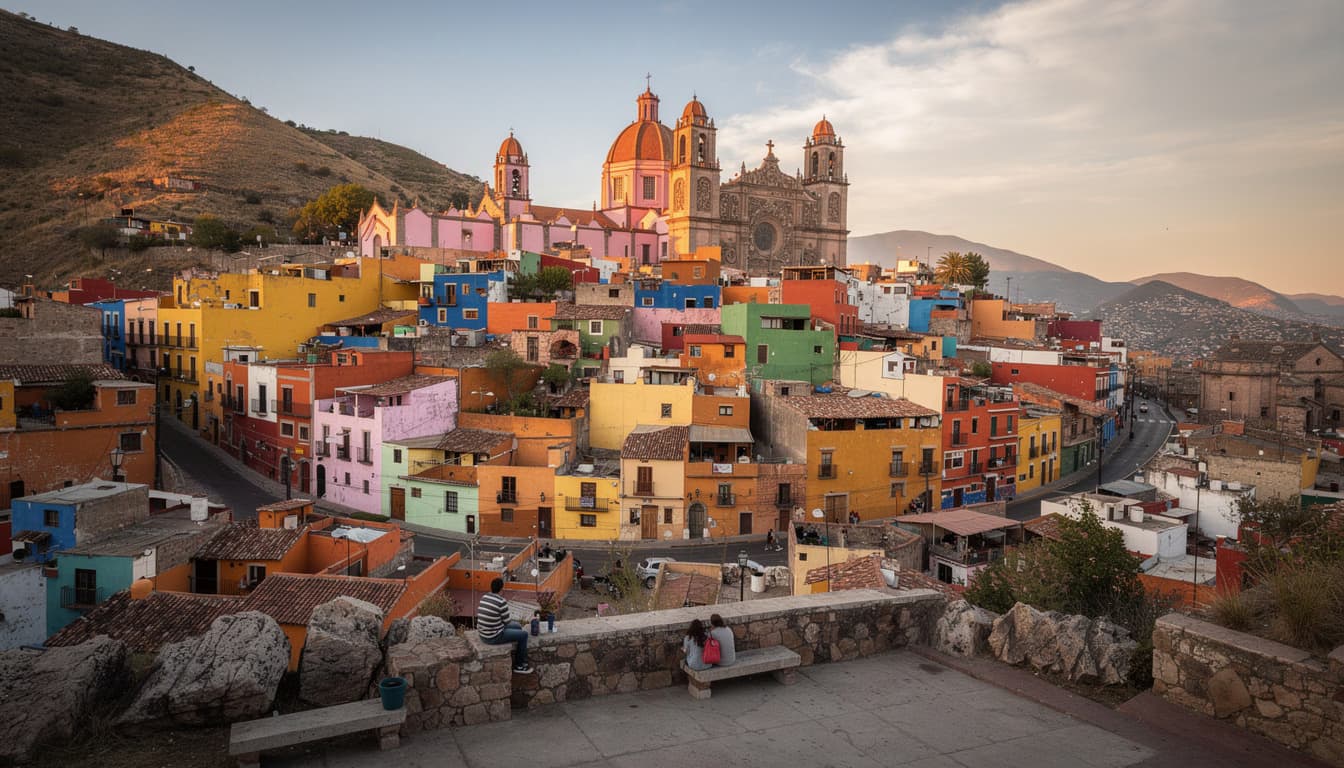
Its historic center, a UNESCO World Heritage Site since 1988, is a maze of colorful alleys, shaded squares, and underground tunnels[1]. What sets it apart from other colonial cities is its student population, which keeps the atmosphere energetic, young, and affordable[2]. It is also known to be noticeably cheaper than other colonial gems such as San Miguel de Allende, largely thanks to this university character[3].
What to See in the Historic Center
The heart of the city is best discovered by wandering the maze of cobbled streets known as callejones[1]. The most famous is the Callejón del Beso, the “alley of the kiss,” where two balconies almost face each other, linked to a local romantic legend[1]. The simplest approach is to follow the advice of local guides: get lost on purpose among the colorful callejones[3].
The central hub is the Jardín de la Unión, a triangular square lined with trees, cafés, and restaurants, where the Teatro Juárez stands[1]. Nicknamed “La Rebanada de Queso” (the slice of cheese), the garden is surrounded by many restaurants, museums, theaters, and hotels[4].
The Teatro Juárez, inaugurated in 1903, has a facade inspired by Greek architecture, with Doric columns and statues of the muses, while its interior reveals opulent decoration[1]. Among the other notable places in the city is Miguel Hidalgo Avenue and its market[4]. The Mercado Hidalgo makes for a day of varied shopping: souvenirs, handicrafts, and food[4].
History and Culture: From Independence to Silver
The Regional Museum of Guanajuato is housed in the Alhóndiga de Granaditas, a former grain warehouse that was the site of a major victory during the Mexican War of Independence[1]. The museum holds collections of art, archaeology, and history, as well as mural paintings by José Chávez Morado[1].
The city's mining past can also be discovered on site. The Guanajuato mines route includes the Mina de Rayas, discovered in 1558 and nearly 500 meters deep[4]. The experimental El Nopal mine is also a highly interesting visit[4].
On the culture side, the International Cervantino Festival takes place in this same center, filled then with young people and students[4]. Guides describe it as the most important cultural event in Latin America, held in October[3].
Museums and Unique Spots
The Museum of Mummies offers a one-of-a-kind experience: it displays naturally mummified bodies discovered in the local cemetery starting in the 19th century[1]. Admission costs 95 pesos[2]. The municipality of Guanajuato Capital offers to buy the e-ticket on its website[5].
Views, Nature, and Surroundings
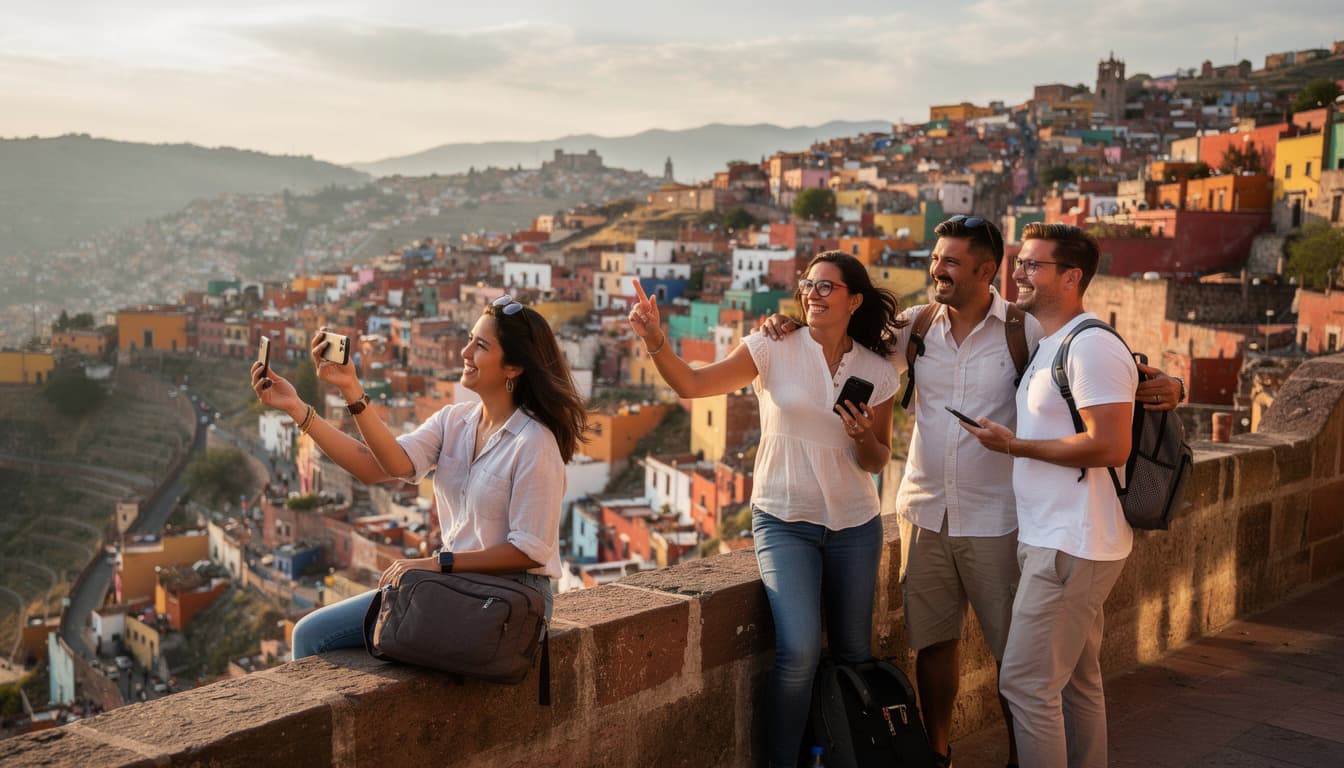
For the big picture, head up to the El Pípila monument, a colossal statue in pink stone that honors a local hero of independence[1]. The site, reachable on foot or by funicular, is especially popular at sunset, when the city lights come on[1].
Hikers can climb the Cerro de la Bufa, an iconic rock formation overlooking the city with several trails[1]. The route offers views of the surrounding landscape and gives access to caves, including the Cueva de San Ignacio[1].
A few kilometers from the center, the former hacienda San Gabriel de Barrera, a 17th-century mining hacienda, has become a museum surrounded by 17 themed gardens (English, Roman, Oriental…)[1]. The Cristo Rey, a statue of Christ more than 20 meters tall atop the Cerro del Cubilete, offers a panorama over the Bajío region; access to the sanctuary is free[1]. To get to the surrounding sites (mines, Cristo Rey, hacienda), the most convenient option is a tour, a taxi by the hour, or a private vehicle[3].
Another curiosity: the underground tunnel network, built in the former bed of a river to ease traffic, which helps you understand the city's topography[1].
Evenings: callejoneadas and student life
In the evening, don't miss a callejoneada: musical walking tours with estudiantinas in period costume who lead you singing through the callejones[3].
The callejoneadas and nightlife often run late, so the hotels in the center can be noisy[2]. If sleep matters to you, keep this in mind when choosing your accommodation.
In November, the State of Guanajuato offers, among other things, Día de Muertos celebrations and food festivals[6].
Where to stay and how to get around
The prime area is the historic center, around the Jardín de la Unión, the Teatro Juárez and the Basilica: everything is within walking distance, with bars, restaurants and a student atmosphere[3]. The flip side is that many streets are pedestrian-only, cobbled and steeply sloped; your suitcase will suffer, so it's best to travel light[3].
Approximate price ranges noted in a Mexican guidebook:
- hostel dormitory beds: from about 300 to 550 MXN[3];
- mid-range hotels: about 1,000 to 2,200 MXN per night[3];
- luxury boutique hotels: about 2,500 to 5,000 MXN[3].
For a long stay or a group trip, there are also many apartment and house rentals through online platforms[3]. Book several months ahead for the Festival Cervantino (October): the city fills up completely and prices soar[3]. The same goes for Semana Santa, the Día de Muertos long weekend and December; on weekdays and in the low season, however, rates are very good[3].
For getting around, the historic center is best explored on foot[1]. City buses, which run at street level and through the tunnels, cost about 10 pesos per ride according to one guide; look for those marked "Centro" to reach the center[2]. Taxis are plentiful; it's best to confirm the fare before getting in, and check with your accommodation what a typical city ride should cost. Uber and DiDi also operate, although a taxi is sometimes more practical given the tunnel layout and pedestrian zones[3]; drivers cannot enter some pedestrian squares[2].
To go up to the Pípila, there are three options: the funicular, which departs from behind the Teatro Juárez[1] (about 30 to 40 MXN according to one guide)[3]; a taxi; or walking up through the callejones, a good climb[3]. One tip from a guide: take an Uber up and walk back down to spare your knees[2].
Budget, length of stay and best time to visit
On budget, a meal at a mid-range restaurant costs about 80 MXN at lunch and 150 MXN at dinner[4]. Given the accommodation prices mentioned above, Guanajuato remains an affordable destination compared with other colonial cities[3].
As for timing, October is presented as the best month, thanks to the Festival Cervantino, provided you book your accommodation in advance[4]. The climate is mild, with an average annual temperature of 18 °C; May and June are the hottest months, around 30 °C, and January the coolest, with temperatures rarely dropping below 6 °C[4].
To place the city within a broader itinerary, read our article "Mexico: The Essential Highlights, Region by Region."
Pitfalls, scams and points of caution
- Before making any payment or bank transfer, verify that tour agencies and accommodations are legitimate and real, so you don't fall victim to a scam[7].
- Make your bookings through official websites to avoid fraud[7].
- Keep your valuables safe in very busy market areas such as the Mercado Hidalgo[2].
- At night, stick to well-lit main streets and squares rather than unlit residential callejones on higher ground[2].
This article covers the essentials for a visit; to settle in for longer, you would need to go further into the budget, line by line, and into how to choose your neighborhood.
Keep exploring
- Mexico: The Must-Sees, Region by Region, to Help You Choose Where to Go
- Mexico City: What to See and Do, from the Zócalo to Xochimilco
- San Miguel de Allende: What to See and Do in the Colonial City
- Guadalajara: What to See and Do in Mexico's Capital of Mariachi and Tequila
Sources
- 1.^ abcdefghijklmnopqrsroutard.com — Visiting Guanajuato: Plan Your Stay and Trip to Guanajuato | Routard.com: “Nestled in the heart of Mexico, at an altitude of about 2,000 meters, Guanajuato is a city with a unique charm.” ; “A former mining town whose prosperity rested on silver extraction, it is today a dynamic cultural and university capital.” ; “Its historic center, a UNESCO World Heritage Site since 1988, is a labyrinth of colorful alleyways, shaded squares, and underground tunnels that make it a truly extraordinary place.” https://www.routard.com/fr/guide/ameriques/mexique/guadalajara-et-les-villes-coloniales/guanajuato (accessed November 9, 2026)
- 2.^ abcdefghvisualtravelspots.com — Guanajuato Travel Guide 2026: Spots & Itinerary: “The city is known for its university population, which keeps the atmosphere energetic, youthful, and affordable.” ; “Mummy Museum: discover Guanajuato's famous naturally preserved mummies (admission: 95 pesos).” ; “However, because the callejonadas and nightlife run late, hotels in the center can be noisy.” https://visualtravelspots.com/travel-guides/guanajuato-travel-guide-2026 (accessed November 9, 2026)
- 3.^ abcdefghijklmnopqrutasmexico.com.mx — Guanajuato, Guanajuato: Travel Guide and How to Get There 2026 | RutasMéxico: “Guanajuato is a distinctly budget-friendly destination compared with other colonial gems like San Miguel de Allende, largely thanks to its university character, which keeps food and lodging prices accessible.” ; “That is why the best way to get to know it is on foot, deliberately getting lost among the colorful callejones, such as the famous Callejón del Beso.” ; “If you visit during the Festival Internacional Cervantino (October), the most important cultural event in Latin America, book several months ahead, as the city fills up completely and prices soar.” https://rutasmexico.com.mx/es/destinos/guanajuato (accessed November 9, 2026)
Show 4 more sourcesShow less
- 4.^ abcdefghikayak.com.mx — Guanajuato Travel Guide | Guanajuato Tourism - KAYAK: “The Jardín Unión, also called La Rebanada de Queso (the slice of cheese), is a triangular space surrounded by many restaurants, museums, theaters, hotels, and other leisure venues.” ; “Among Guanajuato's many attractions are buildings that bear witness to the Mexican War of Independence, such as the Alhóndiga de Granaditas, fascinating corners like Avenida Miguel Hidalgo and its market, and the Callejón del Beso and Callejón de la Condesa.” ; “The Mercado Hidalgo promises a varied and highly entertaining day of shopping, with souvenirs, crafts, food, and much more at your disposal.” https://www.kayak.com.mx/Guanajuato.33380.guide (accessed November 9, 2026)
- 5.^guanajuatocapital.gob.mx — Home - Guanajuato Capital: “Guanajuato Capital offers the option to buy an electronic ticket for entry to the Mummy Museum through its website.” https://www.guanajuatocapital.gob.mx/ (accessed November 9, 2026)
- 6.^guanajuato.mx — Guanajuato.mx – Opening New Paths: “November arrives in Guanajuato with experiences for every taste: Día de Muertos celebrations, gastronomy festivals…” https://guanajuato.mx/ (accessed November 9, 2026)
- 7.^ abgob.mx — Responsible Travel, General Recommendations. | Secretaría de Relaciones Exteriores | Gobierno | gob.mx: “Before making any payment or bank transfer, verify that the tour agencies and accommodations you engage are safe and real; avoid falling victim to scams.” ; “Make your reservations through official websites and avoid becoming a victim of fraud.” https://www.gob.mx/sre/acciones-y-programas/recomendaciones-para-tu-viaje-viajes-con-responsabilidad?state=published (accessed November 9, 2026)