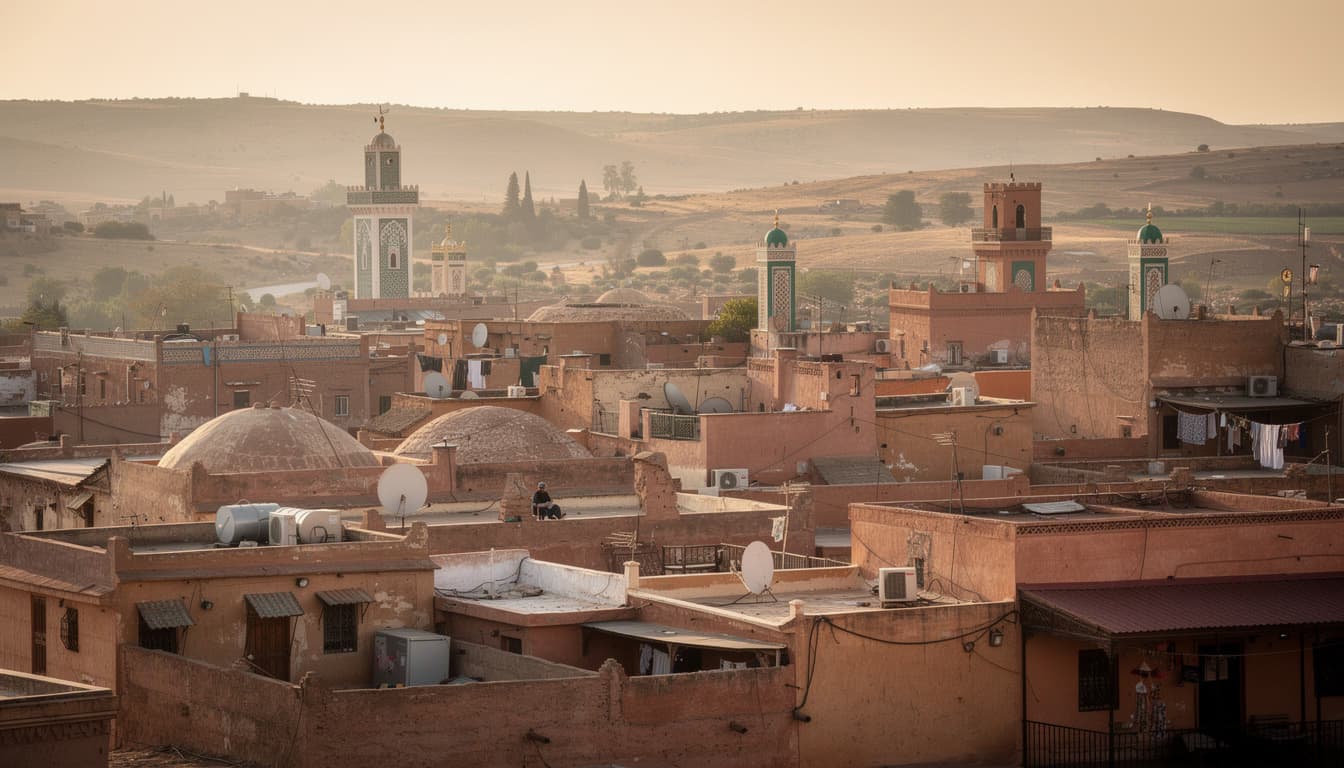
Fez is best explored on foot, in a UNESCO-listed medina where history, craftsmanship and everyday life still blend together. This article offers you a route: the gates, the madrasas, the tanneries, the souks, then Fez el-Jdid and the Mellah. You'll also learn when to go, how much time to plan, how to get there and which precautions to take so your visit goes smoothly.
Fez, Imperial Capital: History and Culture
Founded in the 9th century, Fez reached its peak in the 13th and 14th centuries under the Marinids, when it replaced Marrakech as the capital of the kingdom[1]. Much of what you'll see in the medina dates from this period: the urban fabric and the essential monuments, including madrasas, fondouks, palaces, residences, mosques and fountains[1].
The political capital was moved to Rabat in 1912, but Fez kept its status as the country's cultural and spiritual capital[1]. This is what explains the city's atmosphere: people come for its university, its schools, its places of worship and its craftsmanship as much as for its monuments.
The medina is listed as a UNESCO World Heritage Site, which describes it as one of the largest and best-preserved historic cities in the Arab-Muslim world[1]. Fez el-Bali, the old city, forms a maze of 300 hectares without cars[2].
Entering the Medina: Bab Boujloud and Fez el-Bali
The Bab Boujloud gate is the easiest way into the medina[3]. Walk through it and look at its blue and jade zellige tiles and the scrollwork framing its openings, a fine example of Hispano-Moorish art[4].
Once inside, let yourself wander: Morocco's National Tourism Office invites visitors to stroll at random through the streets of Fez el-Bali[3]. The medina is the largest car-free urban area in the world, and it has about a dozen souks, each devoted to a product: leather, wood, metal, henna[5]. Craftsmanship here covers every trade, from tanners to weavers, as well as coppersmiths and potters[4].
To orient yourself, look for the minaret of the Karaouiyine Mosque: it can be seen from far away, “like a lighthouse”[4]. Heading toward this minaret will take you to the scholarly heart of the city.
The Madrasas and the City's Scholarly Heart
Bou Inania Madrasa
The Marinid sultan Abou Inan Faris had it built between 1350 and 1355[6]. It also served as a Friday mosque, which explains its minaret, nearly unique for a Moroccan madrasa[6]. In the courtyard, the zellige is at the bottom, the carved stucco in the middle and the cedar at the top[6]. Opposite, the facade of the Dar al-Magana keeps the bronze bowls of its water clock, now no longer in use[6][7].
Bou Inania is still a place of worship, so be mindful of timing during your visit[7]. The prayer hall remains closed to non-Muslims, but it can be seen from the courtyard[6].
Al Attarine Madrasa
Dating from the 14th century, it takes its name from the spice merchants' quarter[8]. It is considered the masterpiece of Marinid art in Fez[8]. It is the most intimate of the madrasas, with its white marble basin and small patio decorated with plant-motif stucco[8].
Al Quaraouiyine
Founded in 857-859 and traditionally attributed to Fatima al-Fihri, the Quaraouiyine is cited by UNESCO and Guinness World Records as the oldest continuously operating institution of higher learning[6]. Non-Muslims are not admitted, but several open doorways offer a view of the large courtyard and its fountains. Stay on the threshold, and do not photograph worshippers[6].
Nejjarine Fondouk and Museum of Wood Arts
This carefully restored 18th-century caravanserai houses the Museum of Wood Arts and Crafts[5][8]. The objects are arranged over three levels, by theme, across several rooms[8]. Nearby, the Nejjarine Fountain, with its blue and white mosaics, offers a calm pause before heading back into the medina[5].
Living Craftsmanship: Tanneries, Copper and Souks
The Chouara tanneries are in Fez el-Bali. They are usually viewed from the buildings surrounding them, rather than from within the work area[9]. A guide can also explain how leather is made and the history of this trade[9].
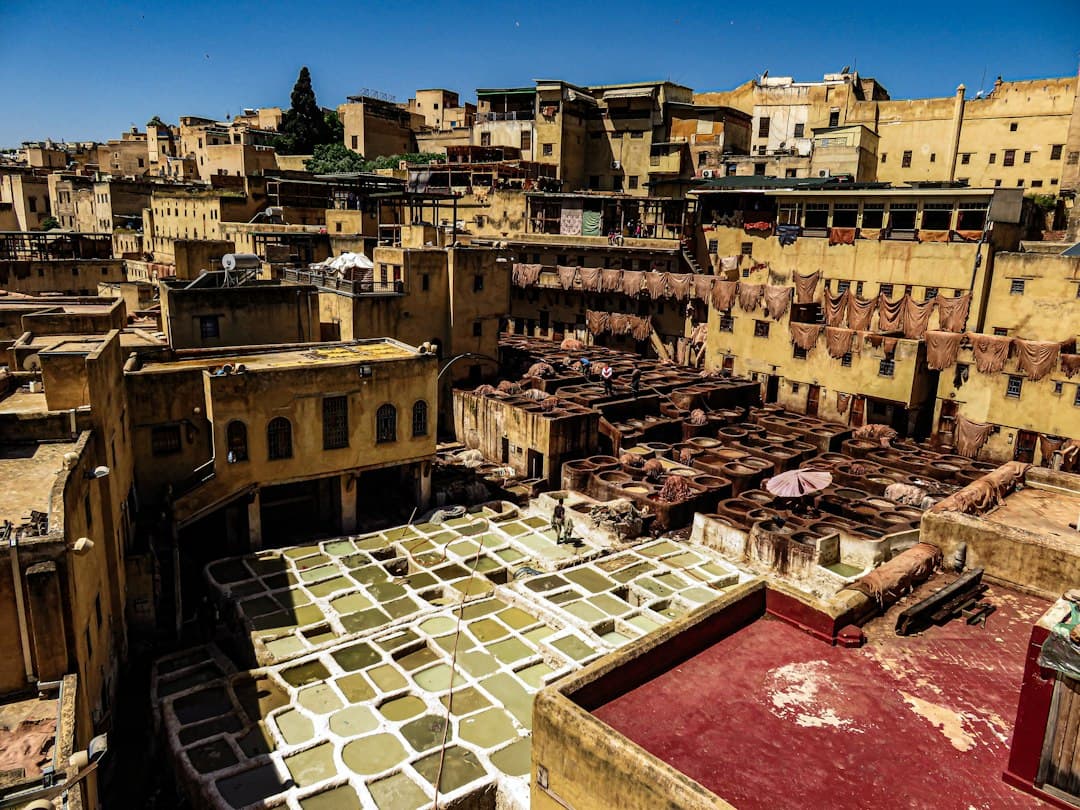
Another stop: Seffarine Square, home to the copper workers[4]. Elsewhere in the medina, some workshops are open to curious visitors: tanneries, pottery, zellige tilework, embroidery, traditional crafts passed down for centuries[10]. The souks are organized by product: one souk for leather, another for wood, metal or henna[5].
Fez el-Jdid, Mellah and Gardens
Fez el-Jdid, the "new city," was founded by the Marinids in 1276, west of the old city. It is home to the royal palace, the army headquarters, fortifications and residential neighborhoods[1]. The Dar el-Makhzen royal palace cannot be visited, but its seven monumental bronze gates, finely chiseled and framed by zellige tilework, are among the most photographed sights in the city[11].
Right next door, the Mellah is the former Jewish quarter, built in the 14th century under the protection of the Marinid sultans[11]. Its ornate balconies overlooking the street stand out from the medina's houses, which turn inward around their courtyards[11]. Visitors can see the Ibn Danan Synagogue and the Jewish cemetery, dazzling white on the hillside[11].
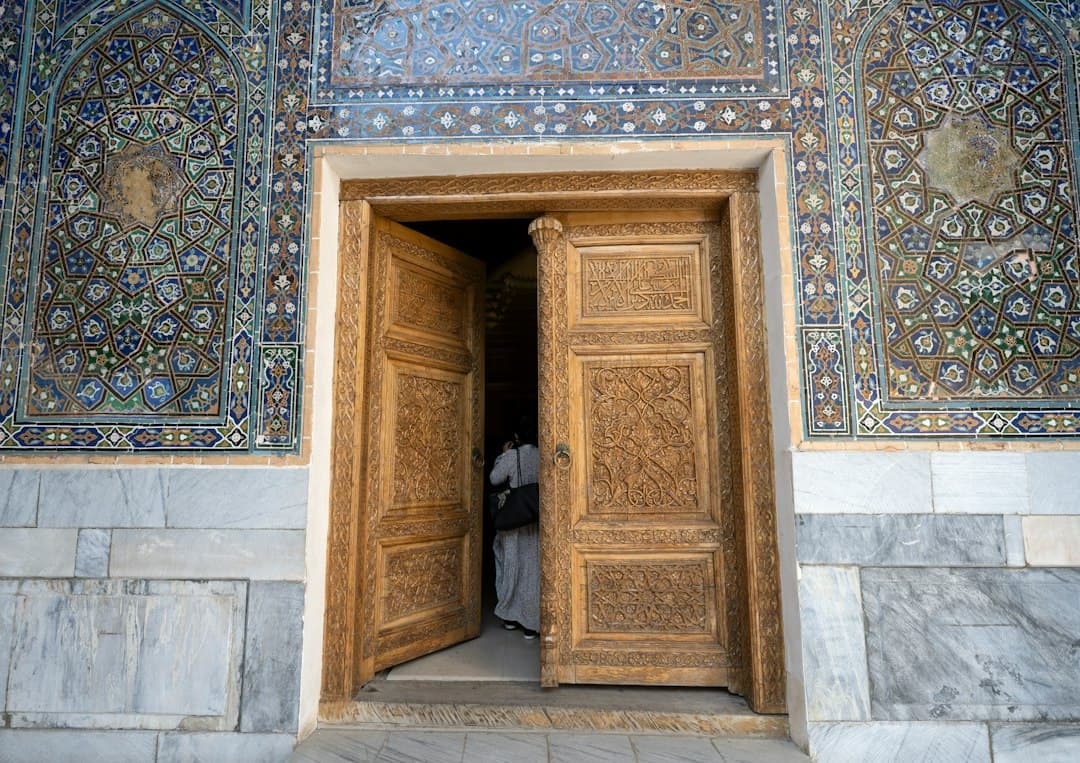
Between the two medinas, the Jnan Sbil garden offers a breath of fresh air after the narrow alleys: pools, palm trees, bamboo and a rose garden[11]. The Dar Batha museum, a 19th-century former palace, showcases Moroccan arts and crafts: pottery, carpets, embroidery, woodwork and the blue pottery of Fez[5].
Experiences: Food, Hammams and Festivals
Fassi cuisine blends sweet and savory flavors, gentle spices and refined family recipes[10]. To slow down, the tourist office suggests a traditional hammam, tea in a flower-filled riad, or a moment on a rooftop terrace listening to the city[10].
On the cultural side, several festivals punctuate the year: the World Sacred Music Festival and the Culinary Arts and Jazz in Riads festival[4]. The Festival of World Sacred Music takes place in May[3].
When to Go, How Long to Stay, How to Get There
The best seasons run from March to May and from September to November. Summer is very hot; winter is mild during the day and cool in the evening[3]. Plan on 3 days on site[3], or 2 to 3 days depending on your pace[12].
Fez-Saïss Airport is 15 km from the city. An ONCF train connects Fez to Casablanca, Rabat and Tangier, petit taxis operate within the city, and the medina is entirely pedestrian[12]. The Al Boraq high-speed line does not serve Fez[11].
From Fez, three day trips are possible: Meknes (about 1 hour), Volubilis (about 1.5 hours) and Ifrane (about 1 hour)[3].
Pitfalls, Scams and Things to Watch For
- Fake guides: hiring an official guide on your first day saves you time, opens doors and helps you avoid fake guides[11].
- Theft: stay alert and carry only the minimum amount of cash or valuables[13].
- Deserted areas: avoid walking alone in deserted places, especially at night[13].
- Solicitation: be very cautious about commitments, never give out your bank details or payment card, and file a complaint promptly if you believe you have been the victim of fraud[14].
- Requests for money: do not respond to requests for financial help without first verifying the identity of the person asking[14].
Going Further
- Morocco: The Highlights, Region by Region
- Merzouga and the Moroccan Sahara: Dunes, Bivouacs, Oases and Villages to See
- Meknes and Volubilis: What to See and Do in Two Days
- Ouarzazate and Aït-Ben-Haddou: Kasbahs, Film Studios and Earthen Ksar
Sources
- 1.^ abcdewhc.unesco.org — Medina of Fez - UNESCO World Heritage Centre: “Founded in the 9th century, Fez reached its peak in the 13th and 14th centuries under the Marinids, when it replaced Marrakech as the capital of the kingdom.”; “The urban fabric and the medina's main monuments (madrasas, funduqs, palaces, residences, mosques and fountains) date from this period.”; “Although Morocco's political capital was moved to Rabat in 1912, Fez has retained its status as the country's cultural and spiritual center.” https://whc.unesco.org/en/list/170/ (accessed November 9, 2026)
- 2.^journeycities.com — Medina of Fez (Morocco): UNESCO Guide | JourneyCities: “Fes el-Bali is a 300-hectare maze of car-free streets.” https://www.journeycities.com/unesco/medina-of-fez (accessed November 9, 2026)
- 3.^ abcdefvisitmorocco.com — Fez: What to Do and When to Go | Visit Morocco: “Bab Boujloud gate is the easiest way into the medina.”; “Wander at random through the streets of the Fes-El-Bali quarter.”; “In May, the squares and alleys ring with world music: the Festival of World Sacred Music takes place in the former imperial capital.” https://www.visitmorocco.com/fr/voyage/fes (accessed November 9, 2026)
Show 11 more sourcesShow less
- 4.^ abcdevisitmorocco.com — Medina in Fes | Visit Morocco: “Pass through Bab Boujloud and admire the refinement of Arab-Andalusian art: the blue and jade zellige tilework that adorns it, the scrollwork that frames its openings.”; “The medina is the oldest in Morocco and also the largest: every craft trade is gathered there, from tanners to weavers, coppersmiths and potters.”; “In the distance, like a lighthouse, you can make out the minaret of the Karaouiyine Mosque.” https://www.visitmorocco.com/fr/voyage/fes/medina (accessed November 9, 2026)
- 5.^ abcdebarcelo.com — Things to see in Fez: Discover the authentic side of Morocco: “The medina, the largest car-free urban area in the world, is home to about a dozen souks, each dedicated to selling a specific product.”; “You can find a souk for leather, another for wood, another for metal, or for henna, and so on.”; “Housed in a carefully restored 18th-century funduq (a former inn for merchants and travelers), the museum is a haven for woodworkers and lovers of exceptional craftsmanship.” https://www.barcelo.com/pinandtravel/en/things-to-see-in-fez-attractions/ (accessed November 9, 2026)
- 6.^ abcdefgmoroccoairport.com — What to See in Fes: The Complete Guide to Visits: “The Marinid sultan Abou Inan Faris had it built between 1350 and 1355.”; “A rare feature: it also served as a Friday mosque, which explains its minaret, almost unique for a Moroccan madrasa.”; “In the courtyard, everything is there: zellige at the bottom, carved stucco in the middle, cedar at the top.” https://moroccoairport.com/que-faire-a-fes/ (accessed November 9, 2026)
- 7.^ abfestourism.org — Visit Fez!: “In front of the madrasa, look up at the water clock, no longer in use, but whose facade preserves the memory of this highly sophisticated machinery.”; “Pay attention to timing during your visit because, a distinctive feature of the Bou Inania madrasa, it is also a place of worship.” https://festourism.org/ficheitem.php?id=100 (accessed November 9, 2026)
- 8.^ abcderoutard.com — Visit Fez: plan your stay and trip to Fez | Routard.com: “Attarine Madrasa: it is the oldest of the some thirty madrasas the city once had. It dates from the 14th century and takes its name from the spice merchants' quarter.”; “It is also considered the masterpiece of Marinid art in Fez, pushing Hispano-Moorish art to extreme refinement.”; “It is the most intimate, with its white marble basin. A superb small patio decorated everywhere. Stucco adorned with plant motifs.” https://www.routard.com/fr/guide/afrique/maroc/nord-du-maroc/fes (accessed November 9, 2026)
- 9.^ abmoroccanjourneys.com — Fez, Morocco: Imperial City, Medina & History | Moroccan Journeys: “The tanneries are located in Fes el-Bali and are normally viewed from the surrounding buildings rather than from inside the work area.”; “A guide can also offer useful insight into leather production and the history of this trade.” https://moroccanjourneys.com/the-imperial-city-of-fez-morocco/ (accessed November 9, 2026)
- 10.^ abcvisitmorocco.com — Fes: “Tanneries, pottery, zellige, embroidery… In Fez, traditional crafts have been carefully passed down for centuries. Some workshops are open to curious visitors.”; “And on the plate, Fassi cuisine blends sweet and savory, gentle spices and family recipes of great refinement.”; “Be enveloped in steam at a traditional hammam, savor tea in a flower-filled riad, listen to the city breathe from a rooftop terrace…” https://www.visitmorocco.com/fr/maroc-terre-de-football/fr/les-villes-hotes/fes (accessed November 9, 2026)
- 11.^ abcdefgnews.travel.orange.com — What to Do in Fez? Medina, Tanneries and Good Deals: “People come mainly for the Dar el-Makhzen royal palace: you can't visit it, but its seven monumental bronze gates, framed by zellige, are among the city's most photographed sights.”; “Right next to it, the Mellah is the former Jewish quarter, one of the oldest in Morocco, built in the 14th century under the protection of the Marinid sultans.”; “Its architecture stands apart from the rest of the medina: ornate balconies overlooking the street, where Muslim houses close in on their courtyards.” https://news.travel.orange.com/fr/que-faire-a-fes (accessed November 9, 2026)
- 12.^ abmoroccotravelbase.com — Fes: Complete Guide, Where to Stay, What to Do | MoroccoTravelBase: “2 to 3 days to explore the medina of Fes el-Bali, the Chouara tanneries, the Bou Inania madrasa and the ramparts.”; “Fes-Saïs airport is 15 km away. ONCF train to Casablanca, Rabat, Tangier. Petit taxis in town. The medina is entirely pedestrian.” https://moroccotravelbase.com/en/destinations/maroc/fes (accessed November 9, 2026)
- 13.^ abdiplomatie.gouv.fr — Morocco - Security | France Diplomatie: “It is strongly advised to stay vigilant and to carry only the minimum amount of money or valuables on you.”; “It is inadvisable to walk around, especially at night, in places deserted by the public (particularly beaches and public parks).” https://www.diplomatie.gouv.fr/fr/information-par-pays/maroc/conseils-aux-voyageurs-securite (accessed November 9, 2026)
- 14.^ abdiplomatie.gouv.fr — Morocco - Useful Information | France Diplomatie: “People who are approached should be very cautious about any commitments they make, should never give out their bank details or payment card, and should file a complaint without delay if they believe they have been victims of fraudulent schemes.”; “It is strongly recommended not to respond to such requests for financial assistance unless you have first verified the identity of the people asking.” https://www.diplomatie.gouv.fr/fr/information-par-pays/maroc/conseils-aux-voyageurs-informations-utiles (accessed November 9, 2026)